WAUTERS A.-J.Livre Rare Book
3 052 résultats
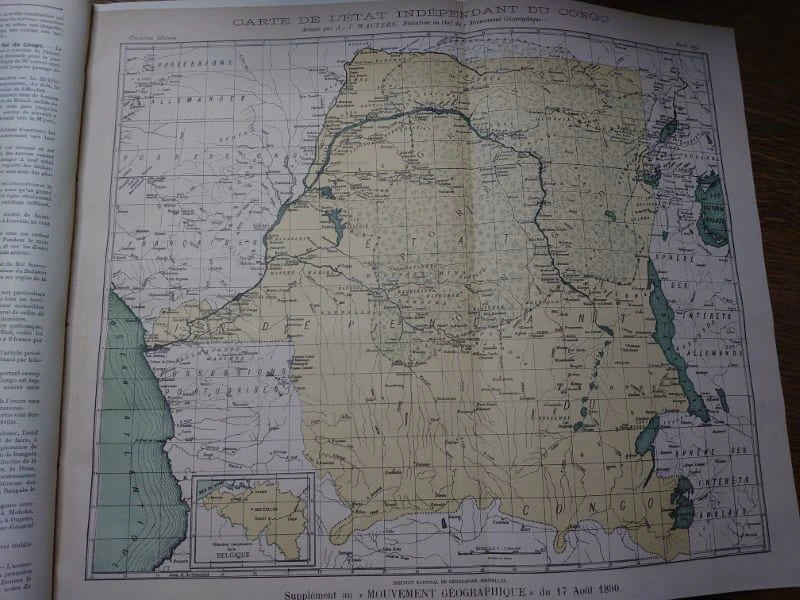
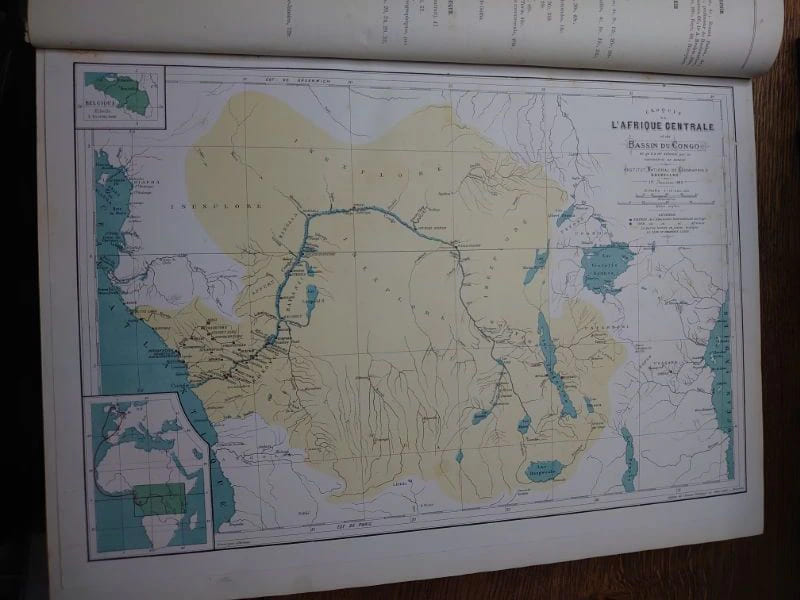
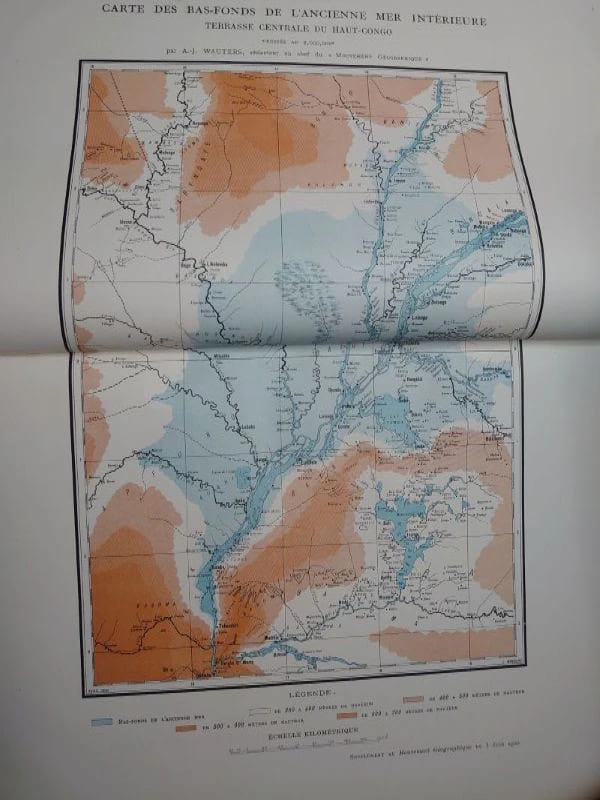
réf. 9131Bruxelles, Institut National de Géographie. 40,5 x 30 cm, années paginées par colonne, 642 col., 684, 654 et 669 col. Reliure demi percaline, dos lisse, titre doré. Reliure légèrement usée sinon bon exemplaire. Nombreuses cartes dépliantes. Le premier numéro du Mouvement géographique, sous-titré « Journal Populaire des Sciences Géographiques », parait à Bruxelles le 6 avril 1884. Ce journal, édité par lInstitut national de Géographie de Bruxelles, est fondé par Alphonse-Jules Wauters, dont la personnalité sy exprimera pendant plus de trente ans. Dabord comme rédacteur en chef, puis en qualité de directeur, de 1890 à 1914, il en sera le maitre duvre incontestable. Le mouvement géographique paraîtra en Belgique avec une périodicité bimensuelle, puis hebdomadaire, de 1884 à 1922 avec, toutefois, une interruption en raison de la guerre de 14-18. Au total, 1.485 numéros seront publiés en 34 ans.
réf. 9131Bruxelles, Institut National de Géographie. 40,5 x 30 cm, années paginées par colonne, 642 col., 684, 654 et 669 col. Reliure demi percaline, dos lisse, titre doré. Reliure légèrement usée sinon bon exemplaire. Nombreuses cartes dépliantes. Le premier numéro du Mouvement géographique, sous-titré « Journal Populaire des Sciences Géographiques », parait à Bruxelles le 6 avril 1884. Ce journal, édité par lInstitut national de Géographie de Bruxelles, est fondé par Alphonse-Jules Wauters, dont la personnalité sy exprimera pendant plus de trente ans. Dabord comme rédacteur en chef, puis en qualité de directeur, de 1890 à 1914, il en sera le maitre duvre incontestable. Le mouvement géographique paraîtra en Belgique avec une périodicité bimensuelle, puis hebdomadaire, de 1884 à 1922 avec, toutefois, une interruption en raison de la guerre de 14-18. Au total, 1.485 numéros seront publiés en 34 ans.
New York 1932/1939/1953/1954, 4 forts volumes grands In-8 brochés. Tome I : x + 756 pages. frontispice, 10 planches en hors texte, 208 illustrations et carte dépliante du CONGO BELGE en fin de volume ---Tome II : vii + 632 pages.frontispice en couleur, 21 planches en hors texte dont 2 en couleurs, 38 illustrations ---Tome III : 821 pages. 14 planches en hors texte et 36 figures. ---Tome IV : ix + 846 pages. 27 planches en hors texte et 46 figures.Index en fin de chaque volume. Bel ensemble, bien complet et en bon état. Rare complet. Bulletin of the American Museum of Natural History.
réf. 13976088Anvers: L'Essor Colonial, 1922 in-8, 48 pages. Broché, 2 plats de couverture illustrés de statues congolaises, couverture salie, un dessin de fleur à la plume sur le premier plat, très bon intérieur. Un des 25 exemplaires sur Hollande. Rare.
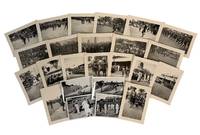
1946réf. 235061946. Congolese ceremonial and colonial encounter photo archive showing indigenous ceremonial dance dress and culture uniformed troops and Belgian officials in the Belgian Congo during the late 1940s and early 1950s. Key scenes are tied to the 1947 visit of Prince Regent Charles to Paulis. Belgium ruled the Congo from 1908 until independence on June 30 1960 after the Belgian parliament took over King Leopold II's Congo Free State following international exposure of forced labor and mass abuses. Several captions appear to place the photographs during the governorship of Eugène Jungers Governor General of the Belgian Congo from December 31 1946 to January 1 1952 a period when Belgian rule promoted "paternal" administration while Congolese political pressure and demands for advancement were growing. The strongest scenes center Congolese public ceremony rather than colonial officials alone: men dancing in lines drummers seated before large instruments children gathered for viewing and performers facing crowds in open fields and palm-lined roads. Chief Tongolo and his daughter appear among colonial representatives during the Prince Regent's visit giving the archive a named Indigenous presence within a public ceremony shaped by Belgian authority. Photo archive of 24 silver gelatin photographs measuring approximately 3" x 4" each Belgian Congo 1940s-1950s. Several French captions can be translated; "Governor General Jungers"; "the regiment's standard at the cemetery"; "parade of the veterans"; and "Congolo gives his speech." Congolese men dance in feathered or fiber headdresses body ornaments patterned waist cloths shields and drums sometimes advancing across open ground before lines of onlookers. Belgian men in white suits and pith helmets stand with Congolese adults and children outside official buildings and in outdoor assembly areas while other scenes show African soldiers in formation a ceremony near railroad tracks a colonial cemetery observance and a station or compound with crowds gathered along walls and platforms. After the Second World War Belgium's Congo policy remained formally paternalist while urbanization war service missionary education and wage labor created new Congolese claims to political recognition that colonial rule could not contain;within thirteen years of Prince Regent Charles's 1947 visit the Congo gained it's independence and became Republic of the Congo. Light handling wear toning and minor curling; captions remain legible on several versos images remain clean and clear. Overall in very good condition. The archive records Congolese ceremonial life at the point where public dance veteran commemoration colonial ceremony military display and Belgian administrative power occupied the same public spaces. unknown
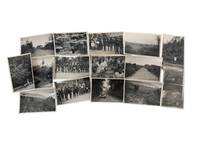
1930réf. 236631930. Mbuti community photo archive depicting Indigenous residents of the Ituri Forest in the Belgian Congo circa 1930s during a period when colonial expansion and missionary work drove foreigners deeper into indigenous communities. Several images concentrate on Mbuti adults and children while photographs of a Western woman and man an automobile and newly accessible routes record the external presence surrounding the encounter. The archive highlights the moment under which Indigenous communities were made visible to Western audiences. Photo archive of 14 silver gelatin photographs each 4" x 6" Ituri Forest Belgian Congo circa 1930s. Several photographs depict large groups of Mbuti men women and children standing in extended lines beside a forest settlement; the adults wear bark cloth patterned wraps or minimal garments and children cluster at the front or beside their mothers. A close portrait centers women and children gathered tightly around an older woman recording individual expressions and family proximity more directly than the formal group arrangements. Other images show dense tropical vegetation cultivated clearings narrow dirt roads rolling grassland and a motorcar traveling through the forest. A Western woman appears alone among tall plants beside a vehicle and on forest paths her repeated placement transforming the landscape into the record of an expedition. The Mbuti comprise several Indigenous forest communities through close relationships with the Ituri environment and neighboring communities. Colonial intervention altered those relationships by imposing territorial administration taxation compulsory labor mission education religious conversion and roads that connected previously remote districts to government and commercial centers. Catholic missions held substantial authority within the Belgian colonial system during the 1920s and 1930s while colonial administrators reorganized settlements and political structures throughout the Ituri region. Minor edge wear and scattered surface marks; images generally retain strong contrast and detail. Overall in good condition. A direct visual record of Mbuti communities confronting the movement of Western people vehicles institutions and cameras into the Ituri Forest under Belgian colonial rule. unknown
FIRST EDITION of this groundbreaking study of the Congo under French and Belgian domination. 2 leaves; 95 pp. Like Roger Casement, Mille and Challaye denounce the treatment of the natives in the French (Brazzaville) and Belgian (Leopoldville, later Kinshasha) Congos. ONE OF ONLY THIRTEEN (13) LARGE-PAPER COPIES PRINTED ON FINE HANDMADE WHATMAN WOVE PAPER. (The regular edition was printed on cheap paper.) This is copy number 4, printed for George Bellew (?--Name partially effaced, but certainly visible under ultraviolet light). 8vo. Original wraps. A bit of dust to extreme margins, else UNCUT, UNOPENED, FINE AND BRIGHT. One of the great early documents on human rights violations in Africa, and extremely rare in this state.
93 pages plus 8 pages of wonderful vintage ads. Features: My Bear Hunt in the B.C. Rockies - Part I, by E. Ashmead-Bartlett; Thrilling stories of the Air, with amazing crash photos; A Doctor in the Holy Land - Dr. H.J. Bailey in Palestine - Gaza and Nablus; Facing Death for Cinema Thrills - some hairbreadth escapes of well-known motion-picture stars, related by themselves, with photos; Tales of the Service - part IV - Tossed into the Bog - a true tale by a Customs Officer from the West Coast of Scotland; The Pirate of the Pacific - Count von Luckner - with photos; A Woman's Journey Across Africa - part V of Eva J. Jordan's 4,000 mile honeymoon trip across the dark continent; Beyond the Law - part IV, by Emmett Dalton, the sole survivor of the Dalton Gang; Exploring the Ice-Wilds of Eastern Karakoram - Part IV, by Fanny Bullock Workman and William Hunter Workman - with photos by the authors; The Drover Dempster - A.A. Beattie relates a deadly drive of 500 miles in Australia; The Disappearing Island - Helen Darbishire describes Ocean Island in the South Pacific - built entirely of phosphates - with nice photos; "Lionel - Because of the Lions" - Mrs. Fred Maturin (Edith Porch) explains how she came to name a lonely station near the Congo, on the Cape-to-Cairo Railway; The Water Miracles of India - how the engineer has wiped out India's famine scourge and reclaimed millions of acres of land by the erection of vast irrigation works - with great photos; Photo of 28-lb lobster; Photo of French school-children in war zone wearing gas masks; Photo of a Mormon Church in Salt Lake City converted into an auto shop; photo of the quaint circumcision garb worn in Uganda. Nostalgic back cover ad by the Haywood Tire & Equipment Co. of Indianapolis proves that the tire repair business was booming in 1918! Full-page ad inside back cover boasts that the Newell Pharmacal Co. can banish the smoking habit in 48 to 72 hours. Small ad for Emblem motorcycles and bicycles. Moderate wear. Unmarked. Binding intact. A sound copy of this excellent vintage issue. Book
réf. 50995, Louvain-la-Neuve Institut Superieur d"Archeologie et d"Histoire de l"Art., 1977 softcover original 520 pages, reproductions, illustrations + cartes en noir et blanc et en couleur. *TRES BON ETAT. ISBN X.
64 pages. A wonderful memento for Toronto Maple Leafs fans! Features: Front cover colour photo shows Leaf bench with George Armstrong, Frank Mahovlich and Eddie Shack; Colour photo ad for the Ford Country Squire Station Wagon inside front cover; Maclean's Reports - How one obscure report inflamed both sides of the Fluoride debate all over again; Editorial on Hypocrisy in the Criminal Code - "preventing conception" is an offense; The Maple Leaf Money Machine - a report on how they play and pay, by Peter Gzowski - fantastic two-page-wide black and white candid photo of the team spread out along the boards, complete with their names and positions - the following pages feature a similar two-page-wide black and white photo of the players spread out along the boards in their street clothes, complete with their names and second job, perhaps the most interesting of which is Myles G. (Tim) Horton, "Restaurateur" - little did he know how big his name would become with the eventual growth of his donut business; The Birth-Control Explosion; Portrait of Toronto's Little Italy - its citizens are 160,000 Italian Canadians; The Intimate Record of Sigismund Zippel's Open Heart Operation - artificial leaves in his main heart valve; Report from Africa's unreported war - in Portuguese Angola -Holden Roberto's rebels attack from the Congo; The Taping of Hamlet, starring Christopher Plummer and Elsinore; Colour illustrated Chevrolet centrefold ad; Colour photo full-page ad for TCA, Trans-Canada Air Lines/Air Canada; Cool all-red full-page photo ad for the 1964 Buick Special - with three models shown; Sidney Katz makes the case for a sane look at drivers who drink. Contents gently tanned with age. Somewhat above-average external wear. Unmarked. Magazine
réf. 13974099Arnouville: Arts d'Afrique noire, 1989 2 vol. in-4, 679 pages, nombreuses illustrations et dessins, cartes. Lexique, index, bibliographie. Reliure toile d'édition, étui, bon état. Ouvrage de référence sur la statuaire Bakongo.
réf. 113504Imp. Barousse, 4 place de l'Odéon, Paris, [sans date, 1882], 1 volume petit in-folio de 230 x 315 mm environ, 16 pages, 1carte hors-texte - 16 pages. Demi-chagrin brun, dos lisse portant titres dorés. Cuir épidermé et rayé par endroits, feuillets montés sur onglets, quelques passages soulignés, page de titre du premier rapport restaurée, sinon bon état général.
réf. 9130Bruxelles, Institut National de Géographie. 40,5 x 30 cm, 126, 130, 152, 120 et 116 pp. Reliure demi percaline, dos lisse, titre doré. Reliure légèrement usée sinon bon exemplaire. Nombreuses cartes dépliantes. Le premier numéro du Mouvement géographique, sous-titré « Journal Populaire des Sciences Géographiques », parait à Bruxelles le 6 avril 1884. Ce journal, édité par lInstitut national de Géographie de Bruxelles, est fondé par Alphonse-Jules Wauters, dont la personnalité sy exprimera pendant plus de trente ans. Dabord comme rédacteur en chef, puis en qualité de directeur, de 1890 à 1914, il en sera le maitre duvre incontestable. Le mouvement géographique paraîtra en Belgique avec une périodicité bimensuelle, puis hebdomadaire, de 1884 à 1922 avec, toutefois, une interruption en raison de la guerre de 14-18. Au total, 1.485 numéros seront publiés en 34 ans.
réf. 9130Bruxelles, Institut National de Géographie. 40,5 x 30 cm, 126, 130, 152, 120 et 116 pp. Reliure demi percaline, dos lisse, titre doré. Reliure légèrement usée sinon bon exemplaire. Nombreuses cartes dépliantes. Le premier numéro du Mouvement géographique, sous-titré « Journal Populaire des Sciences Géographiques », parait à Bruxelles le 6 avril 1884. Ce journal, édité par lInstitut national de Géographie de Bruxelles, est fondé par Alphonse-Jules Wauters, dont la personnalité sy exprimera pendant plus de trente ans. Dabord comme rédacteur en chef, puis en qualité de directeur, de 1890 à 1914, il en sera le maitre duvre incontestable. Le mouvement géographique paraîtra en Belgique avec une périodicité bimensuelle, puis hebdomadaire, de 1884 à 1922 avec, toutefois, une interruption en raison de la guerre de 14-18. Au total, 1.485 numéros seront publiés en 34 ans.
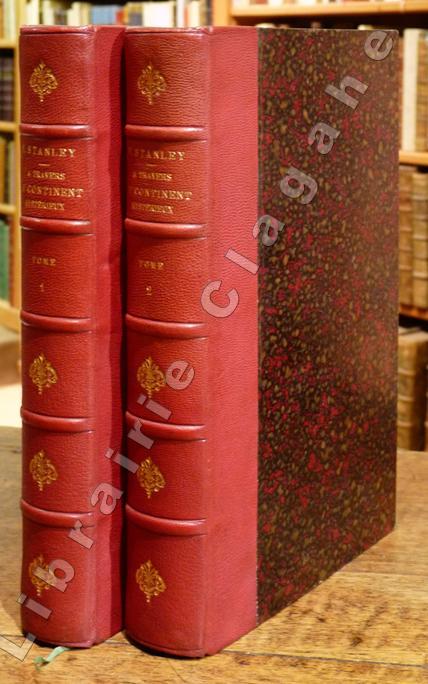
1932réf. 43495Pierre Roger 1932 2 volumes in-4, demi-maroquin fauve, dos à nerfs, couvertures ill. cons., étui, 448- 843 pp. 6 cartes dépliantes hors-texte, nombreux plans, croquis, dessins, photographies et cartes dans le texte. Infimes rousseurs. Bel exemplaire.
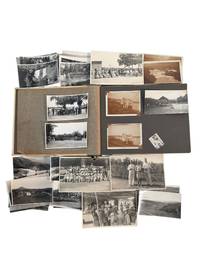
1920réf. 236781920. Belgian Congo colonial residence and indigenous locals photo archive documenting European family life Congolese communities river navigation agricultural districts and travel in the eastern colony circa 1920s to 1930s. The photographs center on Kabalo and related routes through Ituri and Lubero regions integrated into Belgian administration through railways river steamers plantation production and stations built to move personnel and commodities across the interior. European residents appear as travelers hosts sports participants and household members while Congolese people are frequently photographed in large assembled groups at village sites beside transport facilities and within agricultural landscapes shaped by colonial labor demands. Photo album and loose archive of silver gelatin photographs 53 photos with 32 loose most approximately 2.5" x 4" bound in a beige and green board album measuring 7.25" x 10" Belgian Congo circa 1920s to 1930s. Many captioned with name and place identifications. The photographs show European men and women posed in cultivated grounds beside residences on railway platforms and aboard passenger steamers; organized tennis parties and formal gatherings; Congolese crowds assembled beneath palms; workers and families near village buildings; rivers waterfalls upland roads agricultural fields and broad mountain valleys. Several views record launches and larger steam vessels carrying names beginning "Commandant" and "Gouverneur" linking domestic travel to the colonial river fleet. Other images show floodwater submerged or eroded terrain plantation rows administrative or club buildings swimming parties and European visitors observing Congolese gatherings from shaded structures. French inscriptions identify "Kabalo" "Lubero Parc" "Route dans l'Ituri" or "Road in Ituri" and "Petite Halle" or "Small hall." One caption reads in part "L'inondation . de Kabalo mai 1930" or "The flooding . at Kabalo May 1930." Names and surnames visible on versos appear to include Henniger Jordens or Jordaens and possibly Mayenberg; the handwriting does not permit firm identification. Belgian rule after 1908 organized the Congo through concessionary companies missionary institutions administrative posts mines plantations railways and steamer routes intended to extract rubber copper palm products ivory and agricultural commodities while moving European officials and commercial employees through the colony. Kabalo became a strategic junction between the Lualaba River and the rail lines extending toward Lake Tanganyika and the Katanga mining region making it a point where river traffic rail transport labor recruitment and European settlement converged. Minor fading and wear occasional creasing loose photographs and several missing mounts; inscriptions remain generally legible. Overall in good condition. A view at European domestic life in the Belgian Congo depended upon river transport colonial labor agricultural production and the administrative geography of Kabalo and the eastern interior. unknown
1977réf. 010545Repulblique du Zaire 1977 Division des relations publiques de la gécamines Hardcover As New 1st Edition Signed by Author(s)
réf. 13978541Uppsala: Studia Ethnographica Upsaliensia, 1953 - 1957 - 1962 - 1968 4 vol. gr. in-4: viii-155 pages, 25 fig. - (viii)-164 pages, 39 fig., 2 planches hors texte en couleurs - vii-258 pages, 43 fig., 2 planches hors texte en couleurs - vii-198 pages, 29 fig. Broché, le vol. I avec jaquette illustrée en couleurs (dos avec déchirure), couvertures avec marques d'usage, volume 4 non coupé comme neuf, bon état général. Cachets de la bibliothèque de Jacques Kerchache sur les volumes 1,2 et 3. (Studia Ethnographica Upsaliensia IV, VIII, XII, XVI).
1948réf. C99915Tervuren, Museum van Belgisch Congo 1948-1960 Complete series of 10 parts, bound in 4 volumes: viii,562 + 350 + 521 + 574pp., with numerous bl/w pictures and maps in text, text in Dutch, 36cm., in the series "Annales du Musée royal du Congo belge. C: Zoologie, série IV" (vol.2 fasc.1-3, vol.3 fasc.1-2, vol.4 fasc.1-2 & vol.5 fasc.1-3), 4 uniform hardcover bindings in good condition, spines in blue cloth with gilt lettering, few stamps on title pages, text clean and bright, Good condition, [Content: Volume I (fasc.1-3): Struthioniformes, Colymbiformes, Procellariiformes, Pelecaniformes, Ciconiiformes, Phoenicopteriformes, Anseriformes, Falconiformes, Galliformes, Turniciformes, Ralliformes, Gruiformes, Charadriiformes, Lariformes, Columbiformes, Cuculiformes, Psittaciformes // Volume II (fasc.4-5): Coraciiformes, Strigiformes, Caprimulgiformes, Cypseliformes // Volume III (fasc.6-7): Passeriformes // Volume IV (fasc.8-10): Passeriformes], weight: 13kg., C99915
Complete series of 10 parts, bound in 4 volumes: viii,562 + 350 + 521 + 574pp., with numerous bl/w pictures and maps in text, text in Dutch, 36cm., in the series "Annales du Musée royal du Congo belge. C: Zoologie, série IV" (vol.2 fasc.1-3, vol.3 fasc.1-2, vol.4 fasc.1-2 & vol.5 fasc.1-3), 4 uniform hardcover bindings in good condition, spines in blue cloth with gilt lettering, few stamps on title pages, text clean and bright, Good condition, [Content: Volume I (fasc.1-3): Struthioniformes, Colymbiformes, Procellariiformes, Pelecaniformes, Ciconiiformes, Phoenicopteriformes, Anseriformes, Falconiformes, Galliformes, Turniciformes, Ralliformes, Gruiformes, Charadriiformes, Lariformes, Columbiformes, Cuculiformes, Psittaciformes // Volume II (fasc.4-5): Coraciiformes, Strigiformes, Caprimulgiformes, Cypseliformes // Volume III (fasc.6-7): Passeriformes // Volume IV (fasc.8-10): Passeriformes], weight: 13kg., C99915
1879réf. 12907Paris, Hachette, 1879 ; 2 tomes in-8 ; demi-chagrin rouge-cerise, fleurons décoratifs et titre dorés (reliure de l'époque) ; (12), IV, 496 ; (4), 544 pp., 2 frontispices, 9 cartes en couleurs dont 2 très grandes dépliantes en fin de chaque volume et 2 dépliantes, dont celle du fleuve Lingstone (Congo) et de ses chutes.
réf. 9129Bruxelles, Institut National de Géographie. 40,5 x 30 cm, iv-88 pp., iv-112 pp., iv-108 pp., 114 pp., 113 pp. et 108 pp. Reliure demi percaline, dos lisse, titre doré. Reliure légèrement usée sinon bon exemplaire. Nombreuses cartes dépliantes. Le premier numéro du Mouvement géographique, sous-titré « Journal Populaire des Sciences Géographiques », parait à Bruxelles le 6 avril 1884. Ce journal, édité par lInstitut national de Géographie de Bruxelles, est fondé par Alphonse-Jules Wauters, dont la personnalité sy exprimera pendant plus de trente ans. Dabord comme rédacteur en chef, puis en qualité de directeur, de 1890 à 1914, il en sera le maitre duvre incontestable. Le mouvement géographique paraîtra en Belgique avec une périodicité bimensuelle, puis hebdomadaire, de 1884 à 1922 avec, toutefois, une interruption en raison de la guerre de 14-18. Au total, 1.485 numéros seront publiés en 34 ans.
réf. 9129Bruxelles, Institut National de Géographie. 40,5 x 30 cm, iv-88 pp., iv-112 pp., iv-108 pp., 114 pp., 113 pp. et 108 pp. Reliure demi percaline, dos lisse, titre doré. Reliure légèrement usée sinon bon exemplaire. Nombreuses cartes dépliantes. Le premier numéro du Mouvement géographique, sous-titré « Journal Populaire des Sciences Géographiques », parait à Bruxelles le 6 avril 1884. Ce journal, édité par lInstitut national de Géographie de Bruxelles, est fondé par Alphonse-Jules Wauters, dont la personnalité sy exprimera pendant plus de trente ans. Dabord comme rédacteur en chef, puis en qualité de directeur, de 1890 à 1914, il en sera le maitre duvre incontestable. Le mouvement géographique paraîtra en Belgique avec une périodicité bimensuelle, puis hebdomadaire, de 1884 à 1922 avec, toutefois, une interruption en raison de la guerre de 14-18. Au total, 1.485 numéros seront publiés en 34 ans.
1909réf. 310760Bruxelles: Albert de Wit . Institute International de Bibliographie 1909. First edition. With 8 plates from photographs with multiple images; folding map; folding plan. xx 376 pp. Preface by Cyrille van Overbergh. 8bo. Later red cloth with original printed rose wrapper mounted to front cover. Light soiling to wrapper toning to text. First edition. With 8 plates from photographs with multiple images; folding map; folding plan. xx 376 pp. Preface by Cyrille van Overbergh. 8bo. An ethnographic description of the Warega or Lega people of what is now the Democratic Republic of the Congo published shortly after the creation of the Belgian Congo; volume 5 in the Collection de Monographies ethnographiques published by Cyrille Van Overbergh. A short biographical footnote on p. viii describes the author as a reserve officer in the Belgian army. Albert de Wit ... Institute International de Bibliographie unknown books
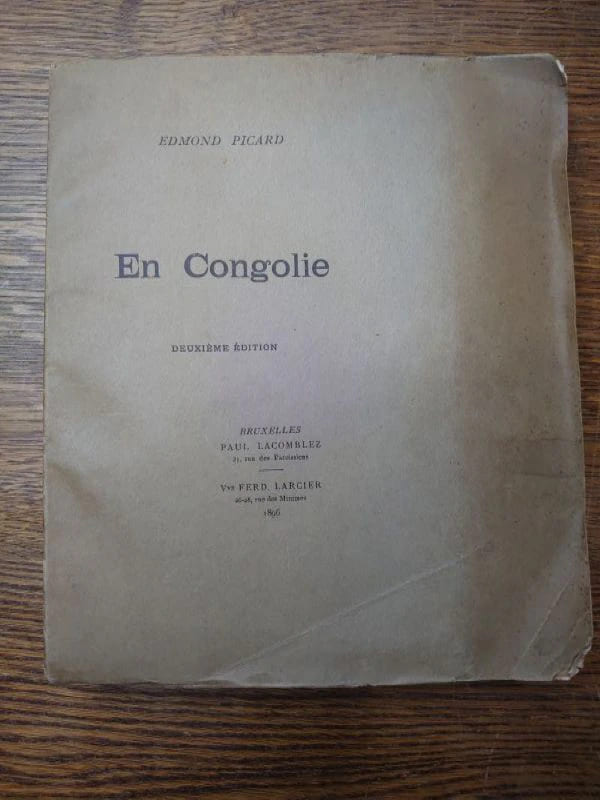
réf. 9167Bruxelles, Paul Lacomblez & Ferdinand Larcier, 1896. In-8°, 211 pp. Broché, entièrement non coupé et non rogné. Couverture d'origine conservée. Bel état malgré une couverture poussiéreuse et un manque au coin du premier plat. Un des 5 exemplaires de tête (hors commerce ?) non numérotés imprimés sur papier de Hollande, au format réimposé.