3052 resultados
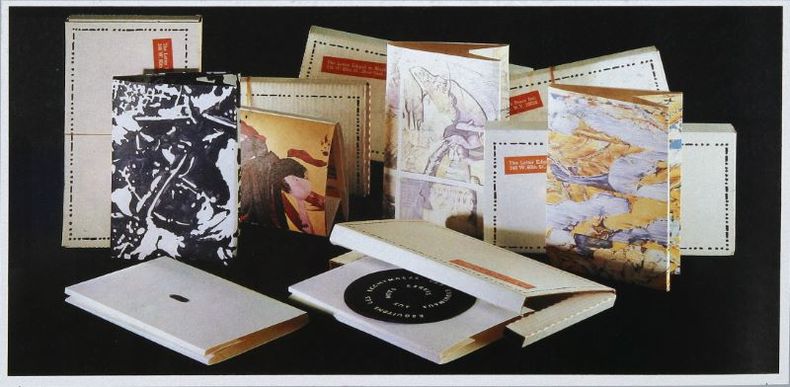
1968ref. 100144New York The Letter Edged in Black Press, 1968. 1968 6 17.8 x 27.9 cm. New York, The Letter Edged in Black Press, 1968. Six portefeuilles 178 x 279 mm, présentés dans leurs emballages postaux d’origine, contenant chacun un sommaire, pour un total de 73 multiples originaux.
ref. 13981038Paris: 2004 Portofolio in folio (43 x 31 cm) de douze PHOTOGRAPHIES ORIGINALES éditées à VINGT EXEMPLAIRES signés et numérotés, estampillées au sceau de l'atelier, plus deux exemplaires "épreuves d'artistes", réalisé à l'occasion de l'exposition du même nom présenté au Musée royal de l'Afrique centrale de Tervuren (Belgique) en avril 2004. Exemplaire n° 11/20.
1960ref. 014528Paris Galerie Iris Clert 1960 In-8 à l'italienne Broché
ref. 13978188s. l.: Sur les Presses de l'Auteur, 1932 1 vol. in-4 (22 x 32 cm) en feuilles, [5] ff., 10 eaux-fortes. Couverture rempliée. 10 eaux-fortes à pleine page et 2 vignettes de H. Kerels. Tirage limité à 32 exemplaires, celui-ci n° 24. Quelques piqûres sur les premiers feuillets. (Benezit VII, 761)
1801ref. 0032601801 Paris, Dentu, An IX - 1801. Deux volumes in-8 (197 X 130 mm) demi-veau fauve à petits coins, dos lisse orné de filets gras et perlés, larges fleurons dorés, pièces de titre et de tomaison veau vert lierre, la tomaison est frappée au centre d'un blason doré et orné (reliure de l'époque). Tome I : faux-titre, titre, 32 pages, XXVIII pages, 226 pages, 1 carte et 7 planches dépliantes ; Tome II : faux-titre, titre, 320 pages, 1 plan, 1 carte et 1 planche dépliante. Tache brune en marge de quelques feuillets du premier tome et en marge de deux gravures, sans gravité.
1801ref. PHO-1139Paris, Dentu, 1801. 2 vol. in-8, (2) ff., 226 pp. ; (2) ff., 320 pp., 2 cartes, un plan et 8 pl. dépl., mouillures claires, relié demi-veau à coins de l'époque , dos lisse avec pièce d’auteur et titre , mouillure au 1er tome sur les 10 premiers feuillets , déchirures aux plis de 2 gravures.
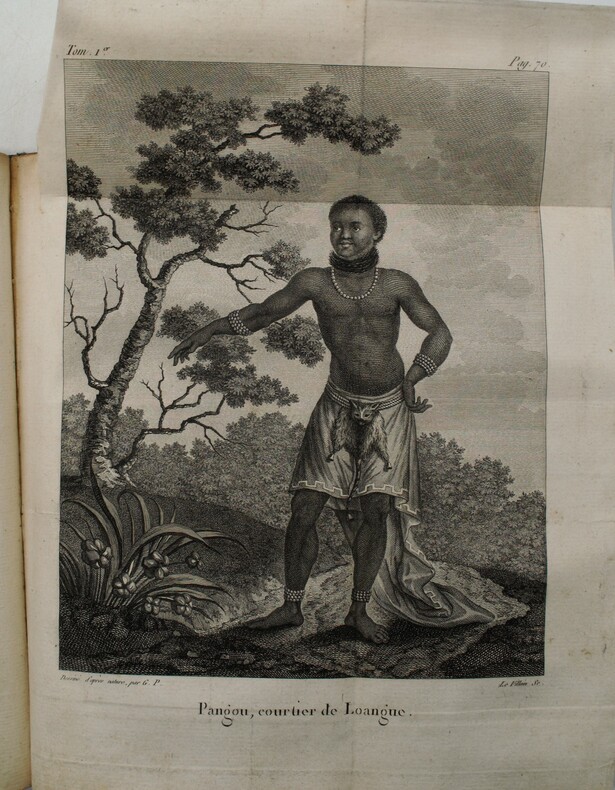
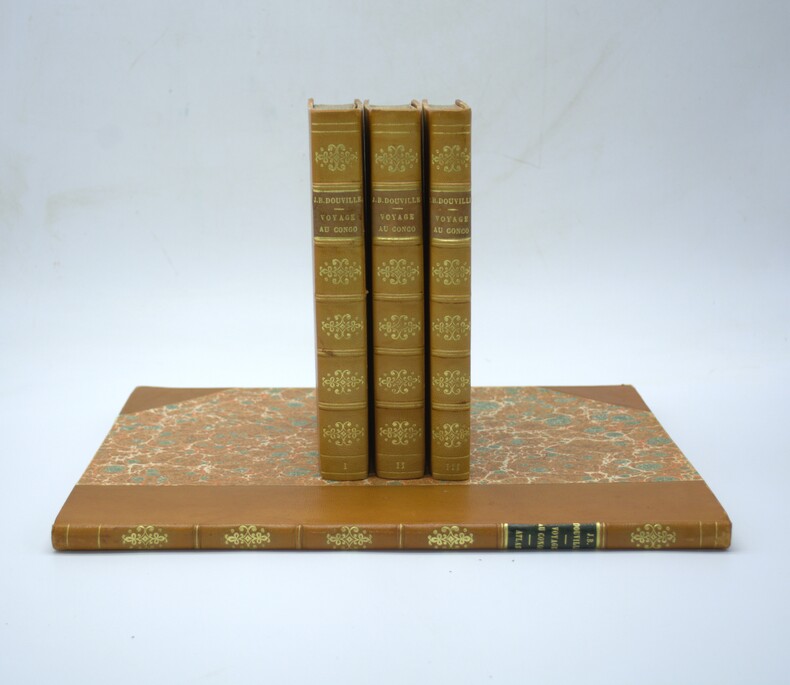
1832ref. PHO-2260Paris, Jules Renouard, 1832. 3 vol. in-8° (21,5x14cm) de xxxj, 1 bl., 328 pp. ; 380 pp. ; 272 pp. et son Atlas in-folio (37x29cm) de titre, [1] p., 1 grande carte dépliante et 21 planches lithographiées (la n° 6 en double). Demi-chagrin miel à coins, dos à 5 faux-nerfs orné, p. de t. en maroquin fauve, tomaison dorée en pied, tête dorée, couverture et dos conservé (Reliure moderne). Des rousseurs, quelques pl. de l'Atlas légèrement brunies, coiffe sup. de l’atlas légèrement frottée. Étiquette de librairie, le frontispice figurant la médaille reçue par l’auteur est en déficit. Bel ensemble.
ref. PF73123 loose gelatin silver photos including 71 large images ca. 175x235 cm 6 ¾ x 9 in one photo ca. 175x205 cm 7x8 in and over forty images from ca. 13x18 cm 5x7 in to ca. 85x13 cm 3 ¼ x 5 in; five small photos are from ca. 8x105 cm 3 ¼ x 4 ¼ in to ca. 55x6 cm 2 x 2 ¼ in; six images are printed as real photo postcards. Three photos with period pencil captions in French on verso; one photo with an ink stamp “Compagnie Aérienne Française 18 Rue de Nanterre Suresnes” on verso. The images were previously removed from an album so most have remnants of mounting on the corners ca. 15 with minor tears or losses to corners. Several images with minor creases on extremities several slightly faded but overall a very good collection. Historically significant extensive collection of original gelatin silver photos showing a copper ore processing plant of the “Compagnie Minière du Congo Français” on the M’Vouvou River near the town of Mindouli French Congo modern-day Pool Department in the middle Congo region of the Republic of Congo. “Compagnie Minière du Congo Français” or CMCF 1911-1962 was established mainly for the extraction of the mineral resources of the Mindouli district reaching the height of its operations in the 1930s after the construction of the ore processing plant on the M’Vouvou River a tributary of the Loukouni which flows into the Niari – the main regional river in 1929. The company was closed shortly after the Republic of Congo gained independence in 1960. The photos include over twenty photos of the M’Vouvou processing plant and the adjacent French residential compound general and close-up views of the plant and the bungalows including six aerial views the factory French compound native villages and roads. Two photos have period pencil captions on verso reading: “Usine de la C.M.C.F. à Mindouli – M’Vouvou;” “Usine de traitement de minerai <…> à Mindouli Vouvou. Proprieté C.M.C.F…” Over seventy photos depict the Loukouni River one image is captioned “Les gorge de la Loukouni” and also most likely its tributaries M’Vouvou and Mindouli which surrounded the area where the plant was constructed. The photos show river valleys and gorges overhanging cliffs rapids and waterfalls with French residents swimming picnicking on the banks posing on a hanging bridge under the cliffs &c. There are also photos of native villages with thatched-roof houses a Congolese town street with an open-air restaurant the interior of a local infirmary with a Congolese caretaker; a biplane sign “O-BAHT” painted on the side with a group of French colonial residents; views of a capsized rail cart on a slope being examined by Congolese workers; portraits of French residents posing next to their bungalows or pretending to do a boxing match Congolese boatsmen and their pirogues workers and their families posing in front of their cottages women working in a field a young man climbing up a palm tree a mother with child and others. Overall an interesting extensive collection of original gelatin silver photos of the Mindouli ore processing plant and district in the middle Congo River in the 1930s. unknown
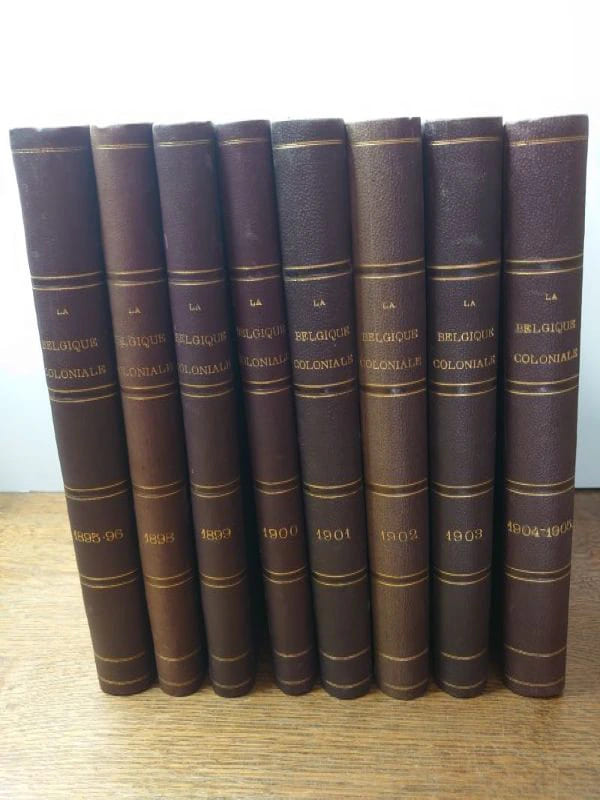
ref. 9128Bruxelles, Imprimerie Veuve Monnom, 1985-1905. 31,5 x 25 cm. Reliés ensemble 1895 n°1 à 8, 80 pp. (première année), et 1896 n°1 à 52, 630 pp. et 4 pp. de table. 1898 n°1 à 52, 620 pp. et iv page de table. 1899 n°1 à 52, 640 pp. dont table pour 1895-1899. 1900 n°1 à 52, 620 pp. et 4 pp. de table. 1901 n°1 à 52, 620 pp. 1902 n°1 à 52, 620 pp. 1902 n°1 à 52, 620 pp. 1903 n°1 à 52, 634 pp. Reliés ensemble 1904 n°1 à 52, 648 pp. et 1905 n°1 à 26, 308 pp. Huit volumes relié à l'identique, dos lisses, titres dorés. beaux exemplaires abondamment illustrés. ensemble presque copmlet de cette revue (manque l'année 1897). Revue hebdomadaire abondamment illustrée, publiée sous la direction de René Vauthier, contenant des récits d'explorations et de missions, des articles sur des questions ethnographiques, sur l'esclavagisme, les moeurs des indigènes, le climat, etc. ATTENTION PRÉVOIR DES FRAIS DE PORT SUPPLÉMENTAIRES.
ref. 13974178Bruxelles, Anvers-Amsterdam: Editions Erasme, Standaard-Boekhandel, 1959 in-8, 161 pp., frontispice, 39 figs. dans le texte, 44 planches avec 232 illustrations, 3 cartes. Reliure toile décorée d'éd., bel exemplaire. ** 8vo. 161 pp., frontispiece, 39 figs. in the texte, 44 plates (232 ills.), 3 maps. Original décorated cloth, fine copy.
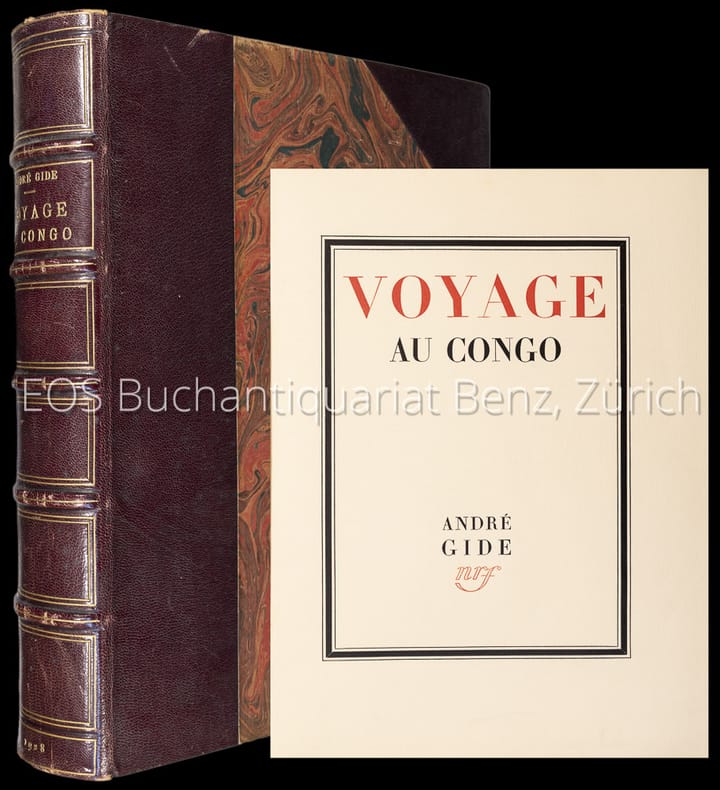
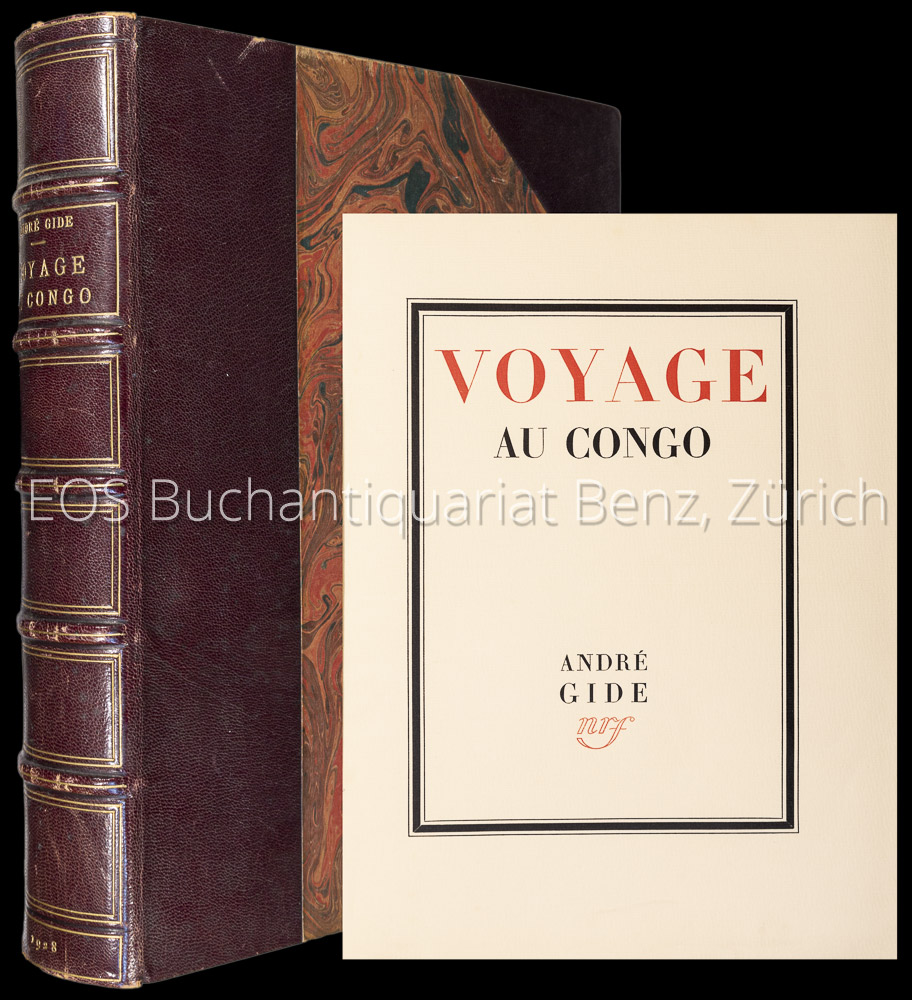
1929ref. 4216DBParis, Gallimard, 1929. Gross-4°. 4 Blatt, 304 Seiten, 5 Blatt, 64 ganzseitige Heligravüren von Marc Allégret, 4 geographische Karten. Mit Kopfgoldschnitt. Halblederband mit marmorierten Deckeln.
1929ref. 0000491929 Paris, Librairie Gallimard, [1929]. Fort in-quarto demi-chagrin poli havane, dos cinq nerfs sertis de filets à froid, auteur et titre dorés, date en queue, plats et dos de la couverture conservés (Reliure moderne) ; 307 pages, 64 planches et 4 cartes hors-texte.
1929ref. 4216DBParis, Gallimard, 1929. Gross-4°. 4 Blatt, 304 Seiten, 5 Blatt, 64 ganzseitige Heligravüren von Marc Allégret, 4 geographische Karten. Mit Kopfgoldschnitt. Halblederband mit marmorierten Deckeln. + Wichtig: Für unsere Kunden in der EU erfolgt der Versand alle 14 Tage verzollt ab Deutschland / Postbank-Konto in Deutschland vorhanden +, A|B|C
ref. 13977273Bruxelles: L'Eglantine, 1931 in-4, 90 pages, 11 illustrations. Broché, couverture illustrée, lég. défr., trace de pliure et petites taches de rouille au deuxième plat, bon exemplaire de ce très rare recueil de contes luba, sans doute la première oeuvre écrite par un congolais et illustrée de dessins de l'artiste congolais Djilatendo.
1903ref. PHO-1294Masson, 1905. 4 vol. in-4 . Texte : broché (dos très usés avec manques et plats détachés au tome III, avec des défauts aux autres tomes); IV- 1210 pp. 428 reproductions photographiques dans le texte, 30 planches num. in & hors-texte, 2 pl. hors-t. n. ch. Atlas : cartonnage vert éditeur (frotté et tâché, bords des cartes un peu piqués et poussiéreux). 16 planches en couleurs contenant l'itinéraire général de la mission entre Ouargla et Bangui à l'échelle de 1/400.000e avec un levé détaillé du cours du Chari aux basses eaux entre Fort-Lamy et Fort-Archambault, à l'échelle de 1/100.000e.
ref. 13979874Bruxelles: Les Editions de Belgique, 1936 in-8 à grandes marges. Tiré à 28 ex. num. Un des 8 sur Japon. Demi chagrin noir à coins, dos à 5 nerfs terminés à froid sur les plats, titre doré, tête dorée, couverture illustrée et dos conservés, minimes épidermures sur les nerfs, très bel exemplaire.
ref. 13983499Arnouville: Arts d'Afrique Noire, 1980 in-4, 264 pages, 142 illustrations, dessins dans le texte, carte. Bibliographie. Rel. toile d'éd., jaquette, petite déchirure au dos, autrement très bon état.
1920ref. 235621920. Belgian Congo travel and colonial encounter photo archive June 1929 documenting Western movement through river settlements Congolese communities and transport corridors during the late 1920s expansion of Belgian colonial administration. The archive dates to the period after Belgium took over the Congo Free State in 1908 and after Leopoldville became the colonial capital in 1926 placing the group inside a decade when river rail missionary commercial and administrative routes shaped how European travelers moved through the colony. The photographs record Congolese people and Western visitors in proximity but the camera's position remains that of the outsider turning encounters village life river crossings and gathered groups into a colonial travel record. Photo archive of 37 likely silver gelatin prints each approximately 3 x 5.5 inches Belgian Congo including Leopoldville June 1929. The photos show broad river views with low shorelines and wooded banks; small boats and steam launches moving across open water; river landings with houses palms and distant hills; rough timber walkways and cleared paths through dense vegetation; and several views of Congolese people near water canoes and village structures. Other images show Western travelers or colonial personnel in light clothing and hats including figures posed near vehicles and on board transport while group scenes show Congolese men women and children gathered in circles or facing the camera. Several photographs depict Congolese men wearing body ornaments patterned cloth arm rings and headdresses including one scene with a large gathered crowd and another showing a man with a leopard skin or spotted pelt before a group. A portrait of a small child standing against a large tree shaded picnic or camp scenes and repeated riverbank views broaden the record from formal encounter to travel rest and observation. One verso is inscribed "Leopoldville. Juin 1929" confirming place and date for at least part of the group. Belgian Congo in 1929 stood between the violent reputation of the Congo Free State and the later high colonial period but Belgian rule continued to depend on racial hierarchy forced labor regimes missionary schooling transport expansion and extractive production. Leopoldville's rise as capital shifted administrative focus inland from Boma and tied the colony more tightly to the Congo River and the Matadi rail connection making the river corridor a principal route for officials commercial travelers missionaries and tourists. These photographs belong to that mobile colonial world: they show Westerners entering Congolese spaces by boat road and landing place while Congolese subjects appear as workers hosts spectators performers children and crowds arranged before an external camera. Light surface wear and toning some versos have penciled inscriptions. Overall in very good condition. A concentrated visual record of Belgian colonial travel and encounter along Congo River routes at the moment Leopoldville was becoming the administrative center of the Belgian Congo. unknown
1959ref. 70321959 1959 · Bruxelles, Belgium M.; J. VAN NOTEN,
ref. 13976341Bolobo (Haut Congo, Congo Belge): Baptist Mission Press, 1942 in-8, [xii}-248 page. Cartonnage d'éd., bon état d'occasion. Rare.
1899ref. R108410Bruxelles, Charles Bulens 1899-1913 Série complète des premières 15 années/volumes, ensemble plus de 7000 pages, richement illustré (principalement des photos en n/bl, des cartes et des dessins), 27cm., reliures uniformes d'époque en rouge (dos en cuir avec titré doré, dos à cinq nerfs, charnières peu passées et qqs. traces d'usage), brochures originales conservées et reliées, feuilles de garde marbrées, qqs. vagues taches d'humidité dans les tomes 1 à 4 (dans le marge du texte, pas dans le texte), texte frais, poids: 30 kg., R108410
Série complète des premières 15 années/volumes, ensemble plus de 7000 pages, richement illustré (principalement des photos en n/bl, des cartes et des dessins), 27cm., reliures uniformes d'époque en rouge (dos en cuir avec titré doré, dos à cinq nerfs, charnières peu passées et qqs. traces d'usage), brochures originales conservées et reliées, feuilles de garde marbrées, qqs. vagues taches d'humidité dans les tomes 1 à 4 (dans le marge du texte, pas dans le texte), texte frais, poids: 30 kg., R108410
ref. 13977111Arnouville: Arts d'Afrique Noire, 1996 in-4, 408 pages, nombreuses illustrations en couleurs, cartes, bibliographie, index. Reliure toile, jaquette, bon état d'usage.
1946ref. 232341946. Belgian Congo photo archive documenting colonialism and segregated settlement in Paulis Jadotville and at Kiubo Falls in 1946-1947 while Belgian rule expanded displacing Congolese communities from political power and control over local resources. Made by an unidentified traveler or colonial observer the group moves between industrial sites river traffic town streets waterfalls village compounds and posed encounters with Congolese residents placing daily life beside the infrastructure of empire. Jadotville in Katanga had been built within the orbit of Union Minière du Haut-Katanga and the copper economy that tied the Congo to European industry; Paulis belonged to the northeastern colonial administrative network that extended surveillance mission activity and commercial penetration into local societies. By the later 1940s these systems were producing wealth for Belgium and foreign markets through forced and controlled labor regimes. Photo archive of 36 black and white silver gelatin photographs various sizes ranging from 2.5" x 3.5" to 5" x 7" Belgian Congo 1946-1947. Nine photographs are identified to the Paulis region in 1946 including versos inscribed in French with "Habitations Européens à Paulis" "Pavillon de l'hotel" and "Le Kigoma sur le fleuve." These images show European-style houses set among palms a large riverside or lakeside steamer a broad colonial street with automobiles and low commercial buildings thatched structures and Congolese figures posed near village compounds and along a tree-lined road. The remaining photographs from Jadotville and Kiubo Falls in 1947 include multiple views of the falls from overlooks and near the waterline several repeated compositions of cascades and riverbanks a dense electrical installation with transformers and steel framing public crowd scenes dugout canoes on calm water groups standing beside temporary camp structures and additional views of thatched settlements large shade trees and Congolese men women and children positioned before houses or in open clearings. Several photographs set European-built environments against Congolese dwellings and occupied landscapes making the colonial dichotomy apparent within this grouping. Waterfalls river steamers electric infrastructure and ordered streets mark the channels through which copper labor and administrative authority moved outward to Belgian and international markets while the photographs of Congolese settlements and residents show the populations who bore that reorganization of land and economy. In the late colonial Congo extraction and transport depended on African labor under coercive conditions and urban growth in places such as Jadotville advanced through racially unequal housing wage structures and civic access leaving Congolese people concentrated in subordinate quarters or rural zones even when their work sustained the entire system. Light wear and occasional creasing; several versos inscribed in French; overall very good condition. An intimate look into Belgian colonial rule at the point where industrial wealth infrastructure and local displacement met on the ground. unknown