3 159 résultats
1907Num?ro complet.
1906Reliure de l'éditeur. 550 pages. Manques au dos. 25x32cm.
réf. 3604Liège/Bruxelles, Compagnie Générale de Publicité et Information, s.d. ca 1945-1950 23 x 31, 126 pp., très nombreuses illustrations, broché, bon état (2 cachets)
réf. 36638Bruxelles, Cultura, 1969. 24 x 31, 50 planches en couleurs + fascicule catalogue, non broché, en feuilles sous chemise carton et étui en bois, très bon état (sauf 1ère page du catalogue+ salie).
réf. 9052Bruxelles, 1906. 24,5 x 16 cm, 100 pp. et deux cartes dépliantes in fine. Broché, déchirure au dos sinon bon exemplaire. Nombreuses illustrations photographiques. Édition originale.
réf. 0266991424.Ghardcover. Good. Access codes and supplements are not guaranteed with used items. May be an ex-library book. hardcover
réf. B9781016065702Hardback. New. hardcover
1954réf. 100071790Clarence Denis imp. 1954. Bon état sous papier de soie couverture un peu défraîchie intérieur propre. in8. 1954. Broché. illustrations en noir et blanc Clarence Denis (imp.) unknown
réf. 9458P. Edt. Dillen, 1936. In-8, 186 pages. Broché.
1936réf. 139421936 broché in-octavo (paperback in-octavo), dos marron clair (light brown spine), couverture illustrée (cover illustrated), tranches non rognées (edges no smooth), pages de garde grises (grey endapers), page de faux-titre (half title page), illustrations in et hors-texte - dont des illustrations hors-texte au début et in fine entre les pages de garde et la couverture (illustrations in text and full page engraving - of which illustrations full page engraving between the endpapers and the cover), 194 pages, 1936 à Paris Editions Dillen - Maison Mère des Pères du Saint-Esprit,
réf. 13980703Bruxelles: Goemaere, 1923 in-8, 87 pages. Broché, couv. défr. Extrait de la revue Congo.
1958réf. 17271ABBruxelles, Publications de l'Institut National pour l'Étude Agronomique du Congo Belge [Hrsg.], 1958. 24,5 cm. (3) Bl., 367 S., mit 36 Tafeln und 11 Strichzeichnungen im Text, 1 Karte. Originalbroschur (Softcover), Fadenheftung. Vol. VII. Gutes Exemplar. Einband am Kapital einseitig eingerissen, mit einem Fehlteil und etwas angefleckt. Buchblock fest und sauber.
1959réf. R160133058. 1959. In-8. Broché. Bon état, Couv. partiel. décollorée, Dos satisfaisant, Intérieur acceptable. 166 pages. Nombreuses photos en noir et blanc dans le texte et hors texte.. . . . Classification Dewey : 70.49-Presse illustrée, magazines, revues
réf. 36087Verviers (Belgique), Marabout, 1971. 11 x 18, 281 pp., très nombreuses illustrations en couleurs et en N/B, reliure plein cuir, très bon état.
réf. DADAX1946160105New unknown
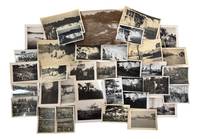
1946réf. 232341946. Belgian Congo photo archive documenting colonialism and segregated settlement in Paulis Jadotville and at Kiubo Falls in 1946-1947 while Belgian rule expanded displacing Congolese communities from political power and control over local resources. Made by an unidentified traveler or colonial observer the group moves between industrial sites river traffic town streets waterfalls village compounds and posed encounters with Congolese residents placing daily life beside the infrastructure of empire. Jadotville in Katanga had been built within the orbit of Union Minière du Haut-Katanga and the copper economy that tied the Congo to European industry; Paulis belonged to the northeastern colonial administrative network that extended surveillance mission activity and commercial penetration into local societies. By the later 1940s these systems were producing wealth for Belgium and foreign markets through forced and controlled labor regimes. Photo archive of 36 black and white silver gelatin photographs various sizes ranging from 2.5" x 3.5" to 5" x 7" Belgian Congo 1946-1947. Nine photographs are identified to the Paulis region in 1946 including versos inscribed in French with "Habitations Européens à Paulis" "Pavillon de l'hotel" and "Le Kigoma sur le fleuve." These images show European-style houses set among palms a large riverside or lakeside steamer a broad colonial street with automobiles and low commercial buildings thatched structures and Congolese figures posed near village compounds and along a tree-lined road. The remaining photographs from Jadotville and Kiubo Falls in 1947 include multiple views of the falls from overlooks and near the waterline several repeated compositions of cascades and riverbanks a dense electrical installation with transformers and steel framing public crowd scenes dugout canoes on calm water groups standing beside temporary camp structures and additional views of thatched settlements large shade trees and Congolese men women and children positioned before houses or in open clearings. Several photographs set European-built environments against Congolese dwellings and occupied landscapes making the colonial dichotomy apparent within this grouping. Waterfalls river steamers electric infrastructure and ordered streets mark the channels through which copper labor and administrative authority moved outward to Belgian and international markets while the photographs of Congolese settlements and residents show the populations who bore that reorganization of land and economy. In the late colonial Congo extraction and transport depended on African labor under coercive conditions and urban growth in places such as Jadotville advanced through racially unequal housing wage structures and civic access leaving Congolese people concentrated in subordinate quarters or rural zones even when their work sustained the entire system. Light wear and occasional creasing; several versos inscribed in French; overall very good condition. An intimate look into Belgian colonial rule at the point where industrial wealth infrastructure and local displacement met on the ground. unknown books
1946réf. 232341946. Belgian Congo photo archive documenting colonialism and segregated settlement in Paulis Jadotville and at Kiubo Falls in 1946-1947 while Belgian rule expanded displacing Congolese communities from political power and control over local resources. Made by an unidentified traveler or colonial observer the group moves between industrial sites river traffic town streets waterfalls village compounds and posed encounters with Congolese residents placing daily life beside the infrastructure of empire. Jadotville in Katanga had been built within the orbit of Union Minière du Haut-Katanga and the copper economy that tied the Congo to European industry; Paulis belonged to the northeastern colonial administrative network that extended surveillance mission activity and commercial penetration into local societies. By the later 1940s these systems were producing wealth for Belgium and foreign markets through forced and controlled labor regimes. Photo archive of 36 black and white silver gelatin photographs various sizes ranging from 2.5" x 3.5" to 5" x 7" Belgian Congo 1946-1947. Nine photographs are identified to the Paulis region in 1946 including versos inscribed in French with "Habitations Européens à Paulis" "Pavillon de l'hotel" and "Le Kigoma sur le fleuve." These images show European-style houses set among palms a large riverside or lakeside steamer a broad colonial street with automobiles and low commercial buildings thatched structures and Congolese figures posed near village compounds and along a tree-lined road. The remaining photographs from Jadotville and Kiubo Falls in 1947 include multiple views of the falls from overlooks and near the waterline several repeated compositions of cascades and riverbanks a dense electrical installation with transformers and steel framing public crowd scenes dugout canoes on calm water groups standing beside temporary camp structures and additional views of thatched settlements large shade trees and Congolese men women and children positioned before houses or in open clearings. Several photographs set European-built environments against Congolese dwellings and occupied landscapes making the colonial dichotomy apparent within this grouping. Waterfalls river steamers electric infrastructure and ordered streets mark the channels through which copper labor and administrative authority moved outward to Belgian and international markets while the photographs of Congolese settlements and residents show the populations who bore that reorganization of land and economy. In the late colonial Congo extraction and transport depended on African labor under coercive conditions and urban growth in places such as Jadotville advanced through racially unequal housing wage structures and civic access leaving Congolese people concentrated in subordinate quarters or rural zones even when their work sustained the entire system. Light wear and occasional creasing; several versos inscribed in French; overall very good condition. An intimate look into Belgian colonial rule at the point where industrial wealth infrastructure and local displacement met on the ground. unknown
1988réf. 0252571988 academie des sciences d'outremer, koninklijke academie voor overzeese wetenschappen Hardcover
1983réf. 0252561983 academie des sciences d'outremer, koninklijke academie voor overzeese wetenschappen Hardcover
1992réf. 0252581992 academie des sciences d'outremer, koninklijke academie voor overzeese wetenschappen Hardcover
in-12° de 302 pages, illustrations, broché. Bel exemplaire. [FRA-4] Tout ce qui faut savoir du Congo belge.
Hard Cover in-folio non paginé (± 250 pages), avec de nombreuses photos et reproductions n&b, cartonnage de l'éditeur. Bon état. [P-44]
réf. 80825Sans lieu, Chocolat Aiglon - Chocolade Aiglon sans date, vers 1940, 305x245mm, 13pages, illustrations en couleurs hors texte / complet des vignettes des 58 en couleurs / Compleet van 58 chromos in gelamineerde kleuren. Broché / Paperback. Edition bilingue: français-néerlandais. Tweetalige editie: Frans-Nederlands. Leuke kopie / bel exemplaire.
réf. 80837Sans lieu, Chocolat Aiglon - Chocolade Aiglon sans date, vers 1940, 305x245mm, 13pages, illustrations en couleurs hors texte. Complet des vignettes des 62 en couleurs, nos° 59 - 120 / Compleet van 60 chromos in gelamineerde kleuren, nos.° 59 - 120. Broché / Paperback. Edition bilingue: français-néerlandais. Tweetalige editie: Frans-Nederlands.