3.135 Ergebnisse
1937Best.-Nr. 119711937 Brazzaville, 1937 ; grand inj-8 broché de 20"pp.; illustré de photographies et carte hors texte en noir sur papier couché; couverture beige illustrée d'un seul tenant sur les deux plats et le dos en noir, orange et bleu de la reproduction d'une carte ancienne, titre en noir au 1er plat.
1963259pp., illustré de tableaux graphiques, 24cm., br.orig., bon état, C94475
2006Mm 165x240 Brossura editoriale di 163 pagine, copertina policroma, alcune illustrazioni in nero nel testo, dedica in apertura. Buono stato. Spedizione entro 24 ore dalla conferma dell'ordine.
1963Best.-Nr. C94475Bruxelles/ Paris, Arscia/ Maloine 1963 259pp., illustré de tableaux graphiques, 24cm., br.orig., bon état, C94475
1910Best.-Nr. 24156Paris H. Oudin s.d. (vers 1910) in-4 demi-chagrin rouge, dos orné, fer de l'Institution des Chartreux à Lyon sur la premier plat [Rel. de l'époque]
Best.-Nr. ORD-9022Leur écologie et leur utilisation en rapport avec les possibilités d'introduction et de multiplication au Congo Belge et au Ruanda-Urundi. Bruxelles. Direction de l'Agriculture, des Forêts et de l'Élevage. 1953. In-4 (225 x 290mm) broché, couverture verte imprimée, 126 pages, 15 cartes la plupart dépliantes, croquis dans le texte et 155 illustrations photos réparties sur des planches hors texte non comprises dans la pagination. Traces d'humidité sur le dos n'affectant en rien l'ouvrage. Bel exemplaire.
1976Best.-Nr. GITd571Abidjan Dakar Les Nouvelles Editions Africaines 1976. In-8 broché couverture illustrée 236pp. Orné de 3 cartes dont 2 à pleine page. Dos et bordure intérieure du 1er plat passés.
1954Milano, 1954, stralcio con copertina posticcia muta, pp. 981/990 con 2 cartine ed 8 fotografie. - !! ATTENZIONE !!: Con il termine estratto (o stralcio) intendiamo riferirci ad un fascicolo contenente un articolo di rivista, sia che esso sia stato stampato a parte utilizzando la stessa composizione sia che provenga direttamente da una rivista. Le pagine sono indicate come "da/a", ad esempio: 229/231 significa che il testo è composto da tre pagine. Quando la rivista di provenienza non viene indicata é perchè ci è sconosciuta. - !! ATTENTION !!: : NOT A BOOK : “estratto” or “stralcio” means simply a few pages, original nonetheless, printed in a magazine. Pages are indicated as in "from” “to", for example: 229/231 means the text comprises three pages (229, 230 and 231). If the magazine that contained the pages is not mentioned, it is because it is unknown to us.
Best.-Nr. 13980384Köln: Rautenstrauch-Joest-Museums für Völkerkunde., 1990 in-4, 107 pages, 95 illustrations en n/b, 2 planches en couleurs, carte. Cartonné, bon état. Ausstellung 30.11.90 bis 26.5.1990 im Rautenstrauch-Joest-Museum für Völkerkunde, Köln ; 29.8.1991 bis 17.11.91 im Reiss-Museum, Mannheim.
1887Hachette 1888, fort In-4 relié demi-chagrin bordeaux, dos à nerfs, caissons et fleurons dorés, gardes de papier marbré, reliure signée en queue E. Jaladieu. 878 pages. Avec 5 cartes en couleurs tirées à part, 190 cartes intercalées dans le texte et 78 vues ou types gravés sur bois. Quelques rousseurs pales sans gravité, bel exemplaire, bien relié
Best.-Nr. DADAX1571819452New unknown
Best.-Nr. 11158Paris, Librarie Hachette et Cie., 1888, .in 4to [27.5 x 21 cm]; [iv], 878, [i, errata] pp, 6 cartes en couleur; 5 a double-page et une depliante 190 cartes in texte, 77 bois gravés in et ht,leg.rousseurs eparses,reliure solide,
1887Best.-Nr. 150912Hachette Hachette 1888, fort In-4 relié demi-chagrin bordeaux, dos à nerfs, caissons et fleurons dorés, gardes de papier marbré, reliure signée en queue E. Jaladieu. 878 pages. Avec 5 cartes en couleurs tirées à part, 190 cartes intercalées dans le texte et 78 vues ou types gravés sur bois. Quelques rousseurs pales sans gravité, bel exemplaire, bien relié
Best.-Nr. 6208456266.Gpaperback. Good. Access codes and supplements are not guaranteed with used items. May be an ex-library book. paperback
Best.-Nr. 13978006London: The Hakluyt Society, 1901 in-8, xx-210 pages + 20 pages (catalogue des publications de The Hakluyt Society), 2 cartes se dépliant in fine. Bibliographie, index et glossaire. Reliure toile moderne, anciens cachets de bibliothèque, sur la page de garde est collée la page d'un catalogue de libraire décrivant cet exemplaire, ex-libris. L'ouvrage contient: The Strange Adventures of Andrew Battell of Leigh; On the religion and the customs of the Peoples of Angola, Congo and Loango from Purchas his Pilgrimage, 1613 (1617) et des appendices par E. G. Ravenstein.
195271pp. illustré de 9 photos en n/bl hors-texte et d'une carte dépliante en couleurs, 25cm., brochure originale, dans la série "Institut royal colonial belge. Section des sciences naturelles et médicales. Mémoires collection in-8" tome XXI fasc.7, bon état, C98336
1952Best.-Nr. C98336Bruxelles, 1952 71pp. illustré de 9 photos en n/bl hors-texte et d'une carte dépliante en couleurs, 25cm., brochure originale, dans la série "Institut royal colonial belge. Section des sciences naturelles et médicales. Mémoires collection in-8" tome XXI fasc.7, bon état, C98336
1932Best.-Nr. ABE-7487908328BROCHE IN 12-PRIERE D'INSERER-MENTION EN P3 DACTYLO "DE LA PART DE RAOUL MONMARSON A NOUVEAU HORS DE PARIS"-NON COUPE-CARTE DE L'AFRIQUE EN COUVERTURE-QUELQUES ROUSSEURS EN PLATS-INTERIEUR TRES PROPRE-(JDG17)
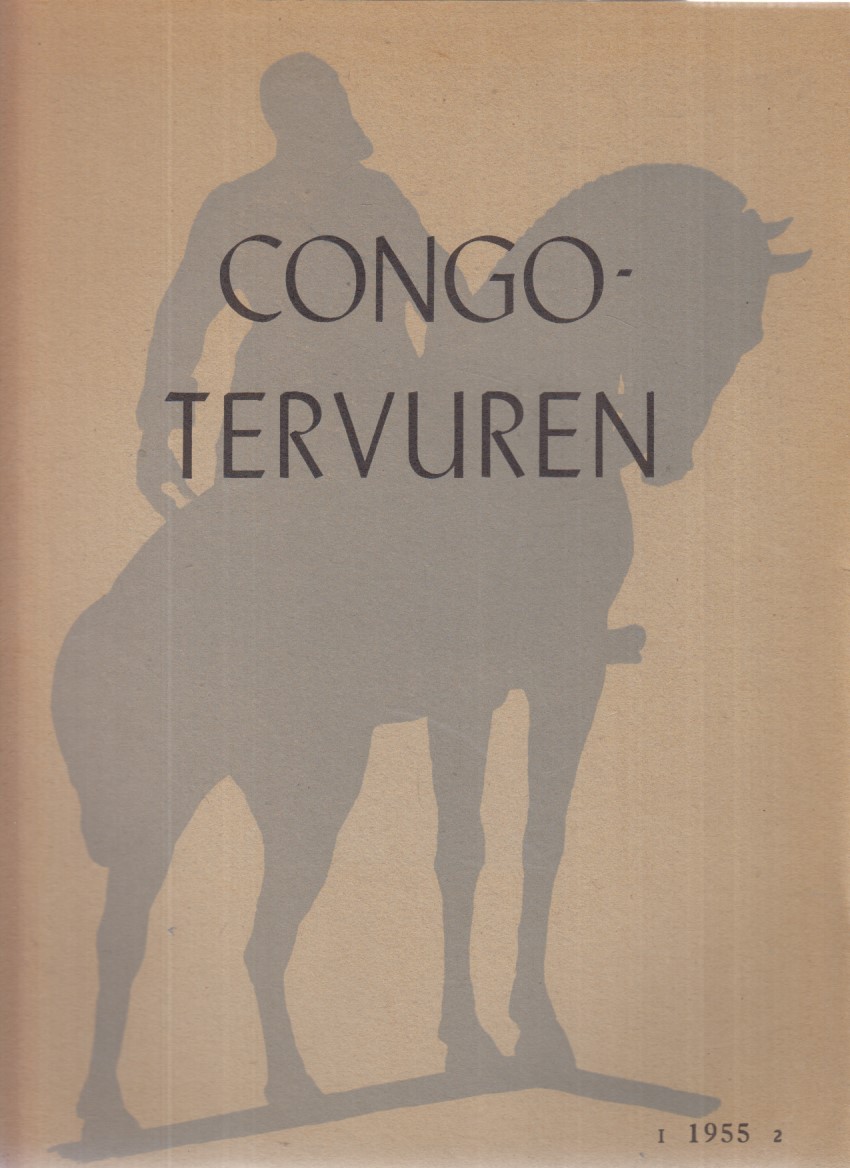
1955Best.-Nr. 1222043Tervuren, 1955. S. (41) - 80; Illustrationen; Kt.; graph. Darst.; 30 cm; geheftet.
1959359pp., 25cm., dans la série "Académie royale des sciences coloniales. Classe des sciences morales et politiques, mémoires in-8" tome 18 fasc.1, brochure originale, bon état, peu commun, C99804
1968In-8, brossura, pp. 275, con 21 ill. in b.n. in tavole fuori testo, alcune cartine nel testo e 2 grandi carte geografiche, più volte ripiegate, fuori testo. Buon esemplare.
Best.-Nr. 13978863Paris: Mouton, 1968 in-8, 275 pages, 21 illustrations hors texte, 8 cartes dont 2 dépliantes. Broché, couverture piquée, autrement bon état, envoi, ex-libris, cachets (Collection Cvilisations et Sociétés 14). EDITION ORIGINALE.
Best.-Nr. 13979162Bruxelles: Les Editions de Belgique, 1934 in-8, 224 pages. Broché, couv. ill. défraichie avec manque angulaire, état modeste. (Collection des auteurs coloniaux).
1899Best.-Nr. 91742London: Her Majesty's Stationery Office 1899. Presumed First Edition First Printing. Wraps. Good. 9 1 pages and 36 pages. Tabular Data. This item has been disbound from a larger volume and now has a stiff blue cover protecting it. The British Central Africa Protectorate BCA was a British protectorate proclaimed in 1889 and ratified in 1891 that occupied the same area as present-day Malawi: it was renamed Nyasaland in 1907. British interest in the area arose from visits made by David Livingstone from 1858 onward during his exploration of the Zambezi area. This encouraged missionary activity that started in the 1860s undertaken by the Universities' Mission to Central Africa the Church of Scotland and the Free Church of Scotland and which was followed by a small number of settlers. The Portuguese government attempted to claim much of the area in which the missionaries and settlers operated but this was disputed by the British government. To forestall a Portuguese expedition claiming effective occupation a protectorate was proclaimed first over the south of this area then over the whole of it in 1889. After negotiations with the Portuguese and German governments on its boundaries the protectorate was formally ratified by the British government in May 1891. As late as 1888 the British Foreign Office declined to accept responsibility for protecting the rudimentary British settlements in the Shire Highlands despite unsubstantiated claims by the African Lakes Company of Portuguese interference with their trading activities. However it also declined to negotiate with the Portuguese government on their claim that the Shire Highlands should be considered part of Portuguese East Africa as it was not regarded by the Foreign Office as under effective Portuguese occupation. In order to prevent Portuguese occupation the British government sent Henry Hamilton Johnston as British consul to Mozambique and the Interior with instructions to report on the extent of Portuguese rule in the Zambezi and Shire valleys and the vicinity and to make conditional treaties with local rulers beyond Portuguese jurisdiction. These conditional treaties of friendship did not amount to the establishment of a British protectorate but prevented those rulers from accepting protection from another state. In response to a Portuguese incursion Johnston's deputy John Buchanan declared a Shire Highlands Protectorate in Johnston's absence despite the contrary Foreign Office instructions. It seems probable that Buchanan's action made without reference to the Foreign Office but following instructions that Johnston had left was to prevent any further advance by the Portuguese rather than to establish British rule in the area. Johnston's proclamation of a further protectorate the Nyasaland Districts Protectorate west of Lake Malawi was also contrary to Foreign Office instructions. However it was endorsed by the Foreign Office in May 1891. This was because the discovery of the Chinde channel in the Zambezi delta which was deep enough to allow sea-going ships to enter the Zambezi which was an international waterway without having to enter Portuguese territory whereas previously such ships had to use the port of Quelimane. There followed an Anglo-Portuguese Crisis in which a British refusal of arbitration was followed by the 1890 British Ultimatum of 11 January 1890. This demanded that the Portuguese give up all claims to territories beyond the Ruo River and west of Lake Malawi. The Portuguese government accepted under duress and ordered their troops in the Shire valley to withdraw to the south bank of the Ruo. This order was received by the commander at Katunga on 8 March 1890 and all Portuguese forces had evacuated Katunga and Chiromo by 12 March. An 1891 Anglo-Portuguese treaty fixed the southern borders of what had been renamed the British Central Africa Protectorate. The treaty also granted Britain a 99-year lease over Chinde a port at one of the Zambezi delta mouths where sea-going ships could transfer goods and passengers to river boats. The northern border of the protectorate was agreed at the Songwe River as part of the Anglo-German Convention in 1890. Its western border with Northern Rhodesia was fixed in 1891 at the drainage divide between Lake Malawi and the Luangwa River by agreement with the British South Africa Company which governed what is today Zambia under Royal Charter until 1924. After this until 1898 troops were used to assist the locally recruited police force to suppress the slave trade. The three main groups resisting British occupation were Yao chiefs in the south of the protectorate and Swahili groups around the center and north of Lake Nyasa both involved in the slave trade and Ngoni people who had formed two aggressively expansionists kingdoms in the west and north. As the northern Ngoni kingdom did not threaten European trading interests as it was far from European-owned estates and as the Scottish mission at Livingstonia was influential within the kingdom Johnston did not use force against it. It accepted British rule in 1904 on condition of retaining its own traditions. Its king was recognized as a paramount chief the only one in the protectorate at that time. Her Majesty's Stationery Office paperback