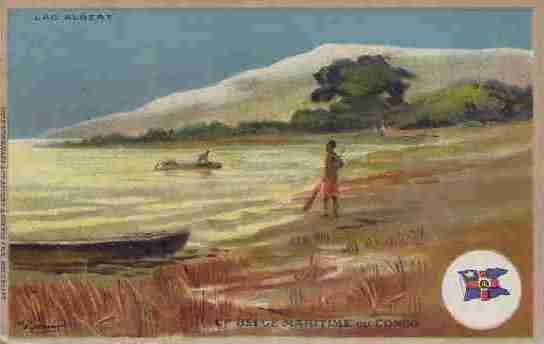
3.083 Ergebnisse
2006112pp., avec de nombreuses illustrations (la plupart en couleurs), 18cm., bon état, C96741
Best.-Nr. PD4Seventeen unmounted gelatin silver prints including six larger ones ca. 12x17 cm ca. 4 ¾ x 6 ¾ in and seven smaller ones ca. 65x105 cm 2 ½ x 4 ¼ in with three images in between those sizes. The majority with manuscript pencil captions in French on verso. The photographs are sharp and in very good condition. This collection includes early views of Boma – the capital of Belgian Congo – its streets and the house of the “Chef Batailon” and three views of Fort de Shinkakasa built near Boma in 1891 also a panorama of the Congo river with the fort on the right and Boma in the distance. Several views of Lusambo show its streets river and a church under construction. There are also photos of a small village on the Kwamouth river and images of local people shown next to their houses with ox driven carts during the cotton harvest etc. “Boma is a port town on the Congo River some 100 km upstream from the Atlantic Ocean in the Bas-Congo province of the Democratic Republic of the Congo. Boma was the capital city of the Congo Free State and Belgian Congo the modern Democratic Republic of the Congo from 1 May 1886 to 1926 when the capital was moved to Léopoldville since renamed Kinshasa” Wikipedia. “Lusambo is a town and territory in the Sankuru district of the Kasai-Oriental province Democratic Republic of the Congo. The town lies north of the confluence of the Sankuru River and the Lubi River. In 1890 Lusambo was chosen by Paul Le Marinel as the main Belgian base in the Kasai region to defend against the threat of Arab or Swahili traders in slaves and ivory who were encroaching from the east. The station would soon become one of the most important military posts of the Congo Free State with a permanent staff of seventeen whites six hundred native soldiers and four artillery pieces” Wikipedia. unknown
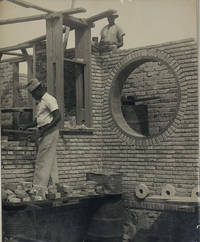
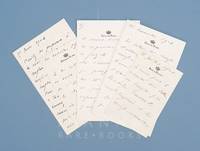
1901Best.-Nr. 100107AG1901. Laeken / Brussels Château de Laeken Palace of Laeken 1901 - 1906. 16 pages of MLS Manuscript Letters signed on 10 leaves of Leopold's official stationery "Château de Laeken" and "Palais de Bruxelles". The leaves with different sizes 135 cm x 9 cm and 18 cm x 115 cm. Excellent condition. Unsigned. Tremendously rare to find original letters by Leopold II on the open market in which the Colonial Free State and the protection against inquisitive visitors is discussed in such clear and instructive fashion. Leopold's correspondence with Adolphe de Cuvelier shows how he is very much trying to still protect and influence the narrative of his Colonial Slavery Outpost even in the final years of his life. Adolphe de Cuvelier 1860-1931 Secretary General of the Ministry of Foreign Affairs of the Congo Free State President of the Syndicate for Studies and Enterprises in Congo. He was given the title of knight in 1893 and baron in 1908 each transferable at first birth. Wikipedia _______________________________ Leopold II French: Léopold Louis Philippe Marie Victor; 9 April 1835 17 December 1909 was the second King of the Belgians from 1865 to 1909 and through his own efforts the owner and absolute ruler of the Congo Free State from 1885 to 1908. Born in Brussels as the second but eldest surviving son of Leopold I and Louise of Orléans he succeeded his father to the Belgian throne in 1865 and reigned for exactly 44 years until his deaththe longest reign of any Belgian monarch. He died without surviving legitimate sons. The current Belgian king descends from his nephew and successor Albert I. Leopold was the founder and sole owner of the Congo Free State a private project undertaken on his own behalf as a personal union with Belgium. He used Henry Morton Stanley to help him lay claim to the Congo the present-day Democratic Republic of the Congo. At the Berlin Conference of 18841885 the colonial nations of Europe authorized his claim and committed the Congo Free State to him. Leopold ran the Congo using the mercenary Force Publique for his personal gain. He extracted a fortune from the territory initially by the collection of ivory and after a rise in the price of natural rubber in the 1890s by forced labour from the native population to harvest and process rubber. Leopold's administration of the Congo Free State was characterised by atrocities and systematic brutality including torture murder and the amputation of the hands of men women and children when the quota of rubber was not met. In 1890 George Washington Williams used the term "crimes against humanity" to describe the practices of Leopold II of Belgium's administration of the Congo Free State. Colonial accounts typically emphasized Leopold's modernizing changes in the Congo and not the mass death he facilitated. These and other facts were established at the time by eyewitness testimony on-site inspection by an international commission of inquiry and the 1904 Casement Report. Modern estimates range from 1 million to 15 million Congolese deaths with a consensus growing around 10 million. Some historians argue against these figures citing the lack of reliable censuses the enormous mortality caused by smallpox and African trypanosomiasis and the fact that there were only 175 administrative agents in charge of rubber exploitation. In 1908 the reports of deaths and abuse and pressure from the Congo Reform Association and other international groups induced the Belgian government to take over the administration of the Congo from Leopold as a new territory Belgian Congo. Wikipedia unknown
1978Best.-Nr. 015567Paris Ader Picard Tajan 1978 In-8 carré Broché, couverture illustrée
1947Best.-Nr. 015999Paris - Drouot Etude Bellier 1947 plaquette in-8 Agrafé, couverture illustrée
Best.-Nr. 136150aaf1906 -1907, album in-4°, qqs cartes avec la signature ms. „MOEHR“ (aussi Möhr (Paul) ), beaucoup de cartes env. a Mlle Cécile Schaeffer à Friboug, vers 1906 -07. (aussi Gustave Moehr employé postale), Album pour cartes postales (dos manquante).
Best.-Nr. 13983493Gand: Imprimerie "Het Volk", 1948 pet. in-4, 96 pages, ill. dans le texte et 4 planches h.-t. coul. Broché, jaquette illustré, petite épidermure à la couv., sinon bel ex.
2006Best.-Nr. C96741Tervuren, MRAC 2006 112pp., avec de nombreuses illustrations (la plupart en couleurs), 18cm., bon état, C96741
2008605pp., 24cm., brochure originale, très bon état, C103912
2008Best.-Nr. C103912Leuven, CPRS 2008 605pp., 24cm., brochure originale, très bon état, C103912
1960Bruxelles, Union Minière di Haut-Katanga, (anni '60) 4to (cm. 28 x 21,5) brossura con alette, copertina illustrata a colori, pp. 38-(30) con numerose illustrazioni e grafici in nero e a colori nel testo, numerose schede illustrate fuori testo.
1956Broch?. 252 pages. 2e plat factice. Envoi d?coup?.
1935IN FOLIO PICCOLO, PP. 312. BROSSURA INTERAMENTE ILLUSTRATA DA FIGURE FOTOGRAFICHE IN NERO. BROSSURA ORIGINALE. DORSO CON PARZIALI MANCANZE. DOCUMENTAZIONE NON COMUNE
1886P., Dreyfous, 1886. Grand in-8 demi reliure rouge de l'éditeur, dos à nerfs caissons décorés, plat en percaline avec encadrements à froid, toutes tranches dorées, XVIII-696 pp. avec 3 cartes hors texte et 2 grandes cartes en couleurs insérées dans une pochette placée sur le dernier contre-plat.
1879Best.-Nr. EXEAFR15Paris, Maurice Dreyfous, [vers 1885]. In-8° relié rexine vert.
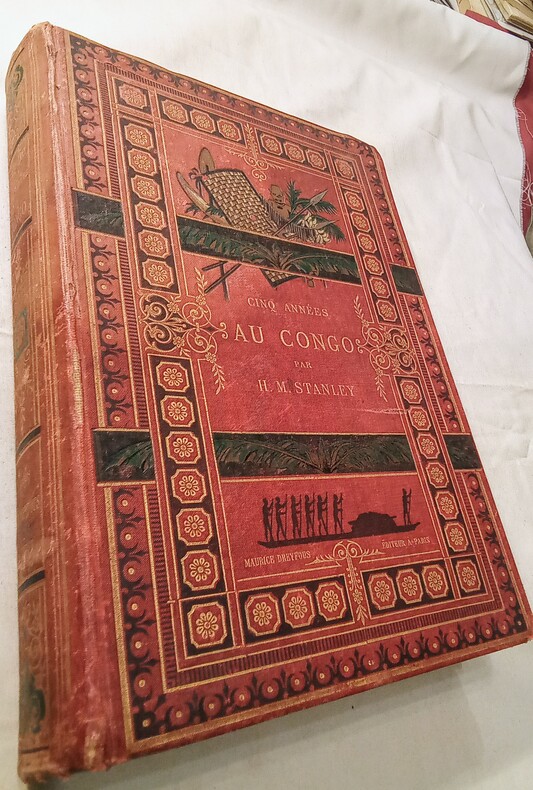
1890Best.-Nr. GITf738Paris Maurice Dreyfous sans date vers 1890. In-8 3 feuillets non chiffrés VIII-XV 2-533pp. Cartonnage de l'éditeur en percaline rouge, dos lisse orné de filets, volutes et végétaux dorés, 1er plat richement décoré d'un large encadrement de frises en noir et doré, traversé par deux bandes noires et vertes (feuilles de palmiers), panoplie africaine polychrome en tête, petite pirogue noire en queue, 2e plat orné de multiples filets, motifs d'angles et fine rosace centrale noirs, tranches dorées. Avec 1 portrait en frontispice, 100 gravures sur bois dont 38 hors texte comprises dans la pagination, 3 cartes hors texte dépliantes en couleurs. Quelques pâles rousseurs par endroits, sans la 4e carte (grande carte murale).
1890Best.-Nr. WOC-1655Voyages – Explorations – Fondation de L'État Libre du Congo. Traduit de l'anglais par Gérard HARRY. Ouvrage illustré de 100 gravures sur bois et de 4 cartes en couleur, dont une Carte murale dressée par H. M. STANLEY (qui manque ici). 2 ème édition. Paris, Maurice Dreyfous, éditeur, sans date (vers 1890). Petit in-4 (26x4x17cm) de percaline bordeaux éditeur orné et passé, charnières et coiffes faibles, tranches dorées et manque la page de garde du plat supérieur. XV,533pp.
1885Best.-Nr. 32531Paris Maurice Dreyfous s.d. [1885] fort vol. grand in-8 demi-chagrin cerise, dosà faux-nerfs orné de filets et caissons dorés, encadrements à froid sur les plats de toile chagrinée, tranches dorées [Rel. de l'époque]
1885Best.-Nr. 217631885 Paris, Maurice Dreyfous, sans date (1885). Grand in4 (285 x 210 mm) percaline rouge ; dos lisse très orné avec auteur, grand titre sur fond bleu & éditeur dorés un peu passé ; 1er plat orné : encadrement de feuillages dorés,titre dorés usé. Tranches dorées. (Reliure d éditeur). Traduit de l anglais par Gérard Harry. Édition originale de la traduction. Ouvrage illustré de 120 gravures sur bois et de 4 cartes en couleur, dont une carte murale dressée par H. M. Stanley. 18-696p dont 97 d annexes. 1 portrait-frontispice de l auteur, sous serpente. 3 cartes hors texte sur beau papier dont 1 plusieurs fois repliée. Sans la carte murale in fine. Quelques rousseurs. cartonnage en état moyen,ors passés
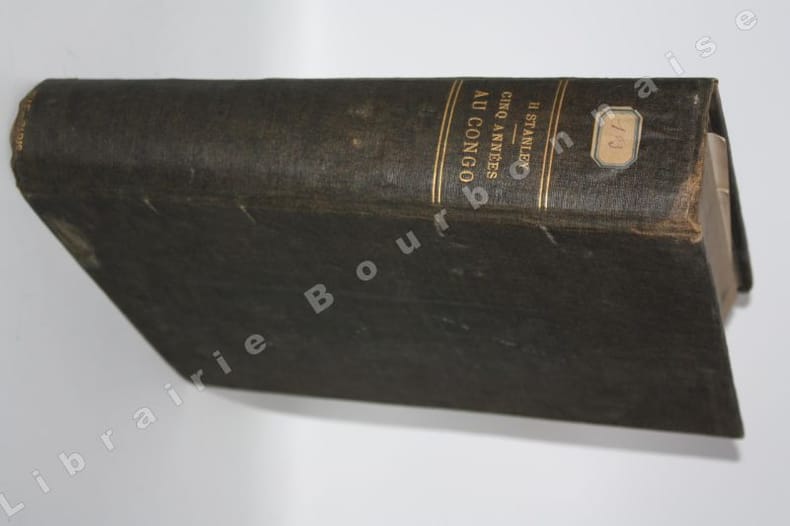
Best.-Nr. 14552Paris, Maurice Dreyfous, s.d. [1885] ; grand in-8. XVIII-696 pp. 2 frontispices hors-texte - 3 cartes dépliantes en deux couleurs - 1 grande carte en couleurs imprimée sur deux feuilles repliées in fine. Déchirures sans manque à la grande carte. Pleine toile noire.
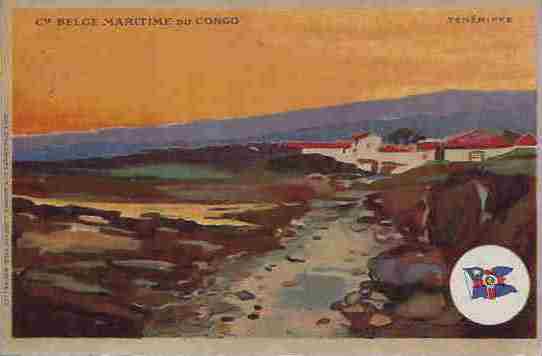
1912Best.-Nr. 25836Anvers, Imp. E. Stockmans & Co. u. Coffin Fils, Bruxelles, 1912. Querformat [2 Warenabbildungen]
1912Best.-Nr. 25835Anvers, Imp. E. Stockmans & Co. u. Coffin Fils, Bruxelles, 1912. Querformat [2 Warenabbildungen]
1912Best.-Nr. 25837Anvers, Imp. E. Stockmans & Co. u. Coffin Fils, Bruxelles, 1912. Querformat [2 Warenabbildungen]
2023Best.-Nr. PEINTUREE9999999990324Paris, In Fine éditions d'art, 2023, 31 x 30, 143 pages sous cartonnage éditeur illustré. Iconographie couleurs. Ouvrage publié à l'occasion de l'exposition "Chéri Samba dans la collection Jean Pigozzi" présentée au Musée Maillol du 17 octobre 2023 au 7 avril 2024. "Peintre congolais, formé chez un peintre d'enseignes, Chéri Samba crée un oeuvre peint dans une palette chromatique riche, vive, contrastée et le plus souvent pailletée comme pour en dédramatiser le sujet. Ayant remarqué que les spectateurs passent devant les tableaux en ne regardant que d'un clin d'oeil, Chéri Samba met également des textes, ou commentaires, au sein de ses toiles. L'écriture attire ainsi l'attention et permet de mieux admirer et pénétrer l'oeuvre. L'artiste qualifie ce style de "griffe sambaïenne" . Pour lui l'art n'a pas de frontière. Les thèmes qu'il aborde sont universels : il met en scène les faits d'actualité, les moeurs, la sexualité, la maladie, les inégalités sociales, la corruption, etc. La peinture de Chéri Samba, emplie d'un humour corrosif, apparaît comme une critique féroce de la vie sociale et politique. Combinant différents styles, ses audacieuses prises de positions picturales se caractérisent par une grande maîtrise du métier, par leur technique et leurs innovations. Chéri Samba traite de la vie de tous les jours, des problèmes, plaisirs et paradoxes que l'on rencontre dans les cultures en mutation rapide, mais il montre aussi l'impact des événements internationaux sur les sociétés africaines."
Best.-Nr. 13979412s. l.: Centre de recherches pédagogiques, 1985 in-8, 111 pages. Bibliographie, index. Broché, bon état d'occasion.