1369 risultati
rif. 28143Éditions Du Seuil In-8 discret cachet de la société de géographie de Tours, 190 pp
1999New English Paperback. Pbo. Roy. 8vo. (24 x 17 cm). In French. 192 p. Les Ottomans, les Safavides et la Georgie 1514-1524.
2003rif. 110091Errance, coll. « Collection des Hespérides » 2003 In-4 broché 25 cm sur 18. 214 pages, couverture illustrée. Ouvrage illustré. Bon état d’occasion.
1895rif. 55141Librairie d’éducation A. Hatier, impr. Ancienne Imprimerie du “Magasin Pittoresque”, coll. « Bibliothèque Anecdotique et Littéraire » 1895 In-8 relié. 127 pages. In-8 21 x 13 cm. Reliure moderne amateur, demi-percaline rouge, dod lisse et muet, 127 pp., illustrations en noir hors et dans le texte. Exemplaire en bon état, légèrement et uniformément jauni.. Bon état d’occasion.
rif. 7796Librairie déducation A. Hatier, coll. « Bibliothèque Anecdotique et Littéraire » In-8° relié. pleine toile de l'éditeur rouge, toutes tranches dorées 111pp pp., illustrations en noir hors et dans le texte. Exemplaire en bon état
1906rif. 22522Paris Juven [1906] grand in-4 percal. rouge de l'éditeur, décor polychrome au dos et sur le premier plat, tranches dorées, minime accroc à la coiffe
1941rif. 28127Paris, Payot 1941 In-8 traduit du russe par G. Welter, avec 2 croquis, 282 pp, de la bibliothèque géographique - discret cachet de la société de géographie de Tours - dos scotché
rif. 13459Paris, JC Lattès, 1960 15 x 24, 500 pp., illustrations en N/B, broché, bon état
rif. 28394P., Lattès, 1990, fort in 8° broché, 500pp. ; illustrations ; couverture illustrée en couleurs ; nombreux passages soulignés au stylo.
1984152pp., avec 124 illustrations (la plupart en couleurs), 30cm., reliure cart. d'éditeur, texte en Français, bon état, S97239
1984rif. S97239Léningrad, Editions d'art Aurora 1984 152pp., avec 124 illustrations (la plupart en couleurs), 30cm., reliure cart. d'éditeur, texte en Français, bon état, S97239
PARIS, Ed.Princesse. 1977 - Grand In-4 Carré, 24 x 32 cms - Cartonnage éditeur sous Jaquette (accroc) illustrée - Gardes illustrées en couleurs - Importante iconographie en couleurs - 96 pages - Bon exemplaire
rif. 20891PARIS, Ed.Princesse. 1977 - Grand In-4 Carré, 24 x 32 cms - Cartonnage éditeur sous Jaquette (accroc) illustrée - Gardes illustrées en couleurs - Importante iconographie en couleurs - 96 pages - Bon exemplaire
1982rif. GITc219Paris Fernand Nathan 1982. Fort in-12 447pp. Reliure éditeur papier toilé bleu bradel, titre doré sur le dos, sous jaquette illustrée. Abondamment illustré de dessins de Raffaelo Segattini et photographies dans le texte ou à pleine page. Bel exmplaire.
rif. 25388Chapelle-sur-Moudon, Ketty & Alexandre 1993, 225x170mm, 178pages, cartonnage de l'éditeur.
1859iv + 550 + [1] pp. illustré de 30 vignettes dessinées d'après nature (dont 16 planches hors-texte) et d'une carte dépliante dressée au dépot topographique de la guerre à saint Petersbourg, avec dédicace autographe par l'auteur à m.le baron P. Desmaisons, 27cm., reliure cart. (plats marbrés, dos en cuir avec titre doré, usage aucx coins), tranches et feuilles de garde marbrées, bon état, rare
1859rif. X86633Paris, Gide 1859 iv + 550 + [1] pp. illustré de 30 vignettes dessinées d'après nature (dont 16 planches hors-texte) et d'une carte dépliante dressée au dépot topographique de la guerre à saint Petersbourg, avec dédicace autographe par l'auteur à m.le baron P. Desmaisons, 27cm., reliure cart. (plats marbrés, dos en cuir avec titre doré, usage aucx coins), tranches et feuilles de garde marbrées, bon état, rare,
1859rif. 54671P., Gide 1859 In-4 18,5 x 27 cm. Reliure demi-toile moderne, IV + 550 pp., 16 planches hors texte, 30 vignettes dans le texte 1 carte dépliante in fine.
2005As New English Original bdg. HC. Demy 8vo. (21 x 14 cm). In English. 400 p., color and b/w ills. Life of outstanding people: Geidar Aliev.
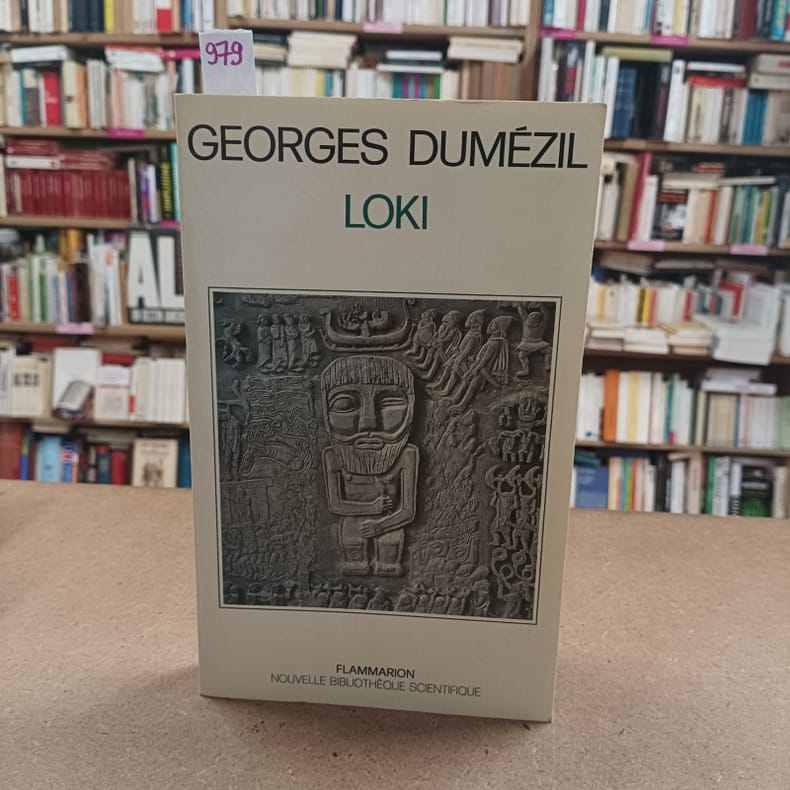
1986rif. 9791986 - broché - Editions Flammarion - Collection Nouvelle Bibliothèque Scientifique, dirigée par Louis Audibert - Nouvelle édition refondue - 1986 - In-8 (22 x 13,5 cm) broché - 261 pages - ISBN : 9782082111591
2000Fine English Paperback. Pbo. Demy 8vo. (21 x 15 cm). In Turkish. [vi], 158 p. Macar Turancilari. Hungarian Turanists. Study aims that the Turanism as one of dominant ideology in Turkey at the beginning of the 20th century was an ideology moved into Turkey by Hungarians (especially Vambery).
2019New Turkish Paperback. Demy 8vo. (21 x 14 cm). In Turkish. 358 p. Maddi buluntulara göre Kuman Kipçaklarda kültürel hayat. A study on social life in Coman / Kiptchak Turks.
2019As New Turkish Paperback. Demy 8vo. (21 x 14 cm). In Turkish. 358 p. Maddi buluntulara göre Kuman Kipçaklarda kültürel hayat. A study on social life in Coman / Kiptchak Turks.
1993Fine English Paperback. Pbo. Roy. 8vo. (24 x 17 cm). In Turkish. 340 p. Magcan Cumabayef Ölenderi. (Magcan Cumabayuli'nin siirleri). Translated by Ferhat Tamir. TURKIC / TURKISH LITERATURE Turkestan Poetry Anthology Central Asia.
1924Very Good Turkish, Ottoman (1500-1928) Paperback. Pbo. 4to. (28 x 20 cm). In Ottoman script. 64 p. Hejra: 1340 = Gregorian: 1924. Özege 11925. First and only edition of Turkmen poet Mahdumkulu (Mahtumkulu)'s diwan in Ottoman Turkish. Mahdumkulu ve yedi asirlik Türkce bir manzume. Annotations and research by [Hüseyin Kazim Kadri], Seyh Muhsin Fanî. Mahtumkulu was an Iranian-Turkmen spiritual leader and philosophical poet who made great efforts to secure independence and autonomy for his people in the 18th century. Magtymguly is widely believed to have been born in the Hajygowshan village near Gonbad-e Qabus city in what is now the Iranian province of Golestan, the northern steppes of which are known as Turkmen Sahra ("Turkmen steppes"). In his poetry, Magtymguly says "Tell those who enquire about me that I am a Gerkez, I hail from Etrek and my name is Makhtumkuli," identifying his homeland as the banks of the Etrek River and expressing his identity through his tribe. He received his early education in the Persian and Arabic languages from his father Döwletmämmet Azady, a leading scholar at that time. He went on to study in various madrassahs, including the Idris Baba Madrassah in the village of Gyzyl Ayak, the Madrassah of Shir Gazi Khan in Khiva, and may have also studied in Bukhara for some time. Upon his return home, Magtymguly worked as a silversmith while he taught and wrote. He went on to develop a realistic style of writing about 18th century Turkmen that proved very popular and ultimately led to him becoming one of the most cherished Turkmen poets of all time. He was also a devout naqshbandi Sufist who was said to have traveled throughout all the lands comprising modern Turkmenistan, teaching and praying for the salvation of his people. Not much is known about Magtymguly's family life. He was unable to marry Mengli, the woman that he loved, yet it seems he was married to someone else. His elder brothers Abdulla and Mahammetsupa disappeared, and his children died young. Magtymguly was also pained by the loss of his father, with whom he had maintained close scholarly relations throughout his life. Some of Magtymguly's poetry, along with stories collected from Turkmen oral traditions, suggest that the poet was taken prisoner at some point in his lifetime, likely in Mashad, Iran. It is unknown who took him captive, yet such events were common in 18th century Iran and Turkmenistan. A servant of the ruler, who was also a Turkmen, allegedly aided Magtymguly's escape. Magtymguly is buried in Aktokay village in north-eastern Iran. The Iranian government has inaugurated a mausoleum on his grave. Magtymguly was one of the first Turkmen poets to introduce the use of the classical Chagatai, the court language of the Khans of Central Asia, as a literary language, incorporating many Turkmen linguistic features. As such, his poetry exemplifies a trend towards increased usage of Turkic languages (as opposed to Persian), and Magtymguly is revered as the founder of Turkmen poetry, literature, and language. Magtymguly is widely revered as holy among Turkmen communities, and his poems are often quoted as proverbs in Turkmen society. Magtymguly made wide use of the qoshuk form of poetry, which features prominently in Turkmen folk songs and is easily adapted to Turkmen musical forms. The qoshuk form consists of quatrains with lines consisting of eight or eleven syllables, and follows a rhyming scheme of ABCB for the first stanza and CCCB, DDDB, etc. for the following stanzas. The compatibility of Magtymguly's poems with traditional musical forms allowed them to be easily adopted by bakhshis, traditional singers. Magtymguly's first poem, "By night when I was asleep... Revelation", was composed following an incident when Magtymguly was a young boy. His parents were attending a wedding, but Magtymguly was sleeping, and they left him behind. As he slept, he began to foam at the mouth, and his parents were called back to the house. When his father awoke him, Magtymguly recited his fir