1397 resultados
2016New Turkish Paperback. 4to. (28 x 20 cm). Papers in Turkish. [xiii], 844 p. 14. Uluslararasi Türk Dünyasi Sosyal Bilimler Kongresi Biildiriler kitabi. 22-23 Agustos 2016, Gostivar - Makedonya.
1988Very Good English Paperback. Pbo. Roy. 8vo. (24x16 cm). In Turkish. 69 p. Kazakhstan events in 1986. 17-18 Aralik 1986, Kazakistan olaylari.
2010As New English Paperback. Pbo. Mint. Roy. 8vo. (24 x 16 cm). In Turkish. 315 p. 18. yüzyilda karisik dilli bir metin: Bahâdur Sâh'in Arz-Nâmesi (Batirsa Aliyev'den Çariçe Elizaveta Petrovna'ya).
1993Fine Turkish Paperback. Roy. 8vo. (23 x 16 cm). In Turkish. 160 p. 1828-1829 Osmanli - Rus Savasi'nda Rumeli'den Rusya'ya göçürülen reâyâ.
1984Fine English Paperback., Fine., 24 x 16 cm., [4], 14 p., "19. yüzyil seyyahlarina göre Orta Kafkaslar'da din.", Mary L. Henze, ODTÜ Yayinlari, Ank.1984. Paperback.Pbo., 24 x 16 cm., [4],14 p., in Turkish, "19.yüzyil seyyahlarina göre Orta Kafkaslar'da din.", Mary L. Henze, ODTÜ Yayinlari, Ank.1984.
1998Good English Paperback. Pbo. Roy. 8vo. (24 x 17 cm). In Turkish. 328 p., 2 huge folding maps. 1917 Ekim ihtilali ve Türk - Tatar Millet Meclisi (Iç Rusya ve Sibirya Müslüman Türk Tatarlarinin Millet Meclisi. 1917-1919).
1999New English Paperback. Pbo. Roy. 8vo. (24 x 17 cm). In Turkish. [v], 119 p. 1926 Bakû Türkoloji Kongresinin 70. Yil Dönümü Toplantisi, 29-30 Kasim 1996.
1986Fine English Paperback., Fine., 24 x 16 cm., [4], 22 p., "1983'de Afgan Savasi: Sovyetlerin kullandigi Nazi tatiklerine karsi güçlenen mücahit direnisi.", Borje Almqvist, ODTÜ Yayinlari, Ank., 1986.
ref. DADAX0190889896New unknown
ref. DADAX019091727XNew unknown
ref. DADAX0190673605New unknown
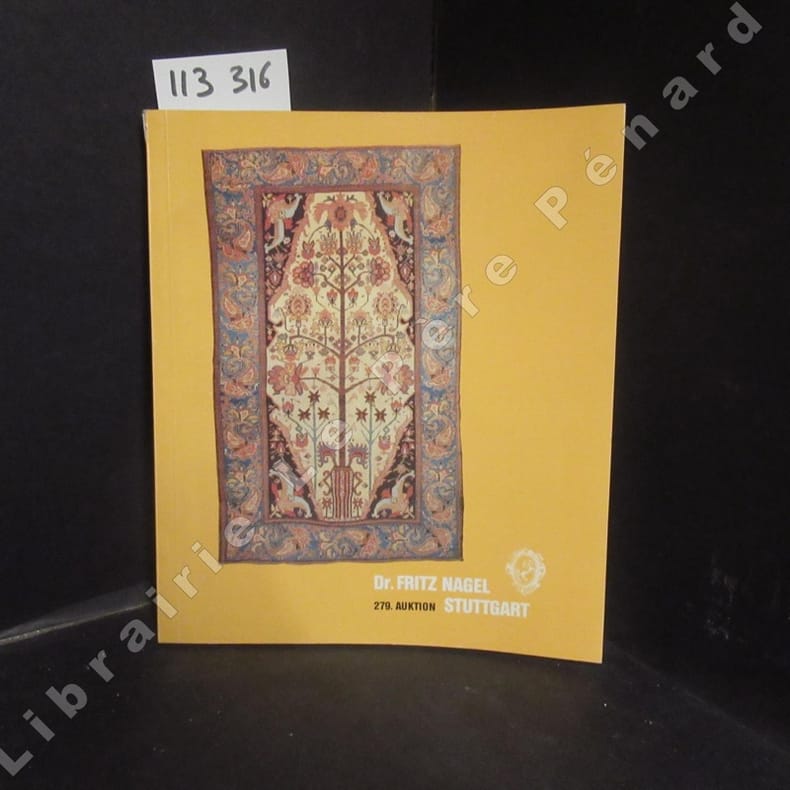
1979ref. 1133161979 Dr. Fritz Nagel, Stuttgart - 1979 - In-4, broché couverture illustrée - 70 pages + 156 planches hors texte - Nombreuses illustrations et reproductions photographiques en couleurs - Texte en allemand
1979ref. 1133171979 Dr. Fritz Nagel, Stuttgart - 1979 - In-4, broché couverture illustrée - 81 pages + 138 planches hors texte - Nombreuses illustrations et reproductions photographiques en couleurs - Texte en allemand
ref. DADAX1436981123New unknown
ref. DADAX0415325927New unknown
ref. DADAX0548256292New unknown
2009New Turkish Paperback. 4to. (28 x 20 cm). Papers in Turkish (with various Turkic / Turkish dialects in Latin and Cyrillic script). [2], [xxv], 1288 p., b/w ills. 6. Uluslararasi Türk Dünyasi Sosyal Bilimler Kongresi: Türk dünyasinda güncel sorunlar ve çözüm önerileri. Many proceedings on Turkish / Turkic and Central Asian geography, religion, education, law, economics, art history, history, linguistics and philology.
2011New Turkish Paperback. 4to. (28 x 20 cm). Papers in Turkish (with various Turkic / Turkish dialects in Latin and Cyrillic script). 1086 p., b/w ills. 8. Uluslararasi Türk Dünyasi Sosyal Bilmler Kongresi: Türk dünyasinda muhtemel is birligi alanlari. 9-13 Haziran 2010, Celalabat-Kirgizistan. Sempozyum tebligleri. Many proceedings under these main chapters: Geography, religion, education, law, economics, art history, history, linguistics and philology.
1922Very Good Turkish, Ottoman (1500-1928) Original Ottoman manuscript historical document. 28x21,5 cm. In Ottoman script (Old Turkish with Arabic letters). 10 lines on 1 p. Signed, and three Ottoman stamps. During the Haydarpasa Fire in 1922, the warning about the Jewish resident of Beyoglu Vitali Efendi's house on Haydarpasa, Mandira Street, where the windows were broken and they were not fitted. The aforementioned warning was prepared by Vitali Efendi's tenant "Abulafya". Transcription in Turkish: "Dersaadet Kâtîb-i Adlîligi Memûriyet-i Valâsina: Efendim, Beyoglu'nda, Tozkoparan'da Bahar Apartmani'nda mukîm Mösyö Vitali Bahar'in Haydarpasa'da, Mandira Sokagi'nda 80 numero ile mudkîm bir bab hanesinde müstecîren ikâmet etmekteyim. Geçen hafta vuku' cevelân harikte, harikin tesîrâti ile hanenin pencerelerinde mevcut camlar kirilip harap olmustur. Kendisine...". The fire in Haydarpasa 1922 came to be known in history as "the Fire of Haydarpasa Çayir", because it broke out in one of the houses in Çayirbasi and spread further. It broke out on July 29, 1922.
1900Very Good Turkish, Ottoman (1500-1928) Modern full leather bdg. in Ottoman style. Foolscap 8vo. (18 x 13 cm). In Ottoman script. 123, [1] p. Kayikla bir cevelân: Karadenizin Irva cihetlerinde icrâ edilen bir seyâhat-i lâtifeyi hakî sairâne sahifeleri, tarihî mülâhazalari, eglenceli fikralari muhtevîdir. 'Kayikla cevelân' [i.e. 'Voyage with a boat'] was written by Yenisehirlizâde Halit Eyüp, the son-in-law of Ahmet Midhat Efendi, one of the shaded names of Turkish literature, in a great style. The book describes a boat trip starting from the Beykoz coast of Istanbul to the Black Sea, Riva shores and its villages in the last period of 19th century. This is a rare book on a Bosphorus voyage. Özege 10469.; TBTK 12174. Only one copy located in OCLC: 634851372 (Universita?tsbibliothek Mu?nchen).
1988Very Good Turkish Paperback. Cr. 8vo. (20 x 14 cm). In Armenian. 20 p., b/w and color ills. [Ancient Armenian script]. ARMENIAN.
1941Very Good Russian Very attractive early Russian edition of this famous Georgian national poem 'The knight in the panther skin', richly illustrated in very well binding. This is a Georgian medieval epic poem, written in the 12th century by Georgia's national poet Shota Rustaveli, and a definitive work of the Georgian Golden Age, the poem consists of over 1600 Rustavelian Quatrains and is considered to be a "masterpiece of the Georgian literature". Original decorative green cloth bdg. with Rustaveli's embossed portrait. Art-nouveau borders on board. Faded titles and decorations on spine. A very good copy. 4to. (27 x 20 cm). In Russian. [5], 315, [7] p., [18] b/w full-paged plates. Shalva Nutshubidze, (1888-1969), was a Georgian philosopher, translator, and public benefactor, one of the founders of the Tbilisi State University (TSU), founder of Alethology. The main fields of scientific activity of Shalva Nutsubidze were: alethology, history of Georgian philosophy, history of the old Georgian literature, Rustvelology, problems of the oriental renaissance. He was also a well-known translator: he translated The Knight in the Panther's Skin of Shota Rustaveli, Visramiani, and other outstanding literary works in Russian. Nutsubidze is co-author of a well-known theory about the identity of Pseudo-Denys Areopagite and Georgian philosopher of the 5th century Peter the Iberian (Theory of Nutsubidze-Honigmann).
1939Very Good German Contemporary black cloth bdg. Original covers in binding. 4to. (27,5 x 20 cm). In German. 173-224 pp. Ownership signature on colophon, some underlined sentences, and markings. Otherwise a good copy. Exceedingly rare separatum of collected and compiled 27 Laz (Lazuri) fairy and folk tales around Rize area of Turkey as well as an introduction and short information on folklorists of Lazistan by Finger. From introduction: "Die nachstehenden Märchen wurden von mir im Jahre 1934 in der kleinen Nahie Kurayiseb'a, etwa 80 km landeinwarts von Rize am Kalopotamos gelegen, aufgezeichnet. Der kleine Han, der wir dort durch etwa 14 Tage bewohnten, war abends Treffpunkt der Jugend des Ortes, und die Märchen wurden mir im Austausch gegen deutsche Sagen und Märchen, die ich erzahlte, mitgeteilt." [i.e. The following fairy tales were recorded by me in 1934 in the small town Kurayiseb'a, about 80 km inland from Rize on the Kalopotamos. Little Han, which we lived there for about 14 days, was the evening meeting place for the local youth, and the fairy tales were given to me in exchange for German sagas and fairy tales that I told]. Josef (Sepp) Finger studied at the Handelsakademie and was employed from 1919 in a Vienna bank. In 1926 he emigrated to Turkey, living in Ankara and Constantinople (Istanbul), traveling around Asia Minor, and working for the Deutsche Orientbank. From 1927 he worked at the Austrian legation in Turkey and the Deutsches Archäologisches Institut in Istanbul and he also organized a zoological study trip through Anatolia. He returned to Vienna at the end of 1934 and was employed by the Österreichisches Verkehrsbüro. After the annexation of Austria, he was employed initially at the Feinstahlwerke in Traisen, Lower Austria, and then as an export manager in Vienna. Finger, who spoke Turkish and several European languages, was employed in 1939 as an interpreter in the Vienna Gestapo censorship department and also joined the SS Security Service (SD) that year. He attended the SS leadership school in Fulda in 1941 and was promoted to SS-Obersturmführer. In 1943/44 he published extensive travel reports, particularly about Turkey, in the Völkischer Beobachter. Until September 1944 he worked in the press censorship department of the Vienna Gestapo and later in Department (Amt) IV (Gestapo) of the Reich Security Main Office in Berlin. He moved to the anti-Communist Department (Amt) VI in February 1945. His last posting was in the special department for combating Austrian resistance. From February 1946 to July 1947 he was detained in the Marcus W. Orr US internment camp in Glasenbach near Salzburg. He said nothing there or during registration as a Nazi about his career in the Gestapo and ultimately lived under a false identity in the Saalfelden area. In 1947 he was transferred to the prison of the Landesgericht für Strafsachen (provincial court for criminal matters) in Vienna, and Volksgericht proceedings were instituted against him under §§ 8, 10, and 11 of the Prohibition Act (registration fraud, illegality, and qualified illegality). Finger claimed that he had been sent to the Gestapo by the employment department and had been used there merely for "subordinate activities". In 1949 the public prosecutor's office in Vienna dropped the case. On several occasions between 1935 and 1944, Finger had given or sold the Museum für Völkerkunde (Museum of Ethnology, now Weltmuseum Wien) objects from the Caucasus, Asia Minor, Persia, and the Middle East. The objects were not identified as having been expropriated by the Nazis, and it is most likely that Finger acquired them during his long sojourns abroad. The Art Restitution Advisory Board took note of a report on the ethnographic items in the Weltmuseum from Finger on 30 November 2012 and a dossier on textiles in the MAK on 26 September 2014. (Lexikon Provenienzforschung online). Only one copy in OCLC: 560570599 (The British Library, St. Pancras of London).
1875Very Good Turkish, Ottoman (1500-1928) Original quarter black leather. Ottoman title-lettered gilt on the spine with decorative elements in compartments. Demy 8vo. (22 x 14 cm). In Ottoman script (Old Turkish with Arabic letters). 459 p., 32 woodcut plates with tissue papers and a folding color map of Khiva calligraphed by Mehmed Vasfi. AH 1292 = Gregorian: 1875. Extremely rare first Turkish edition of this richly illustrated eye-witness travel account of the 1873 Russo-Khivan war and the fall of the Khivan Khanate, by the American war correspondent MacGahan (1844-1878), which was first published in New York in 1874 as "Campaigning on the Oxus and the fall of Khiva", translated by Ahmed Sükrü (?-1876-77) who was the first Postmaster General. After a daring journey through the Kyzil Kum desert, McGahan joined von Kaufmann's army on the banks of the Amu-Darya, shortly before the fall of Khiva. Interesting and lively report with a description of Kazakh- (systematically called "Kirghiz", following the confusing habit of Russian historians) and Yomud Turkmen nomads, as well as of the settled Uzbek, Sart - and enslaved Persians of the Khanate. Probably one of the most complete and objective descriptions of the fall of the Khivan Khanate to three Russian columns which reach it from North and from East, after difficulties due to the climate and the huge distances. The young American makes many friends with Russian officers and gets a lot of information directly from the horse's mouth. There is also a well-documented report about previous Russian attempts to conquer Khiva, which all turned into disasters. The rather civilized behavior of the Russian army with the vanquished Khivans contrasts very much with their cruel and unfair treatment of the brave Yomud nomads, who offer only serious military opposition despite their heavy losses. The Khivan oasis is described as being very fertile and outstandingly well-cultivated. While Mac Gahan is impressed by the beautiful gardens and orchards of the Khanate, he is disappointed by the city of Khiva, the capital, the main residence of its ruler, and the second largest city of the Khanate. Even the Khan's palace (in which he is allowed to spend a few days by the Russian authorities) is disappointing. He visits the treasury room of the palace, in which the fleeing Khan left most of his possessions. He also left his whole harem behind, in his precipitous escape. The text is illustrated with numerous engravings from original designs and paintings by artists (and Russian officers), like Vereschagin and Feodoroff, and enriched with a great number of anecdotes. MacGahan was an American journalist and war correspondent working for the New York Herald and the London Daily News. His articles describing the massacre of Bulgarian civilians by Turkish soldiers and irregular volunteers in 1876 created public outrage in Europe and were a major factor in preventing Britain from supporting Turkey in the Russo-Turkish War of 1877-78, which led to Bulgaria gaining independence from the Ottoman Empire. He learned in 1873 that Russia was planning to invade the khanate of Khiva, in Central Asia. Defying a Russian ban on foreign correspondents, he crossed the Kyzyl-Kum desert on horseback and witnessed the surrender of the city of Khiva to the Russian Army. There he met a Russian Lieutenant Colonel, Mikhail Skobelev, who later became famous as a Russian commander during the Russian-Turkish War of 1877-78. In 1874 he spent ten months in Spain, covering the Third Carlist War. In 1875, he voyaged with British explorer Sir Allan William Young on his steam yacht HMS Pandora on an expedition to try to find the Northwest Passage from the Atlantic to the Pacific. The expedition got as far as Peel Sound in the Canadian Arctic before it met pack ice and was forced to return. OCLC 1014870496.; Özege 7682.; Atabey 744 (Ed. in English).
1878Good Turkish, Ottoman (1500-1928) Contemporary burgundy cloth bdg. Marginal stains on the front board, foxing on pages, period repairs on some papers' margins. Otherwise a good copy. Stamp of "P. I. Kaia Bibliothek" on title page. With an exceptional provenance, from the collection of "S. Kiiliççioglu", who was a collector of books in Ottoman Turkish related to Asia and China. Roy. 8vo. (24 x 17 cm). In Ottoman script (Old Turkish with Arabic letters). 192 p. The very rare first Turkish edition of the narrative of a Hungarian-Jewish polyglot orientalist and traveler's first-hand account as a spy in the British service in disguise through Central Asia. This work was translated by Abdülhalim (1794-1882) who was the father of the famous Turkish writer Samipasazâde Sezai, fifteen years later he met Vambery first in the Rifat Pasha's Konak [ie. Mansion], while Vambery was teaching linguistics. With his journey paid for by Baron József Eötvös, in 1857 he set off for Istanbul, where there was a network of (quarrelsome) Hungarian émigrés. He survived, first, as a cook's lodger in Pera, then in a cold, damp cellar of the Hungarian Association. To make ends meet he sang Ottoman ballads in the meyhanes, wearing Turkish costumes and calling himself, eventually, Reshid Efendi. Then he climbed, went over to Stamboul, the old city, and was taken up by the Rifat Pasha family, to teach the sons (Raif Bey and his elder brother) Western ways. The journey lasted six months and was very dangerous. There were deserts to cross, with bandits, extreme thirst, and sandstorms. Vámbéry and his companions were holy beggars, dependent on charity for survival, but rumours went about that "hadjis" returning from Mecca had concealed treasure, and it was difficult to find boatmen who would take them across the Caspian without being well paid. All the while Vámbéry kept up his alias as a Turkish dervish, past Russians already suspicious of interlopers; and at the end of the road were emirs, in Bokhara, Samarkand, and Khiva, who put foreigners to death or threw them into a snake pit. However, Vámbéry had the presence of mind and the panache for which Budapest Jews are famous and passed himself off. He encountered the Emir of Khiva, who took an interest in him, and they discussed the possible links between the languages. Sorrowfully they concluded that there was nothing much in it - the music perhaps? The emir produced a court orchestra that made native noises. Vámbéry was asked to sing some of his own native music and produced excerpts from Don Giovanni. He went back via Samarkand and the tomb of Tamerlane to Iran, returned to Budapest, and then got himself to England. British representatives in Tehran had become very interested in his activities. Russian railway-building had gone ahead, and within a few years, the Russians had taken over Central Asia - Samarkand in 1868, and Khiva in 1873. The British were alarmed... (Cornucopia). Vámbéry met Dickens (they regularly lunched at the Athenaeum) and he seems to have inspired Matthew Arnold's most famous poem, Sohrab and Rustum. When he wrote his Travels in Central Asia, the publishers were Byron's and Scott's John Murray, the firm to be published by, though they drove a hard bargain. The Travels sold 24,000 copies. "Vámbéry became an instant celebrity in London and the public's fascination with his adventures and linguistic prowess created a huge demand for his original work upon publication in 1864." "I have divided the book into two parts; the first containing the description of my journey from Teheran to Samarcand and back, the second devoted to notices concerning the geography, statistics, politics, and social relations of Central Asia." (From the preface of Vambery for the original edition). Özege 2391.