19.125 risultati
2001rif. 314352001. Softcover. VG. Pictorial wraps. 82 pp. Profuse bw and color plates. Text in Spanish. paperback books
1972rif. 313558San Francisco: Honeywell and Todd 1972. Poster. 29x19.5 inch poster by the underground comix artist depicting a gang fight outside of a restaurant near fine we have purchased the remaining undistributed stash from the artist's estate. Spain born Manuel Rodriguez a prolific contributor to underground comix and an illustrator of posters for the San Francisco Mime Troupe is perhaps best known for his characters Trashman and Big Bitch. He has written and drawn a great deal about his own youthful experience in a motorcycle gang in east Buffalo the Road Vultures. Honeywell and Todd unknown books
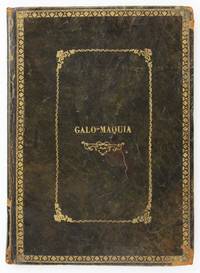
1850rif. 5353Spain 1850. Very good. 45pp. Small quarto. Contemporary calf gilt. A few minor abrasions along spine edges and corners worn. Occasional minor dust-soiling or foxing to text. An intriguing handwritten manual on cockfighting describing different types of roosters and the rules for fighting them presumably produced in Spain in the first half of the 19th century. The subtitle of the work touts it as in English translation "a very useful work for cockfighting fans." The manuscript includes passages with headings such as "Nobleza antiguedad y utilidad del juego de Gallo" "Nobility antiquity and usefulness of the Rooster game" "De las peleas en general" "Of fights in general" "Condiciones para carear la guerra" "Conditions to face war" "Condiciones en las peleas de navaja" "Conditions in knife fights" "Observaciones acerca del acto de las peleas" "Observations about the act of fighting" "De las circumstancias del Gallero de las cosas anexas a su egercicio y de su gratificacion" "Of the circumstances of the Gallero of the things annexed to his exercise and gratification" "Sobre preparacion de los gallos para las peleas de pico" "On the preparation of roosters for beak fights" "Del modo de disponer los gallos para las peleas de navaja" "How to arrange the roosters for knife fights" as well as passages on the rules for fighting and comparing roosters by weight age and other means and more. A substantial portion of the latter part of the manual is devoted to describing about thirty different "Colores de los gallos" and color patterns which include various shades and patterns of "Indio" "Giro" "Canelo" "Blanco" "Prieto" "Pintojo" and "Tabao." The last section contains a "Regimen para curar las enformedades que mas generalmente padecen los gallos" "Regimen for curing diseases that roosters most generally suffer from". Though an undated manuscript the binding appears to emanate from the first half of the 19th century. The ownership inscription and stamp on the first flyleaf indicates the work was owned by Fermin Canella Secades of the University of Oviedo in Spain. Canella Secades lived from 1849 until 1924 so could have owned the work anywhere within those years but the manuscript was most assuredly produced earlier. Though he was a prolific author the handwriting of the ownership inscription presumably belonging to Canella Secades does not match the handwriting in the manuscript and the ownership inscription and stamp were most certainly added later. In any case the present manuscript is a fascinating collection of useful information regarding one of the more esoteric bloodsports in the world which is still legal in parts of Spain and Mexico as well as many other countries and still practiced in numerous places where it's clearly illegal. unknown books
1972rif. 272585San Francisco: Good Times Commune 1972. Newspaper. 28p. folded tabloid underground newspaper news opinion reports actions psychedelia ads illustrations photos lightly-worn else very good on newsprint. San Francisco's longest lasting underground paper. Originally San Francisco Express Times. Cover depicts the Good Times Commune looking mighty pleased with themselves. This issue kicks off the paper's final stretch of existence. Inside: bad news that the Gov't is going to cut off food stamps for members of communes short profile of Steve Gaskin's Farm in Tenn. interview with Jodorowsky about El Topo and more centerspread poster featuring I Ching for the coming year thrown by the staff two full page comix by Harry Driggs and Gary Ratto. Usual ads news items and letters of the era. Good Times Commune unknown books
2002rif. 281135Madrid: Fundacion Caja Madrid 2002. paperback. very good. Many text Illus. some in color. 4to pr. wrs. Madrid: Fundacion Caja Madrid 2002. Very good Fundacion Caja Madrid unknown books
rif. 82079Madrid. hardcover. fine. 490 color illustrations. 4to full black leather gilt silk moire endpapers; slipcase. Madrid: Banco de Espana 1979. Fine. unknown books
1986rif. 49448NY: Russell Sage 1986. First printing. 8vo pp. xxii 286. Bibliography index. The population of the United States in the 1980s. National Committee for Research on the 1980 census. Gray paper over boards. Edges little spotted some notes in pencil o/w a VG tight copy in scuffed dj. Census monograph series. Russell Sage unknown books
1992rif. 47858Chapel Hill NC: University of North Carolina 1992. First printing. 8vo pp. xviii 294. Appendices references index. Illustrated with photographs and drawings. Paper wraps. Top edges little spotted o/w a nice copy. A discussion of gender as determined by the work spaces of men and women. University of North Carolina unknown books
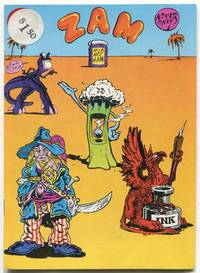
1974rif. 553305San Francisco: Print Mint Comics 1974. Softcover. Near Fine. First edition. 12mo. Stapled illustrated wrappers. Near fine or better with price sticker on covers as usually with many copies. Anthology with work from Robert Crumb S. Clay Wilson Spain Rodriguez and Gilbert Shelton. Print Mint Comics unknown books
1971rif. 553477Berkeley: Print Mint 1971. Softcover. Very Good. First printing. Octavo. Illustrated stapled wrappers. Very good or better with rubbing and light general wear. Print Mint unknown books
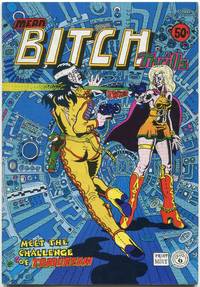
1983rif. 553713Berkeley: Print Mint 1983. Softcover. Fine. First printing. Octavo. Illustrated stapled wrappers. A couple creases at the edges else fine. The final issue of this anthology with contributors from Spain Rodriguez as Algernon Backwash Melinda Gebbie Bill Griffith Kim Deitch Dori Seda Joel Beck and Gilbert Shelton. Print Mint unknown books
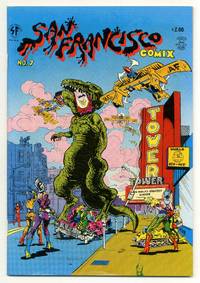
1970rif. 553708San Francisco: The San Francisco Comic Book Co 1970. Softcover. Very Good. First printing. Octavo. Illustrated stapled wrappers. Very good with oxidation at the staples toning to the interior pages and general creasing and rubbing. Contributors include Robert Crumb S. Clay Wilson Dan O'Neill Spain Rodriguez and Rick Griffin among others. The San Francisco Comic Book Co unknown books
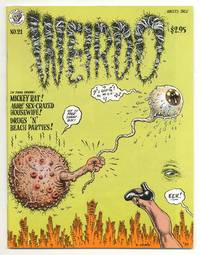
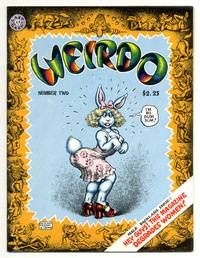
1987rif. 553779Berkeley: Last Gasp 1987. Softcover. Fine. First printing. Magazine. Quarto. Stapled illustrated wrappers. Fine. Comic anthology with contributions from Robert Crumb Spain Rodriguez Mary Fleener Carol Ann Tyler Harvey Pekar Aline Komnsky-Crumb and Robert Armstrong among others. Last Gasp unknown books
1981rif. 553777Berkeley: Last Gasp 1981. Softcover. Fine. Second printing. Magazine. Quarto. Stapled illustrated wrappers. Fine. Comic anthology with contributions from Robert Crumb Spain Rodriguez Terry Zwigoff Harry S. Robins N.F. Pettingill and Aline Komnsky-Crumb. Last Gasp unknown books
1959rif. 95123New York: Golden Press 1959. Hardcover. Near Fine. First edition. Very faint pencil mark on front board else near fine. A Little Golden Book adapted from the screenplay which was itself adapted from a Felix Salten novel. Golden Press hardcover books
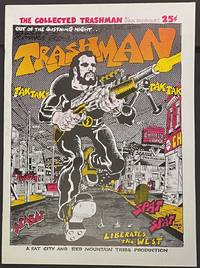
1969rif. 340827Berkeley: Fat City/Red Mountain Tribe 1969. 24p. tabloid newspaper format 11.5x16 inches horizontal fold minor edgewear evenly toned front wrap lightly foxed along bottom edge. Reprints the full-page strips that originally appeared in the East Village Other by the revolutionary underground cartoonist at his 60s finest; published by the Berkeley Tribe at its height. Fat City/Red Mountain Tribe unknown books
2011rif. 326266n.p.: Zeitgeist Films 2011. poster. Large 27x39 inch poster very good featuring a woman wielding a banner inscribed with Marcia Tucker's quote "Every women's success is all of our success. Zeitgeist Films unknown books
1994rif. 313681Italy: Subvert Comix 1994. Pamphlet. 24p. staplebound booklet 9.5x13.25 inches very good. Italian-language translation of the 1969 original published as a supplement to Stampa Alternativa. Subvert Comix unknown books
1969rif. 276303Berkeley CA: Red Mountain Tribe 1969. Newspaper. 24p. folded tabloid underground newspaper articles reviews news opinion events ads comix very good on newsprint. Cover triptych by Spain of a revolver firing with caption "Ooh that felt good!" Also Protesters at Atom Blast. Allen Ginsberg open letter to Secretary of the Treasury David Kennedy. Woodstock: How it Was. Buk's Notes from a Dirty Old Man. Red Mountain Tribe unknown books
1969rif. 262039Berkeley: The Berkeley Barb 1969. Newspaper. 28p. folded tabloid underground newspaper illustrated with b&w photos local ads articles news columns evenly toned else very good on newsprint. Cover is a Spain comic "Manning" on police brutality. Also a "Little Nemo in Slumberland" by McKay. Panther Masai on the recent raids. The Berkeley Barb unknown books
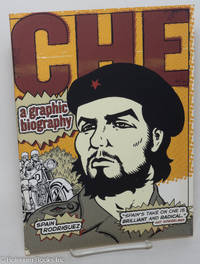
2008rif. 260873London: Verso 2008. Paperback. 106p. b&w comix panels throughout softbound in 10.5x8 inch color wraps; very good condition first paperback printing. Verso paperback books
1969rif. 205231Berkeley: Fat City/Red Mountain Tribe 1969. 24p. tabloid newspaper format 11.5x16 inches horizontal fold minor edgewear. Reprints the full-page strips that originally appeared in the East Village Other by the revolutionary underground cartoonist at his 60s finest; published by the Berkeley Tribe at its height. Fat City/Red Mountain Tribe unknown books
1772rif. EPL79Madrid: Por Joachin Ibarra 1772. Paperback. Near Fine. Single page 149-150. Spanish imprint which dealt with the Conspiracy of the Catiline 65-62 B.C. This particular page dealing with the War of Jugurtha. Printed in Italic type with printed notes in Roman. Wide and clean margins; a good solitary specimen of this important work in Latin literature. Size: 350 x 255mm. Por Joachin Ibarra paperback books
1814rif. 2677Hunthill House Scotland 1814. Written in English in a small and narrow but legible italic hand with occasional corrections or additions in a different hand on wove paper watermarked Budgen & Wilmott / 1812. Four unnumbered pages of French text at front and four at back the latter dated 27 May 1814 in a different hand apparently the author’s on different paper with no visible watermark. Very good; some occasional spotting. Contemporary red straight-grained morocco gilt edges scuffed and scraped joints strained head of spine chipped. An unpublished first-hand memoir filled with searing descriptions of the horrors of war by a French army officer veteran of the terrible Peninsular War. The narrator was one of few survivors of the surrender of French forces after the Battle of Bailén in July 1808. The background to this event was Napoleon's attempt to complete the isolation of England from the continent by sending a French army into the Iberian Peninsula to occupy Portugal and Spain thereby preventing British trade with the Continent. Napoleon later referred to the Peninsular War characterized by appalling cruelty on both sides as the ‘Spanish ulcer’; it was to be one of the primary factors in his downfall. General Pierre Dupont de l'Étang was charged with securing French control of the major cities in Spain. Dupont's 20000 men had initial success but as they penetrated deeper into Spain they faced increasing resistance. This memoir by H. de Montvaillant an 18-year-old Protestant officer from Montpellier who was serving in the second Corps d’Observation of the Gironde recounts the route and experiences of Dupont's army to its furthest point of penetration into Spain: Córdoba. There after a particularly bloody and cruel occupation the army was forced to withdraw and was soon overwhelmed. Dupont surrendered his army at Bailén. Originally promised safe passage most of the French were slaughtered immediately after their surrender. Montvaillant’s account commences with the French arrival in Bayonne in November 1807. By December 22 the French troops had arrived in the town of Vittoria 50 miles west of Pamplona and by January 9 1808 they had advanced to south of Burgos. Detailed descriptions of the monuments churches libraries art and inhabitants of various localities passed through in their zigzagging progress south through French-occupied Spain enliven this first part of Montvaillant’s narrative: he describes with evident pleasure Burgos Valladolid Guadarrama and the Escorial Madrid and Toledo where the troops spent most of May. He makes the acquaintance of many Spaniards. In Toledo a young woman explains to him the contradictions of Spanish women rendered emotionally susceptible by their extreme religious devotion but whose sometimes shocking to the French frankness contrasts with a strict sexual morality. Later he deplores the time wasted in Toledo while the Spanish insurgents were building up their strength. As the French troops proceed southward the local populations exhibit increasing hostility often hidden under excessive politeness. They encounter a Frenchwoman who has fled Bailén saying that she was not safe there because of her nationality but the soldiers assume that she exaggerates. By the end of May the French pass the Sierra Morena and enter Andalusia and the truth becomes evident. It is at this point that the narrative takes on an ominous tone. Montvaillant notes that the population had abandoned the villages taking all foodstuffs. He records that the senior officers had assumed that the army would only be harassed by small bands of “brigands” a far cry from the massive resistance that it encountered: “We learned that the insurgents each day gathered strength and that the Junta of Seville was determined to stop us in our March. The following day we got to the little town Baylen in whose plains two months afterwards our destiny was decided” p. 86. The first battle was engaged at Alcoléa just upstream from Córdoba an event Montvaillant describes in a poem in French transcribed. The next day the French arrived at Córdoba where the Spanish enemy had taken refuge. A musketry attack upon their arrival so enraged General Dupont that “he gave up the town to pillage" p. 88. Allowed to run wild the French soldiers sacked the city committing hideous crimes: “Neither tears promises or humble supplications could arrest the thirst for pillage.” p. 89. Discipline was nonexistent drunkenness and looting continued for eight days. The soldiers raped the women and ransacked homes. Montvaillant presents himself as a savior of women and the elderly on several occasions but notes that some of the Spanish whom he and fellow officers placed under protection in Córdoba were later “the first to persecute the unprotected French prisoners and even those who had been their Benefactors” p. 92. While he does not detail the contents of the soldiers’ plunder it is known that the rich churches of Córdoba were heavily looted. Notwithstanding the circumstances he manages to visit and describes in amazement the great mosque-cathedral scarcely changed in a thousand years. Nine days after the French entrance into Córdoba Montvaillant and his troops were ordered back to Alcolea to guard a bridge crossing. En route there from Cordóba he discovered and graphically describes the many mutilated corpses of the French sick and wounded who had been left along the line of march while the main body of General Dupont's troops had taken Córdoba. “It is almost incredible how people calling themselves Christians could push inhumanity to such an excess” p. 96. The army moved back to Andújar near Bailén and encamped. Montvaillant records that the general staff had by now realized that the French were outnumbered and that the opposition had organized itself. Dupont's army was isolated without hope of reinforcement or re-supply defending a garrison situated on a flat plain in the scorching sun. The narrative becomes one of revenge heat troop dispositions losses tactical mistakes errors of the general staff and increasing difficulties. Dupont's surrender came on July 20 1808 and thus begins the second part of the memoir devoted to the narrator’s experiences as a prisoner of war. The officers were segregated from the defeated army before being escorted supposedly to return to France. Most of the army was slaughtered within days. Montvaillant records details of the survivors’ months-long “death march” southwards to the coast. Having finally arrived at Jerez de la Frontera near Cádiz to await embarkation to France they waited in vain. Their captors kept them in Jerez having discovered that the ruling Junta of Seville had abrogated the surrender treaty and that the inhabitants were planning to massacre them on their approach to Cádiz. Montvaillant’s account is henceforth devoted to anecdotes of captivity and of the prisoner’s horrendous treatment at the hands of their escorts and guards. He is unclear as to exact dates but it seems that the French captives were held at Jerez until mid-December and then hastily driven aboard ships to sail for the Balearic Islands. A severe storm intervened and they were blown off course to Africa finally coming to port at Gibraltar; several days later they were blown back to Andalusia at Málaga. After more storms and much sailing having been at sea 25 days for a voyage which normally took a week they finally made the Balearics. And here the worst surprise of many bad surprises awaited them: the desert island of Cabrera. Montvaillant counts some 4000 soldiers and 400 officers who were forced to survive as best they could on this scorching hot nearly waterless uninhabited island p. 148. Details of his account square with Denis Smith’s monograph on the subject. During the next four years close to 9400 French prisoners of war were exiled to this island; possibly 40% died of disease or malnutrition. The officers as usual fared much better than their soldiers. Montvaillant was one of 216 officers who were collected from this exile after a month and taken to the capital Palma p. 150; another group was sent to Mahon in Minorca. There imprisoned in better circumstances the group waited although the news from outside was threatening as the Spanish "mobs" were calling for their "sacrifice." The officers between attempting escapes were able to conjure up some distractions. The narrator passed the time translating Spanish poems and plays and spending up to eight hours at a stretch playing chess. They also freely imbibed the good Mallorcan wine danced and partied; making do without women Bacchus presided as he delicately puts it. But nearly half these officers were massacred during a riot and assault on the prison by the inhabitants of Palma described by Montvaillant in gory detail pp. 158-162. The survivors were returned to Cabrera in March 1810 as were the officers from Mahon. They found there a diminished population of half-naked walking skeletons. During the next five months spent on Cabrera Montvaillant was nonetheless able to observe a thriving “political economy” on the island where enough food was still provided that the prisoners had the energy for theater productions and dances. Describing the gender-bending that took place as the men playing female roles in the performances instinctively took on conventionally feminine attitudes even to the point of inspiring crushes bickering and jealousy among the audience members Montvaillant comments that the theatrical chronicle of Cabrera would make quite a book ”un bel in folio”- p. 170. In early August Montvaillant and the officers were removed from the island on an English ship — all unhesitatingly leaving their men to rot on the island where they remained for four more years. A diplomatic impasse kept the officers off the coast at Gibraltar for several weeks until they were finally put on ships for Portsmouth and Plymouth. Montvaillaint went on to Salisbury for a short time and then embarked again for Leith en route to his final destination in Scotland where he remained in comfortable exile until the accession of Louis XVIII in 1814. The text is written in an occasionally stilted English a translation from the author’s own French account by a family whom he had befriended at Hunthill House near Jedburgh Scotland where he stationed. Eight pages of notes in French by the author are inserted four pages at the beginning the bifolium is inserted using wax seals and four pages at the end. The French preface contains a romanticized account of the author’s Scottish sojourn including a temptress fairy and concludes with the author’s promise to never forget his friends in Scotland. The English text is preceded by the title-leaf and a one-page dedicatory poem introduced by a statement that these “`Recollections’ in an English Garb are presented by the sincerest of Friends to the Author” and dated Hunt Hill 1 January 1814. Following the narrative in a letter to his family dated from Jedburgh 27 May 1814 Montvaillant explains the history of the manuscript the remaining pages contain literary notes including translations into French of poems by Robert Burns and Sir Walter Scott. During his years of exile in Jedburgh Montvaillant had become deeply attached to the owners of Hunthill House and to their three daughters. Without them he claims he would not have survived the loneliness of his exile. In homage and gratitude he dedicated his memoir to them. His friends retained the original French version as a keepsake of their friend and an engrossing biographical narrative and presented him with this translation which he brought back to France planning to render it anew into French to share with his family and close friends. He emphasizes that he plans to keep the manuscript unpublished; perhaps the memories were too painful. Cf. Denis Smith The Prisoners of Cabrera: Napoleon's Forgotten Soldiers 1809-1814 New York 2001. unknown books
1615rif. 4007Ãvila and La Horcajada 1615. Manuscript on parchment 380 x 270 mm. 18. Complete. Contents: ff. 1r-4v: Regla in Spanish in 30 numbered sections inconsistent numbering on ff. 3v-4v in a rounded script in brown ink the first page slightly larger up to 27 lines. F. 1r: incipit first four lines in large lettering with very large calligraphic initial: En el nombre de dios todo poderoso padre y hijo y espiritu sancto tres personas y una esencia. Section 30 f. 4v added in a slightly later hand. The word Cruz symbolized by a red Maltese cross. Text on ff. 2r-2v underlined in red. Calligraphic initials some with marginal extensions in brown purple or red. Marginal drawings of prickly foliage some in the shapes of fantastic animals. Later marginal notes opposite many sections. Ff. 5r-5v: Heading: Este es traslado de un testimonio followed by two notarial subscriptions on f. 5v one partially in cursive signed and dated Ãvila 11 May 1527 the other in italic partly faded including the date 1615. F. 6r: A cerca de la procession de la Resurrection. After an introductory portion in a small round early 16th-century hand in brown ink the text continues from f. 4v with sections 32-37 of the Regla of which sections 33-37 are in a later sixteenth-century hand; these sections ruled through with light diagonal lines. Signatures or notes in lower margin. F. 6v: blank except for five lines heavily cancelled in red. Ff. 7r-7v: five paragraphs in a fine upright italic hand the first and third with headings in red La orden que han de tener en la procession de la Resurxection sic en la faded and illegible…; La orden que sea de tener en la procession de la Resurretion sic en el domingo de pascua es la siguente. Followed on f. 7v by a note in a different hand dated from La Horcajada 21 May 1550. Ff. 7v-8v and back inner cover: later additions some quite faded. A few later marginal annotations throughout. Rubrication and decoration: headings and line fillers in red a few ornamented line fillers or borders some passages underlined in red or light purple else ruled in dry point numerous calligraphic initials in red or brown ink opening initial with purple filigree extension filling left margin numerous foliate vegetable and zoomorphic ornamental designs in the margins in red purple and brown ink. Binding: stitched into the original parchment cover with title “Regla de la Pasion” in large letters the R with decorative extensions above a large cross in green ink entwined with the snake and in the margins apparently the instruments of the Passion. Condition: rubbing and staining vertical crease from folding causing occasional erasure of text outer edge of first page somewhat rubbed affecting legibility of text some words at line ends helpfully written over in a later hand the inks used in the last two leaves quite faded; wrapper worn and darkened with tears at top and 3 small holes in lower cover. Provenance: Confraternity of the Holy Cross of Horcajada; purchased in France with export license. An early Spanish confraternity manuscript containing the rules and statutes that governed the Confraternity of the Holy Cross referred to as the Cofradía or Hermandad de la Cruz the word Cruz being supplied by a Maltese cross in red of La Horcajada a town located in Castile y León in the province of Ãvila. As in other Roman Catholic countries confraternities or lay brotherhoods played a vital role in community life in Spain functioning as mutual aid societies and venues for laypeople to express their piety and perform charitable acts. Vernacular manuscript confraternity statutes from the Iberian peninsula surface much more rarely than for example their Italian counterparts although it appears that Spain had a larger number of confraternities proportional to the population especially in Castile y Leon than the other Catholic lands. Virtually every community including small villages had at least one confraternity. While exact numbers of confraternities in sixteenth-century Spain are unknown “studies carried out for a number of cities suggest that the number of confraternities and brotherhoods in the Hispanic kingdoms was larger than elsewhere in Catholic Europe. The reasons behind the extraordinary popularity of confraternities and brotherhoods in the Hispanic kingdoms cannot yet be established however in view of the current state of research on the topic. There has been a tendency for scholars to emphasize the confraternity as a primarily urban phenomenon a reflection perhaps of their early development in Italy where they formed an essential part of civic and urban life. In the Hispanic kingdoms however these institutions were equally important in the religious and social life of the small village. Pastoral visitations carried out by the bishops of Cuenca during the sixteenth century found that `nearly every community had at least one brotherhood’ even small villages of 500 inhabitants. A similar pattern prevailed in villages around Toledo during the late sixteenth century” Callahan pp. 18-19. In his article on Spanish confraternities William Callahan further points out their popular nature which “arose from the initiative of the laity rather than the clergy prime examples of the lay piety that began to flourish in late medieval Europe. This piety developed largely on its own uncontrolled by either local bishops or the pope both of whom regarded its manifestations with some suspicion. The resiliency of traditional confraternities and brotherhoods developed from their connection to local religious cultures. It also reflected a fact noted by scholars who have studied specific cities and regions the strongly popular character of membership. There were of course some associations that limited membership to the nobility or clergy but in most cases members were recruited from the popular classes. This was obviously true in the case of peasant villages where only one or two confraternities existed.” pp. 22-23. In spite of the centrality of confraternities to early modern religious life in Spain there is comparatively little modern scholarly literature especially on the rural confraternities. Note the absence for example of any articles on Spain or Portugal in Brill’s recently published Companion to Medieval and Early Modern Confraternities edited by Konrad Eisenbichler. This working manuscript bears witness to this central but understudied aspect of Spanish popular religious culture before the restrictions placed on confraternities by the Council of Trent and succeeding Popes. Consulted frequently and contributed to by members of the confraternity the manuscript includes abundant interlinear and marginal additions and corrections and half- or full-page later additions. The town of La Horcajada is identified in the opening page. Ff. 1r to 5v contain the introduction the first 30 statutes and a notarized testimony with heading “Este es traslado de un testimonio” which relates to the apparently recent establishment of the confraternity. The statutes cover admission of new members general rules of comportment requirements of prayer and confession for feast days and for the canonical hours charity for poorer members of the confraternity chants etc. Several paragraphs relate to processions including required habits and admission of non-members into the processions. On f. 6r a paragraph on the procession de la Resurrection is followed by six entries numbered 32 to 37 of which paragraphs 33 to 37 are in a later 16th-century hand. Several light diagonal lines through these five paragraphs may indicate that they were cancelled. The verso f.6v contains only five lines heavily cancelled in red ink and f. 7r continues discussion of the procession of the Resurrection on a feast day the name of the saint is smudged and on Easter Sunday in a different 16th-century upright cursive. This second section of which portions are difficult to read because of fading ends on f. 7v and is followed by a note in a larger hand dated from La Horcajada 21 May 1550. The final leaf and inner back cover contain later additions some quite faded. One late addition in the lower margin of f. 5v is dated 1615. The manuscript is decorated in a popular style. Some of the leafy plant designs have a thorny look that may reflect local vegetation. Animals and grotesques include a scorpion-like creature birds and possibly imaginary mammals. A witness to the central role played by religious confraternities in early modern Spain bearing the marks of its use and in original condition it is a rare survival and would repay further study. Cf. William Callahan “Confraternities and Brotherhoods in Spain 1500-1800” Confraternitas: The Newsletter of the Society for Confraternity Studies 12:1 2001 17-25. See also William A. Christian Local Religion in Sixteenth Century Spain Princeton 1981; Maureen Flynn Sacred Charity: Confraternities and Social Welfare in Spain 1400-1800 Basingstoke 1989. unknown books