(Garcia, Alonso). Felipe V of SpainBiblio.com
19.873 Ergebnisse
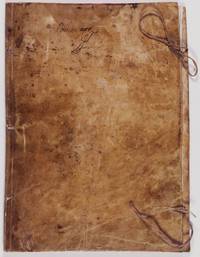
1711Best.-Nr. 50903Alagon Zaragoza Spain 1711. Hardcover. Folio. 12x9". 8 leaves the final leaf backed in paper. Manuscript bound in limp vellum. Protected with 2 paper leaves and 2 maroon silk sheets bound and encased within plain contemporary paper-backed vellum covers with cloth string ties. Contains 2 leaves with gorgeous full-page illustrations elaborately hand-colored in ink and gilt the first depicting the family arms of García the second with the royal arms of Don Felipe within decorative borders. Fine clear cursive hand in black ink within two sets of double-ruled borders 25 lines per page; 7 gold capitals superimposed on a landscape within square black borders mark the sub-sections of the text followed by initial lines in gilt letters. Text and illuminations fine and clean; vellum covers lightly soiled. Text block now loose within covers. Early eighteenth-century illuminated "carta de hidalguia" manuscript a patent of nobility for one Alonso García an inhabitant of Montejo de la Vega de la Serrezuela in the Spanish province of Segovia Castilla and León. The motto appearing on his arms reads: García De Arriba Nadie Diga May No One Speak from Above. The royal decree of King Felipe V is dated 5 May 1711; the document was notarized on 12 June 1711 in Alagón a municipality located in the Spanish province of Zaragoza. In addition to the notarial stamp of the king Yo el Rey at least four witnesses have signed the manuscript on the final page. The document concludes with the formula: "El Mgd. Majestad hace merced à Alonso García vecino y natural del lugar de Montejo de la Vega de que por los días de su Vida pueda gozar; y ser reputado en la dicha Villa y demas partes que residiere por hijodaldgo y obtener las preheminencias que por ello le tocaren." The Majesty grants Alonso García a resident and native of Montejo de la Vega that he may enjoy for the days of his life and be well-regarded as a noble in that town and other places in which he may reside and obtain the privileges to which he is entitled. References: Revista de historia y de genealogía española 1912-1931 p.102: Alonzo García is noted in a list of those ennobled in the State of Castilla Castile since the year 1710. hardcover
1711Best.-Nr. 50903Alagon Zaragoza Spain 1711. Hardcover. Folio. 12x9". 8 leaves the final leaf backed in paper. Manuscript bound in limp vellum. Protected with 2 paper leaves and 2 maroon silk sheets bound and encased within plain contemporary paper-backed vellum covers with cloth string ties. Contains 2 leaves with gorgeous full-page illustrations elaborately hand-colored in ink and gilt the first depicting the family arms of García the second with the royal arms of Don Felipe within decorative borders. Fine clear cursive hand in black ink within two sets of double-ruled borders 25 lines per page; 7 gold capitals superimposed on a landscape within square black borders mark the sub-sections of the text followed by initial lines in gilt letters. Text and illuminations fine and clean; vellum covers lightly soiled. Text block now loose within covers. Early eighteenth-century illuminated "carta de hidalguia" manuscript a patent of nobility for one Alonso García an inhabitant of Montejo de la Vega de la Serrezuela in the Spanish province of Segovia Castilla and León. The motto appearing on his arms reads: García De Arriba Nadie Diga May No One Speak from Above. The royal decree of King Felipe V is dated 5 May 1711; the document was notarized on 12 June 1711 in Alagón a municipality located in the Spanish province of Zaragoza. In addition to the notarial stamp of the king Yo el Rey at least four witnesses have signed the manuscript on the final page. The document concludes with the formula: "El Mgd. Majestad hace merced à Alonso García vecino y natural del lugar de Montejo de la Vega de que por los días de su Vida pueda gozar; y ser reputado en la dicha Villa y demas partes que residiere por hijodaldgo y obtener las preheminencias que por ello le tocaren." The Majesty grants Alonso García a resident and native of Montejo de la Vega that he may enjoy for the days of his life and be well-regarded as a noble in that town and other places in which he may reside and obtain the privileges to which he is entitled. References: Revista de historia y de genealogía española 1912-1931 p.102: Alonzo García is noted in a list of those ennobled in the State of Castilla Castile since the year 1710. hardcover books
1958Best.-Nr. 5769Stuttgart, Metzler, 1958. 234 S., 1 Bl. OLeinen mit OSchutzumschlag. Gr.-8°.
1803Best.-Nr. 20964Leipzig, Gräff, 1803. XXIV, 293 SS., 1 Bl. Vlgs.-Anz.; IV, 291 SS. 8°. - 18,5:11 cm. Blaue Interims-Umschläge der Zeit mit Rückenschild.
Zaragoza, Ayuntamiento, 1946. 4to. mayor; 151 pp. Ilustraciones fotográficas. Cubiertas originales.
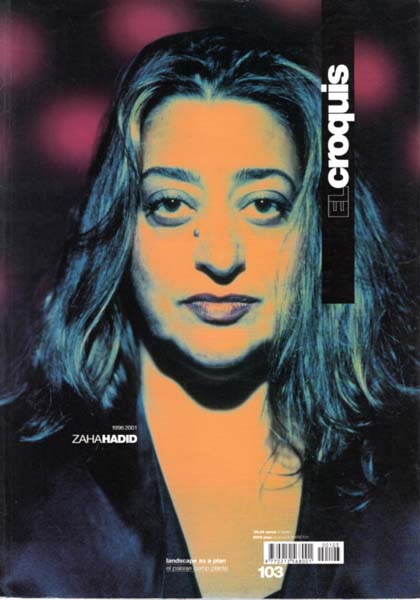
2000Best.-Nr. 68189ABMadrid., El Croquis Editiorial., 2000. 34 x 24 cm. 243 S., 2 Blatt. Illustrierter OKarton mit OKlappenumschlag., 68189A Erste Auflage. Einband minimal berieben, Rücken stärker lesespurig, Bindung gelockert, sonst gutes Exemplar.
1977Best.-Nr. 26101Ediciones Poligrafa, Barcelona., 1977. 358 S. 4°, OLn mit ill. OU.
1974Best.-Nr. LITTESPAGNE620222Paris, Editions Hispaniques, 1974, 16,5 x 25, 488 pages cousues sous couverture souple imprimée.
1982Best.-Nr. A224(München, Thiemig, 1982). Erste Ausgabe. Umfassende Darstellung der großen Spanischen Kunst seit der Renaissance bis zum Barock. Der hübsche Katalog in sehr frischem Erhaltungszustand.
Best.-Nr. 1917A Cologne, chez Pierre le Sincere, M.DCC.XIX. (1719). In-12 relie plein veau,dos à nerfs orne, piece de titre rouge, 446 pages. Marque de possession en lettre dorees sur le premier à-plat "DE CIRFONTAINE" et cachet "Pissot Nore / à Joinville" Dans un ovale en page deux.Bon etat.
1951Best.-Nr. c63971951 Paris, Lubineau, 1951 ; in-4° en feuilles, couverture crème rempliée illustrée sur tout le 1er plat d'un burin de Josso, titre en noir au dos, chemise cartonnée rouge avec titre doré au dos, étui cartonné doré bordé de rouge; 115pp. Illustré de 23 burins originaux de C. P. Josso, 1 pour la couverture, 1 en frontispice , 3 à pleine page, 15 dans le texte à mi-page et 3 lettrines. Tirage total à 390 exemplaires sur vélin d' Arches. Notre exemplaire, en plus de l'état définitif des 23 gravures, possède une suite ajoutée de 19 burins, dont certains avec remarque (soit tous les burins sauf 1 vignette du texte et les 3 lettrines) et est enrichi à la page 47, sous la dédicace imprimée à Maria-Pia Chaintreuil, d'un dessin original à l'encre bleue accompagné d'une belle dédicace autographe signée de l'artiste. Ce recueil renferme 3 nouvelles : Peau d'Espagne. Pavane pour une infante défunte. L' Exode de Monsieur le Marquis de Herrera.
1992Best.-Nr. 059560Valencia., 1992. Sueca: Generalitat Valenciana. Conselleria de Cultura, Educació i Cìencia. 53(2) Seiten mit Abbildungen, teilweise farbig, im Text. Zustand: Der Schutzumschlag ist an den Rändern minimal gebräunt. Erschien im Kulturprogramm der Comunidad Valencia zur EXPO92, Seville. 4°. (31 x 24 cm) OKarton mit OUmschlag.
1973Paper wrappers, 8vo. , 193 pages. In Spanish. Inscribed by the author to Joseph Gutmann. Illustrated throughout with photographs and facsimile, includes fold out. SUBJECT (S) : Synagogue architecture -- Spain. Synagogues -- Spain. Inscriptions, Hebrew -- Spain. Includes bibliographical references. Prologue by José Camón Aznar. Light wear to cover. Good + condition. (SEF-31-9)
1979Softcover, 8vo, 18 pages, illustrated, 22 x 28 cm. Loaded with photos of synagogues and sites. SUBJECT (S) : Jews -- Spain. Spain -- Description and travel. Booklet folded in half. Light wear to cover edges and corners. Very good condition. (Art-11-16)
1977Hardcover, 8vo, xi, 556 pages. In Hebrew; Series: Sifriya le-toldot ha-yishuv ha-yehudi be-Erets-Yisra? El; Quntresim; 6; Variation: Sifriya le-toldot ha-yishuv ha-yehudi be-Erets-Yisrel. ; Quntresim; 6. OCLC lists 2 copies worldwide (Danish Union, DET Kongelige Biblitek) . Light wear. Very good condition. (Sef-25-27)
1974Original Cloth. 8vo. XXI, 331; XVIII, 235 pages. 23 cm. In Hebrew. Summaries in English. Volumes one and two: East and Maghreb, Researches in the History of the Jews in the Orient and North Africa. Kerekh 1. 'arukh bi-yede H. Z. Hirshberg; be-hishtatfut E. Bashan - kerekh 2. Ba-'arikhat Eliezer Bashan, Avraham Rubinstein, Shim'on Shvartsfuks. Volume one includes ten essays and eight plates (including three maps) : with essays on Sephardim and Ashkenazim in the Ottoman Empire, the economic basis of Yeshivot in the Ottoman Empire, structure of the Rabbinate in the Ottoman Empire, Emancipation of Tunisian Jewry, etc. Volume two contains eleven essays: Divorce proceedings in Cairo Genizah documents, the Sages of Salonika, Responsum of R. Haim Capusi, Elegies of Rabbi Shalom Shabazi, Hebrew Printing in the Maghreb, Sephardi Rabbinical Emissaries to the Maghreb after World War 1, etc. Subjects: Jews - Turkey. Judaism - Turkey. Jews - Africa, North. Judaism - Africa, North. Ethnic relations. Institutional stamp on endpage, light water staining to upper margins, otherwise clean and fresh. Good condition. (SEF-53-18)
1965Hardcover, 8vo, 482 pages. S. 479-482: Americo Castro. Selected bibliography. The Richard Kronstein foundation for the promotion of Jewish and cognate studies. Castro (18851972) , was a Spanish historian and literary critic. Castro was a professor at the University of Madrid and later at Princeton University. He interpreted the culture and history of Spain as a result of the coming together of Christianity, Islam, and Judaism, which created a peculiarly Hispanic form of life, different both from the East and from the civilization of Western Europe. The expulsion of 1492 was in Castro's view the result of uncontainable pressures from below. He believes that the preoccupation with purity of lineage in Christian Spain from the 15th century on was a transfer of a Jewish concept, due to the infiltration of converts into Christian society. The use of secrecy and informers by the Inquisition was a continuation of methods used by Jewish tribunals. Ultimately, according to Castro, it was the Jews and their descendants the Conversos who were responsible for the discrimination by the Spaniards against the New Christians because of the latter's blood or race and for the cruel and unjust methods employed by the Inquisition and the maltreatment of those who were brought to trial before it. These were all derived from Jewish sources and traditions. Castro relied on "evidence" from the Bible, from the origin of the Spanish aristocracy, from medieval Jewish authors like Santob de Carrion (Shem Tov ben Ardutiel) , R. Moses Arragel, R. Asher ben Yehiel, R. Solomon ben Adret, and others. Castro's evidence is based entirely on a basic misunderstanding of the sources, of the Jews' understanding of the biblical text, and of the essence of Jewish law (Scholberg in EJ 2007) . OCLC lists 1 copy worldwide (National Library of Sweden) . Heavily warped by waterdamage, but completely usable with no explicit damage (plates were not printed on glossy paper, but rather high-grade flat paper, so they did not stick) . Ex-library with usual markings. Staining to cover. Staining on edges of pages. Good condition. Important and scarce. (Sef-18-17)
1883Hardcover, 8vo, 16, 112 pages. In Hebrew. 1st edition. Sefer ohole Shem. Kohen-Zedek (18271903) , was a Hebrew poet, writer, and publicist. Kohen-Zedek, who was born in Lvov, studied rabbinics with Solomon Kluger in Brody and S. J. Nathanson in Lvov. He first engaged unsuccessfully in business and then turned to literature and journalism. He published a number of collections of his patriotic poetry in honor of the Austro-Hungarian emperor from whom he received a gold medal for art and science in 1851 and an anthology of contemporary poetry dedicated to Moses Montefiore, Neveh Kehillah. Kohen-Zedek edited a number of more or less short-lived Hebrew periodicals: Meged YeraIm, OAr khokhmah, Ha-Yehudi ha-NiI, and Or Torah. His weekly Ha-Mevasser, which included a literary supplement, Ha-Nesher, was the first Hebrew paper in Galicia; some of the best Hebrew writers and scholars contributed to it. He himself wrote in a lively and original meli? Ah style . Of some scholarly importance are his Sefat Emet, a polemic against Michael Rodkinson; Ohole Shem: Tents of Shem, Being an Account of the Trial of Jacob and Isaac of the City of Madrid in the Year 5202, on blood libels; Divrei ha-Yamim le-Malkhei Arefat, an edition of Joseph ha-Kohen 's chronicle with Kohen-Zedeks introduction; and Even Bohan, an annotated edition of Kalonymus b. Kalonymus satirical work. He has been called "the last publicist of the Galician Haskalah"(Kressel in EJ, 2007) . OCLC lists three copies worldwide (Columbia, Hebrew U, Staatsbibliothek Zu Berlin) . ATtractive gold embossed border on cover. Wear to backstrip. Hinges repaired. Bookplate on inside front cover. Other wise good condition. (Rab-46-20B).
1909Original Paper Wrappers. 8vo. 8 pages. 25 cm. In Italian and Hebrew. Title translates to English as, On the History of the Pro-Falasha Movement: Two Documents. SUBJECT (S) : Jews, Ethiopian. Estratto dalla Rivista Israelitica, anno 6, n. 4-5 [Offprint from Jewish Journal Year VI, No. 4-5]. OCLC lists four copies of this offprint (Univ. Of California in Los Angeles, Univ. Of California S Regional Library, Hebrew Union College, Univ. Of Manchester) . Jewish institutional imprint on cover; light chipping at edges. Good condition. (SEF39-30)
1913Original Paper Wrappers. 8vo. 12 pages. 25 cm. In Italian. Title translates as, The Falasha. SUBJECT (S) : Jews, Ethiopian. Dalla Nuova Antologia: 1o Febbraio 1913. [Offprint from New Anthology, February 1, 1913]. Pages tanned with some chipping at edges; spine repaired. Good condition. (SEF39-29)
1971Best.-Nr. 99181971 Editions Le Musée de Poche, 1971, broché, couverture souple d'édition illustrée couleurs à rabats, 156 pages, listes des oeuvres de l'artiste. Importante iconographie (photos de sculptures, dessins préparatoires...). Bon exemplaire.
Best.-Nr. 8941PARIS, Arnould Ed. - ss date - In-16 (8x12) - 1/2 reliure, dos lisse avec titre et fleurons dorés - Tranche dorée - Gardes jaspées -Frontispice et quelques illustrations HT de A. Robida - 360 pages
PARIS, Arnould Ed. - ss date - In-16 (8x12) - 1/2 reliure, dos lisse avec titre et fleurons dorés - Tranche dorée - Gardes jaspées -Frontispice et quelques illustrations HT de A. Robida - 360 pages
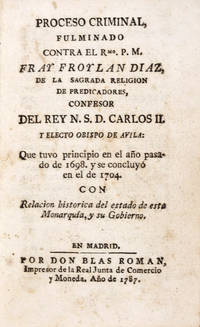
1788Best.-Nr. 28844Madrid: Don Blas Román; Don Antonio Espinosa Criticos Documentos; D. Joseph Doblado Apendice 1788. First edition. Hardcover. fair. 16mo. 230 2 277 1 4 146pp. Original full calf with gold lettering on spine. All edges red. Marbled endpapers. Fascinating work on the trial of Dominican Froilan de Llanos who was the official confessor of Charles II of Spain. Fray Froylan Diaz de Llanos was convinced that the king's poor health was a result of a spell cast on him. In 1698-1699 under the Head Inquisitor Juan Tomas de Rocaberti's supervision he performed a series of exorcisms over the king after which he stated that Charles II was indeed under the influence of evil forces for which various persons from the royal court were responsible among others Queen Maria Anna of Neuburg. When the queen found out about the accusations against her Froylan Diaz de Llanos was dismissed from the post of royal confessor and transferred to the diocese of the city of Avila and subsequently arrested by the Tribunal of the Inquisition on charges of heresy. Some age wear on binding with rubbing on spine and along edges. Minor and sporadic foxing throughout. Binding in overall good- to good interior in very good condition. Don Blas Román; Don Antonio Espinosa (Criticos Documentos); D. Joseph Doblado (Apendice) hardcover
1788Best.-Nr. 28844Madrid: Don Blas Román; Don Antonio Espinosa Criticos Documentos; D. Joseph Doblado Apendice 1788. First edition. Hardcover. fair. 16mo. 230 2 277 1 4 146pp. Original full calf with gold lettering on spine. All edges red. Marbled endpapers. Fascinating work on the trial of Dominican Froilan de Llanos who was the official confessor of Charles II of Spain. Fray Froylan Diaz de Llanos was convinced that the king's poor health was a result of a spell cast on him. In 1698-1699 under the Head Inquisitor Juan Tomas de Rocaberti's supervision he performed a series of exorcisms over the king after which he stated that Charles II was indeed under the influence of evil forces for which various persons from the royal court were responsible among others Queen Maria Anna of Neuburg. When the queen found out about the accusations against her Froylan Diaz de Llanos was dismissed from the post of royal confessor and transferred to the diocese of the city of Avila and subsequently arrested by the Tribunal of the Inquisition on charges of heresy. Some age wear on binding with rubbing on spine and along edges. Minor and sporadic foxing throughout. Binding in overall good- to good interior in very good condition. Don Blas Román; Don Antonio Espinosa (Criticos Documentos); D. Joseph Doblado (Apendice) hardcover books