8031 resultados
ref. 0260956090.Ghardcover. Good. Access codes and supplements are not guaranteed with used items. May be an ex-library book. hardcover
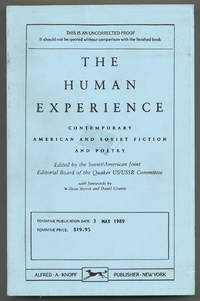
1989ref. 578465New York: Alfred A. Knopf 1989. Softcover. Near Fine. Uncorrected proof. Blue wrappers. Forewords by William Styron and Daniil Granin. A shadow from sticker removal on the front wrapper thus near fine. Alfred A. Knopf unknown
1960ref. 556565Jerusalem: The Israel Program for Scientific Translations 1960. Hardcover. Fine/Near Fine. First English-language edition. Quarto. 484pp. Illustrated with charts and graphs. Owner stamp and signature of a noted American psychologist on the front fly. Top corners of boards and about half the text modestly bumped else a fine copy in a close to fine dust jacket with a corresponding gentle bump and tiny abrasion. Published for two American institutions: The National Science Foundation and The Department of Health Education and Welfare. First published in Russian in 1955. This publisher The Israel Program for Scientific Translations was founded by future mayor of Jerusalem Teddy Kollek in 1959. He is quoted in a 1970 article in The New York Times: "There was a keen need in the West for technically sound translations of Soviet scientific works soon after the launching of Sputnik. We had numerous immigrants with exceptional linguistic and scientific ability so we just put demand and supply together.” The venture began modestly—with a small government grant and five editors—but by 1970 had over 100 editors and published about 150 English-language titles a year. A nice copy of a relatively uncommon title. The Israel Program for Scientific Translations hardcover
1972ref. G39302Leningrad: Nauka. Very Good/No Dust Jacket. 1972. First Edition. Hard Cover. 4to - over 9¾" - 12" tall Used In blue cloth with gilt titling 4to 231pp. Copy of program to the symposium laid in. light browning to pages from age. . Nauka hardcover
1954ref. 21263Research program on the u.s.s.r. 1954. Trade paperback in fine condition. Soft cover. Fine. Research program on the u.s.s.r. Paperback
1984ref. 2iEh0028bMoscow U.S.S.R. Russia: Finansy/Published by Statistika Publishers 1984. Book. Very Good. Mass Market Paperback. 12mo or 12° Duodecimo: 6¾" x 7¾" tall. 239 pp. A rare hard-to-find out-of-print true collectible gem! A wonderful copy! Solidly bound copy with minimal external wear crisp pages and clean text. Bottom right corner of front cover bent. Finansy/Published by Statistika Publishers Paperback
1937ref. 80372Moscow: The People's Commissariat of Justice of the U.S.S.R. 1937. Presumed First Edition First printing thus. Hardcover. Fair. 22 cm. 8 580 pages. Cover very worn and soiled. Hindges weak. Edges rubbed and corners bumped. Some moisture staining at bottom all pages separate and text complete. This second purge trial involved 17 lesser figures including Karl Radek Yuri Pyatakov and Grigory Sokolnikov. Alexander Beloborodov was also arrested and intended to be tried along with Radek but did not make the confession required of him and so he was not produced in court. Thirteen of the defendants were eventually executed by shooting. The rest received sentences in labor camps. Radek was spared as he implicated others including Nikolai Bukharin Alexei Rykov and Marshal Mikhail Tukhachevsky setting the stage for the Trial of Military and Trial of the Twenty One. Radek provided the pretext for the purge on a massive scale with his testimony that there was a "third organization separate from the cadres which had passed through Trotsky's school" as well as "semi-Trotskyites quarter-Trotskyites one-eighth-Trotskyites people who helped us not knowing of the terrorist organization but sympathizing with us people who from liberalism from a Fronde against the Party gave us this help." By the third organization he meant the last remaining former opposition group called Rightists led by Bukharin. At the time many Western observers who attended the trials said that they were fair and that the guilt of the accused had been established. They based this assessment on the confessions of the accused which were given in open court without any apparent evidence that they had been tortured or drugged. The Moscow Trials were a series of show trials held in the Soviet Union at the instigation of Joseph Stalin between 1936 and 1938 against Trotskyists and members of Right Opposition of the Communist Party of the Soviet Union. There were three Moscow Trials: the Case of the Trotskyite-Zinovievite Terrorist Center Zinoviev-Kamenev Trial aka "Trial of the Sixteen" 1936 the Case of the Anti-Soviet Trotskyist Center Pyatakov-Radek Trial 1937 and the Case of the Anti-Soviet "Bloc of Rights and Trotskyites" Bukharin-Rykov Trial aka "Trial of the Twenty-One" 1938. The defendants of these were Old Bolshevik party leaders and top officials of the Soviet secret police. Most defendants were charged under Article 58 of the RSFSR Penal Code with conspiring with the Western powers to assassinate Stalin and other Soviet leaders dismember the Soviet Union and restore capitalism. The Moscow Trials led to the execution of many of the defendants. They are generally seen as part of Stalin's Great Purge an attempt to rid the party of current or prior oppositionists especially but not exclusively Trotskyists and any leading Bolshevik cadre from the time of the Russian Revolution or earlier who might even potentially become a figurehead for the growing discontent in the Soviet populace resulting from Stalin's mismanagement of the economy. Stalin's hasty industrialization during the period of the First Five Year Plan and the brutality of the forced agricultural collectivization had led to an acute economic and political crisis in 1928-33 a part of the global problem known as the Great Depression and to enormous suffering on the part of the Soviet workers and peasants. Stalin was acutely conscious of this fact and took steps to prevent it taking the form of an opposition inside the Communist Party of the Soviet Union to his increasingly totalitarian rule. The People's Commissariat of Justice of the U.S.S.R. hardcover
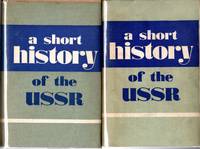
1948ref. 60005Moscow: Foreign Languages Publishing House 1948. Hardcover. Good. No dust jacket. Cover has some wear and soiling. Volume II ONLY. 242 1 p. Illustrations. Occasional footnotes. Foreign Languages Publishing House hardcover
1938ref. 58833Moscow: The People's Commissariat of Justice of the U.S.S.R. 1938. Presumed First Edition First printing thus. Hardcover. Fair. 22 cm. 7 799 1 pages. Errata slip at last page. Cover shows wear and soiling. Edges rubbed and corners bumped. The third show trial in March 1938 known as The Trial of the Twenty-One tied together all the loose threads from earlier trials. It included 21 defendants alleged to belong to the so-called "Bloc of Rightists and Trotskyites" It was now alleged that Bukharin and others had conspired to assassinate Lenin and Stalin numerous times after 1918 and had murdered Soviet writer Maxim Gorky by poison in 1936. The group also stood accused of espionage. Bukharin and others were claimed to have plotted the overthrow and territorial partition of the Soviet Union in collusion with agents of the German and Japanese governments among other preposterous charges. Even sympathetic observers who had stomached the earlier trials found it hard to swallow the new charges as they became ever more absurd and the purge had now expanded to include virtually every living Old Bolshevik leader except Stalin. Stalin also observed some of the trial in person from a hidden chamber in the courtroom. On the first day of the trial Krestinsky caused a sensation when he repudiated his written confession and pleaded not guilty to all the charges. However he changed his plea the next day after "special measures" which dislocated his left shoulder among other things. The Moscow Trials were a series of show trials held in the Soviet Union at the instigation of Joseph Stalin between 1936 and 1938 against Trotskyists and members of Right Opposition of the Communist Party of the Soviet Union. There were three Moscow Trials: the Case of the Trotskyite-Zinovievite Terrorist Center Zinoviev-Kamenev Trial aka "Trial of the Sixteen" 1936 the Case of the Anti-Soviet Trotskyist Center Pyatakov-Radek Trial 1937 and the Case of the Anti-Soviet "Bloc of Rights and Trotskyites" Bukharin-Rykov Trial aka "Trial of the Twenty-One" 1938. The defendants of these were Old Bolshevik party leaders and top officials of the Soviet secret police. Most defendants were charged under Article 58 of the RSFSR Penal Code with conspiring with the Western powers to assassinate Stalin and other Soviet leaders dismember the Soviet Union and restore capitalism. The Moscow Trials led to the execution of many of the defendants. They are generally seen as part of Stalin's Great Purge an attempt to rid the party of current or prior oppositionists especially but not exclusively Trotskyists and any leading Bolshevik cadre from the time of the Russian Revolution or earlier who might even potentially become a figurehead for the growing discontent in the Soviet populace resulting from Stalin's mismanagement of the economy. Stalin's hasty industrialization during the period of the First Five Year Plan and the brutality of the forced agricultural collectivization had led to an acute economic and political crisis in 1928-33 a part of the global problem known as the Great Depression and to enormous suffering on the part of the Soviet workers and peasants. Stalin was acutely conscious of this fact and took steps to prevent it taking the form of an opposition inside the Communist Party of the Soviet Union to his increasingly totalitarian rule. The People's Commissariat of Justice of the U.S.S.R. hardcover
1962ref. 71460Moscow: Academy of Sciences of USSR Central State Military-Historic Archive 1962. Presumed first edition/first printing thus. one of 4 000. Hardcover. Good in fair dust jacket. DJ has some wear and soiling tears and chips. 160 plates p. Includes illustrations. List of illustrations. Glossary. Table of Contents. This is a collection of broadsides by various Imperial Army officers in 1812 during the Napoleonic invasion and after Russian victories. A broadside is a large sheet of paper printed on one side only. 1 Historically broadsides were posters announcing events or proclamations or simply advertisements. Today broadside printing is done by many smaller printers and publishers as a fine art variant with poems often being available as broadsides intended to be framed and hung on the wall. The historical type of broadsides were ephemera i.e. temporary documents created for a specific purpose and intended to be thrown away. They were one of the most common forms of printed material between the sixteenth and nineteenth centuries particularly in Britain Ireland and North America. They were often advertisements but could also be used for news information or proclamations. Academy of Sciences of USSR, Central State Military-Historic Archive hardcover
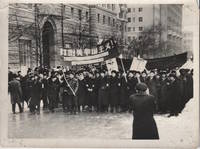
1965ref. 217848Beijing: No publication details. Circa1965. Complete set of 20 black and white photographs photographs 15 and 19 not numbered. 15 x 20.3cm. Explanatory slips of paper in simplified Chinese characters measuring 6.7 x 18.7cm are provided for 18 photographs lacking two slips for numbers 15 and 19. Pin-holes at corners of photographs corners little creased one corner chipped. An interesting collection of photographs in good condition. This collection of 20 black and white photographs shows a Chinese and international student demonstration against American imperialist aggression in Vietnam that took place in front of the American Embassy in Moscow in 1965. Photos 1-13 show an initially peaceful demonstration by Chinese and international students that turned ugly after Soviet troops cavalry vehicle-mounted guns and water sprayers were sent in with Russian generals personally taking charge. The chaos can be clearly felt in some of the blurred images where students were being beaten up and arrested. Photograph 14 shows an injured student Huang Zhaogeng being taken off a plane in Beijing on a stretcher. The photographs numbered 15 - 20 show demonstrations in Beijing in support of injured Chinese student demonstrators two leaders making speeches and medical care and support from friends. Text on the banners in photographs in Chinese and Russian. . No publication details. unknown
1951ref. BOOKS210451Moscow-Leningrad USSR. Fair/NO DUSTJACKET. 1951. Softcover or Wraps. In Russian. . 4to. 184 Corners and edges rubbed binding slightly wrinkled cover and pages slightly yellowed. . paperback
1958ref. BOOKS210176Moscow-Leningrad USSR. G/NO DUSTJACKET. 1958. Cloth Hardcover. In Russian. . 8vo. 244 Corners slightly rubbed pages slightly yellowed. . hardcover
1961ref. BOOKS210167Moscow USSR. Fair/NO DUSTJACKET. 1961. Boards Hardcover. In Russian. . 4to. 281 Corners and edges rubbed pages slightly yellowed. . hardcover
1959ref. BOOKS207088Moscow-Leningrad USSR. G/NO DUSTJACKET. 1959. Hardcover Cloth. 8vo. 503 Corners rubbed pages slightly yellowed. . hardcover
1959ref. BOOKS210075Moscow USSR. G/NO DUSTJACKET. 1959. Boards Hardcover. In Russian title page in Bashkir Bashkir in Cyrillic script. . 4to. 159 Corners slighly rubbed pages slightly yellowed crayon marking on front cover. . hardcover
1961ref. BOOKS210096Moscow USSR. Fair/NO DUSTJACKET. 1961. Boards Hardcover. In Russian. . 4to. 283 Corners and edges rubbed water stains on front cover tear on inside back cover pages slightly yellowed. . hardcover
1963ref. BOOKS208621Moscow USSR. Fair/NO DUSTJACKET. 1963. Hardcover Boards. In Cyrillic script. . 8vo. 191 Corners and edges rubbed several pages in the middle yellowed. . hardcover
ref. 18722Issued by Tass Agency Chronicle House 72-78 Fleet Street E.C.4. London. No. 8669 28 June 1947. 5pp. folio. Duplicate typescript on three leaves. In fair condition on aged paper. The first article produced on the eve of Indian independence begins: 'Moscow radio broadcast an account of a lecture given by Corresponding Member of the USSR Academy of Sciences Zhukove on "The Situation in India" at the Polytechnical Museum in Moscow.' It proceeds with a summary of Zhukov's lecture the view he expounds including the following: 'Britain's new policy derives from the economic changes which took place in India during the years of the Second World War. India's big bourgeoisie made profits from the war and have become richer and at the same time more compliant towards Britain. The bourgeoisie's fear of the popular masses is greater than their fear of Britain.' The second articles is pure propaganda beginning: 'A vast territory of over 1158000 sq. miles lies in the North-East of the Soviety Union. In Tsarist days it was known as "the Siberia of Siberia." It is now the Yakut Autonomous Soviet Socialist Republic - a part of the Russian Federation - which is just celebrating the 25th anniversary of its foundation says a TASS message.' From the papers of Jimmy Shields of the International Department of the Communist Party of Great Britain. No other copy traced. Issued by Tass Agency, Chronicle House, 72-78 Fleet Street, E.C.4., London. No. 8669, 28 June 1947. unknown
ref. 143872Used. For more details please contact me unknown
1965ref. 106898Moscow: Progress Publishers 1965. 1st . Hardcover. Near Fine/Very Good. 12 vo. Total of 7 folding maps laid in; B&W Photographs & Illust. 1st edition stated; djs in mylar; tan c w/spine titles; 333 412 clean unmarked pages; lite discoloration on dj pf volume 2 Progress Publishers hardcover
ref. 1090115083.Gpaperback. Good. Access codes and supplements are not guaranteed with used items. May be an ex-library book. paperback
1973ref. C1624Oblong photograph 6 3/4" x 11 1/4" Signed by 14 of the 18 contestants Boris Spassky Michal Tal Anatoly Karpov Alexander Beliavsky Efim Geller Paul Keres Victor Korchnoi Nukhim N Rashkovsky Gennadi Kuzmin Vladimir Savon Evgeni Ellinovich Sveshnikov Mark Taimanov Vladimir Borisovich Tukmakov Orest Averkin and one non contestant Viktor Davidovich Kupreichik on the verso. The photograph shows the stage were the contest took place with lined up game tables and the participants during the competition. In the foreground a part of the auditorium with seated spectators. In the aftermath of Robert James Fischer's victory over Boris Spassky in the 1972 World Championship the Soviet Union had been humiliated and humbled by an American and the 35 year rule of the Soviet chess machine over the international chess world had finally been put to an end. The consequences of this result were felt in Soviet chess for months after. Mark Taimanov Tigran Petrosian and Spassky were all reprimanded for their failure to stop Fischer. Consequences continued into the 41st USSR Championship held in the Soviet capital of Moscow from October 2-26 1973. The tournament was organized to be the strongest in a decade. In addition to the four qualifying players who had each won a semi-final Orest Averkin Karen Grigorian Nukhim Rashkovsky and Evgeni Sveshnikov the very strongest grandmasters of the Soviet Union received forced invitations to participate. The list was a collection of former world champions multiple Soviet title winners and the very strongest of the Soviet school including: Spassky Petrosian Mikhail Tal Vasily Smyslov Anatoli Karpov Viktor Korchnoi Efim Geller Paul Keres Lev Polugaevsky Taimanov Leonid Stein Vladimir Tukmakov Vladimir Savon and Gennadi Kuzmin. Victor Davidovich Baturinsky the vice-president of the USSR chess federation and a Colonel of Justice explained clearly to all the participants that their attendance was not only obligatory but their very future as Soviet chess players and the favors imparted therein depended on their performance in the championship. Stein died before the championship took place and he was replaced by junior world champion Alexander Beliavsky. In addition to the composed line up it was made known that draws of thirty moves or less were 'discouraged' by the organizers. Although short draws did occur the schedule of play and the intense combat among the contestants was arduous. It was Spassky after failing in Reykjavik who emerged victorious by a full point. This edition did have the desired effect of revealing future world title candidates as Karpov and Korchnoi tied for second along with two other contestants and would face each other the following year for what ultimately was the de facto world championship. Condition: Slightly tinted trimmed at the bottom irregularly else a very good copy of an interesting chess historical document. USSR Chess Federation
1963ref. BOOKS210416Moscow USSR. G/NO DUSTJACKET. 1963. Softcover or Wraps. In Russian. . 8vo. 194 Corners slightly rubbed binding slightly wrinkled pages slightly yellowed. . paperback
1952ref. BOOKS210472Moscow USSR. Fair/NO DUSTJACKET. 1952-56. Boards Hardcover. In Russian. Volumes I III IV and VI. . 4to. 231 263 379 527 Corners and edges rubbed pages slightly yellowed. . hardcover