30 580 résultats
1927réf. 126365P., J. de Gigord, 1927, in-12, xxxvi-475 pp, 10e édition, introduction sur la vie, les œuvres, la langue et la grammaire d'Horace, texte latin et notes explicatives en français, cart. éditeur, dos toilé, bon état
1851réf. 0035381851 Parisiis [Paris], Edidit Lefevre [Lefevre, Garnier et Plon], 1851. Petit in-12 (98 X 148) chagrin orange, triple encadrement de filet doré sur les plats, titre doré, lieu et date d'édition dorés en queue, dos cinq nerfs filetés, compartiments ornés à la grotesque, coiffes et coupes ornées, bordure intérieure ornée aux petits fers, tranches dorées (B. DAVID) ; portrait, XII pages (dont titre), 347 pages. Cerne de mouillure claire en tête du portrait frontispice, sans gravité ; dédicace autographe à l'encre brune sur le premier feuillet blanc datée "24 mai 1884".
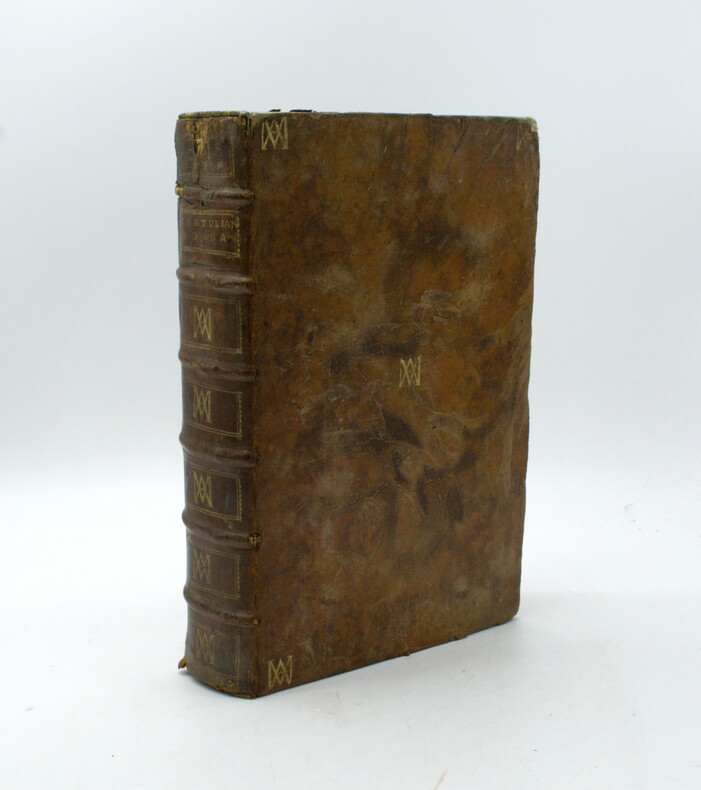
1641réf. PHO-1871Lutetiæ, Mathurini du Puis, 1641. In folio ; 10ff.-860pp., 130 pp. (Rigaltii Observationes), 40ff.( index), plein basane au monogramme “MA” au centre et aux angles des plats et sur 6 caissons du dos (ex-libris Collège de Montaigu), plats frottés et épidermés, dos à nerfs avec mq., coins et coupes usés, tranches marbrées, étiquette manuscrite “ex libris Brissat” collée au contre-plat, inscriptions manuscrites en pages de garde, faux-titre et titre (ex-dono Abraham Marlier, principal du collège 1652-1693)
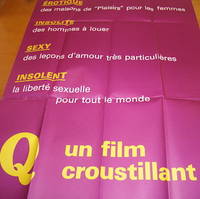
réf. 68-3019Paris France: SND-Contrechamp 1974. Promotional Poster. 120 x 75 cm. Good with minor tears. En Francais. Scarce. Paris, France: SND-Contrechamp, 1974. unknown
1999Ouvrage collectif, par Fernando López Alsina, Anna Benvenuti, Franco Cardini, etc, publié sous la direction de l'enseignant italien Paolo G. CAUCCI VON SAUCKEN, voulant montrer "la signification des pèlerinages dans l'histoire de la chrétienté d'Occident", "manière originale de tracer une géographie sacrée et symbolique pour tout le monde chrétien, d'indiquer des voies de conversion pour celui qui entreprend la "route". Les différentes contributions |...] introduisent à la dimension humaine du pèlerinage, à l'idée et aux représentations qui hantent l'esprit des pèlerins du Moyen Age, [expliquant] les rites directement liés aux pèlerinages avec les spécificités propres à chaque destination, à chaque chemin. Elles retracent aussi le concret du pèlerinage, ses "chemins", ses "étapes", ses "aventures", ses "légendes" |.... et présentent] les villes qui sont le but de ces voyages, autant intérieurs qu'extérieurs: Jérusalem, Rome, Saint-Jacques-de-Compostelle" (rabat de jaquette); carte et nombreuses illustrations, photos et reproductions de peintures et gravures anciennes; bibliographie. Exemplaire bien complet de sa jaquette. Français
1905xiii + 201pp., br.orig., 23cm.
réf. 19638Saint-Léger-Vauban / Paris, Zodiaque / Desclée de Brouwer, "Présence de l'art", 1999 1 volume 24 x 30cm Reliure éditeur pleine toile sous jaquette au 1er plat illustré couleurs. 384p.; carte et nombreuses illustrations in texte, 236 vignettes en noir et 159 planches, pleines et doubles pages, en couleurs. Très bon état.
1905réf. R49254Périgueux, Cassard jeune 1905 xiii + 201pp., br.orig., 23cm.
8vo, hardcover in dw pp.187.
Bulino misure: mm 178 x 280 Antiquario, disegnatore, numismatico e incisore, dopo una prima formazione nella città natale, l'artista si trasferisce a Roma. Qui lavora per lo stampatore Salamanca e per Tommaso Barlacchi incidendo molti rami fra cui una serie di Grottesche edite nel 1542; si forma soprattutto studiando le incisioni di Marcantonio Raimondi e della sua scuola (del 1541 è la copia in controparte della Lucrezia di Raimondi, incisa per Barlacchi). Dopo un soggiorno a Firenze si trasferisce a Venezia e infine a Ferrara alla corte di Alfonso II. Oggi conosciamo circa cinquecento incisioni a bulino eseguite da Vico: ritratti, serie di vasi antichi, gemme e cammei, incisioni da opere di Raffaello, Michelangelo, Salviati, ecc. Il soggetto descritto in questa incisione deriva da un invenzione di Perino del Vaga (Firenze 1501 - Roma 1547) ed è ispirato ad una leggenda legata a Virgilio che lo vede innamorato di una giovane fanciulla figlia di un imperatore romano. La donna però non solo non ricambia l'amore ma si prende gioco del Poeta; finge di accoglierlo nelle sue stanze mediante l'espediente di una cesta per farlo arrivare di nascosto alla finestra, ma poi la cesta si ferma e Virgilio rimane appeso fino al giorno dopo, tra le risa del popolo. Il poeta si vendica spegnendo tutto il fuoco di Roma e solo attraverso la donna il popolo avrebbe potuto procurarselo. Così la figlia dell'imperatore venne posta sulla pubblica piazza e Virgilio fu vendicato. Nella stampa, davanti ad obelischi, colonne e edifici romani possiamo osservare un primo piano gremito di persone colte in pose e atteggiamenti differenti, il tumulto e la concitazione sono creati mediante una forte gestualità, un tratto netto e velatura argentea. A destra la donna viene soggiogata dal popolo e sullo sfondo Virgilio è appeso allo cesta. Monogramma EV in basso a sinistra nella tavoletta, mentre oltre l'immagine nel margine bianco il distico e la data VIRGILIVM ELVDENS MERITAS DAT FOEMINA POENAS ROMAE ANNO 1542. Impressione eccellente, splendido effetto di velatura grigio argentea di fondo. Ottimo stato di conservazione eccetto una mancanza integrata lungo il margine destro, qualche assottigliamento della carta. Rifilata alla battuta del rame. Filigrana: ancora nel cerchio (Centro Italia, metà XVI secolo) . Esemplare III/III con l'indirizzo di Salamanca, in basso al centro. Bibliografia: Bartsch XV.304.46; Gori Gandinelli V, pp. 49-50; TIB 30.65.46; Borea 1980, pp. 271-72
réf. 1241214948.Gpaperback. Good. Access codes and supplements are not guaranteed with used items. May be an ex-library book. paperback
In 8o, pp. 138, br. Prima ediz. italiana, difetti al dorso, tracce di nastro adesivo ai piatti, interno ottimo (9006/ TRILUSSA - PRIMA EDIZIONE - ROMA)
réf. 43660152-nnew. unknown
réf. 43660152like new. unknown
2021réf. x-0367426854Routledge 2021. Paperback. New. 272 pages. 9.19x6.13x0.67 inches. Routledge paperback
réf. A9780367426842Hardback. New. hardcover
réf. A9780367426859Paperback / softback. New. paperback
1774pp. 15, 144, 3 + Plus numerous full-page and folding engraved plates. Illustrated throughout with engraved vignettes, culs-de-lampe, etc. Normal foxing and off-setting. Tall 8vo. [221 x 135 mm.] Contemporary full leather binding, worn. Lacks original spine label. Generally, Very Good. "Containing only the Bucolics and Georgics, this work was left unfinished by old Pine, and was published by his son Robert" - Dibdin II, p. 561. Probably, in realit y, somewhat scarcer than Pine's justly famous Horace.**PRICE JUST REDUCED! W153
1825105x165 mm. 351 pages. gilt hardcover. Cover detached and taped. Cover rubbed. Cover edges and corners worn. Spine worn. Pages slightly yellowing and stained. Else in good condition.
1772364p. Slight foxing. 4to. [304 x 235 mm.] Contemporary straight grained plum morocco leather binding. Boards tooled in gold with a wide Greek key design, and in blind with an archway roll. Engraved bookplate showing a shield (Arms Barry of six Supporters); two unicorns; ermine Coronet of an Earl ; and the Motto A MA PUISSANCE. This is likely the plate of Charles Grey, 2nd Earl Grey (1764-1845) Whig Prime Minister of Great Britain (1830-1834). There is also a manuscript inscription: "With B. Drury's Best Wishes, Eton, March 20 , 1820." John Baskerville (1706-1775) was the greatest printer of his era. Born in Wolverley, Hereford - Worcester, England, he became a writing master in Birmingham. He also carried on a successful japanning (varnishing) business there. In about 1750 he began to make experiments in letter founding, and produced the wonderful series of types now named after him. His first book, the Virgil of 1757, was also the first to be printed upon wove paper (manufactured by a process that he invented). In 1758 he be came printer to Cambridge University. All of his books bear show fine craftsmanship and a refined sense of design. In the last few years before his death, Baskerville published a few Latin classics in quarto and duodecimo. "All these bear the marks of unabated genius even in his declining days: and suffice, had he printed nothing else, to distinguish him as the first typographer of his time" - T. B. Reed, in 'Old English Letter Foundries'. Gaskell 46; Brunet V:71 8. A really handsomely bound copy of a beautifully printed book. **PRICE JUST REDUCED! W113
1772pp. (4), 308. The edition without the cancellans at G2. 12mo. [176 x 105 mm.] Foxed. It is very unusual to find in a Baskerville that some leaves (in two gatherings of this copy) were smudged during printing, and permitted to pass. Contemporary full sprinkled calf binding. Gilt tulip roll on the boards. Spine ornamented with gold crossed arrows. Joints tender. Printed ExLibris of John Rayner. Gaskell 47. Terence (Ca. 190-159 B.C.), the great Latin comic poet, was born in Carthage. He came to Rome as the slave of a senator, Terentius Lucanus. In the house of Lucanus he was educated like a free man and soon emancipated. His successful first play, 'Andria' introduced him to Roman society, and the circle of Scipio, Philus, and Laelius. His surviving six comedies are drawn from Athenian sources, especially from lost plays by Menander. Terence has been read for over two thousand years, and his influence on European literature cannot be overestimated. He imparted to Latin the sense of artistic elegance, consistency and moderation which made it a model for all literary epochs. In him we find a meeting-point for three great civilizations - the decaying Greece; Carthage, soon to pass away into oblivion; and nascent Italy, poised to absorb the world. John Baskerville (1706-1775) was the greatest printer of his era. Born in Wolverley, Hereford - Worcester, England, he became a writing master in Birmingham. He also carried on a successful japanning (varnishing) business there. In about 1750 he began to make experiments in letter founding, and produced the wonderful series of types now named after him. His first book, the Virgil of 1757, was also the first to be printed upon wove paper (manufactured by a process that he invented). In 1758 he be came printer to Cambridge University. All of his books bear show fine craftsmanship and a refined sense of design. In the last few years before his death, Baskerville published a few Latin classics in quarto and duodecimo. "All these bear the marks of unabated genius even in his declining days: and suffice, had he printed nothing else, to distinguish him as the first typographer of his time" - T. B. Reed, in 'Old English Letter Foundries' "Quot homines tot sentensiae; suo quoiqu e mos " So many men, so many opinions; a law of his own to each -- Terence. ** PRICE JUST REDUCED!! W154
18398vo., First Edition, text in Latin, introduction and notes in English; contemporary full calf, sides with triple frame border stopped at corners by rosettes all in blind, back gilt with compartments ruled in gilt and blind, wanting original label but impressed lettering just legible, doublures tooled in blind, speckled edges, one or two slight scuffs to covers, small ink mark on lower board else a remarkably clean, crisp and highly desirable copy in unrestored period binding. EDWARD VESEY BLIGH'S COPY WITH HIS SIGNATURE ON FRONT FREE ENDPAPER. A NOTABLE COPY OF ONE OF KEIGHTLEY'S FINEST CLASSICAL COMMENTARIES. Remembered today primarily for his 'Fairy Mythology' (1828), Thomas Keightley (1789-1872) was also a classical historian and scholar of note; his editions of Greek and Roman texts were produced mainly from Trinity College Dublin. His 'Fasti' is based on the Krebs text, and Keightley notes the most important variant readings of the fifty-eight collated MSS of the poem, together with (not unnaturally) appropriate references to his own 'Mythology of Greece and Italy' published eight years previously. The edition received several laudatory reviews (notably in the 'Gentleman's Magazine') and was adopted for use by at least one major public school. The Hon. Edward Vesey Bligh, brother to 6th Earl of Darnley, was vicar of Birling in Kent and Chairman of the Prayer Book Revision Society
2014SIGNED BY AUTHOR. 25x17cm. XII+361 pages. Hardcover with dust-jacket. In good condition.
8vo, br. ed. pp.176. paperback. small former ow. signature, ow. very good. The absence of a professional police force in the city of Rome in classical times is often identified as a major cause of the collapse of the Republic. But this alleged 'structural weakness' was not removed by the Emperor Augustus and his successors, and was in fact shared with other pre-modern states: a specialised police force is a modern invention. In this critical study of the system of law and order in ancient Rome in both Republican and Imperial periods, Wilfried Nippel identifies the mechanisms of self-regulation which operated as a stabilising force within Roman society. This case-study of ancient Rome has a comparative dimension and will interest legal historians of other pre-modern societies as well as ancient historians, anthropologists, sociologists and political scientists.