PERUBiblio.com

2.761 Ergebnisse
Best.-Nr. CBS 9781394227228US Edition. New. Brand New! Fast Delivery US Edition and ship within 24-48 hours. Deliver by FedEx and Dhl & Aramex UPS & USPS and we do accept APO and PO BOX Addresses. Order can be delivered worldwide within 6-10 days and we do have flat rate for up to 2LB. Extra shipping charges will be requested if the Book weight is more than 5 LB. This Item May be shipped from India United states & United Kingdom. Depending on your location and availability. unknown
Best.-Nr. 45135612-nnew. unknown
Best.-Nr. 46081523-nnew. unknown
Best.-Nr. 46081523like new. unknown
Best.-Nr. 45181930-nnew. unknown
2012Best.-Nr. DADAX2290054046J'AI LU 2012-04-05. pocket_book. New. 4.33x1.02x7.01. Buy with confidence. Excellent Customer Service & Return policy. J'AI LU unknown
Best.-Nr. 39868332like new. unknown
Best.-Nr. 39868332-nnew. unknown
Best.-Nr. DADAX0469654562Wentworth Press 2019-02-25. hardcover. New. 6.14x0.69x9.21. Buy with confidence. Excellent Customer Service & Return policy. Wentworth Press hardcover
2020Best.-Nr. __190952669XReel Art Pr 2020. Hardcover. New. 272 pages. French language. 13.00x10.00x1.25 inches. Reel Art Pr hardcover
2012Best.-Nr. H-464-561Soleil 2012. Paperback. Very Good. Volume 3. Ammareal gives back up to 15% of this item's net price to charity organizations. Soleil paperback
2012Best.-Nr. H-464-562Soleil 2012. Paperback. Very Good. Volume 3. Ammareal gives back up to 15% of this item's net price to charity organizations. Soleil paperback
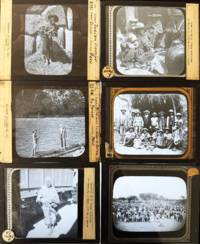
1900Best.-Nr. 232171900. Peru glass lantern slide archive documenting Indigenous and rural life in the Perené and Cuzco during a period where the political economy shaped was by export agriculture regional extraction and foreign institutional interest. In this period Peru was governed by a coastal elite tied to export markets and to the expansion of state and commercial control into the interior and images of carriers river craft family groups and gathered communities register how Indigenous people were affected by that process through incorporation into frontier economies while also being recast for North American educational audiences as ethnographic subjects. Photo archive of 6 black and white glass lantern slide photographs each 3.25" x 4" Peru early 1900s. Issued as lecture materials for the Philadelphia Museum. The group includes a family or community portrait posed before a thatched structure with adults and children wearing brimmed hats layered garments shawls and patterned skirts; a closer seated group of women and children gathered around large ceramic vessels; also includes a large outdoor crowd scene showing a densely gathered public space filled with adults and children; a posed family and community portrait before a rustic structure with men women and children wearing layered garments shawls and broad-brimmed hats; a closer domestic scene centered on seated women and children gathered around large ceramic vessels; a river crossing in the Rio Perené region showing an adult and child standing on a balsa or log raft using poles to navigate the current; an "Indian Carrier" posed beside a railroad car linking Indigenous labor and movement to expanding transportation networks; and a closer portrait of an Indigenous man framed by a larger crowd gathered behind him. Several slides retain typed or manuscript labels including references to "Rio Perene" and "Hutchins Indian in Balsa" while institutional labels read "The Philadelphia Museums" and "Negative by E. Tyson Hutchins / Use restricted to school lectures in museum" establishing the archive as part of a formal educational and interpretive program rather than private travel photography alone. The archive is particularly effective because it balances portraiture with broader communal documentation. The large crowd scene family grouping and market or gathering views shift the photographs away from isolated ethnographic "types" and toward visible social environments populated by children laborers families and community members. The railroad image and river crossing additionally place Indigenous Peruvians within the transportation and frontier systems increasingly tied to trade extraction regional movement and outside institutional observation in the early twentieth century. During the late nineteenth and early twentieth centuries regions such as the central selva and Perené valley were increasingly bound to colonization schemes plantation agriculture and extractive enterprise while Indigenous communities faced land pressure labor demands and outside scrutiny from state agents missionaries traders and foreign observers. No cracks or chipping; crowd image lacking its original frame with glass and matte border loose; otherwise very good condition. A concise record of how Indigenous and local Peruvians were photographed within overlapping systems of frontier incorporation and museum interpretation. unknown
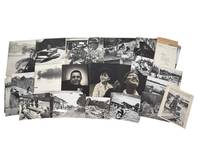
1961Best.-Nr. 231231961. Baum Allyn. Peru photo archive a substantial working group of large original photographs and related New York Times material centered on Baum's Peru assignments significant for preserving a photographer's own visual record of Andean and Amazonian travel Indigenous communities village life and editorial circulation within mid twentieth century American newspaper photojournalism. Allyn Baum was a staff photographer for The New York Times from 1957 to 1967. Included is a typed note from New York Bureau Chief Gedeon de Margitay congratulating Baum on the Peru photographs published in the Magazine together with the January 21 1962 New York Times article "Into the Unknown" directly linking the images to their original publication context and to contemporary American visual encounters with Peru's Indigenous regions and frontier geographies. From the estate of Allyn Baum. Peru and New York. 1961-1973. Archive of 48 items including 46 large silver gelatin photographs a New York Times article written by Baum and a single-page typed letter regarding publication. Most photographs measure 8" x 10" while 9 larger examples measure 10" x 13". Several are mounted on board and bear Baum's signature or detailed inscriptions such as "Jungle Priest" "Headhunter" and "High Andes Quechua Indians in Peru. Working in home . producing products for sport." Many retain original press captions or handwritten notes on the versos some in Baum's own hand. The photographs document river and jungle travel in the Amazon Basin village and market scenes domestic interiors American aircraft and extensive portrait studies of Andean and Amazonian Indigenous peoples. Indigenous sitters appear weaving spinning wool knitting carrying children traveling by canoe gathered near riverside settlements or posed in both formal and informal portrait settings. Several photographs emphasize textile production and traditional labor practices among Quechua communities in the high Andes while others focus on Amazonian Indigenous groups photographed within thatched settlements and river communities preserving material evidence of architecture clothing subsistence practices and daily life during a period when American newspaper photography increasingly framed Indigenous South America through the lens of exploration modernization and remote access. The archive is a strong record of Peru in the early 1960s documenting not only transportation networks settlement patterns and regional travel but also Indigenous cultural continuity across both Andean and Amazonian environments. Baum's photographs repeatedly center Indigenous Peruvians not simply as background figures within landscape photography but as primary subjects whose labor dress craft production domestic life and physical presence structure the visual narrative of the archive. The accompanying New York Times material preserves the editorial framework through which these images entered American mass circulation while the de Margitay note confirms internal recognition of Baum's Peru work within the newspaper itself. The later date range appears to reflect continued press handling reuse and captioning rather than a single production moment giving the archive additional value as a working newspaper photography file shaped over time. Minor edgewear throughout; versos with original handwritten descriptions by Baum and press editors. A cohesive and well-preserved Peru field photography archive documenting Indigenous life regional travel and mid century American photojournalism connected to The New York Times. unknown
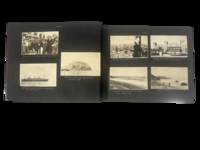
1925Best.-Nr. 227551925. Latin America SS Resolute voyage photograph album 1925 documenting a steamship journey through Central and South America during the interwar expansion of international maritime tourism following the opening of the Panama Canal in 1914. The photographs record port cities landscapes and civic landmarks encountered along the Pacific and Atlantic coasts of Latin America during a period when luxury liners increasingly connected North American travelers with destinations across the hemisphere. By the 1920s transisthmian canal travel had reshaped global shipping and passenger routes allowing cruise itineraries to combine Caribbean Pacific and South American destinations within a single voyage. The album preserves visual evidence of these emerging travel circuits while also documenting major urban and cultural centers of the region during a period of modernization and expanding hemispheric exchange. Photo album compiled during the 1925 voyage of the steamship SS Resolute containing approximately 150 original silver gelatin photographs mounted to black album leaves and captioned in white ink. Contemporary red leatherette album titled "Photographs" in gilt and bound with red cord. Photographs measure approximately 3 x 4 inches to 4 x 6 inches. The photographs document the vessel's route through Panama and the Canal Zone before continuing along the Pacific coast of South America and returning through the Atlantic basin. Numerous photographs depict Panama City and the Panama Canal including views of the Culebra Cut and Gold Hill major engineering features of the canal project completed little more than a decade earlier. Other sections of the album record urban and harbor scenes in Cartagena Colombia including colonial architecture and waterfront activity. Photographs from Peru show Lima's Plaza de Armas the bullring at Miraflores and rural Andean valleys near Arequipa with terraced agricultural landscapes and local communities. Images from Chile capture the steep hills and harbor districts of Valparaíso along with coastal plazas and naval vessels near El Morro. Additional photographs from Argentina depict major civic spaces in Buenos Aires including Plaza San Martín and Plaza de Mayo documenting the monumental architecture and modernizing urban landscape of the city during the 1920s. The steamship SS Resolute operated as a passenger liner serving long distance routes during the interwar expansion of luxury cruising and international tourism. Voyages such as the one recorded in this album reflected the growing accessibility of transcontinental travel made possible by the Panama Canal and by the increasingly global network of commercial steamship lines linking the Americas. Mild toning consistent with age; mounts and binding well preserved. Overall very good condition. The photographs collectively document a hemispheric itinerary connecting canal infrastructure colonial port cities Andean landscapes and rapidly modernizing capitals offering a visual record of the cultural and geographic environments encountered by travelers during the height of the steamship era. unknown
2010Best.-Nr. DADAX1160841179Kessinger Publishing 2010-03-19. paperback. New. 6.00x0.87x9.00. Buy with confidence. Excellent Customer Service & Return policy. Kessinger Publishing paperback
2006Best.-Nr. DADAX190952669XReel Art Press 2020-06-09. hardcover. New. 9.90x1.30x13.00. Buy with confidence. Excellent Customer Service & Return policy. Reel Art Press hardcover
Best.-Nr. DADAX1347624457Palala Press 2015-12-06. hardcover. New. 6.14x1.06x9.21. Buy with confidence. Excellent Customer Service & Return policy. Palala Press hardcover
2019Best.-Nr. 2-8416428603Yermo ediciones 2019. Hardcover. New. 192 pages. Spanish language. 12.52x9.06x0.63 inches. Yermo ediciones hardcover
1921Best.-Nr. 27058PRIMERA EDICION.- Madrid: Ed. Nosotros Imp. Antonio G. Izquierdo 1921.- 59 h. o 118 p. sin numerar: decorado ante portada con un ex-libris de Alberto Guillén y portada orlada; 8º minúsculo 14 x 195 cm.; portada a dos tintas roja y negra; Media Piel nueva lomo dorado y con 5 nervios conservando la cubierta anterior original.- Rara e importante obra de este gran poeta peruano nacido en Arequipa el 20 de enero de 1897 y fallecido en Mollendo el 20 de octubre de 1935. Junto con Alberto Hidalgo fue el más importante poeta arequipeño de inicios del siglo XX. Fue un hombre de profundo talento y de una gran fecundidad al que una grave enfermedad segó la vida en pleno momento de creación literaria. Mínimas y tenues motas de óxido en las dos últimas hojas y alguna más muy dispersa en el resto del libro. Pequeña mancha de tinta en el margen exterior de la cubierta original y las cuatro primeras hojas. LITERATURA ESTUDIOS LITERARIOS FILOSOFÃA Y PENSAMIENTO IBEROAMERICANO EN GENERAL Libro en español Ed. Nosotros hardcover
1830Best.-Nr. 319997London: James Duncan 1830. 3 plates & 1 folding map as frontispiece. 2 vi2 340pp. 1 vols. 12mo. Half contemp. calf. VG. 3 plates & 1 folding map as frontispiece. 2 vi2 340pp. 1 vols. 12mo. James Duncan unknown
1855Best.-Nr. 236854Paris: Chez Camuzeaux Libraire-Éditeur 1855. Later edition. Frontispieces. 280 272 pp. 2 vols. 8vo. later blue cloth with original wrappers bound in uncut. Later edition. Frontispieces. 280 272 pp. 2 vols. 8vo. Chez Camuzeaux, Libraire-Éditeur hardcover
1847Best.-Nr. 214253New York: Harper and Brothers 1847. First edition. Engraved portrait frontispieces facsimile map. 2 vols. 8vo. Original publishers' blind-stamped brown cloth. Covers slightly faded and rubbed remnants of library labels removed from spines darkening to endpapers occasional light spotting to text. Ex-library with bookplate and one other from private owner on front pastedowns. First edition. Engraved portrait frontispieces facsimile map. 2 vols. 8vo. The classic work on the subject going through scores of editions Prescott's "Peru" was one of the standard household books for the later part of the Nineteenth century. Though included in the Grolier Club exhibition of One Hundred Books Famous in English Literature it was not included in their catalogue of One Hundred American Books . simply because "Prescott's Conquest of Mexico . came first and set a new American standard for the use of source materials." This standard he maintained in his History of the Conquest of Peru. Sabin 65272; BAL 16346 Harper and Brothers unknown
1863Best.-Nr. 236623Lima: Tipografia de Aurelio Alfarno 1863. xv 104 xxii 1 pp. 1 vols. 8vo. Yellow wrappers split with some loss. xv 104 xxii 1 pp. 1 vols. 8vo. Tipografia de Aurelio Alfarno unknown
1853Best.-Nr. 236625Cuzco: Imprenta Libre por Gregorio Arriaga 1853. 48 pp. 1 vols. 12mo. Wrappers. 48 pp. 1 vols. 12mo. Imprenta Libre por Gregorio Arriaga unknown