2 952 résultats
1991réf. LFA-126744873Un ouvrage de 229 pages, format 150 x 225 mm, broché couverture couleurs, publié en 1991, Editions Philippe Lebaud, bon état
Cambridge, Cambridge University Press, 1982. 4to.; XVIII pp., 577 pp. Encuadernación original en tela.
1859PARIS HACHETTE 1859. mm. 174 x 110 Traduzione dal tedesco per W. De Suckau. Seconda edizione. Mezza percallina verde con titolo in oro al dorso (piccole mancanze). pp. (4), VIII, 633, (2). Una carta geografica f.t., piu' volte ripiegata con l'intinerario del viaggio. Dall'indice: Borneo, Sumatra, Ascension du Merapi, California, Lima, Quito, Panama, New Orleans, Chicago, Cleveland, Quebec, New York, Boston, Liverpool, Lisbona, etc.
1993réf. Khe01004München (Eugen Diederichs) 1993 (= Erste Ausgabe). 8°, Originalleinen mit illustriertem Originalumschlag (Hardcover), 468 S., ISBN 3424011932 1
1958réf. RO30149068PARIS. 1958. In-8. Broché. Etat d'usage, Couv. convenable, Dos frotté, Intérieur frais. Environ 50 pages augmentées de planches en noir et blanc -. . . . Classification Dewey : 985-Pérou
1958réf. RO30315396Petit Palais. 1958. In-12. Broché. Bon état, Couv. convenable, Dos satisfaisant, Intérieur frais. Environ 60 pages augmentées de nombreuses photos en noir et blanc.. . . . Classification Dewey : 985-Pérou
1964réf. 172130Lima 1964. S.37-128 S., zahlr. Abb., erweitert durch zahlr. vom Verf. hs. untertitelte Fotoabzüge entstanden anl. des Besuchs des Bundespräsidenten W.Lübke*beigebunden: Club Germania... 118 S. 4° priv. HLn.
Madrid, 1963 ("Biblioteca de Autores Españoles"). 4to. mayor; 409 pp. Cubiertas originales
réf. 0332486737.Ghardcover. Good. Access codes and supplements are not guaranteed with used items. May be an ex-library book. hardcover
1951réf. 00532420Impr. Torres Aguirre 1951. First Edition. Hardcover. Very Good/No Jacket. 8vo - over 7¾" - 9¾" Exceptionally rare regulations for captains of the Peruvian National Merchant Marine. 2 volumes complete as issued. Original blue hardcovers 2 post bindings. This is the 2nd printing 1973. Each volume has the ink stamp of prior owner a Peruvian diplomat. Description:. Impr. Torres Aguirre hardcover
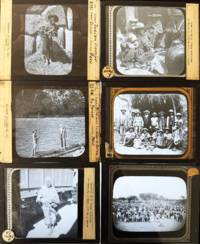
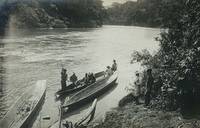
1900réf. 232171900. Peru glass lantern slide archive documenting Indigenous and rural life in the Perené and Cuzco during a period where the political economy shaped was by export agriculture regional extraction and foreign institutional interest. In this period Peru was governed by a coastal elite tied to export markets and to the expansion of state and commercial control into the interior and images of carriers river craft family groups and gathered communities register how Indigenous people were affected by that process through incorporation into frontier economies while also being recast for North American educational audiences as ethnographic subjects. Photo archive of 6 black and white glass lantern slide photographs each 3.25" x 4" Peru early 1900s. Issued as lecture materials for the Philadelphia Museum. The group includes a family or community portrait posed before a thatched structure with adults and children wearing brimmed hats layered garments shawls and patterned skirts; a closer seated group of women and children gathered around large ceramic vessels; also includes a large outdoor crowd scene showing a densely gathered public space filled with adults and children; a posed family and community portrait before a rustic structure with men women and children wearing layered garments shawls and broad-brimmed hats; a closer domestic scene centered on seated women and children gathered around large ceramic vessels; a river crossing in the Rio Perené region showing an adult and child standing on a balsa or log raft using poles to navigate the current; an "Indian Carrier" posed beside a railroad car linking Indigenous labor and movement to expanding transportation networks; and a closer portrait of an Indigenous man framed by a larger crowd gathered behind him. Several slides retain typed or manuscript labels including references to "Rio Perene" and "Hutchins Indian in Balsa" while institutional labels read "The Philadelphia Museums" and "Negative by E. Tyson Hutchins / Use restricted to school lectures in museum" establishing the archive as part of a formal educational and interpretive program rather than private travel photography alone. The archive is particularly effective because it balances portraiture with broader communal documentation. The large crowd scene family grouping and market or gathering views shift the photographs away from isolated ethnographic "types" and toward visible social environments populated by children laborers families and community members. The railroad image and river crossing additionally place Indigenous Peruvians within the transportation and frontier systems increasingly tied to trade extraction regional movement and outside institutional observation in the early twentieth century. During the late nineteenth and early twentieth centuries regions such as the central selva and Perené valley were increasingly bound to colonization schemes plantation agriculture and extractive enterprise while Indigenous communities faced land pressure labor demands and outside scrutiny from state agents missionaries traders and foreign observers. No cracks or chipping; crowd image lacking its original frame with glass and matte border loose; otherwise very good condition. A concise record of how Indigenous and local Peruvians were photographed within overlapping systems of frontier incorporation and museum interpretation. unknown books
1900réf. 232171900. Peru glass lantern slide archive documenting Indigenous and rural life in the Perené and Cuzco during a period where the political economy shaped was by export agriculture regional extraction and foreign institutional interest. In this period Peru was governed by a coastal elite tied to export markets and to the expansion of state and commercial control into the interior and images of carriers river craft family groups and gathered communities register how Indigenous people were affected by that process through incorporation into frontier economies while also being recast for North American educational audiences as ethnographic subjects. Photo archive of 6 black and white glass lantern slide photographs each 3.25" x 4" Peru early 1900s. Issued as lecture materials for the Philadelphia Museum. The group includes a family or community portrait posed before a thatched structure with adults and children wearing brimmed hats layered garments shawls and patterned skirts; a closer seated group of women and children gathered around large ceramic vessels; also includes a large outdoor crowd scene showing a densely gathered public space filled with adults and children; a posed family and community portrait before a rustic structure with men women and children wearing layered garments shawls and broad-brimmed hats; a closer domestic scene centered on seated women and children gathered around large ceramic vessels; a river crossing in the Rio Perené region showing an adult and child standing on a balsa or log raft using poles to navigate the current; an "Indian Carrier" posed beside a railroad car linking Indigenous labor and movement to expanding transportation networks; and a closer portrait of an Indigenous man framed by a larger crowd gathered behind him. Several slides retain typed or manuscript labels including references to "Rio Perene" and "Hutchins Indian in Balsa" while institutional labels read "The Philadelphia Museums" and "Negative by E. Tyson Hutchins / Use restricted to school lectures in museum" establishing the archive as part of a formal educational and interpretive program rather than private travel photography alone. The archive is particularly effective because it balances portraiture with broader communal documentation. The large crowd scene family grouping and market or gathering views shift the photographs away from isolated ethnographic "types" and toward visible social environments populated by children laborers families and community members. The railroad image and river crossing additionally place Indigenous Peruvians within the transportation and frontier systems increasingly tied to trade extraction regional movement and outside institutional observation in the early twentieth century. During the late nineteenth and early twentieth centuries regions such as the central selva and Perené valley were increasingly bound to colonization schemes plantation agriculture and extractive enterprise while Indigenous communities faced land pressure labor demands and outside scrutiny from state agents missionaries traders and foreign observers. No cracks or chipping; crowd image lacking its original frame with glass and matte border loose; otherwise very good condition. A concise record of how Indigenous and local Peruvians were photographed within overlapping systems of frontier incorporation and museum interpretation. unknown
réf. 033263888X.Ghardcover. Good. Access codes and supplements are not guaranteed with used items. May be an ex-library book. hardcover
réf. 1331792177.Gpaperback. Good. Access codes and supplements are not guaranteed with used items. May be an ex-library book. paperback
1875réf. 617011875. Preferred Edition of Peru's First Commercial Code Peru. Commercial Law. Codigo de Comercio de la Republica del Peru. Lima: Imprenta del Estado 1875. 231 pp. Octavo 7-3/4" x 5". Contemporary quarter morocco over marbled boards gilt title to spine. Moderate rubbing to extremities some toning to text internally clean. Ex-library. Location label to spine bookplate to front pastedown small inkstamp to title page. $350. Second and final edition. Peru's first commercial code was adopted in 1852 and put into force and issued in print in 1853. Clagett says the first edition is riddled with errors and cites the 1875 printing as the preferred edition. OCLC locates 5 copies in North American law libraries Harvard LA County Library of Congress UC-Berkeley University of Michigan. Clagett A Guide to the Law and Legal Literature of Peru 41. unknown books
1875réf. 617011875. Preferred Edition of Peru's First Commercial Code Peru. Commercial Law. Codigo de Comercio de la Republica del Peru. Lima: Imprenta del Estado 1875. 231 pp. Octavo 7-3/4" x 5". Contemporary quarter morocco over marbled boards gilt title to spine. Moderate rubbing to extremities some toning to text internally clean. Ex-library. Location label to spine bookplate to front pastedown small inkstamp to title page. $350. Second and final edition. Peru's first commercial code was adopted in 1852 and put into force and issued in print in 1853. Clagett says the first edition is riddled with errors and cites the 1875 printing as the preferred edition. OCLC locates 5 copies in North American law libraries Harvard LA County Library of Congress UC-Berkeley University of Michigan. Clagett A Guide to the Law and Legal Literature of Peru 41. unknown
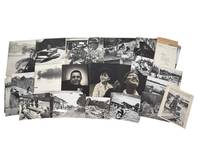
1961réf. 231231961. Baum Allyn. Peru photo archive a substantial working group of large original photographs and related New York Times material centered on Baum's Peru assignments significant for preserving a photographer's own visual record of Andean and Amazonian travel Indigenous communities village life and editorial circulation within mid twentieth century American newspaper photojournalism. Allyn Baum was a staff photographer for The New York Times from 1957 to 1967. Included is a typed note from New York Bureau Chief Gedeon de Margitay congratulating Baum on the Peru photographs published in the Magazine together with the January 21 1962 New York Times article "Into the Unknown" directly linking the images to their original publication context and to contemporary American visual encounters with Peru's Indigenous regions and frontier geographies. From the estate of Allyn Baum. Peru and New York. 1961-1973. Archive of 48 items including 46 large silver gelatin photographs a New York Times article written by Baum and a single-page typed letter regarding publication. Most photographs measure 8" x 10" while 9 larger examples measure 10" x 13". Several are mounted on board and bear Baum's signature or detailed inscriptions such as "Jungle Priest" "Headhunter" and "High Andes Quechua Indians in Peru. Working in home . producing products for sport." Many retain original press captions or handwritten notes on the versos some in Baum's own hand. The photographs document river and jungle travel in the Amazon Basin village and market scenes domestic interiors American aircraft and extensive portrait studies of Andean and Amazonian Indigenous peoples. Indigenous sitters appear weaving spinning wool knitting carrying children traveling by canoe gathered near riverside settlements or posed in both formal and informal portrait settings. Several photographs emphasize textile production and traditional labor practices among Quechua communities in the high Andes while others focus on Amazonian Indigenous groups photographed within thatched settlements and river communities preserving material evidence of architecture clothing subsistence practices and daily life during a period when American newspaper photography increasingly framed Indigenous South America through the lens of exploration modernization and remote access. The archive is a strong record of Peru in the early 1960s documenting not only transportation networks settlement patterns and regional travel but also Indigenous cultural continuity across both Andean and Amazonian environments. Baum's photographs repeatedly center Indigenous Peruvians not simply as background figures within landscape photography but as primary subjects whose labor dress craft production domestic life and physical presence structure the visual narrative of the archive. The accompanying New York Times material preserves the editorial framework through which these images entered American mass circulation while the de Margitay note confirms internal recognition of Baum's Peru work within the newspaper itself. The later date range appears to reflect continued press handling reuse and captioning rather than a single production moment giving the archive additional value as a working newspaper photography file shaped over time. Minor edgewear throughout; versos with original handwritten descriptions by Baum and press editors. A cohesive and well-preserved Peru field photography archive documenting Indigenous life regional travel and mid century American photojournalism connected to The New York Times. unknown books
1961réf. 231231961. Baum Allyn. Peru photo archive a substantial working group of large original photographs and related New York Times material centered on Baum's Peru assignments significant for preserving a photographer's own visual record of Andean and Amazonian travel Indigenous communities village life and editorial circulation within mid twentieth century American newspaper photojournalism. Allyn Baum was a staff photographer for The New York Times from 1957 to 1967. Included is a typed note from New York Bureau Chief Gedeon de Margitay congratulating Baum on the Peru photographs published in the Magazine together with the January 21 1962 New York Times article "Into the Unknown" directly linking the images to their original publication context and to contemporary American visual encounters with Peru's Indigenous regions and frontier geographies. From the estate of Allyn Baum. Peru and New York. 1961-1973. Archive of 48 items including 46 large silver gelatin photographs a New York Times article written by Baum and a single-page typed letter regarding publication. Most photographs measure 8" x 10" while 9 larger examples measure 10" x 13". Several are mounted on board and bear Baum's signature or detailed inscriptions such as "Jungle Priest" "Headhunter" and "High Andes Quechua Indians in Peru. Working in home . producing products for sport." Many retain original press captions or handwritten notes on the versos some in Baum's own hand. The photographs document river and jungle travel in the Amazon Basin village and market scenes domestic interiors American aircraft and extensive portrait studies of Andean and Amazonian Indigenous peoples. Indigenous sitters appear weaving spinning wool knitting carrying children traveling by canoe gathered near riverside settlements or posed in both formal and informal portrait settings. Several photographs emphasize textile production and traditional labor practices among Quechua communities in the high Andes while others focus on Amazonian Indigenous groups photographed within thatched settlements and river communities preserving material evidence of architecture clothing subsistence practices and daily life during a period when American newspaper photography increasingly framed Indigenous South America through the lens of exploration modernization and remote access. The archive is a strong record of Peru in the early 1960s documenting not only transportation networks settlement patterns and regional travel but also Indigenous cultural continuity across both Andean and Amazonian environments. Baum's photographs repeatedly center Indigenous Peruvians not simply as background figures within landscape photography but as primary subjects whose labor dress craft production domestic life and physical presence structure the visual narrative of the archive. The accompanying New York Times material preserves the editorial framework through which these images entered American mass circulation while the de Margitay note confirms internal recognition of Baum's Peru work within the newspaper itself. The later date range appears to reflect continued press handling reuse and captioning rather than a single production moment giving the archive additional value as a working newspaper photography file shaped over time. Minor edgewear throughout; versos with original handwritten descriptions by Baum and press editors. A cohesive and well-preserved Peru field photography archive documenting Indigenous life regional travel and mid century American photojournalism connected to The New York Times. unknown
réf. PF138 loose gelatin silver photographs from ca. 17.5 x 12 cm 6 ¾ x 4 ¾ in to 10.5 x 8 cm 4 x 3 in. 21 images captioned in pencil on recto; 11 images captioned in ink on recto; four images captioned in ink on recto. a few photos mildly faded or with mild creasing on edges but overall a very good collection of interesting photos. An interesting collection of photographs showing mining activities in the South American Andes in the early 20th century. 6 photographs show the mines of Santo Domingo in Peru. Santo Domingo was a gold mine located in southeastern Peru and in operation sometime between 1890 and 1920. The photographs show the offices miner dormitories and general views of the site. 9 photographs show the mines of Concordia possibly the Concordia Tin Mine in western Bolivia. The Concordia Tin Mine is most well known for being where notorious American outlaws Butch Cassidy 1866-1908 and the Sundance Kid 1867-1908 allegedly worked after fleeing the United States in the early 1900s. The photographs include views of the site the route the compiler took up to the mine including a “station” being constructed and “Carnival Day” festivities showing dancers at the mine and a photograph of the compiler and his colleagues. Also included are 10 photographs from a river tour on the “West” and “Mayo” rivers the compiler went on showing him and his party led by indigenous South Americans in canoes on the river; at a campsite; and in a constructed house with two views from the compiler’s “balcony.” Other photographs in the collection include views of La Paz Bolivia National Day/La Paz Day parade; Santiago Chile Santa Lucía Hill and the public gardens on top; Arequipa Peru outdoor church service before a crucifix; Cusco Peru; and Incan palace ruins in Peru. Overall an interesting collection showing South America during the early 20th century. unknown
réf. DADAX0275941469New unknown
réf. DADAX0195069285New unknown
réf. DADAX3865216927New unknown
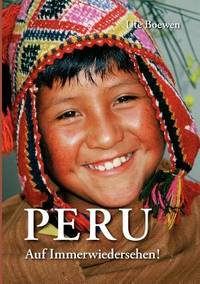
réf. BN67690Peru: Auf Immerwiedersehen ! Erweiterte Neuauflage Boewen Ute unknown
Folio, [53] p., [32] leaves of plates, loose as issued in portfolio.
réf. 0692513485.Ghardcover. Good. Access codes and supplements are not guaranteed with used items. May be an ex-library book. hardcover