1.266 Ergebnisse
1957Best.-Nr. 165321957. Women voting in Colombia 1957 documents Colombian women exercising national suffrage for the first time during the December 1 plebiscite that approved constitutional reforms inaugurating the political settlement known as the National Front. Women had formally received the right to elect and be elected through Legislative Act No. 3 of 1954 but the 1957 plebiscite provided their first opportunity to exercise that right in a nationwide vote. The photograph therefore records two interconnected developments in modern Colombian history: women's entry into the national electorate and a popular vote intended to establish a new constitutional and political arrangement after the fall of General Gustavo Rojas Pinilla and years of violent Liberal Conservative conflict. The plebiscite overwhelmingly approved reforms associated with the National Front under which the Liberal and Conservative parties would share political power; although conceived partly as a means of containing partisan conflict the settlement did not immediately terminate the violence that had marked Colombia since the 1940s. Gelatin silver press photograph with two images. Bogotá Colombia December 4 1957. Approximately 7 x 9 inches. The original caption printed above the photographs states in part: "Women voting for the first time in Colombian history turned out in large numbers in the 12/1 national plebiscite. Many mothers carried children in their arms as they arrived at polling places." The paired images emphasize women's physical participation in the electoral process: mothers are shown arriving to vote with children while at right a woman raises an ink-stained finger which the caption identifies as evidence that she has cast her ballot. These details make the photograph particularly useful as a record of suffrage as lived civic practice rather than merely legislative achievement preserving women's presence at polling places and the visible procedures surrounding their incorporation into the electorate. Colombia's national electoral authority confirms December 1 1957 as the first occasion on which Colombian women voted nationally while Banco de la República sources place that vote within the longer campaign for women's political rights and the constitutional transition leading into the National Front. The photograph was issued only three days after the plebiscite placing its production within the immediate press coverage of an election that altered both Colombian electoral participation and the organization of national political power. The vote followed the period conventionally known as La Violencia a prolonged conflict rooted principally in Liberal Conservative political antagonism; Colombia's Truth Commission identifies major phases extending from 1946 through the Rojas Pinilla dictatorship of 1953 to 1957 and notes continuing violence thereafter. As an original press photograph prepared for newspaper use the print also survives as material evidence of the visual news culture through which images of Colombia's new female electorate circulated contemporaneously. Minor handling and age wear consistent with press use; very good condition. A compelling contemporary visual record of the first nationwide exercise of women's suffrage in Colombia and of female voters' participation in the plebiscite that established the constitutional basis for the National Front. unknown books
2001415pp.richly illustrated in colour, hardcover (editor's cloth), illustrated dustwrapper, text in English, small stamp at verso of titlepage, 32cm., very good condition, S79093
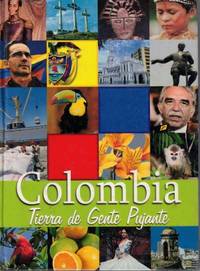
2001Best.-Nr. S79093, Villegas editores 2001 415pp.richly illustrated in colour, hardcover (editor's cloth), illustrated dustwrapper, text in English, small stamp at verso of titlepage, 32cm., very good condition, S79093
1957Best.-Nr. 165321957. Women voting in Colombia 1957 documents Colombian women exercising national suffrage for the first time during the December 1 plebiscite that approved constitutional reforms inaugurating the political settlement known as the National Front. Women had formally received the right to elect and be elected through Legislative Act No. 3 of 1954 but the 1957 plebiscite provided their first opportunity to exercise that right in a nationwide vote. The photograph therefore records two interconnected developments in modern Colombian history: women's entry into the national electorate and a popular vote intended to establish a new constitutional and political arrangement after the fall of General Gustavo Rojas Pinilla and years of violent Liberal Conservative conflict. The plebiscite overwhelmingly approved reforms associated with the National Front under which the Liberal and Conservative parties would share political power; although conceived partly as a means of containing partisan conflict the settlement did not immediately terminate the violence that had marked Colombia since the 1940s. Gelatin silver press photograph with two images. Bogotá Colombia December 4 1957. Approximately 7 x 9 inches. The original caption printed above the photographs states in part: "Women voting for the first time in Colombian history turned out in large numbers in the 12/1 national plebiscite. Many mothers carried children in their arms as they arrived at polling places." The paired images emphasize women's physical participation in the electoral process: mothers are shown arriving to vote with children while at right a woman raises an ink-stained finger which the caption identifies as evidence that she has cast her ballot. These details make the photograph particularly useful as a record of suffrage as lived civic practice rather than merely legislative achievement preserving women's presence at polling places and the visible procedures surrounding their incorporation into the electorate. Colombia's national electoral authority confirms December 1 1957 as the first occasion on which Colombian women voted nationally while Banco de la República sources place that vote within the longer campaign for women's political rights and the constitutional transition leading into the National Front. The photograph was issued only three days after the plebiscite placing its production within the immediate press coverage of an election that altered both Colombian electoral participation and the organization of national political power. The vote followed the period conventionally known as La Violencia a prolonged conflict rooted principally in Liberal Conservative political antagonism; Colombia's Truth Commission identifies major phases extending from 1946 through the Rojas Pinilla dictatorship of 1953 to 1957 and notes continuing violence thereafter. As an original press photograph prepared for newspaper use the print also survives as material evidence of the visual news culture through which images of Colombia's new female electorate circulated contemporaneously. Minor handling and age wear consistent with press use; very good condition. A compelling contemporary visual record of the first nationwide exercise of women's suffrage in Colombia and of female voters' participation in the plebiscite that established the constitutional basis for the National Front. unknown
Best.-Nr. 0656366966.Ghardcover. Good. Access codes and supplements are not guaranteed with used items. May be an ex-library book. hardcover
Best.-Nr. 1330982878.Gpaperback. Good. Access codes and supplements are not guaranteed with used items. May be an ex-library book. paperback
1967452 p. Hardcover Ex-library, Very good condition
1822Best.-Nr. 28453London, Baldwin, Cradock, and Joy, 1822. 8vo. Bound in 2 fine red longgrained hmorocco with clothsides and uncut. CXXIV,707"(4),782 pp. , 2 engraved portraits (Bolivar and Zea). A few scattered minor brownspots, clean and fine copy. Sabin calls for a map, which is not present here.
1822Cm. 21, 2 volumi, belle legature in piena pelle verde con fregi in oro al dorso e ai piatti, tasselli in pelle con titolo, pag. CXXIV, 707 (2 carte bianche) più ritratto e grande carta geografica ripiegata; VI, 782 (2 carte bianche) più ritratto. I ritratti sono del Presidente Bolivar e di Zea. MANCA l'occhiello al primo volume. PRIMA edizione di questo importante e dettagliato trattato sul paese sudamericano, con importanti notizie di aspetto economico con specifici paragrafi sulle estrazioni minerarie, le coltivazioni di Tabacco e Caffe' e la pesca delle perle. Interessante la descrizione accurata delle popolazioni indigene, con usi e costumi. Sabin, 101033.
Best.-Nr. A9781343941939Hardback. New. hardcover
1822Best.-Nr. 28453London Baldwin Cradock and Joy 1822. 8vo. Bound in 2 fine red longgrained hmorocco with clothsides and uncut. CXXIV707;4782 pp. 2 engraved portraits Bolivar and Zea. A few scattered minor brownspots clean and fine copy. Sabin calls for a map which is not present here. Scarce first English edition it was issued the same year in Spanish with the title: "Colombia: siendo una relacion geografica topografica.". This is the first major description of the new country The Republic of Colombia founded in 1820. hardcover
1900Cm. 17; pp. (32). Brossura editoriale illustrata colorata. Illustrazioni nel testo sulle varie fasei della coltivazione e raccolta del caffè. Si allega pieghevole pubblicitario a colori, più volte ripegato, di cm. 14; "Caffè gloria della Colombia". Interessante insieme. Ottimo esemplari. (19 / 1093)
196632x22. 208p. Fotogr. Nereo. Enc. Tela ed. Sobrecubierta.
1927(Roma, Ministero della Marina, 1927), stralcio con copertina posticcia muta, pp. 114/119 - !! ATTENZIONE !!: Con il termine estratto (o stralcio) intendiamo riferirci ad un fascicolo contenente un articolo di rivista, sia che esso sia stato stampato a parte utilizzando la stessa composizione sia che provenga direttamente da una rivista. Le pagine sono indicate come "da/a", ad esempio: 229/231 significa che il testo è composto da tre pagine. Quando la rivista di provenienza non viene indicata é perchè ci è sconosciuta. - !! ATTENTION !!: : NOT A BOOK : “estratto” or “stralcio” means simply a few pages, original nonetheless, printed in a magazine. Pages are indicated as in "from” “to", for example: 229/231 means the text comprises three pages (229, 230 and 231). If the magazine that contained the pages is not mentioned, it is because it is unknown to us.
Best.-Nr. 200819714Neuchatel, Delachau et niestlé , 1981 ; in-4, 216 pp., cartonnage d'éditeur avec jaquette.
1971Ex - library with bookplate, barcode. Otherwise very good condition: minor shelfwear only, contents clean and sound throughout. TPW Ex Library
Madrid, Insula, 1960. 4to.; 170 pp. y 10 láminas. Cubiertas originales.
Best.-Nr. 0656614897.Gpaperback. Good. Access codes and supplements are not guaranteed with used items. May be an ex-library book. paperback
Best.-Nr. 0364480262.Ghardcover. Good. Access codes and supplements are not guaranteed with used items. May be an ex-library book. hardcover
Best.-Nr. 0365952192.Gpaperback. Good. Access codes and supplements are not guaranteed with used items. May be an ex-library book. paperback
Best.-Nr. 0366207458.Ghardcover. Good. Access codes and supplements are not guaranteed with used items. May be an ex-library book. hardcover
1974In-4° pp. 73 con 140 tav. di goto a col. a piena pagina. leg. edit. con sovrac. ill.
2005Best.-Nr. 113517Grupo Cultural de Colombia 2005. hardcover. Bueno. Bogotá 2005. Grupo Cultural de Colombia. Cartoné. 528 pp. 27x20. Ilustrado. Nombre anterior propietario. Grupo Cultural de Colombia hardcover
piccoli danni, mancanza alla costola e a pag 37 senza interessamento dl testo.Una carta geografica in ultima pagina