SAUSSE André -MareMagnum

971 Ergebnisse
1953Milano, 1953, stralcio con copertina posticcia muta, pp. 77/88 con numerose fotografie. - !! ATTENZIONE !!: Con il termine estratto (o stralcio) intendiamo riferirci ad un fascicolo contenente un articolo di rivista, sia che esso sia stato stampato a parte utilizzando la stessa composizione sia che provenga direttamente da una rivista. Le pagine sono indicate come "da/a", ad esempio: 229/231 significa che il testo è composto da tre pagine. Quando la rivista di provenienza non viene indicata é perchè ci è sconosciuta. - !! ATTENTION !!: : NOT A BOOK : “estratto” or “stralcio” means simply a few pages, original nonetheless, printed in a magazine. Pages are indicated as in "from” “to", for example: 229/231 means the text comprises three pages (229, 230 and 231). If the magazine that contained the pages is not mentioned, it is because it is unknown to us.
18948vo; xxiii, 242pp, frontis, 15 other full-page illus. original cloth with deorative spine, bit soiled, end-papers foxed, else clean very good copy of an important contribution to rain forest botany and ecology, scarce. A picture of this book is available upon request by email. An important contribution to rain forest botany and ecology, based on the author's 24 years of collecting and study in the area.
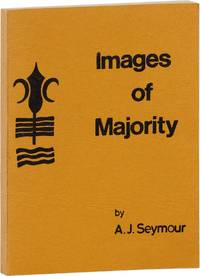
1978Best.-Nr. 84948Georgetown Guyana: Labour Advocate Printery 1978. First Edition. First Printing. Octavo 20.5cm; bright orange card wrappers with titles printed in black on front cover; xii1053pp. Inscribed by Seymour on the title page to Puerto Rican editor translator and literary critic Roberto Marquez: "For Roberto Marquez / from Arthur Seymour / Jan 30. 1978 / With best wishes." Marquez has marked several passages in ink throughout the text. Hint of sunning to spine some trivial wear to extremities; Very Good. Collection of verse by the Guyanese poet capturing memories of his visits to various places Bonafoux Hato Rey Brasilia Rome Gibbs St. Peter and touching on themes of love the national ethos Black consciousness and the "philosophical quest for the underlying and varied meanings of the various moods that come upon us all" from the introduction. 84948. Labour Advocate Printery unknown books
1978Best.-Nr. 84948Georgetown Guyana: Labour Advocate Printery 1978. First Edition. First Printing. Octavo 20.5cm; bright orange card wrappers with titles printed in black on front cover; xii1053pp. Inscribed by Seymour on the title page to Puerto Rican editor translator and literary critic Roberto Marquez: "For Roberto Marquez / from Arthur Seymour / Jan 30. 1978 / With best wishes." Marquez has marked several passages in ink throughout the text. Hint of sunning to spine some trivial wear to extremities; Very Good. Collection of verse by the Guyanese poet capturing memories of his visits to various places Bonafoux Hato Rey Brasilia Rome Gibbs St. Peter and touching on themes of love the national ethos Black consciousness and the "philosophical quest for the underlying and varied meanings of the various moods that come upon us all" from the introduction. 84948. Labour Advocate Printery unknown
1979Best.-Nr. RO80024704"CHEZ L'AUTEUR. 1979. In-12. Broché. Très bon état, Couv. fraîche, Dos satisfaisant, Intérieur frais. e""nviron 30/40 pages illustrées de nombreuses photos en couleurs dans le texte et hors-texte. Couverture rempliée.. . . . Classification Dewey : 908.88-Régionalisme : Guyane"
Best.-Nr. R260128563EDITIONS GUY DELABERGERIE. NON DATE. In-8. Broché. Etat d'usage, Couv. légèrement passée, Dos satisfaisant, Intérieur frais. 64 pages. Premier plat illustré en couleurs. Couverture rempliée. Nombreuses photos en couleurs dans et hors texte. Une carte en couleurs.. . . . Classification Dewey : 988-Guyane
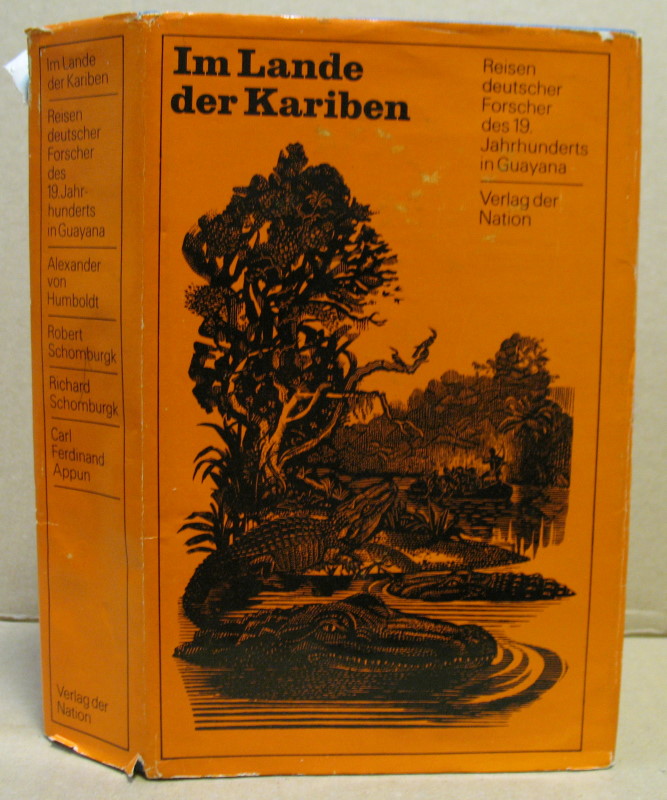
1969Best.-Nr. 8787Berlin, Verlag der Nation, 1969. 8°; 712 Seiten, Illustrationen von Alfred Will; 4. Auflage Orig.-Leinen mit OU Umschlag stark gerändert, randrissig; Papier deutlich gebräunt Reisen deutscher Forscher des 18. und 19. Jahrhunderts
1979Best.-Nr. R100066044Encre. 1979. In-8. Broché. Etat d'usage, Couv. convenable, Dos satisfaisant, Papier jauni. 189 pages - quelques planches en noir et blanc.. . . . Classification Dewey : 988-Guyane
1957trad. di Bruno Oddera tela edit. con sovrac. ill., piccole rotture e lieve abrasione in sovrac.
1989trad. di Susanna Basso tela edit. con sovrac. ill., minime tracce d'uso in sovrac.
1973n. 507 bross. edit. con sovrac. ill., fioriture e piccole rotture in sovrac., sigla a penna all'occhietto
1973n. 507 bross. edit. ill., manca sovrac., fioriture, piccola rottura e lievi tracce d'uso in cop. in cop.
1856Best.-Nr. 13210Paris Michel Lévy Frères 1856 In-12 252 pp, plats muets, dos orné de 4 nerfs, caissons dorés et filest simples ; très fines épidermures sur les coiffes, faibles rousseurs sur les gardes.
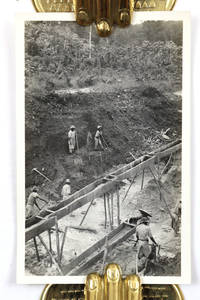
Best.-Nr. PB4359 loose original gelatin silver photographs five photos identical from ca. 88x144 cm 3 ½ x 5 ¾ in to ca. 87x125 cm 3 ¼ x 5 in. Three photos with period pencil captions in English on the verso. Most photos with stamped negative numbers and/or the “Velox” manufacturer’s mark on the verso; with accompanying manuscript index indicating captions to the photographs 1-82; 101-163. 5 pp. of text. Ca. 316x20 cm 12 ¼ x 8 in. Black ink on yellowish lined paper. Three photos lack small fragments at the corners accompanying index with fold marks one page with small tears at the lower left corner but otherwise a very good collection. Historically important collection of 59 original photographs taken by an American field technician during a six-month resource survey expedition for a New York mining syndicate in the Guianas in 1925. By the 1920s gold mining along the Lawa River borderlands between French and Dutch Guiana present-day Suriname had shifted from the gold rushes of the late nineteenth century to more organized syndicate-financed exploration. As easily accessible surface deposits along tributaries such as Crique Eau Claire were exhausted foreign mining companies introduced systematic survey methods to assess deeper placer deposits. Many of these ventures however proved short-lived because of harsh rainforest conditions and high logistical costs. As follows from the accompanying index the expedition lasted from December 1924 to June 1925. The party first traveled through Grenada and Trinidad before proceeding into the interior of Dutch Guiana and crossing into neighboring French Guiana in January. Its members operated mainly along the Lawa River and its tributary creeks carrying out test drilling timber cutting and placer gold mining. The principal mining activity appears to have been concentrated on the French Guiana side of the border namely along Crique Eau Claire and Crique Rufin while smaller outposts along the Lawa River managed transport and supplies. Among the identified members of the expedition is Fred C. Runckel a driller from Dutch Flat who according to both the index and a 1925 article in the Union sailed for home in April. The compiler appears to have been among the last members of the expedition to remain in the Guianas staying there at least until June and visiting among other places the French penal settlement at Saint-Jean. The collection contains fifty-nine original gelatin silver photographs taken during the expedition between December 1924 and June 1925. Although the accompanying master log lists 163 indexed photographs from the journey only part of the series appears to have been printed or preserved. Furthermore matching individual prints to specific index entries remains difficult due to unnumbered photos. About fifteen lively vernacular photographs likely depict Maroon inhabitants of the Guiana interior most probably Youcas poling long canoes navigating river rapids hunting along the Lawa River etc. At least five candid scenes portray native laborers unloading cargo from boats on the Lawa River while expedition members stand on the shore amid wooden crates hampers and heavy field equipment. Especially interesting are more than fifteen well-executed photos of the New York Syndicate’s gold mining operations likely taken near Rufin Creek and Eau Claire Creek at Revanche Camp in French Guiana. The images show local workers digging open-cut trenches erecting timber flume lines and managing placer mining equipment under the supervision of the syndicate's field engineers. The rest of the photos mostly portray San Fernando in Trinidad Port of Spain; Queen St. with signs “W. S. Robertson & Co.” and “Colonial Bank” “Indians of the Tumuc-Humac Mountains in Brazilian Guiana” landscapes and unidentified street views buildings trams and pedestrians. The collection also contains one photograph apparently taken after the expedition. The image shows open-cut nitrate mining in Chile and an electric mine locomotive operated by the Anglo-Chilean Consolidated Nitrate Corporation for which the compiler appears to have later worked. Overall historically important collection of 59 original gelatin silver photographs taken by an American field technician during a six-month resource survey expedition for a New York mining syndicate in the Guianas in 1925. unknown
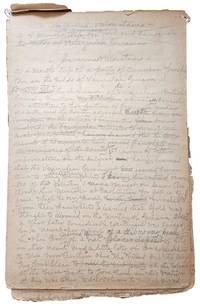
Best.-Nr. FRE55Oblong small folio ca. 177x277 cm 7 x 11 in. Ca. 180 pp. including ca. 99 pages of text. Pencil on yellowish paper. Period original illustrated wrappers fastened with a string. Amateur restoration with brown paper tape over the original spine and ca. two pages reinforced on the verso with paper. Occasional pencil corrections by the author. Wrappers fragile and rubbed with small losses to the front wrapper about ten pages with tears several leaves loose but otherwise a good copy. Historically significant manuscript diary of a forty-one-year-old railroad employee from Canton Ohio offering a first-hand account of an American gold-prospecting expedition into Venezuelan Guiana present-day Guayana in the fall of 1897. Gold discoveries in southeastern Venezuela during the mid-nineteenth century followed by the rapid development of the El Callao mining district in the 1860s attracted foreign prospectors to the remote interior of Venezuelan Guiana. The discoveries also intensified Venezuela’s long-running boundary dispute with Britain whose claims on behalf of British Guiana extended into gold-bearing territory and at their broadest approached the mouth of the Orinoco River. By the time our party arrived in 1897 the dispute was under international arbitration while Venezuela remained politically unstable with recurrent revolutions and fears of renewed armed conflict. Against this background the travellers pursued reports of a rich placer deposit supposedly discovered by an Ohio prospector named Bundy although no contemporary American newspaper account of this particular discovery has yet been located. According to the diary the author had “much experience handling earthwork and some knowledge of general prospecting.” The core party consisted of the author and fellow Canton residents J. H. Alexander and H. C. Knoblock. They left Canton on September 1 1897 travelling to New York by Fort Wayne and Erie Railroads then sailed aboard the S.S. Caracas transferring at Curaçao to the S.S. Philadelphia before reaching La Guaira Venezuela. After visiting Caracas they continued along the Venezuelan coast aboard the Dutch steamer Prins Maurits to Trinidad then re-entered Venezuela through the Orinoco Delta aboard the City of Bolívar and reached Ciudad Bolívar. From there they made a fifteen-day roughly 250-mile trek south to Paragua and later established a prospecting camp near Caño Wanaca and Mount El Rotundo. The diary ends in November and appears incomplete covering three of the four months indicated by its title. The diary features ninety-nine pages of manuscript text with the first thirteen pages describing the expedition's journey from their departure in Canton through their voyage to New York and Curaçao. About fourteen pages of the Venezuelan section trace the more urban stage of the journey through La Guaira Caracas and the coastal ports of Guanta Cumaná and Carúpano prior to the main prospecting expedition from Ciudad Bolívar. The author records stays at early hotels in La Guaira Hotel Sfatoro Grand Hotel and Hotel Italia as well as visits to cafés parks and public events La Guaira — Café Italia; Caracas — El Calvario and a military-band concert in Plaza Bolívar. Interestingly he describes La Guaira as a “filthy town” and criticizes Caracas’s open-gutter sewage poor gas and electric lighting. In the capital the compiler also records meeting General Jacinto Fabricio Lara the Venezuelan Minister of Development who oversaw mining interests and supplied the party with regional mining maps. He further notes Carúpano’s reconstruction after a destructive tidal wave active rum smuggling and the excessive customs formalities at Venezuelan ports. The central sixty pages cover the interior expedition south of Ciudad Bolívar with six burros and a hired “West Indian Negro” later dismissed for drunkenness. In these passages the author records numerous encounters with local residents including a woman preparing chicken soup with yuca & cassava cassava-bread production at La Tigre his treatment of a bleeding young man and the manufacture of papelón at a sugar plantation. He also recounts crossing the rock-strewn Río Grande Claro severe mosquito bites getting lost on the trail to Paragua and trading medicine for food. Interestingly at Paragua the author harshly criticizes the minimal use of dairy sparse furnishings repetitive music played on cuatros and widespread child cigar smoking and describes a local funeral that descended into a drunken brawl. In the same part of the diary the author details the party’s principal prospecting activities. He writes about their first field tests along the road to Paragua where he and a local guide examined a mountain stream using a pick shovel and gold pan; although they found no gold he records promising formations and notes a nearby mountain composed largely of iron ore. Near Paragua the author describes accompanying Señor Morales on a twenty-five-mile journey across the savanna to inspect a quartz vein at the foot of a large mountain though he notes that careful examination revealed no trace of gold. Finally he talks about their most systematic work at a base camp near Caño Wanaca and Mount El Rotundo where he recounts how they cleared brush blazed trails dug test pits in alluvial ravines washed stream gravels for “colors” of gold and examined the mountain’s iron-rich rock and unusual cave formations. Especially interesting are the author’s observations on Venezuela’s unstable political situation including the seizure at Carúpano of a vessel carrying arms for an impending revolution and the hurried transfer of cattle across the Paragua River following a disputed election. He also records a Venezuelan passenger’s fervent gratitude to the United States for resisting British territorial claims while another episode describes customs officials in Ciudad Bolívar mistaking the party’s food supplies for gunpowder and threatening them with imprisonment. Among the prominent officials who assisted the party at different stages of the journey were U.S. Minister Francis B. Loomis ca. 1861-1948 Legation Secretary William W. Russell ca. 1858-1944 and Consular Agent Robert Henderson in Ciudad Bolívar. The diary also contains a detailed account of the travellers’ stopover in Port of Spain Trinidad an important transit point on their journey. The author praises the colony’s infrastructure electric streetcars well-maintained botanical gardens and bustling commercial district stocked largely with imported English goods. Overall historically significant manuscript diary of a forty-one-year-old railroad employee from Canton Ohio offering a first-hand account of an American gold-prospecting expedition into Venezuelan Guiana in the fall of 1897. unknown
1784In 8, pp. XIV + 356 con 1 ritr. inc. all'antip. e 1 grande tabella piu' volte rip. Br. ed. muta. Ottimo es. genuino in barbe e intonso. Edizione originale di quest'opera che partendo dalla sua piu' famosa dedicata ai commerci europei nelle indie e nelle americhe, si occupa specificatamente della colonizzazione della Francia nelle americhe. Dopo aver analizzato il ritardo francese nella corsa coloniale, Raynal descrive i tentativi fatti verso le Antille a partire dagli inizi del XVII sec. Tratta poi della conquista della Guyana, di Santa Lucia, della Martinica, di Guadalupe, di Santo Domingo e di Tabago. Raynal dopo un inizio ecclesiastico, abbandonato il sacerdozio si fa conoscere come apostolo della liberta'. Il ritratto sulla terza edizione della sua importante opera sul commercio degli europei nelle Indie, opera avversata e conndatta al rogo, lo obbliga a fuggire, prima in Svizzera poi in Prussia, tornato in Francia nel 1784, si dedica a istituire premi accademici. Con la rivoluzione si mettera' nei guai con molte critiche agli eccessi del terrore. La sua fama gli evitera' la ghigliottina.
1784Best.-Nr. 10126Lausanne J. Pierre Heubach 1784 in-8 cart. de l'époque, très lég. frotté; cachet et signature "F. Reber 1790" sur la première garde
Best.-Nr. ORD-19122Tome XI contenant la suite des voyages aux Indes orientales par le Sud-Ouest, Voyage aux Terres Australes ou Antarctiques et Voyages errans. Paris. Didot. 1753. 1 volume in-4 (205 x 260 mm) pleine basane racinée, dos à 5 nerfs orné or, gardes peignées, tranches rougies, 1f. II, 722, (3) pages. 6 carte sur 11 et 12 figures sur 14 hors texte. Coiffes un peu arasées, papier lgt insolé par endroits, petits défauts mais bon état intérieur et bonne reliure. Certaines cartes sont détachées mais à leur place. Étiquette de Raoul Pascalis au revers du 1er plat.
1758In-16 p. (mm. 170x100), 2 volumi, p. pelle bazzana coeva, dorso a cordoni (restaur. per piccole manc.) con decoraz. e tit. oro su due tasselli, tagli rossi. Pubblicata in 80 volumi nel formato in-16, questa celebre raccolta di viaggi contiene "ce qu'il y a de plus remarquable .. dans les pays où les voyageurs ont pénétré.. Enrichi de cartes géographiques et de figures". Sono disponibili i volumi 53-54: "Continuation des voyages, des découvertes & des établissemens dans l’Amérique Méridionale" dedicati a: viaggi sul Rio delle Amazzoni, Rio de la Plata, costa della "Terre Magellanique", dei portoghesi in Brasile (con descriz., usi e costumi, storia naturale), sull'Orinoco, in Guiana. I 2 volumi sono molto ben illustrati f.t. (e completi come da Indice) da: “5 carte geografiche” (Rio de la Plata - Brasile (3 carte) - Guyana, tutte più volte ripieg. e da “6 tavole”, di cui 2 piante delle città di Buenos Aires e S. Salvador (capitale del Brasile), più volte ripieg.: le restanti raffigurano usi, costumi, storia naturale, ecc., tutte inc. in rame. Qualche lieve e uniforme arross., peraltro esempl. ben conservato.
Best.-Nr. 3494Ibis Rouge Editions, Presses Universitaires créoles/GEREC, collection Espaces guyanais, 1997, broché, 14X22 cm, 263 pages.
1839Best.-Nr. 95286Paris, Fimin Didot Frères, coll. « L'univers : histoire et description de tous les peuples » 1839 In-8 20,5 x 13,5 cm. Reliure demi-basane havane, dos lisse orné de filets dorés, 384-32 pp., 92-8 pl. Manque pl. n 66 et les 2 cartes repliées.
1993In-8 (cm. 27), similpelle editoriale, titolo oro al piatto e al dorso, pp. 286, con illustrazioni in bianco e nero nel testo. In buono stato (good copy). .
1993In-8 (cm. 27), similpelle editoriale, titolo oro al piatto e al dorso, pp. 286, con illustrazioni in bianco e nero nel testo. In buono stato (good copy). .
1993In-8 (cm. 27), similpelle editoriale, titolo oro al piatto e al dorso, pp. 286, con illustrazioni in bianco e nero nel testo. In buono stato (good copy). .
Best.-Nr. 212676Collection Univers de la France et des pays francophonesToulouse, Privat, 1982 fort in-8 carré, 480 pp., 39 planches dont 7 cartes, bradel toile bordeaux sous jaquette illustrée (reliure de l'éditeur).