3495 risultati
1853In 16, pp. XLVI + 384. Br. ed. con restauri. Edizione originale della traduzione francese di quelllo che viene considerato uno dei piu' importanti libri per la storia argentina mai pubblicati. L'edizione originale spagnola risale al 1845 ed e' strutturata attraverso un insieme di storia sociale, finzione, biografia attraverso il quale Sarmiento cerca di spiegare il trionfo della barbarie sulla civilta' in Argentina. L'autore fu presidente dell'Argentina dal 1868 al 1874. Precedentemente aveva viaggiato molto in Europa e Stati Uniti.
rif. 238070Paris, Pougin, an III (1795) in-8, XII-206-[2]-256-[4] pp., demi-basane fauve à coins de vélin, dos lisse orné (reliure de l'époque). Dos un peu frotté, infimes trous de ver sans atteinte au texte à la fin de l'ouvrage.
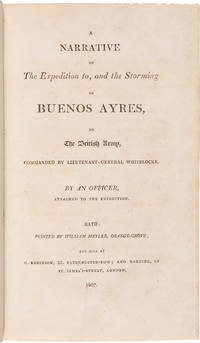
1807rif. 58063Bath: William Meyler 1807. An anonymous straight-forward account of the British attack on Buenos Aires in 1807 written "without any flourishing or prolix declamation on the calamities of war the effects of courage or the pursuit of wealth and fame." The unidentified author includes extensive details on the final engagements leading to the defeat of the British troops under Lieut. Gen. John Whitelocke by the Spanish citizen army of Creoles and peasants under the command of Santiago de Liniers. Forced to withdraw from Buenos Aires after this defeat Whitelocke was court-martialed and cashiered. An intriguing record of the British engagement in Buenos Aires with an unusual Bath imprint for such a work. OCLC records only five copies. 238pp. Lacks engraved plan. Modern red cloth spine gilt. Minor foxing to titlepage else quite clean. Very good. SABIN 51805. ALBERICH 1247. hardcover
1807rif. 58063Bath: William Meyler 1807. An anonymous straight-forward account of the British attack on Buenos Aires in 1807 written "without any flourishing or prolix declamation on the calamities of war the effects of courage or the pursuit of wealth and fame." The unidentified author includes extensive details on the final engagements leading to the defeat of the British troops under Lieut. Gen. John Whitelocke by the Spanish citizen army of Creoles and peasants under the command of Santiago de Liniers. Forced to withdraw from Buenos Aires after this defeat Whitelocke was court-martialed and cashiered. An intriguing record of the British engagement in Buenos Aires with an unusual Bath imprint for such a work. OCLC records only five copies. 238pp. Lacks engraved plan. Modern red cloth spine gilt. Minor foxing to titlepage else quite clean. Very good. SABIN 51805. ALBERICH 1247. hardcover books
19618vo., First Edition, with frontispiece, title-vignette and numerous illustrations (a number full-page) in the text; terracotta cloth, backstrip lettered in silver, a near fine copy in unclipped dustwrapper. SIGNED BY THE AUTHOR ON TITLE. Bright copy of Durrell's account of his animal-collecting expedition to the Argentine during the late 1950s, travelling from Buenos Aires to Patagonia and up to Jujuy. It is another of his collaborations with his finest illustrator Ralph Thompson; the two were brought together in 1954 by Rupert Hart-Davis, who had lured Durrell away from Faber after the success of his first book 'The Overloaded Ark' three years before. The partnership was an extraordinarily fruitful one, lasting a full decade and resulting in Durrell's most attractive books, including, of course, 'My Family and other Animals'. SIGNED COPIES OF DURRELL'S EARLIER WORKS ARE VERY SCARCE.
1852rif. 217621London: John Murray Albemarle Street 1852. Second edition enlarged with a new map and illustrations. Lacking the engraved portrait frontispiece of Sebastian Cabot. With 5 lithograph plates one tinted p. 97; folding map colored in outline mended several drawings in text. xlii 434 pp. 32 pp. of publisher's ads at rear. 1 vols. 8vo. Three quarter brown morocco. Brazilian bookseller ticket at back. Lacking frontispiece as noted. Some rubbing to binding browning to text block. Second edition enlarged with a new map and illustrations. Lacking the engraved portrait frontispiece of Sebastian Cabot. With 5 lithograph plates one tinted p. 97; folding map colored in outline mended several drawings in text. xlii 434 pp. 32 pp. of publisher's ads at rear. 1 vols. 8vo. Sabin 58613 John Murray, Albemarle Street unknown
1852rif. 217621London: John Murray Albemarle Street 1852. Second edition enlarged with a new map and illustrations. Lacking the engraved portrait frontispiece of Sebastian Cabot. With 5 lithograph plates one tinted p. 97; folding map colored in outline mended several drawings in text. xlii 434 pp. 32 pp. of publisher's ads at rear. 1 vols. 8vo. Three quarter brown morocco. Brazilian bookseller ticket at back. Lacking frontispiece as noted. Some rubbing to binding browning to text block. Second edition enlarged with a new map and illustrations. Lacking the engraved portrait frontispiece of Sebastian Cabot. With 5 lithograph plates one tinted p. 97; folding map colored in outline mended several drawings in text. xlii 434 pp. 32 pp. of publisher's ads at rear. 1 vols. 8vo. Sabin 58613 John Murray, Albemarle Street unknown books
1940rif. 41816Buenos Aires: n.p. 1940. First edition. Patterned maroon leather album two holes with string ties and tassels gilt titles and illustrations on front board. A very good copy with wear to spine ends and corners of boards writing on front pastedown and on a few leaves edgeworn first leaf. Unpaged 20 leaves. Illus. with 19 mounted silver-gelatin photographs with spider-web tissue guards 29 b/w photo-reproductions on 7 plates and two small portraits. Obl. 4to. 12 x 8.5 inches. Over forty original signatures and inscriptions some a paragraph long on the front pastedown and verso of first leaf plus one or two later on all presumably members of the regiment. Includes a short history of the Regiment. A group photo of 28 officers has a separate bound-in key identifying them by name and rank. Created on May 29 1810 and immediately sent as part of the relief expedition to the interior provinces Regimiento no. 3 de Infanteria "General Belgrano" is the most prestigious brigade in the Argentinean army. This 1940 album produced on the 140th anniversary of the regiment was a crucial time for the military in Argentina with the country officially neutral but much influenced by the German military. The Regiment was led by General Ambrosio Vago first photograph a supporter of the Allies who had refused to take part in the coup of 1930 though at this time was urging a new coup along with a number of Axis-leaning officers to oust President Ramón Castillo with the goal of holding non-fraudulent elections. But it would be Peron who would lead the coup in 1943 with Vago though ostensibly a Peronist not participating and exiled to Bahia Blanca. A rare photographic record of the Argentinean military before Peron's ascendancy. We could locate no copies of this nor any similar items in OCLC or other Latin American or European library databases. n.p. hardcover
1940rif. 41816Buenos Aires: n.p. 1940. First edition. Patterned maroon leather album two holes with string ties and tassels gilt titles and illustrations on front board. A very good copy with wear to spine ends and corners of boards writing on front pastedown and on a few leaves edgeworn first leaf. Unpaged 20 leaves. Illus. with 19 mounted silver-gelatin photographs with spider-web tissue guards 29 b/w photo-reproductions on 7 plates and two small portraits. Obl. 4to. 12 x 8.5 inches. Over forty original signatures and inscriptions some a paragraph long on the front pastedown and verso of first leaf plus one or two later on all presumably members of the regiment. Includes a short history of the Regiment. A group photo of 28 officers has a separate bound-in key identifying them by name and rank. Created on May 29 1810 and immediately sent as part of the relief expedition to the interior provinces Regimiento no. 3 de Infanteria "General Belgrano" is the most prestigious brigade in the Argentinean army. This 1940 album produced on the 140th anniversary of the regiment was a crucial time for the military in Argentina with the country officially neutral but much influenced by the German military. The Regiment was led by General Ambrosio Vago first photograph a supporter of the Allies who had refused to take part in the coup of 1930 though at this time was urging a new coup along with a number of Axis-leaning officers to oust President Ramón Castillo with the goal of holding non-fraudulent elections. But it would be Peron who would lead the coup in 1943 with Vago though ostensibly a Peronist not participating and exiled to Bahia Blanca. A rare photographic record of the Argentinean military before Peron's ascendancy. We could locate no copies of this nor any similar items in OCLC or other Latin American or European library databases. n.p. hardcover books
1965rif. 63434Buenos Aires Argentina: Asociacion Esquelas Lincoln American International School 1965. Thick folio. 12.5 x 13.75 in. 76 pp unpaginated. on thick paper stock. With 145 original silver gelatin photographs mounted enhanced with printed captions occasional annotations and numerous pieces of ephemera including ALS mimeographed material laid-in card as well as 2 silver print architectural elevations laid-in nearly all decorative tissue guards retained. Padded brown calf post-binder manuscript label on front cover ownership of Whinery on first leaf occasional scuffing minor tears to a couple of the leaves gutter margins creasing to some of the tissue guards minor chipping head & foot of spine still a VG exemplar. The souvenir/memory album opens with photos of Whinery and the early images of the Lincoln American International School in Buenos Aires the ground breaking at La Lucila the massive school addition designed by architects Alberto E. Dodds and Mario E. Cattaneo and completion November 30 1963.Two silver print photos laid-in depict the proposed new building elevation drawings from the architect and convey the full size and impact of the building when later completed. The vaulted new Mid-Century Modern auditorium with Argentine & U.S. Flag prominent on the stage also used as gymnasium with the compiler wondering how they ever survived without the new structure. Also depicted are school pageants greeting other international students the new school library along with a myriad of student events. Of additional interest are the photographs capturing the new science labs vocational training for aircraft and automobiles and finally the sports events of the “Condors.” Also featured are the school choirs bands architectural features such as the striking Mid-Century Modern atrium and finally the staff and support staff of the school. The final group of pages include photographs and tipped-in mounted letters addressed to Mr. Whinery declaring “We are very sorry that you are leaving” and “You have been a very good director” and song addressed to him from the students and staff. The closing pages include photos of the Director’s houses in Buenos Aires Commencement in 1960 several farewell parties and a laid-in card. Whinery 1918-2009 was a Kansas educator recruited after World War II for international schools for the American Embassy in Buenos Aires and he would remain the director of the Lincoln school from about 1952 through his retirement from there in 1964 and was still attending American International School reunions as late as 1995. Lincoln based in La Lucila Vicente Lopez is still considered the best English-language prep school in Buenos Aires and routinely sends graduates to the most elite universities and participates in the International Baccalaureate IB program. See: Jacob Meschke Lincoln: International Schooling in Argentina Asociacion Escuelas Lincoln Buenos Aires Times April 7 2018. Asociacion Esquelas Lincoln, American International School, unknown
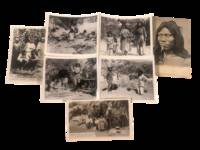
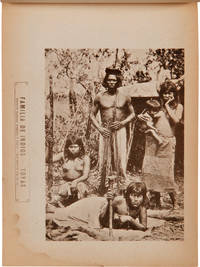
1910rif. 230061910. Indigenous Peoples of Argentina's Chaco and Northern Regions early 20th century. This photo archive consists of 10 black and white photographs comprising three real photo postcards and four original silver gelatin photographs documenting Indigenous peoples of Argentina in rural and semi-rural settings. The materials date to the early 20th century and originate primarily from northern Argentina with several images clearly associated with Indigenous communities of the Chaco. The postcards carry printed captions in Spanish identifying subjects by regional or ethnic designation. The post cards are from the 1910s-20s while the photographs are probably from 1930s-40s demonstrating the eras between Native expulsion at the turn of the century to colonial era labor workers. Historically these images must be understood within the violent context of Indigenous dispossession and assimilation policies in early twentieth-century Argentina. Following campaigns such as the Conquest of the Desert and subsequent northern military actions Indigenous peoples were subjected to land seizure population displacement forced labor on plantations and ranches and confinement within missions or state-controlled settlements. In regions like the Chaco Indigenous communities were frequently exploited for agricultural and industrial labor under coercive conditions while their cultures were documented by missionaries anthropologists and photographers who framed them as vanishing or pre-modern. The collection depicts Indigenous men women and children engaged in daily life and posed portraiture. Group scenes show families gathered outdoors domestic labor such as food preparation and carrying water and communal resting or work areas constructed from organic materials. Several photographs emphasize mobility and subsistence including figures carrying bundles tools or containers across arid terrain while others present seated family groups framed in front of shelters or temporary dwellings. Individual and small-group portraits highlight clothing that blends Indigenous traditions with elements of imposed or adopted settler attire revealing the uneven process of cultural disruption and adaptation underway at the time. Light handling and edgewear throughout photos remain crisp and clear. Overall very good condition. This archive provides an important primary visual source for understanding Indigenous life in Argentina during a critical era of colonial consolidation offering insight into everyday practices family structures and the visual strategies through which Indigenous peoples were represented and controlled. unknown
1910rif. 230061910. Indigenous Peoples of Argentina's Chaco and Northern Regions early 20th century. This photo archive consists of 10 black and white photographs comprising three real photo postcards and four original silver gelatin photographs documenting Indigenous peoples of Argentina in rural and semi-rural settings. The materials date to the early 20th century and originate primarily from northern Argentina with several images clearly associated with Indigenous communities of the Chaco. The postcards carry printed captions in Spanish identifying subjects by regional or ethnic designation. The post cards are from the 1910s-20s while the photographs are probably from 1930s-40s demonstrating the eras between Native expulsion at the turn of the century to colonial era labor workers. Historically these images must be understood within the violent context of Indigenous dispossession and assimilation policies in early twentieth-century Argentina. Following campaigns such as the Conquest of the Desert and subsequent northern military actions Indigenous peoples were subjected to land seizure population displacement forced labor on plantations and ranches and confinement within missions or state-controlled settlements. In regions like the Chaco Indigenous communities were frequently exploited for agricultural and industrial labor under coercive conditions while their cultures were documented by missionaries anthropologists and photographers who framed them as vanishing or pre-modern. The collection depicts Indigenous men women and children engaged in daily life and posed portraiture. Group scenes show families gathered outdoors domestic labor such as food preparation and carrying water and communal resting or work areas constructed from organic materials. Several photographs emphasize mobility and subsistence including figures carrying bundles tools or containers across arid terrain while others present seated family groups framed in front of shelters or temporary dwellings. Individual and small-group portraits highlight clothing that blends Indigenous traditions with elements of imposed or adopted settler attire revealing the uneven process of cultural disruption and adaptation underway at the time. Light handling and edgewear throughout photos remain crisp and clear. Overall very good condition. This archive provides an important primary visual source for understanding Indigenous life in Argentina during a critical era of colonial consolidation offering insight into everyday practices family structures and the visual strategies through which Indigenous peoples were represented and controlled. unknown books
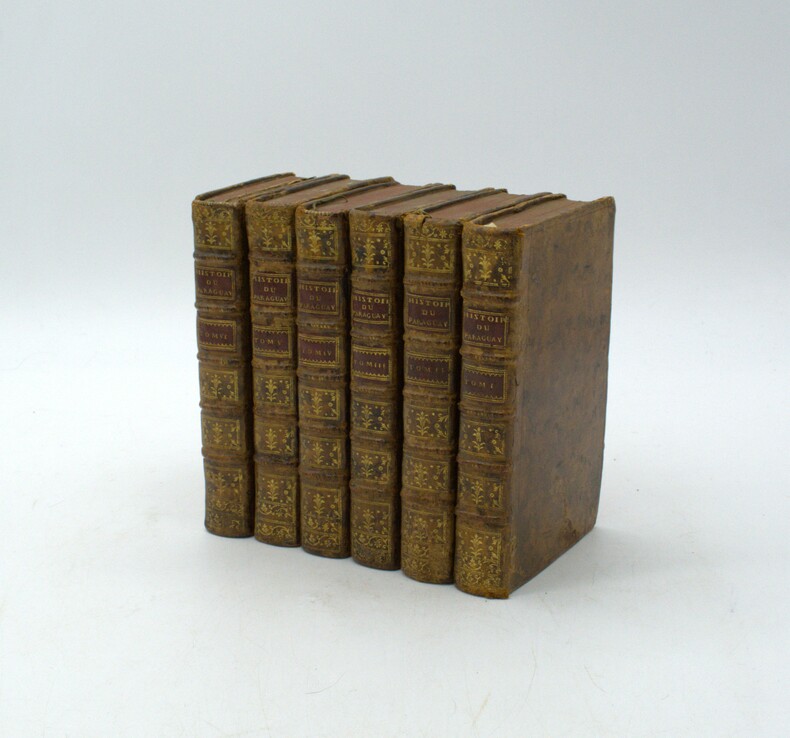
1757rif. PHO-1914Paris, Desaint, 1757. 6 vol in-12, veau havane moucheté époque, dos à 5 nerfs, pièces de titre et de tomaison rouge, caissons ornés, tranches rouges (défauts à la reliure dont des coins usés, 3 coiffes découvertes, des épidermures et des trous sur les mors des tomes 4, 5 et 6, très légères rousseurs). Édition illustrée de 7 cartes dépliantes hors-texte gravées sur cuivre. Provenance : bibliothèque de la Congrégation de Notre Dame - Maison des Oiseaux (étiquette lithographiée).
In 4o, pp. 141, br., 10 litografie a coll. f.t. e 1 tempera originale. Ristampa dell'opera comico-burlesca del Romero (prima ed. 1886, che narra la storia di una famiglia di emigranti liguri) scritta in quel particolare idioma che parlavano gli immigrati italiani in Argentina: il cocoliche. Edizione in 210 esemplari piu 10 con una tempera originale dell'artista argentino Santiago Cogorno. Prologo di Alberto Galardi Dedica autografa di Cogorno a Norberto Raggio. Minime tracce di polvere ai piatti. Perfetto (1684/ ROMERO - COGORNO - ARGENTINA - EMIGRAZIONE - BUENOS AYRES - LIBRI D'ARTISTA - LITOGRAFIA - SUDAMERICA)
rif. 11-0952London: Waterlow & Sons 1913. Large map measuring 124 x 103 cm. 49 x 40 inches. Mounted on canvas. Very attractive. London: Waterlow & Sons, 1913. unknown
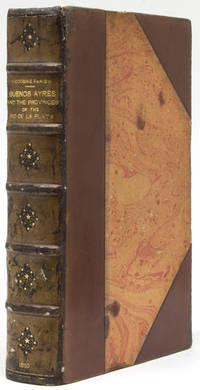
18818vo [22 x 15 cm]; 2 volumes, xv, [iii] 436; xv [i] 527pp, large folding colored map, indexes. original cloth, gilt spine title lettering, short tear at spine end, endpaper bookplate of Mark Robinson and short note by Herbert Taylor dated 1904, a near fine set. A picture of this book is available upon request by email. A detailed description of the country, the peoples, tribes, gauchos, buildings, institutions, methods of travel, trade and commerce, climate, the authors travels throughout area, fauna and flora, the Andes, resources, hunting, agriculture, artisans, travels up the Uruguay river, Rioja, Salta, Tucuman, down the Parana river. Wood p. 625: 'Reference to animal life, especially to the birds, of the country are numerous'. See also Sclater and Hudson, Argentine Ornithology vol. 2, 230. Ibis 1885, p. 335. Welch 16. 'The notions about this vast and progressive country currently in England are at times absurd, at others biased and if my efforts serve to enlighten the one and correct the other, they will not have been in vain' (preface). Volume II was delayed due to printing difficulties, which was done in Buenos Aires.
1883In-8°, legatura in mezza tela con titoli in oro su tassello al dorso, pp. XXVI, 2 bianche, 217(1). Con 55 tavole fotolitografiche di carte (ripiegate), strumenti, tipi indigeni, esemplari botanici, etc. Buon esemplare. Spartiacque per la scienza e la geopolitica argentine, la Spedizione Australe fu un progetto dell'esploratore e tenente di marina italiano Giacomo Bove, realizzato con l'appoggio del governo argentino. L'obiettivo iniziale di arrivare in Antartide fu modificato a beneficio di una spedizione scientifica nella parte meridionale della regione patagonica. Sotto il comando militare del comandante Luis Piedrabuena e quello scientifico di Bove, la nave Cabo de Hornos e poi la San José percorsero il fiume Santa Cruz, la Isla de los Estados, lo Estrecho di Magellano, i canali fueguini, il nord della Terra del Fuoco, Punta Arenas, Río Gallegos e parte della provincia di Santa Cruz. La spedizione produsse validi risultati in campo zoologico, botanico, metereologico, etnografico, orografico e geologico.
1910Album cm. 48 x 26. Composto di circa 400 pagine, ognuna con un’illustrazione, 28 dei queste stampate a colori. Le tavole rappresentano vedute, ritratti di personaggi celebri e scene della storia argentina, le immagini sono racchiuse in cornici tipografiche di vari colori. Tela editoriale rossa con titoli oro sul primo piatto. Esemplare in ottimo stato.
1772rif. PHO-1925Paris, Saillant & Nyon, 1772, 2 volumes in-8 (200x130), relié plein veau marbré époque, dos à nerfs orné, pièce de titre et tomaison, tranches rouges 2ff. xliii , 336pp-2ff.453pp,1ff-1ff. , illustré de 3 planches et 20 cartes dépliantes ( sur 21, manque la carte n°3), 2 cartes détachées, déchirures et léger manque en marge à 3 cartes , coins et coupes usés, coiffes absentes tome 2, petit manque au plat, charnière fendillée tome 2.
1934In 4, pp. VIII + 432 con 43 tavole fotografiche fuori testo in nero e a colori e 6 grandi panorami fotografici piu' volte ripiegati + 1 grande carta geografica della Terra del fuoco in apposita taschina editoriale separata. Tutta tela editoriale con la rarissima sovraccoperta fotografica, estremamente difficile da reperirsi, probabilmente per la frase a firma Mussolini che campoeggia al piatto anteriore e che potrebbe aver indotto molti possessori a eliminarla. Curiosa la figura di Alberto MAria De Agostini, sacerdote salesiano e missionario in Terra del Fuoco, uni' alla sua attivita' pastorale anche quella di esploratore, alpinista e naturalista. Sali' infatti il Monte S. lorenzo nel 1943 e organizzo' varie spedizioni con Carlo Mauri e Monzino. Importanti furono anche le sue ricerche cartografiche e naturalistiche.
1895rif. 57189Buenos Aires Argentina: Arrufana Garrido Ortiz & Cia. 1895. An Enlightening Look at Buenos Aires and Surroundings in 1895 An interesting gift book from Arrufana Garrido & Ortiz an importing company which operated in Buenos Aires during the 1890s. Each leaf contains a black-and-white photographic illustration of a scene from Buenos Aires or its surroundings on the recto with an advertisement mostly in Spanish printed in cyan on the verso. Among the photos of cities and dramatic landscapes are also more intimate images including several of outdoor markets one of a ranching family outside their straw-roofed home with their livestock and a portrait of a family of Toba people one of Argentina's largest indigenous groups. The illustrations after photographs by Arturo W. Boote are attributed to Gunche Wiebeck y Turtl whose photoprinting and lithography office in Buenos Aires advertised in this volume printed photographs for a number of works as well as maps of Argentina Chile and the surrounding areas of South America around the turn of the 20th century. The advertisements some illustrated offer a wide array of goods and services from firearms to pocket watches to steamboat travel. One advertisement for a restaurant specializing in French and German cuisine is printed side by side in Spanish and German; the text is generally the same although the German side has an additional line that reads "Mit allem comfort der Neuzeit" which might suggest a certain outlook of European visitors towards other establishments in the city. More than just a souvenir this gift book's variety of photos both posed and candid rural and urban along with its breadth of advertisements make it a fascinating window into Argentina at the end of the 19th century. Not located on OCLC. Oblong 12mo. Original pebbled red cloth tooled in blind and gilt. Boards somewhat rubbed and worn corners worn rear hinge separated but binding still sturdy. Text moderately tanned and with a persistent stain in the lower outer corner. Good plus. hardcover
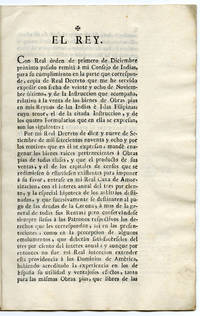
1805rif. 51822Buenos Aires. 1805. An early Buenos Aires imprint that conveys several royal decrees of the King of Spain Charles IV. These decrees were originally issued in September 1804 and govern the sale of religious works in the Spanish colonies and give instructions for compliance. A rare piece of South American printing not in OCLC. Medina claims to have owned a copy. Folio. Dbd. Some tanning and dust soiling scattered light foxing. Very good. MEDINA RIO DE LA PLATA 285. unknown
1895rif. 57189Buenos Aires Argentina: Arrufana Garrido Ortiz & Cia. 1895. An Enlightening Look at Buenos Aires and Surroundings in 1895 An interesting gift book from Arrufana Garrido & Ortiz an importing company which operated in Buenos Aires during the 1890s. Each leaf contains a black-and-white photographic illustration of a scene from Buenos Aires or its surroundings on the recto with an advertisement mostly in Spanish printed in cyan on the verso. Among the photos of cities and dramatic landscapes are also more intimate images including several of outdoor markets one of a ranching family outside their straw-roofed home with their livestock and a portrait of a family of Toba people one of Argentina's largest indigenous groups. The illustrations after photographs by Arturo W. Boote are attributed to Gunche Wiebeck y Turtl whose photoprinting and lithography office in Buenos Aires advertised in this volume printed photographs for a number of works as well as maps of Argentina Chile and the surrounding areas of South America around the turn of the 20th century. The advertisements some illustrated offer a wide array of goods and services from firearms to pocket watches to steamboat travel. One advertisement for a restaurant specializing in French and German cuisine is printed side by side in Spanish and German; the text is generally the same although the German side has an additional line that reads "Mit allem comfort der Neuzeit" which might suggest a certain outlook of European visitors towards other establishments in the city. More than just a souvenir this gift book's variety of photos both posed and candid rural and urban along with its breadth of advertisements make it a fascinating window into Argentina at the end of the 19th century. Not located on OCLC. Oblong 12mo. Original pebbled red cloth tooled in blind and gilt. Boards somewhat rubbed and worn corners worn rear hinge separated but binding still sturdy. Text moderately tanned and with a persistent stain in the lower outer corner. Good plus. hardcover books
1805rif. 51822Buenos Aires. 1805. An early Buenos Aires imprint that conveys several royal decrees of the King of Spain Charles IV. These decrees were originally issued in September 1804 and govern the sale of religious works in the Spanish colonies and give instructions for compliance. A rare piece of South American printing not in OCLC. Medina claims to have owned a copy. Folio. Dbd. Some tanning and dust soiling scattered light foxing. Very good. MEDINA RIO DE LA PLATA 285. unknown books
1953rif. 18764Buenos Aires, 1953 - 1984 (with gaps). 27 - 29 cm high, 21 - 25 cm deep, 272 cm breadth on shelf. 4°. Half-cloth with cardboard-covers; library copies