3 515 résultats
1946réf. ZB536587Buenos Aires: 1946. 209 2 pp minor library markings text age toned paper wrappers. - If you are reading this this item is actually physically in our stock and ready for shipment once ordered. We are not bookjackers. Buyer is responsible for any additional duties taxes or fees required by recipient's country. Photos available upon request. Buenos Aires: unknown
1963réf. ZB5450211963. softcover very good. - If you are reading this this item is actually physically in our stock and ready for shipment once ordered. We are not bookjackers. Buyer is responsible for any additional duties taxes or fees required by recipient's country. paperback
1912réf. ZB485037Buenos Aires: Robles Herrando y Cia 1912. 12mo 18 pp. rules and regulations of this Masonic philanthropic organization; paper wrappers and title age toned but not fragile. - If you are reading this this item is actually physically in our stock and ready for shipment once ordered. We are not bookjackers. Buyer is responsible for any additional duties taxes or fees required by recipient's country. Buenos Aires: Robles, Herrando y Cia, unknown
1998réf. ZB462207Asociacion de Bancos de la Republica Argentina 1998. 525 pp. softcover very good. - If you are reading this this item is actually physically in our stock and ready for shipment once ordered. We are not bookjackers. Buyer is responsible for any additional duties taxes or fees required by recipient's country. Photos available upon request. Asociacion de Bancos de la Republica Argentina paperback
1937réf. ZB146685Buenos Aires: 1937-43. volumes 1-9 an uninterrupted run of complete volumes bound some joints weak or broken minor ownership markings still good very-good. - If you are reading this this item is actually physically in our stock and ready for shipment once ordered. We are not bookjackers. Buyer is responsible for any additional duties taxes or fees required by recipient's country. Photos available upon request. Buenos Aires: unknown
1994réf. 1-0590471406Scholastic Paperbacks 1994. Paperback. New. 233 pages. 7.75x5.50x0.75 inches. Scholastic Paperbacks paperback
1985réf. G9506120218I4N00Academia Nacional de Bellas Artes 1985. Hardcover. Very Good. May have limited writing in cover pages. Pages are unmarked. ~ ThriftBooks: Read More Spend Less.Dust jacket quality is not guaranteed. Academia Nacional de Bellas Artes hardcover
1994réf. USD_9780590471404Scholastic Inc 1994. 1st. Soft Cover. Used - Like New/Used - Like New. Scholastic Inc paperback
1977réf. SBBI-mon0000051538Elías Quejereta. 1977. library. Good. Our good condition books are generally good for reading but not for gifting or collecting. They could have imperfections such as creasing fanning inscriptions margin notes yellowing staining on edge or cover or pages bumps scuffs etc etc sometimes multiple of these. It's a wide category that encompasses anything that isn't almost-new down to anything that is slightly better than poor. We would NOT recommend gifting Good books - these should be considered reading copies. Our books are dispatched from a Yorkshire former cotton mill. We list via barcode/ISBN so please note that the images are stock images and may not be the exact copy you receive furthermore the details about edition and year might not be accurate as many publishers reuse the same ISBN for multiple editions and as we simply scan a barcode or enter an ISBN we do not check the validity of the edition data when listing. If you're looking for an exact edition please don't order at least not without checking with us first although we don't always have time to check. We aim to dispatch prompty the service used will depend on order value and book size. We can ship to most countries see our shipping policies. Payment is via Abe only. Elías Quejereta. unknown
2021réf. 1-1541581245Millbrook Pr 2021. LIB. New. 32 pages. 9.75x9.75x0.50 inches. Millbrook Pr unknown
2015réf. G1634176901I4N10Page Publishing Inc 2015. Paperback. Very Good. Former library book; May have limited writing in cover pages. Pages are unmarked. ~ ThriftBooks: Read More Spend Less.Dust jacket quality is not guaranteed. Page Publishing, Inc paperback
réf. PC39Oblong Folio album ca. 26x35 cm or 10 x 13 ½ in. 111 black card stock leaves. With 110 mounted original gelatin silver photos mostly ca. 195x24 cm 7 ¾ x 9 ½ in the last photo is 19x21 cm 7 ½ x 8 ¼ in. Most photos are numbered in negative three views of Rio de Janeiro are also captioned in negative. About a hundred images are with paper labels with typewritten captions on the mounts. With nineteen smaller loose photos from ca. 8x14 cm 3 ¼ x 5 ½ in to ca. 6x85 cm 2 ¼ x 3 ¼ in housed in an envelope at the rear. Three images with period ink or pencil captions on verso one photo dated on verso “Easter Day – 1921 Rio Brazil”. Period black full sheep album fastened with metal bolts; gilt-lettered title on the front board. Paper label of the “Badger Line” of the “Heinn Company Milwaukee” on the inner side of the rear board. Binding rubbed on extremities front board with a crack at the stub ca. thirty photos with bigger or smaller creases or losses on the left margins or corners several photos detached and loosely inserted but overall a very good album of large interesting strong photos. Interesting extensive collection of large original gelatin silver photographs compiled by a female traveller and documenting the “second annual American Express cruise to and around South America” in January – April 1921 A 70 Days Cruise// The Gazette. Montreal January 31 1921 p. 18. Amex a freight and finance company which became famous through its payment cards opened its travel division in 1915. In the 1920s it offered tours and cruises to South America Hawaii California the Caribbean the Mediterranean China Japan and around the world as well as elaborate independent packages. The 1921 cruise to South America lasted seventy days and started on board the luxury steamship “Ebro” which departed New York and called at Havana went through Panama Canal and stopped at Lima Mollendo Arica and Valparaiso. From there the travellers went by train to Santiago and Buenos Aires and then sailed up the east coast on board the steamer “Aeolus” visiting Montevideo Santos Sao Paulo Rio de Janeiro and Bridgetown Barbados. Among the passengers were “a number of prominent Canadians” A 70 Days Cruise Ibid. including “Sir John Hendric former Governor of Ontario Canada and Lady Hendric” St. Louis Girl Who Starts on S. American Trip// St. Louis Globe-Democrat. January 28 1921 p. 5. The same article discussed several Louisans who went on the cruise – Miss Olguita Queeney Mr. & Mrs. C.W. Johnson and James W. Scudder. One of the captions identifies another traveller as "Mr. Charles Le Maire” who was a travel representative for the “Walford-Astoria” and several other hotels in Chicago under the management of the Boomer family. Fluent in Spanish Portuguese and French Le Maire was sent on a cruise “for the purpose of studying business travel and hotel conditions in the Latin American cities and to arrange with the various hotel owners and transportation companies for the handling of American and European visitors extending the service of arranging hotel and travel accommodations which the Boomer hotels inaugurated successfully in Europe” A “Commercial Traveler” for a Great Hotel System is Mr. Le Maire// National Hotel Reporter. Chicago January 31 1921 p. 1. The album belonged to a female traveller who went on a cruise one of the smaller loose photos of four ladies bears the caption “The Lindermans Mother & I at Tacna Chile”. It opens with five views of Havana showing Columbus Cathedral Catedral de San Cristobal Morro Castle and harbour Paceo El Prado Mercedes Church and a scene with Cuban farmers in a field. The images of Panama include interesting group portraits of the travellers posing at Gatun locks a view of the Panama Canal at the Culebra Cut and two photos of Panama City Metropolitan Cathedral ruins of the old Cathedral tower in Panama Viejo. A lively series of photos depicts the celebration of crossing the Equator and fancy-dress balls on board the S.S. “Ebro” “Father Neptune and his followers” spectators “Father Neptune holds court” “a tenderfoot about to be initiated” makeshift pool on the ship’s deck ball participants in fancy dress. Nineteen photos of Peru show Lima Cathedral and Plaza Mayor a military review the travellers having lunch at the Exposition Building the bull ring the Institute of Hygiene portraits of toy and fruit vendors elaborate forged metal gates to a private residence a pier in Barranco - “the bathing resort of Lima” Mollendo “the breakwater and landing place” passengers being landed in a chair and Tacna “the principal business street” a city park the travellers dining in a restaurant the train which “carried us from Tacna to Arica”. Over twenty images of Chile include views of Arica oxen moving cargo at the dock fruit vendors Antofagasta the beach at the Automobile Club Valparaiso the port and harbour and Santiago Santa Lucia Park National Congress Building “Mr. Chas le Maire giving an exhausted tourist a lift on the climb up the mountain” tourists posing on the steps of Virgin Mary on the summit of San Cristobal Hill city race track the tourists having lunch in a garden a flower stand an oxen-driven cart a “business section of Santiago” La Moneda Presidential Palace Fine Arts Museum. Several views show the interior towns of Los Andes and Rio Blanco which the party visited during a train ride to Buenos Aires Salto del Soldado Rio Blanco railway station train engines and cars of Ferrocarril Transandino Chile with the Andes in the background. Twenty-six views of Buenos Aires show Plaza Hotel Jockey Club the façade and interior of the dining room Monument of the Spanish Las Nereidas fountain Monument to the Two Congresses Palermo Park the tourists posing with a banner “American Express South American Cruise” “the Interpreter squad of the Argentine Police” city racetrack tourists having lunch the racetrack restaurant “gauchos roasting meat for our lunch at Tigre” &c. Over a dozen views of Brazil show Petropolis Santos general view city square “the Aeolus loading coffee at Santos” Sao Paolo snake farm Rio de Janeiro Sugarloaf Cable Car Sugarloaf Mountain and Botafogo Bay Palace Hotel a view from the Corcovado Mountain and several scenes of growing and harvesting coffee beans on a plantation near Sao Paolo. The album closes with six views of Bridgetown “the principal business street” “native women loading boats with coal” “an avenue of royal palms” windmills grinding sugar cane “native boys diving for coins” and a bird’s-eye view of Havana. Overall an attractive extensive collection of large original photos from the second American Express tour to South America. unknown
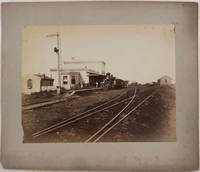
réf. PC67Sixteen loose original albumen photos all ca. 16x22 cm 6 ¼ x 8 ½ in or slightly smaller. Each photo is mounted on the original card ca. 235x28 cm 9 ¼ x 11 in. All but one photo with period pencil captions in English on verso several photos also dated 1882 on verso. Mounts slightly age-toned and waved several mounts with minor tears or chipping on extremities several photos mildly faded but overall a very good collection of early large rare photos. Historically significant collection of early large rare original albumen photos of the British-owned East Argentine Railway built in 1871 to connect Concordia Entre Rios Argentina and the port of Ceibo on the right bank of the Uruguay River. The railway passed Gualeguaycito Federacion Estancia Philippi Chajari Mocoreta Naranjito and Monte Caseros before reaching Ceibo which developed as the starting point of the navigation on the Upper Uruguay River. The railway company owned the Scotish-built “Mensajero” steamer which took passengers and cargo as far up as Santo Tome Corrientes Argentina. Due to financial difficulties the railway was sold to another British-owned company the Argentine North Eastern Railway in 1907. According to the pencil captions the photos were taken in 1882 and include seven general and street views of Concordia photos of railway stations in Gualeguaycito and Monte Caseros a four-span bridge in Mandisovi between Federacion and Chajari Ceibo River and nearby ranchos Monte Caseros “Mensajero” steamer in Ceibo with a visible name sign and a smaller railway bridge with the two-car train on its right side. Overall a nice collection of early original photographs of the starting point stations bridges and the steamer of the East Argentine Railway. A list of captions: View in Concordia; View of Concordia two different views; Principal street Concordia; Street in Concordia; Plaza Concordia 1882; Plaza Concordia/82; A station on E.A. Railway Gualeguaycito; Monte Caserne station; … Grande bridge E.A. Railway/82; Mandisovi bridge/82; Monte Caseros 1882; Ceibo River; Raches on the banks of Ceibo; Mensagero in Ceibo; Mensajero steamer. unknown
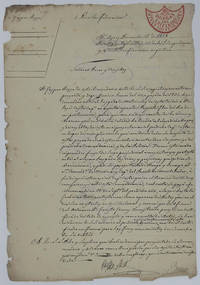
réf. MB83Folio ca 31x215 cm. 1 p. Brown ink on watermarked paper legible text in Spanish signed and docketed on verso. Light wear and chipping at edges. Very minor foxing. Very good. An interesting document from the tense period of the French blockade of Rio de la Plata 28 March 1838 - 1840 during the War of the Confederation between Argentina and Chile on one side and the Peru-Bolivian Confederation on the other side. Buenos Aires merchant Gaspar Ressa filed a complaint to the members of the city Council about Don Jose Costa the captain of the ship “Flor de Rio” which belonged to Ressa. “I requested before the town's office of registered licences that Don Jose Costa the then captain of a ship of mine Flor del Río reports on matters done in his capacity as a captain pertaining to his management and regarding the aforesaid ship; as a result the aforesaid captain Costa instead of fulfilling what was his duty ran away and went to Montevideo in secret without any authorisation from the aforementioned headquarters and police: as his way of behaving was prejudicial to my interests I hereby complain before the same court about all damage which may arise <…> The chief of navy and the captain of the port of Montevideo were in charge so that they ordered Captain Costa to appear within a couple of weeks before this jurisdiction's court <…>; there was no reply to date as it shows on those decrees…” As follows from the verso of the letter Ressa’s appeal was processed by the Buenos Aires Council the same day and on the 3rd of December “the testimony was received and given to the interested party Ressa.” The document bears the seal of Argentina and is signed by Gaspar Ressa and a member of the council Antonio Francio Gomez. In 1838 France had sent ships to blockade Buenos Aires in support of their allies in the Peru-Bolivian Confederation. This eventually helped spark the Uruguayan civil war which lasted from 1839 to 1851. unknown
1992réf. 61537Sevilla s/f 1992. paperback. Bueno. Sevilla s/f. Centro Distribuidor de Revistas diarios y publicaciones. 64 pp. 16x11. Rústica. Cubiertas rozadas. Recopilación y reproducción de los mayores éxitos en tangos y canciones cantados por Imperio Argentina y carlos Gardel. Sevilla s/f paperback
réf. SONG0374223505Farrar Straus & Giroux 0000-00-00. First Edition. hardcover. Used: Good. 6.00x1.50x9.00. Buy with confidence. Excellent Customer Service & Return policy. Farrar Straus & Giroux hardcover
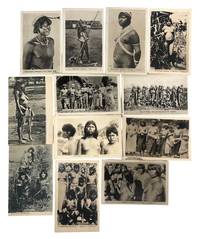
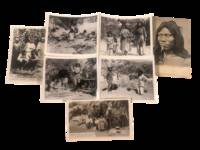
1910réf. 230041910. Real photo postcards depicting Indigenous peoples of Argentina in the early twentieth century document communities identified in captions as Indios del Chaco alongside additional references to southern regions including Tierra del Fuego. Produced during a period of intensified state expansion and consolidation these images record Indigenous individuals and groups at a time when Argentine policies of land seizure labor exploitation and missionization reshaped Indigenous life. The archive supports research into Indigenous history Latin American nation building and the visual culture of ethnographic photography. Archive consists of 12 black and white real photo postcards each with printed Spanish captions identifying subjects by region or group. The images present posed and semi candid compositions of Indigenous men women and children including group portraits of families and community gatherings as well as individual figures. Several photographs emphasize bodily presentation attire and adornment while others depict men holding tools or weapons in open landscapes. The majority of images are associated with the Chaco region an area targeted by military campaigns and settler expansion while one card references Tierra del Fuego extending the geographic range of the archive. The postcards appear to have been issued for circulation as documentary or commercial imagery. These photographs were produced in the aftermath of campaigns such as the Conquest of the Desert and subsequent northern military actions when Indigenous populations in Argentina were subjected to displacement forced labor and incorporation into state and missionary systems. Visual documentation of Indigenous communities during this period often coincided with efforts by anthropologists missionaries and state actors to classify and record populations whose autonomy was being curtailed. The images therefore function both as records of community life and as artifacts of a broader system of representation tied to colonial governance and modernization narratives. Mild fading and edge wear to some cards with others remaining sharp; overall very good condition. This archive provides primary visual documentation of Indigenous communities in Argentina during a period of significant political and social transformation. unknown
1910réf. 230061910. Indigenous Peoples of Argentina's Chaco and Northern Regions early 20th century. This photo archive consists of 10 black and white photographs comprising three real photo postcards and four original silver gelatin photographs documenting Indigenous peoples of Argentina in rural and semi-rural settings. The materials date to the early 20th century and originate primarily from northern Argentina with several images clearly associated with Indigenous communities of the Chaco. The postcards carry printed captions in Spanish identifying subjects by regional or ethnic designation. The post cards are from the 1910s-20s while the photographs are probably from 1930s-40s demonstrating the eras between Native expulsion at the turn of the century to colonial era labor workers. Historically these images must be understood within the violent context of Indigenous dispossession and assimilation policies in early twentieth-century Argentina. Following campaigns such as the Conquest of the Desert and subsequent northern military actions Indigenous peoples were subjected to land seizure population displacement forced labor on plantations and ranches and confinement within missions or state-controlled settlements. In regions like the Chaco Indigenous communities were frequently exploited for agricultural and industrial labor under coercive conditions while their cultures were documented by missionaries anthropologists and photographers who framed them as vanishing or pre-modern. The collection depicts Indigenous men women and children engaged in daily life and posed portraiture. Group scenes show families gathered outdoors domestic labor such as food preparation and carrying water and communal resting or work areas constructed from organic materials. Several photographs emphasize mobility and subsistence including figures carrying bundles tools or containers across arid terrain while others present seated family groups framed in front of shelters or temporary dwellings. Individual and small-group portraits highlight clothing that blends Indigenous traditions with elements of imposed or adopted settler attire revealing the uneven process of cultural disruption and adaptation underway at the time. Light handling and edgewear throughout photos remain crisp and clear. Overall very good condition. This archive provides an important primary visual source for understanding Indigenous life in Argentina during a critical era of colonial consolidation offering insight into everyday practices family structures and the visual strategies through which Indigenous peoples were represented and controlled. unknown
2010réf. DADAX1161032193Kessinger Publishing 2010-04-18. paperback. New. 8.25x0.97x11.00. Buy with confidence. Excellent Customer Service & Return policy. Kessinger Publishing paperback
2010réf. DADAX1160717184Kessinger Publishing 2010-03-19. paperback. New. 6.00x0.90x9.00. Buy with confidence. Excellent Customer Service & Return policy. Kessinger Publishing paperback
1889réf. 25246B1889. Buenos Aires: "Courrier de la Plata". 1889. 4°. 29 x 22 cm. 5081 p. Half cloth with handwritten label to spine. Rather worn. 2 stamps to title page and 1 stamp to last page paper some browning apart from this inside in good condition. ACHTUNG! Dieses Buch kann wegen seines Gewichts oder seiner Größe nur als PAKET verschickt werden. Innerhalb Deutschlands 580 Euro. Portokosten ins Ausland bitte erfragen. / ATTENTION! Due to its weight or size this book can only be sent as a PARCEL. Within Germany 580 Euro For shipment abroad please ask. =================== LIEBE KUNDEN ICH MACHE MEINE DIESJÄHRIGE HERBSTAKTION MIT 30% AUF DEN GESAMTEN BESTAND. DIE AKTION LÄUFT BIS EINSCHLIESSLICH SONNTAG 25. OKTOBER. WICHTIG: DER 30%-RABATT WIRD ERST NACH IHRER BESTELLUNG ABGEZOGEN SIE ERHALTEN EINE EMAIL MIT DEN AKTUALISIERTEN ZAHLUNGSINFOS VON MIR. ICH FREUE MICH WIE IMMER AUF IHR INTERESSE AN MEINEN SELTENEN BÜCHERN ARCHIVALIEN UND UNIKATEN. ==================== hardcover
1401réf. mon0003000543See Description 1914-01-01. Hardcover. Good. . See Description hardcover
réf. DADAX1731614802Rourke Educational Media 2019-08-11. hardcover. New. 7.40x0.30x10.10. Buy with confidence. Excellent Customer Service & Return policy. Rourke Educational Media hardcover
1947réf. 147941947. Women's suffrage celebration Buenos Aires 1947 documents the mass public response to Argentina's enactment of Law 13010 which established equal political rights for women and men and granted Argentine women the right both to vote and to stand for national political office. The Chamber of Deputies gave the legislation final approval on September 9 1947 and President Juan Domingo Perón formally promulgated it on September 23 presenting the law to First Lady Eva Perón during a public ceremony attended by a large gathering in Buenos Aires. The photograph consequently records a defining episode in Argentine women's political history and the culmination of decades of suffrage activism pursued by women including Julieta Lanteri Alicia Moreau de Justo Elvira Rawson and others alongside Eva Perón's prominent advocacy during the Peronist government. Gelatin silver press photograph. Buenos Aires Argentina September 26 1947. Approximately 9 x 7 inches. The image depicts a densely packed crowd assembled outside the Presidential Palace or Casa Rosada in connection with the announcement of women's suffrage giving visual form to the unusually public character of the political milestone. The photograph shows the collective scale of the celebration rather than an isolated portrait of political leadership preserving the presence of ordinary Argentinians gathered around the seat of national government following the recognition of women's political rights. The law was promulgated on September 23 three days before the date carried by this press photograph; Argentine government sources identify that public ceremony as the occasion on which Perón delivered the measure symbolically to Eva Perón before the assembled crowd. As a wire-service photograph the image was produced for rapid transmission and reproduction by newspapers placing the photograph not only at the scene of the celebration but within the contemporary news infrastructure through which the event reached audiences beyond Buenos Aires. Law 13010 did not itself establish legal divorce as stated in the earlier description; its central provision established equality of political rights between Argentine women and men. Argentina introduced absolute divorce only later under Law 14394 in December 1954 during Perón's second presidency. The suffrage legislation nevertheless substantially altered women's formal relationship to the Argentine state: after the administrative work necessary to register women as voters more than four million women entered the electoral rolls and women participated in national elections for the first time on November 11 1951. Eva Perón became closely identified with the measure although official Argentine historical accounts place her advocacy within the longer work of socialist radical feminist and other suffrage campaigners who had pressed for women's political citizenship before the rise of Peronism. Light handling and age wear consistent with its use as a working press photograph; very good condition. A visually immediate contemporary record of the public celebration surrounding one of the principal expansions of women's political rights in twentieth-century Argentina. unknown
réf. DADAX0270888209Wentworth Press 2018-07-29. hardcover. New. 6.14x1.06x9.21. Buy with confidence. Excellent Customer Service & Return policy. Wentworth Press hardcover