3 590 résultats
réf. 200912044Paris, J. SUSSE, 1946 ; in-8, 188 pp., broché, couverture illustr.
réf. 2162Paris, Eugène Fasquelle, 1923 - in-8 : 546 pp. (qqs. rousseurs) - br., couv. pap. jaune défraîchie, déchirée avec manque sur 1ère de couv.
réf. 63172P., Fasquelle / Charpentier, 1911, fort in 12 broché, 529 pages ; couverture fanée recollée.
réf. 72871Paris, Buenos Aires, Le Figaro, 1925, in 4° relié demi-percaline crème de l'éditeur, dos lisse muet, plats imprimés, 398 pages ; accident avec manque de percalilne au dos, plats fanés ; intérieur très frais.
réf. 2626Gravure originale. Eau forte. 1978. Affiche de contestation. Dim : 560 x 760 mm. En parfait état.
réf. ORD-416Paris. Tallandier et Nelson Doubleday. N°32, Octobre 1962. In-8 (ca 138 x 210mm) broché, couverture illustrée couleurs sur les 2 plats, XII pages sur papier jaune (Actualités-Voyages) et 64 pages consacrées à l'ARGENTINE, nombreuses illustrations en noir et images couleurs collées dans le texte. Bel exemplaire, complet.
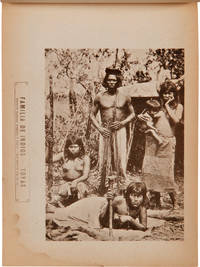
1895réf. 57189Buenos Aires Argentina: Arrufana Garrido Ortiz & Cia. 1895. An Enlightening Look at Buenos Aires and Surroundings in 1895 An interesting gift book from Arrufana Garrido & Ortiz an importing company which operated in Buenos Aires during the 1890s. Each leaf contains a black-and-white photographic illustration of a scene from Buenos Aires or its surroundings on the recto with an advertisement mostly in Spanish printed in cyan on the verso. Among the photos of cities and dramatic landscapes are also more intimate images including several of outdoor markets one of a ranching family outside their straw-roofed home with their livestock and a portrait of a family of Toba people one of Argentina's largest indigenous groups. The illustrations after photographs by Arturo W. Boote are attributed to Gunche Wiebeck y Turtl whose photoprinting and lithography office in Buenos Aires advertised in this volume printed photographs for a number of works as well as maps of Argentina Chile and the surrounding areas of South America around the turn of the 20th century. The advertisements some illustrated offer a wide array of goods and services from firearms to pocket watches to steamboat travel. One advertisement for a restaurant specializing in French and German cuisine is printed side by side in Spanish and German; the text is generally the same although the German side has an additional line that reads "Mit allem comfort der Neuzeit" which might suggest a certain outlook of European visitors towards other establishments in the city. More than just a souvenir this gift book's variety of photos both posed and candid rural and urban along with its breadth of advertisements make it a fascinating window into Argentina at the end of the 19th century. Not located on OCLC. Oblong 12mo. Original pebbled red cloth tooled in blind and gilt. Boards somewhat rubbed and worn corners worn rear hinge separated but binding still sturdy. Text moderately tanned and with a persistent stain in the lower outer corner. Good plus. hardcover
1807réf. 58063Bath: William Meyler 1807. An anonymous straight-forward account of the British attack on Buenos Aires in 1807 written "without any flourishing or prolix declamation on the calamities of war the effects of courage or the pursuit of wealth and fame." The unidentified author includes extensive details on the final engagements leading to the defeat of the British troops under Lieut. Gen. John Whitelocke by the Spanish citizen army of Creoles and peasants under the command of Santiago de Liniers. Forced to withdraw from Buenos Aires after this defeat Whitelocke was court-martialed and cashiered. An intriguing record of the British engagement in Buenos Aires with an unusual Bath imprint for such a work. OCLC records only five copies. 238pp. Lacks engraved plan. Modern red cloth spine gilt. Minor foxing to titlepage else quite clean. Very good. SABIN 51805. ALBERICH 1247. hardcover
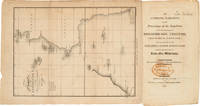
1807réf. 35048Bath: William Meyler 1807. Britain Invades South America During the Napoleonic Wars An anonymous straight-forward account of the British attack on Buenos Aires in 1807 written "without any flourishing or prolix declamation on the calamities of war the effects of courage or the pursuit of wealth and fame." The unidentified author includes extensive details on the final engagements leading to the defeat of the British troops under Lieut. Gen. John Whitelocke by the Spanish citizen army of Creoles and peasants under the command of Santiago de Liniers. The plan and accompanying printed explanation of the plate assist in visualizing the narrative of the battle described in the text. Forced to withdraw from Buenos Aires after this defeat Whitelocke was court-martialed and cashiered. A scarce and intriguing record of the British engagement in Buenos Aires with an unusual Bath imprint for such a work. Modern half roan and boards spine gilt. Occasional minor foxing; minor titlepage repair with no loss of text. A very good copy with engraved bookplate of P. Francis K.C.B on front pastedown. SABIN 51805. ALBERICH 1247. hardcover
1808réf. 41553London. 1808. Detailed Account of the British Invasion of Argentina In 1807 Gen. John Whitelocke was sent to the Rio de la Plata with a large force. His goal was to reinforce British troops already operating there and in Argentina and to seize Buenos Aires a move designed to open up the markets of South America to British commerce and replace those lost on the Continent by Napoleon's blockade. Despite his large force Whitelocke proceeded cautiously and ineptly further hampered by bad weather. The assault on Buenos Aires was met by civilian as well as military resistance when the British had expected local merchants to welcome them with open arms. Craufurd commanded a light brigade which led the attack on Buenos Aires and successfully achieved its objectives. However a large part of the attacking force was cut off and forced to surrender while Whitelocke napped in his tent and Craufurd's brigade was ordered to surrender with the rest of the British force. Santiago Liniers the Spanish commander proposed a truce if the British would promise to withdraw in two months but said he could not answer for the safety of the prisoners if the attack was renewed. Feeling that the object of the expedition was now untenable Whitelocke accepted those terms. The British withdrew to Montevideo and then to England losing what might have been a foothold in South America. Whitelocke was the subject of the greatest scorn on returning to England where he was court-martialed and cashiered. Though this work is sometimes attributed to Gen. Whitelocke the accusatory and wounded tone of the narrative makes that unlikely. viii2161pp. plus four folding maps. Antique-style three-quarter calf and marbled boards. Minor offsetting and foxing on titlepage and other leaves facing maps. Old library stamps on first two leaves; contemporary ownership inscription on titlepage. Errata slip pasted to verso of titlepage. Very good. Untrimmed. SABIN 103672. PALAU 375051. HALKETT & LAING I p.164. DNB online. hardcover
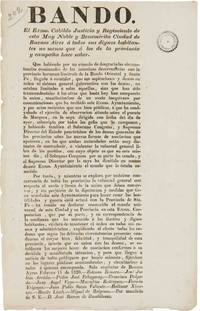
1820réf. 33027Buenos Aires. Feb. 11 1820. A broadside proclamation regarding the Bando Oriental recently annexed by Brazil during Buenos Aires' struggle for independence. Not on OCLC. Moderate edge wear. Old library stamp on recto and verso. Very good. unknown
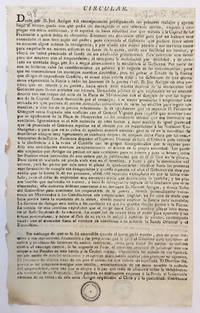
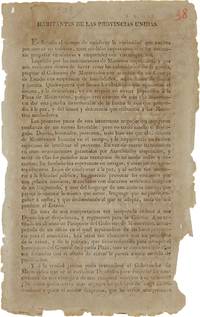
1815réf. 32987Buenos Aires. March 30 1815. News of the Independence Fight A lengthy broadsheet description of the activities of Banda Oriental liberator Don José Artigas and the tenuous hold of the independence fighters over the province of Buenos Aires. Such Argentine imprints are extremely rare. Not in OCLC. Broadsheet 12 x 7½ inches. Trimmed close occasionally affecting text. Old library stamp on recto and verso. Overall quite clean. Very good. unknown
1940réf. 41816Buenos Aires: n.p. 1940. First edition. Patterned maroon leather album two holes with string ties and tassels gilt titles and illustrations on front board. A very good copy with wear to spine ends and corners of boards writing on front pastedown and on a few leaves edgeworn first leaf. Unpaged 20 leaves. Illus. with 19 mounted silver-gelatin photographs with spider-web tissue guards 29 b/w photo-reproductions on 7 plates and two small portraits. Obl. 4to. 12 x 8.5 inches. Over forty original signatures and inscriptions some a paragraph long on the front pastedown and verso of first leaf plus one or two later on all presumably members of the regiment. Includes a short history of the Regiment. A group photo of 28 officers has a separate bound-in key identifying them by name and rank. Created on May 29 1810 and immediately sent as part of the relief expedition to the interior provinces Regimiento no. 3 de Infanteria "General Belgrano" is the most prestigious brigade in the Argentinean army. This 1940 album produced on the 140th anniversary of the regiment was a crucial time for the military in Argentina with the country officially neutral but much influenced by the German military. The Regiment was led by General Ambrosio Vago first photograph a supporter of the Allies who had refused to take part in the coup of 1930 though at this time was urging a new coup along with a number of Axis-leaning officers to oust President Ramón Castillo with the goal of holding non-fraudulent elections. But it would be Peron who would lead the coup in 1943 with Vago though ostensibly a Peronist not participating and exiled to Bahia Blanca. A rare photographic record of the Argentinean military before Peron's ascendancy. We could locate no copies of this nor any similar items in OCLC or other Latin American or European library databases. n.p. hardcover
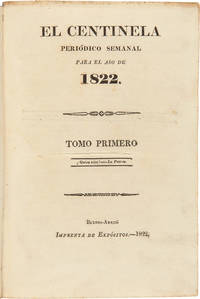
1822réf. 36917Buenos Aires: Imprenta de los Expósitos 1822. Important Periodical from Newly-Independent Argentina An extremely rare copy of the complete first volume of the most important Argentinean periodical of the early independence period. Edited by Florencio Varela Juan Cruz Varela and Ignacio Núñez the issues include news miscellaneous notices and short literary pieces in verse and in prose. CENTINELA was published weekly and then biweekly in 1822 and 1823. The two years of the periodical consist of seventy-two numbers and three supplements. This first volume is complete with twenty-three numbers and one supplement. Extremely rare. OCLC records four copies at New York Public the John Carter Brown Library the British Library and the Ibero-Amerikanisches Institute in Germany. 5397pp. Nos. 1-23 plus supplement to No. 22 paged continuously. Quarto. Contemporary three-quarter sheep and marbled boards spine gilt. Outer joints and corners worn. A few pencil annotations. Occasional minor foxing. A very good copy. PALAU 51467. OCLC 50151967. hardcover
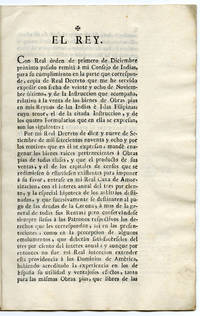
1805réf. 51822Buenos Aires. 1805. An early Buenos Aires imprint that conveys several royal decrees of the King of Spain Charles IV. These decrees were originally issued in September 1804 and govern the sale of religious works in the Spanish colonies and give instructions for compliance. A rare piece of South American printing not in OCLC. Medina claims to have owned a copy. Folio. Dbd. Some tanning and dust soiling scattered light foxing. Very good. MEDINA RIO DE LA PLATA 285. unknown
1814réf. 5649Buenos Aires. 1814. An early piece of Buenos Aires printing. In 1814 troops from Argentina attempting to unite Uruguay and Rio Plata with Argentina invaded and seized Montevideo. This broadside announces a suspension of hostilities and mediation. The broadsheet is dated at Buenos Aires on May 1 1814 and is signed by Gervasio Antonio de Posadas. Broadsheet 12 x 7½ inches. Red crayon numerical inscription in upper margin. Some chipping at edges not affecting text foxed. Good. unknown
1947réf. 147941947. Women's suffrage celebration Buenos Aires 1947 documents the mass public response to Argentina's enactment of Law 13010 which established equal political rights for women and men and granted Argentine women the right both to vote and to stand for national political office. The Chamber of Deputies gave the legislation final approval on September 9 1947 and President Juan Domingo Perón formally promulgated it on September 23 presenting the law to First Lady Eva Perón during a public ceremony attended by a large gathering in Buenos Aires. The photograph consequently records a defining episode in Argentine women's political history and the culmination of decades of suffrage activism pursued by women including Julieta Lanteri Alicia Moreau de Justo Elvira Rawson and others alongside Eva Perón's prominent advocacy during the Peronist government. Gelatin silver press photograph. Buenos Aires Argentina September 26 1947. Approximately 9 x 7 inches. The image depicts a densely packed crowd assembled outside the Presidential Palace or Casa Rosada in connection with the announcement of women's suffrage giving visual form to the unusually public character of the political milestone. The photograph shows the collective scale of the celebration rather than an isolated portrait of political leadership preserving the presence of ordinary Argentinians gathered around the seat of national government following the recognition of women's political rights. The law was promulgated on September 23 three days before the date carried by this press photograph; Argentine government sources identify that public ceremony as the occasion on which Perón delivered the measure symbolically to Eva Perón before the assembled crowd. As a wire-service photograph the image was produced for rapid transmission and reproduction by newspapers placing the photograph not only at the scene of the celebration but within the contemporary news infrastructure through which the event reached audiences beyond Buenos Aires. Law 13010 did not itself establish legal divorce as stated in the earlier description; its central provision established equality of political rights between Argentine women and men. Argentina introduced absolute divorce only later under Law 14394 in December 1954 during Perón's second presidency. The suffrage legislation nevertheless substantially altered women's formal relationship to the Argentine state: after the administrative work necessary to register women as voters more than four million women entered the electoral rolls and women participated in national elections for the first time on November 11 1951. Eva Perón became closely identified with the measure although official Argentine historical accounts place her advocacy within the longer work of socialist radical feminist and other suffrage campaigners who had pressed for women's political citizenship before the rise of Peronism. Light handling and age wear consistent with its use as a working press photograph; very good condition. A visually immediate contemporary record of the public celebration surrounding one of the principal expansions of women's political rights in twentieth-century Argentina. unknown
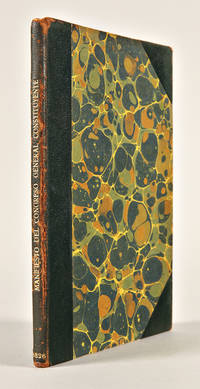
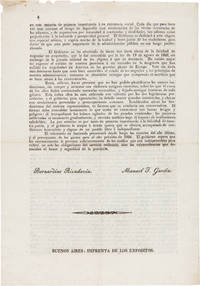
1826réf. 37321Buenos Aires: Imprenta Argentina 1826. An extremely rare tract concerning the development of the Argentine constitution in the early republican period of that nation. In April 1819 a constitution was approved establishing a congress with two legislative branches and an elected chief executive. Due to the local political situation however that constitution was not fully enacted. A new constitution promoting a centralized system of government was eventually drafted in 1826. This manifesto of the government's constitutional commission presented to the Argentine representatives reviews various aspects of the 1819 Constitution and proposes changes to be effected in the new document. An extremely rare publication concerned with the early constitutional period in Argentina. OCLC locates only a single copy in the national Library of Chile. 12pp. Small quarto. 20th-century three-quarter morocco over marbled boards spine gilt. Edges and spine lightly worn upper outer joint moderately worn. Contemporary number inscription in top margin of first page of text. Lower right corners of first two leaves chipped. Moderate age-toning and foxing. A good copy. PALAU 148972. OCLC 55255075. hardcover
1823réf. 46583Buenos Aires. May 5 1823. The United States Recognizes Argentina In this message to Congress Rivadavia Interior Secretary and Garcia Treasury Secretary announce the recognition of Argentine independence by the United States and discuss relations with other South American countries. They also report to Congress on the condition of internal security and defense the treasury taxes debt medical sciences etc. Rivadavia later served as the first president of the Provinces of Rio de la Plata from 1826-27. Rare with one copy in OCLC at the British Library. Folded folio sheet. Minor wear to top edge. Very good plus. unknown
1882réf. 52900London & New York: Griffith and Farran West Corner of St. Paul’s Churchyard; E.P. Dutton & Co. May 1882. 12mo. 4 374 pp. plus 15 1 pp. publisher’s catalogue dated May 1882. Frontisp. 3 plates woodcut engraved head- and tail-pieces throughout. Dark green pictorial publisher’s cloth cover art illustration in black & gray of boy reading in tree gilt lettering 1 panel front cover 3 gilt panel titles on spine decorated endpapers bumping to corners minor rubbing & edgewear to head & foot of spine corners very light uniform interior toning still a VG- bright copy ownership inscription dated Christmas 82 on 2nd flyleaf. Early printing of one of Henty’s earliest adventure stories set against the backdrop of an English family pioneering in Argentina around the time of the Mexican-American War. Johann Baptist Zwecker 1814-1876 was a popular German artist who illustrated many different titles and magazines during the 19th-century including the illustrations for Alfred Russel Wallace’s Geographical Distribution of Animals. Griffith and Farran, West Corner of St. Paul’s Churchyard; E.P. Dutton & Co., hardcover
1950réf. 251237Buenos Aires: Carbometal S.A. Ind. y Com 1950. A half-inch pile of folded mappings of the province of Mendoza most of these fold out to 20x56 inches folded measuring 14x8.5 inches. Dividers amongst them and a ribbon-copy TLs on Carbometal letterhead addressed to an English-speaking investor one Joseph Coney. The maps or 'plans' are in colors; per a mimeo'd leaf we quote above in our title line items are complete pace the numbering gaps and all are in good shape; find old enclosing boards with decorative ties these not in good shape but serve their purpose. Carbometal, S.A. Ind. y Com unknown
1947réf. 35027Buenos Aires: Ministerio de Relaciones Exteriores y Culto 1947. First edition. Cloth. A very good copy tear at staple throughout leaves browned new binding. 40 pp. Illus. with 1 photo of Peron. 12mo. I. Declaración del Excmo. Señor Presidente de la Nación Argentina General Juan Perón. II. Nota la los Gobiernos de América y a la Santa Sede de S.E. el señor Ministro de Relaciones Exteriores y Culto doctor Juan Atilio Bramuglia a seprate printing of this section was published earlier in 1947. III. Proyecto de paz interior y exterior propuesto a las Naciones de América por la República Argentina. During the first period of Perón's presidency 1946-1949 a major policy was to improve the international image of Argentina abroad. Perón claimed a "Third Position" of positive neutrality in the cold war which had developed between the western powers and Russia. The present volume contains three separate titles toward the goals of economic cooperation and world peace. Part I is the "Declaration" of Perón placing the position of Argentina and its goals before the world of nations. Part II is a "Nota" addressed by the Minister of Foreign Affairs and Worship Dr. Juan Atilio Bramuglia to the nations stating the position of Argentina to achieve both internal and international peace. Part III is a proposal made by the Argentine Nation to those of America for international peace. This "Proyecto" was published here in Spanish Portuguese English French Italian and Russian. Ministerio de Relaciones Exteriores y Culto hardcover
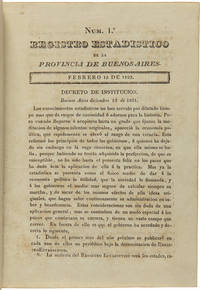
1822réf. 36918Buenos Aires: Imprenta de la Independencia 1822-1823. Very Rare and Early Argentinian Government Publication The extremely rare initial twelve issues of the first statistical register for the province of Buenos Aires. The publication was created by government decree on December 13 1821 reprinted here in the first issue published on February 15 1822. The REGISTRO ESTADISTICO. was charged with publishing statistics documenting conditions throughout the province with additional causes notes and observations. The issues are a fascinating compilation of facts and figures regarding all aspects of life in Buenos Aires in the early period of independence. On a regular basis data concerning geography meteorology the movement of populations and hospitals were recorded. Other areas documented in these issues include commerce means of production and education including courses taught at the university. The first eleven numbers were issued monthly February through December 1822; the twelfth issue was published March 1823. An extremely rare government publication documenting the political economy of Buenos Aires in the early 1820s. OCLC lists nine locations for the register but only Cornell for the earliest issues. Contemporary diced sheep black leather label stamped in gilt. Outer joints and spine worn. Minor foxing and dampstaining. Very good. SABIN 68831. PALAU 253761. hardcover
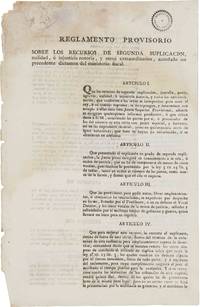
1811réf. 32981Buenos Aires. June 21 1811. An official printing of thirteen regulations governing the submission of petitions to the government for monetary redress. Given unstable political conditions and the paucity of materials necessary for printing such Argentine imprints are extremely rare. OCLC locates only two copies. Dbd. Leaves nearly detached. Moderate soiling in upper margin of recto of first leaf. Old institutional stamp on recto of first leaf and on verso of last leaf. Good. OCLC 14769848. unknown