1992 resultados
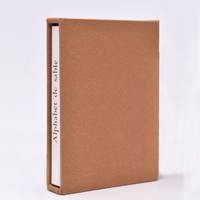
ref. 367757Paris France: Maeght Editeur 2000. First edition limited to 100 numbered copies '21/100' signed by Venus Khoury-Ghata and Matta total printing of 120 copies. A fine copy in publisher's slipcase box also fine. First edition limited to 100 numbered copies '21/100' signed by Venus Khoury-Ghata and Matta total printing of 120 copies. OCLC lists two holdings none in the United States Paris- Bibliotheque Kandinsky and Bibliotheque nationale de France. Nicely illustrated with an original color lithograph measuring twelve inches by four inches by Roberto Matta. Sebastian Antonia Matta Echaurrenm 1912-2002 abstract expressionist and surrealist artist was born in Santiago Chile. Vénus Khoury-Ghata French-Lebanese poet and novelist was born in 1937 in Bsharri Lebanon. She has lived in Paris since 1972 and has published several novels and collections of poems. and has won the following awards:1980- Prize Apollinaire for "Les ombres et leurs cris"; 1987- Prize Mallarmé for "Un Faux pas du soleil"; 1992- Grand Prix de la Société des gens de lettres for Fables pour un people d'argile; Prize Jules Supervielle for "Anthologie personnelle"; Prize Baie des anges for "Le moine l'ottoman et la femme du grand argentier"; 2011- Prize of Goncourt for Poetry for all her works; 2012- Poetry Prize Pierrette Micheloud for "Où vont les arbres." per Wikipedia. Maeght Editeur unknown books
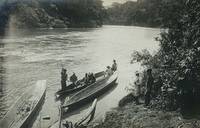
ref. PF138 loose gelatin silver photographs from ca. 17.5 x 12 cm 6 ¾ x 4 ¾ in to 10.5 x 8 cm 4 x 3 in. 21 images captioned in pencil on recto; 11 images captioned in ink on recto; four images captioned in ink on recto. a few photos mildly faded or with mild creasing on edges but overall a very good collection of interesting photos. An interesting collection of photographs showing mining activities in the South American Andes in the early 20th century. 6 photographs show the mines of Santo Domingo in Peru. Santo Domingo was a gold mine located in southeastern Peru and in operation sometime between 1890 and 1920. The photographs show the offices miner dormitories and general views of the site. 9 photographs show the mines of Concordia possibly the Concordia Tin Mine in western Bolivia. The Concordia Tin Mine is most well known for being where notorious American outlaws Butch Cassidy 1866-1908 and the Sundance Kid 1867-1908 allegedly worked after fleeing the United States in the early 1900s. The photographs include views of the site the route the compiler took up to the mine including a “station” being constructed and “Carnival Day” festivities showing dancers at the mine and a photograph of the compiler and his colleagues. Also included are 10 photographs from a river tour on the “West” and “Mayo” rivers the compiler went on showing him and his party led by indigenous South Americans in canoes on the river; at a campsite; and in a constructed house with two views from the compiler’s “balcony.” Other photographs in the collection include views of La Paz Bolivia National Day/La Paz Day parade; Santiago Chile Santa Lucía Hill and the public gardens on top; Arequipa Peru outdoor church service before a crucifix; Cusco Peru; and Incan palace ruins in Peru. Overall an interesting collection showing South America during the early 20th century. unknown
1863ref. GF357751863 Paris - Librairie de Thévelin - 1863 - 1 volume in8 broché de 174 pages - étiquette collée en queue - couverture un peu poussièreuse -
1890ref. c2311100201xbvkParis, imprimé par autorisation de M. le Garde de Sceaux, à L'Imprimérie National, M DCCC XC.(1890); Lithograph printed by L. Léchaudel. 26 singleside printed large-paper cardboard-sheets, incl. 1 coloured plate; large-4to.(ca. 32 x 25 cm, few plates slightly smaller ca. 31 x 24 cm).
1832ref. PHO-1689Paris, J. Tastu, 1832, In-folio, demi-chagrin noir, dos orné de filets dorés à froid Atlas de botanique seul comprenant 76/80 pl. sur chine collé, liste des planches in fine, peu de défauts.
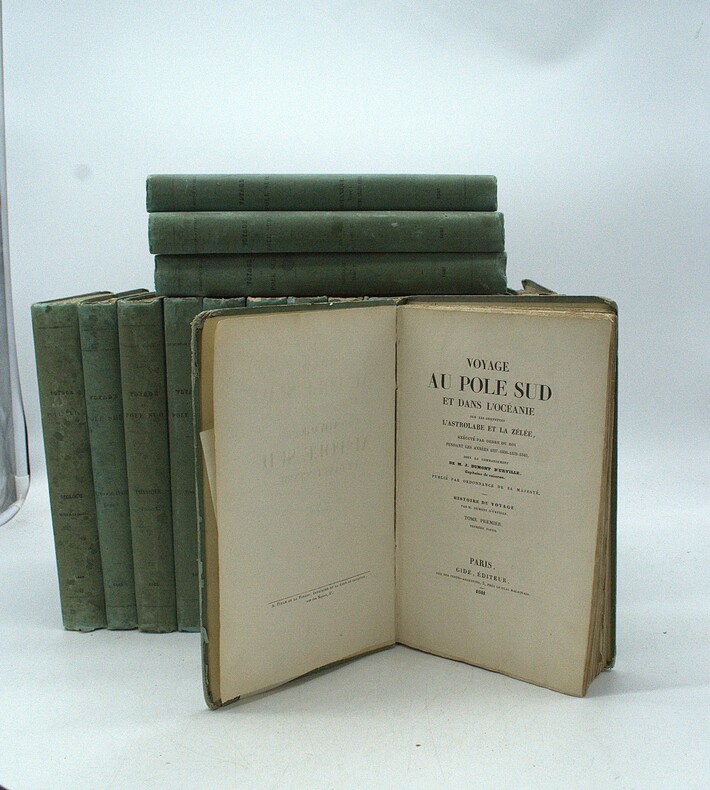
1841ref. PHO-1967Paris, Gide, 1841-1848, in-8, cartonnage éditeur, frottements, qlqs petits manques de matière, coins usés, qlqs coiffes usées, qlqs taches aux plats, T4 avec manque au dos et en haut du 1er plat 16 volumes de texte (sur 21) comprenant : Histoire du voyage, 1841-1846. 10 volumes en premier tirage, (1er tome, 1ère partie correspondant au 1er tome, 1er tome seconde partie correspondant au 2nd tome et 2nd tome, 1ère partie correspondant au tome 3), T2 mouillure en marge sur les derniers feuillets, T4 mouillure, T2 rousseurs, papier légèrement bruni aux tomes 3,4,5,6,7,8 et début tome 9. Zoologie, 1846, 2 volumes (sur 4, tome 1 et2) Botanique, 1845, 1 volume (sur 2), tome 1, plantes cellulaires, papier légèrement bruni Physique, 1842. 1 seul volume (en raison de la mort de Vincendon-Dumoulin) bien que d’autres annoncés, papier légèrement bruni Géologie, Minéralogie et Géographie physique du Voyage. 1848- 1 volume (sur 2, le second paru en 1854), 1 planche in-fine, papier légèrement bruni Hydrographie. 1843. 1 volume (sur 2), 1 planche in-fine, papier légèrement bruni.
ref. 13980277Roma: Presso Giuseppe Mauri, 1827 4 tomes in-8 reliés en 2 volumes, xii-239, 262, 256, 247 pages, grande carte se dépliant en couleurs in fine (qq petites taches d'encre sans gravité). Par suite d'une erreur de reliure, le tome IV a été transposé et placé en tête du volume avant le tome III. Demi reliure veau marbré brun d'époque, dos lisses, pièces de titres et de tomaison basane verte et rouge, roulettes dorées, tranches mouchetées, bel exemplaire. Très rare voyage au Amérique latine.
2014ref. 113210Distanz. New. Paperback. FREE UPGRADE to Courier/Priority Shipping Upon Request - IN STOCK AND IMMEDIATELY AVAILABLE FOR SHIPMENT - IN STOCK AND IMMEDIATELY AVAILABLE FOR SHIPMENT - Flawless copy brand new pristine never opened - Text in English German and Spanish. -- with a bonus offer--; German Spanish and English Edition . 2014. 3954760657 . Distanz paperback
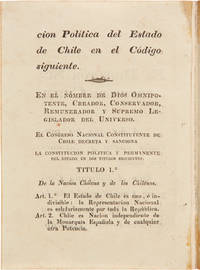
1824ref. 57794Santiago de Chile: Imprenta Nacional 1824. Chile's "Moralistic Constitution" Chile's short-lived but significant constitution of 1823 nicknamed the "Moralistic Constitution." Chile's first officially independent constitution was adopted in 1818 and granted revolutionary leader Bernardo O'Higgins considerable power which he consolidated further in a widely despised revision in 1822. O'Higgins was peacefully deposed by a new more conservative group under the leadership of Ramón Freire in early 1823 and a special congress was convened to create a new constitution presided over by Juan Egaña. Egaña was chiefly responsible for drafting and proposing the present document which was approved the next day and promulgated the day after. The eighty-one page 277-article document begins with an outwardly liberal appearance: after stating that "Chile is a nation independent of the Spanish monarchy and of any other power" it declares that its "constitutional protections and laws protect every individual who lives in Chile" and provides citizenship to any person who has lived and worked in the country for one year all quotations our own translation. It further states that "every Chilean is equal before the law" and takes a firm stand against slavery. Article eight reads in full that "In Chile there are no slaves: any who stands on its territory for one natural day will be free. Any who carry on the business of slavery may not live here more than one month and may never be naturalized." On the other hand article ten declares that "The state religion is the Apostolic Roman Catholic Church: to the exclusion of worship and practice of any other." Practicing Catholicism is made a requirement for suffrage and the broadly granted citizenship is just as easy to lose including for "habitual drunkenness or prohibited gaming." Additionally the press is considered "free protected and rewarded so long as it contributes to morality and good habits" and is expressly forbidden from "meddling in the mysteries dogmas and religious discipline and morals generally approved by the Catholic Church." Despite its eager acceptance and immediate promulgation Egaña's document proved unwieldy and unpopular; it was suspended the following July and abrogated in November. A more liberal constitution would finally replace it in 1828 although this sparked a civil war in which the conservative faction came out ahead once again. The new constitution of 1833 was spearheaded by Egaña's son Mariano de Egaña and remained in force until 1925. A rare document; Rare Book Hub records only this copy at auction since 1981. 81pp. Small quarto. Later calf spine gilt with raised bands gilt leather labels. Binding slightly rubbed Text lightly tanned small stab holes in gutter from original stitching gutter periodically reinforced with paper. Very good. PALAU 59709. BRISEÑO I 74. hardcover
1824ref. 57794Santiago de Chile: Imprenta Nacional 1824. Chile's "Moralistic Constitution" Chile's short-lived but significant constitution of 1823 nicknamed the "Moralistic Constitution." Chile's first officially independent constitution was adopted in 1818 and granted revolutionary leader Bernardo O'Higgins considerable power which he consolidated further in a widely despised revision in 1822. O'Higgins was peacefully deposed by a new more conservative group under the leadership of Ramón Freire in early 1823 and a special congress was convened to create a new constitution presided over by Juan Egaña. Egaña was chiefly responsible for drafting and proposing the present document which was approved the next day and promulgated the day after. The eighty-one page 277-article document begins with an outwardly liberal appearance: after stating that "Chile is a nation independent of the Spanish monarchy and of any other power" it declares that its "constitutional protections and laws protect every individual who lives in Chile" and provides citizenship to any person who has lived and worked in the country for one year all quotations our own translation. It further states that "every Chilean is equal before the law" and takes a firm stand against slavery. Article eight reads in full that "In Chile there are no slaves: any who stands on its territory for one natural day will be free. Any who carry on the business of slavery may not live here more than one month and may never be naturalized." On the other hand article ten declares that "The state religion is the Apostolic Roman Catholic Church: to the exclusion of worship and practice of any other." Practicing Catholicism is made a requirement for suffrage and the broadly granted citizenship is just as easy to lose including for "habitual drunkenness or prohibited gaming." Additionally the press is considered "free protected and rewarded so long as it contributes to morality and good habits" and is expressly forbidden from "meddling in the mysteries dogmas and religious discipline and morals generally approved by the Catholic Church." Despite its eager acceptance and immediate promulgation Egaña's document proved unwieldy and unpopular; it was suspended the following July and abrogated in November. A more liberal constitution would finally replace it in 1828 although this sparked a civil war in which the conservative faction came out ahead once again. The new constitution of 1833 was spearheaded by Egaña's son Mariano de Egaña and remained in force until 1925. A rare document; Rare Book Hub records only this copy at auction since 1981. 81pp. Small quarto. Later calf spine gilt with raised bands gilt leather labels. Binding slightly rubbed Text lightly tanned small stab holes in gutter from original stitching gutter periodically reinforced with paper. Very good. PALAU 59709. BRISEÑO I 74. hardcover books
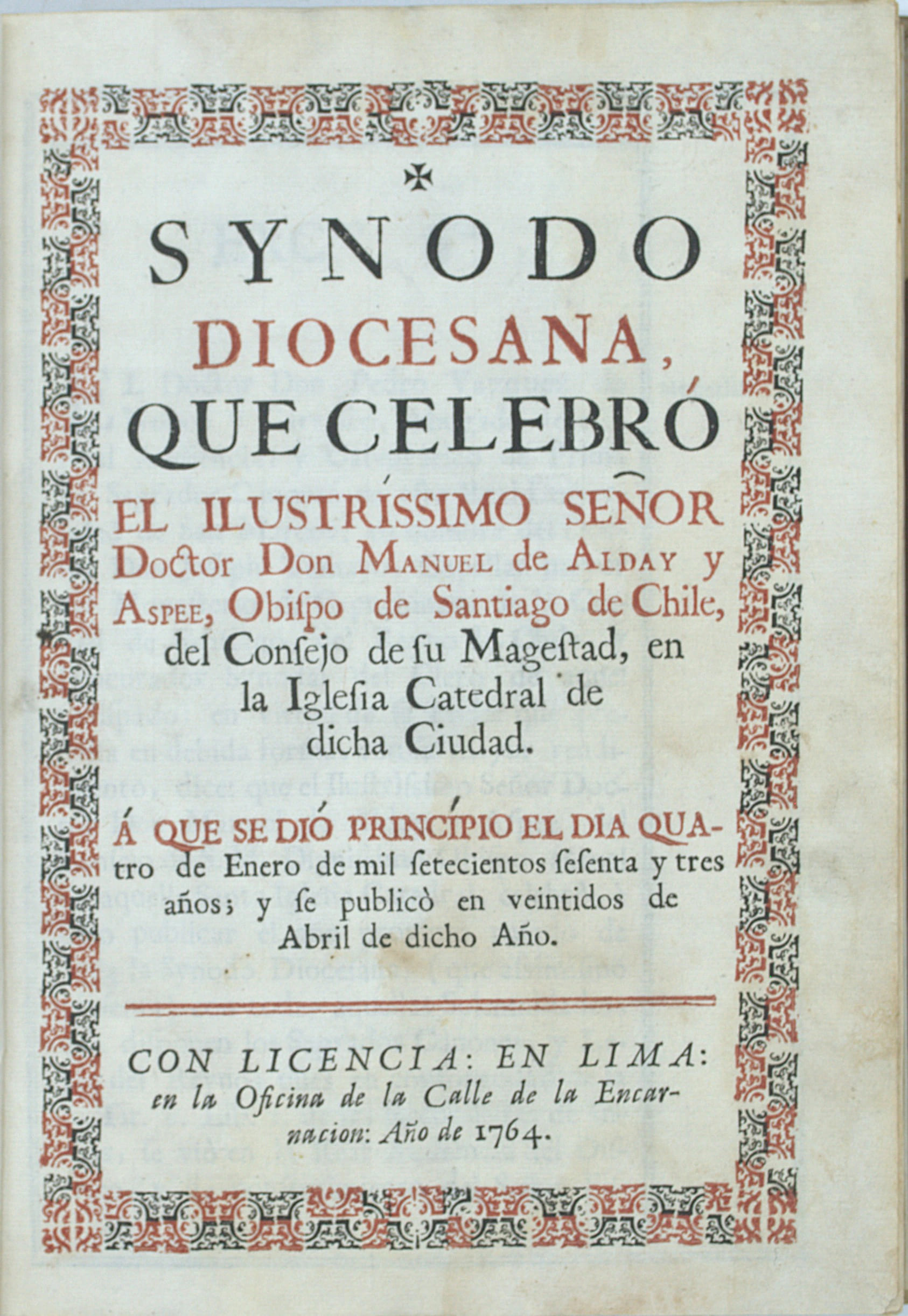
1764ref. PHO-2524Lima, Oficina de la Calle de la Encarnación, Imprenta Real, 1764. Grand in-4° (280 × 206 mm), 4ff.-170pp.-13ff. ; 7ff.-168 pp., relié en demi-vélin à coins, pièce de titre et de tomaison. 1 cahier bruni.
1728ref. PHO-2076Amsterdam, Pierre Mortier, 1728. 3 vol. in-12 (17x10,5cm), 2ff.-314pp.-5ff. ; 227 pp. ; 192pp.-12ff., Reliure pastiche en demi-veau à coins, dos à 5 faux-nerfs fleuronné, pièce de titre en maroquin rouge, pièce de tomaison en maroquin vert, année dorée en pied, filet doré sur les plats. Mouillure au plan de Pisco, quelques très rares mouillure en marge sans gravité. Bon exemplaire, bien complet des cartes, plans et planches gravés, le titre gravé et le premier feuillet (page 1 &2) mal placés. Cachet de la Bibliothèque Géographique Hachette et Cie ; de la bibliothèque de Paul Lebaudy, avec son ex-libris gravé.
178821,5x15. 418p. Trad. Domingo Joseph. Incluye un plano desplegable. Pérdida de texto en portadilla. Manchas de humedad en algunas páginas. Anotaciones y sello anterior poseedor. Enc. Pasta española algo rozada. Cantos pintados. Únicamente volumen de 1788.
1750ref. 4284Genève, Barillot et Fils, 1750. In-4 de XXIV-363p., pleine basane brune. Dos à nerfs orné de filets et fleurons dorés.
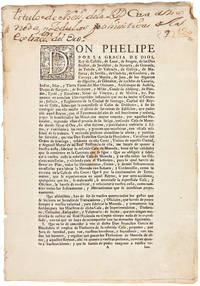
1744ref. 36299Madrid. 1744. Rebuilding Chile's Mint After a Devastating Earthquake A rare printed decree by Philip V King of Spain regarding the reconstruction of the Casa de Moneda in Santiago following the earthquake that devastated that city in 1730. Detailed orders concerning the construction and operation of the Casa de Moneda and related matters regarding the processing of gold are also provided. It is noted that the reconstruction of the Santiago mint will ensure that the gold will not need to be sent to Lima for processing as was the case after the earthquake. Dated October 1 1743 the decree was printed in Madrid for distribution to officials in the Council of the Indies and in Santiago. A printed note dated Madrid March 22 1744 at the bottom of the text indicates that the text is a copy of the original which remains with the Secretary of Peru. Not in EUROPEAN AMERICANA. OCLC records only a single copy at the Chilean National Library. Folio. Dbd. Contemporary manuscript annotations at top of first page and in margins of text. Old folds. Moderate dampstaining in top margins. A good copy. MEDINA BHC 365. OCLC 55278441. unknown
1744ref. 36299Madrid. 1744. Rebuilding Chile's Mint After a Devastating Earthquake A rare printed decree by Philip V King of Spain regarding the reconstruction of the Casa de Moneda in Santiago following the earthquake that devastated that city in 1730. Detailed orders concerning the construction and operation of the Casa de Moneda and related matters regarding the processing of gold are also provided. It is noted that the reconstruction of the Santiago mint will ensure that the gold will not need to be sent to Lima for processing as was the case after the earthquake. Dated October 1 1743 the decree was printed in Madrid for distribution to officials in the Council of the Indies and in Santiago. A printed note dated Madrid March 22 1744 at the bottom of the text indicates that the text is a copy of the original which remains with the Secretary of Peru. Not in EUROPEAN AMERICANA. OCLC records only a single copy at the Chilean National Library. Folio. Dbd. Contemporary manuscript annotations at top of first page and in margins of text. Old folds. Moderate dampstaining in top margins. A good copy. MEDINA BHC 365. OCLC 55278441. unknown books
1833ref. PHO-2302Paris, Imprimerie Royale, Arthus Bertrand, au dépôt général de la marine, 1833-1839. 5 vol. in-8 (25,5x16,5cm) demi-chevrette rouge, dos à nerfs orné (reliure de l'époque), supplément lépidoptères broché de I. [2] ff.-xli-558-[1] pp. ; II. [2] ff.-481-[1] pp., grande carte dépliante (piqûres, coupures aux pliures sans manque) ; III. [2] ff.-510-[1] pp. ; IV. [2] ff.- 480 pp. ; V. [2] ff., 195-200 pp., Supplément Lépidoptères 30pp., 70 planches dont 61 soigneusement aquarellées. Rousseurs touchant principalement le texte et très peu les planches, mouillures claires par endroits au texte, feuillets volants pour le supplément. Sans les deux grands atlas historique et hydrographique, mais bien complet du très rare 5e volume d'histoire naturelle, paru ultérieurement qui manque presque toujours et complet des planches. Ce rarissime cinquième et dernier volume de texte, qui comporte 2 parties, renferme le rapport fait à l'Académie des sciences le 4 février 1833 sur les collections d'histoire naturelle recueillies pendant le voyage de la corvette La Favorite…, les Recherches sur les marsupiaux par Fortuné Eydoux et Laurent, la 2e partie Zoologie par Fortuné Eydoux et Paul Gervais, le supplément sur les Lépidoptères nouveaux par Feisthamel.