WHITMAN (Walt) - MAZET (Elbio, ill. de).Livre Rare Book
1 310 résultats
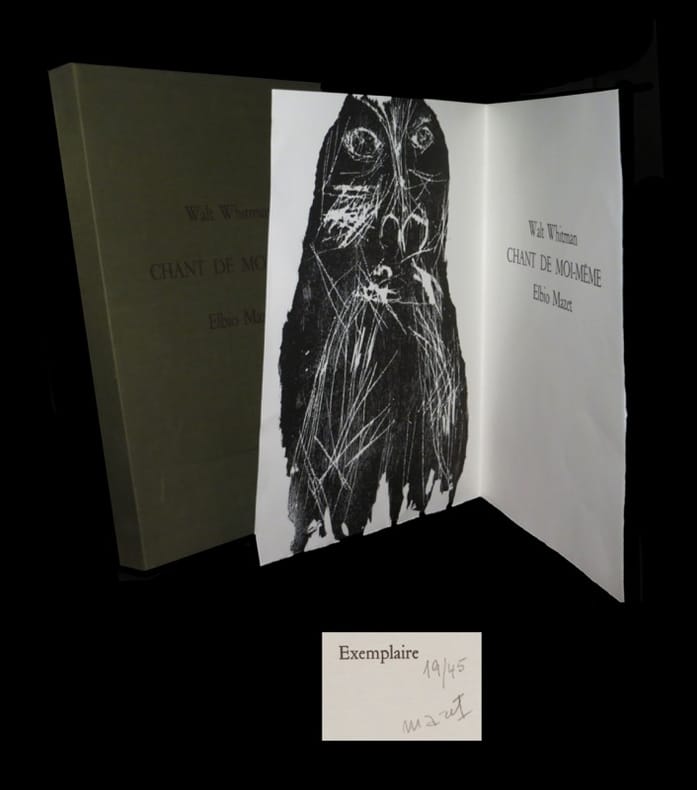
1983réf. 30037S.l., (Centre international de recherche et diffusion de la gravure sur bois), (1983). Un vol. au format in-folio (382 x 282 mm) de non paginé, en feuilles, sous coffret de pleine percaline satinée olive, titre frappé à l'oser lie-de-vin au premier plat.
1885In-8 gr. (mm. 252x165), 4 voll., cartonato moderno, conserv. copp. originali, pp. (2),332; 275,(3); 514; 588. Riccamente illustrati f.t. da complessive 6 carte geografiche più volte ripieg. e 97 tavole (di cui 15 ripieg.) litografiche in tinta e a colori relative a: vedute di località, ritratti degli abitanti dei luoghi visitati, scene di vita quotidiana, costumi, etc. Il vol. I, comprende un fascicolo di 16 pagine che riproduce i "Diagrammi delle pressioni barometriche e temperature minime e massime giornaliere" e alcuni disegni eseguiti dal cav. Massuero che rappresentano curiose antichità americane, ossia manufatti e oggetti raccolti durante il viaggio, fra cui degli scheletri umani”. Prima edizione. “Carlo De Amezaga (1835-1899), nato a Genova da una famiglia proveniente dalla Spagna. Arruolatosi volontario come marinaio di quarta classe nel 1848, entrò in servizio effettivo nella marina sarda il 10 febbr. 1849, come allievo di pilotaggio a bordo del veliero "Sofia".. Di notevole importanza è il viaggio di circumnavigazione attorno al globo della corvetta "Caracciolo", che il D. guidò fra il 1881 e il 1884, raccontandone poi le vicende e indicandone i principali risultati raggiunti in un'ampia relazione ("Viaggio di circumnavigazione della Regia Corvetta "Caracciolo" (comandante C. De Amezaga) negli anni 1881-82-83-84, I-IV, Roma 1885-1886). La spedizione partì da Napoli il 27 nov, 1881 e, toccando Cagliari, Gibilterra, Madera, San Vincenzo, Pernambuco, Rio de Janeiro, Santa Catarina, approdò a Montevideo il 3 marzo 1882. Il viaggio venne ripreso l'11 maggio alla volta di Possession Bay, Santa Elisabetta, Punta Arenas, Voces Bay, Wood's Bay, Boria Bay, Palia Cove, Sholl Bay, Fortune Bay, Colombine Bay, Puerto Bueno, Bahia Rayo, Bahia Caracciolo, Lecky Inlet, Chacabuco, Eden Harbour, Conner Cove, Hale Cove, Port Otway, Ancud, Lota, Valparaiso e Callao, dove giunsero l'8 ottobre. Ebbe inizio a questo punto il viaggio di istruzione lungo le coste del Perù, dell'Ecuador e della Colombia, che si svolse fra il 2 dicembre 1882 e il 10 aprile 1881 quando rientrarono a Callao dopo aver toccato Ancon, Chimbote, Mal Abrigo, Pacasmayo, Guayaquil, Panamá, Taboga, Paita, Guayaquil, Puná e Paita. Lasciata poi definitivamente Callao l'11 giugno 1883, rientrarono in patria il 9 settembre, sbarcando a Venezia, dopo aver toccato Papeete, Papetai, Vaiaré, Suva Figi, Sydney, Townsville, Thurday, Banda, Amboyna, Macassar, Singapore, Pulo Penang, Atcheen, Point de Galle, Mahé, Aden, l'isola di Perim, Assab, Beylul, Porto Tor, Suez, Ismailia, Porto Said, Candia e Brindisi. Le miglia percorse complessivamente furono 35.374, di cui 16.292 a vela” (così Diz. Biograf. Ital.,XXXIII, pp. 226-227). Ben conservato.
1830réf. 29825Paris Imprimerie de Didot le jeune 1830-1831 2 vol. in-4 déreliés
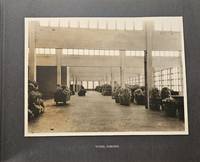
réf. List3132Montevideo Uruguay N.d. Photo album with thirty-six captioned photos measuring 6 ¾ x 9 ¼ inches mounted on heavy cardstock. Album embossed “INDUSTRIA LANERA DEL URUGUAY S.A. / ILDU / MONTEVIDEO URUGUAY”. Photos with fine contrast two missing; slight wear to mounts and album; else Near Fine. Industria Lanera del Uruguay is a Montevideo-based wool manufacturing company that was founded in 1933. Offered here is a photo album likely from the late 1950s to mid-1960s showcasing ILDU’s high-tech factory—an introductory page from the album claims that ILDU had “a policy of yearly replacements” of equipment to keep “abreast of all technological improvements”. The photos which are all captioned document the worsted wool manufacturing process from sorting and scouring to dyeing and weaving; the laboratories that test the product’s moisture level tensile strength and so on; and the luxurious “sample room” where gentlemen examine the finished product while relaxing in leather armchairs. Textiles especially wool made up a large percent of the Uruguayan manufacturing sector before 1960. Though manufacturing was slow to start because of a small population and political instability in the country and because so much of the country’s open space was taken up with ranching there was a massive boom in wool manufacturing in particular between the 1930s and 1950s.1 ILDU was one of the largest worsted wool companies in the ‘30s and is still operational today. Of interest to historians of South America’s manufacturing history. 1 Magdalena Bertino “La industria textil uruguaya 1900–1960” América Latina en la historia económica 31 June 2009: 99–126. unknown
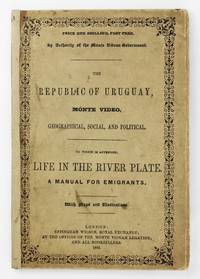
1862réf. 6341London: Effingham Wilson Royal Exchange 1862. Very good. 72pp. plus four folding maps. Original printed card wrappers spine reinforced with cloth tape. Light wear and soiling to wraps. Minor toning and scattered faint spotting internally. The only edition of this rare and attractive promotional tract the earliest known devoted to Uruguay. It was issued to coincide with the London International Exhibition of 1862 in order to attract English settlers to South America and contains extensive descriptions of natural resources and economic opportunity of the country. The text begins with a brief section that provides an account of the voyage to Montevideo from Southampton. The two main sections provide a statistical and narrative account of the land and lifestyle. The work contains four folding maps of Uruguay and the River Plate as well as numerous illustrations throughout. "The Oriental Republic of Uruguay among all the States of South America is that which most exercises European customs and in which the stranger will have the least cause of regret for his native country." Indeed during the mid- to late 19th century the number of English emigrants to Uruguay was substantial and the country attracted significant British investment of which this manual is strong evidence. Scarce OCLC locates four copies in U.S. institutions at Harvard Penn State Cleveland Public Library and NYPL. Effingham Wilson, Royal Exchange unknown
1925réf. 227551925. Latin America SS Resolute voyage photograph album 1925 documenting a steamship journey through Central and South America during the interwar expansion of international maritime tourism following the opening of the Panama Canal in 1914. The photographs record port cities landscapes and civic landmarks encountered along the Pacific and Atlantic coasts of Latin America during a period when luxury liners increasingly connected North American travelers with destinations across the hemisphere. By the 1920s transisthmian canal travel had reshaped global shipping and passenger routes allowing cruise itineraries to combine Caribbean Pacific and South American destinations within a single voyage. The album preserves visual evidence of these emerging travel circuits while also documenting major urban and cultural centers of the region during a period of modernization and expanding hemispheric exchange. Photo album compiled during the 1925 voyage of the steamship SS Resolute containing approximately 150 original silver gelatin photographs mounted to black album leaves and captioned in white ink. Contemporary red leatherette album titled "Photographs" in gilt and bound with red cord. Photographs measure approximately 3 x 4 inches to 4 x 6 inches. The photographs document the vessel's route through Panama and the Canal Zone before continuing along the Pacific coast of South America and returning through the Atlantic basin. Numerous photographs depict Panama City and the Panama Canal including views of the Culebra Cut and Gold Hill major engineering features of the canal project completed little more than a decade earlier. Other sections of the album record urban and harbor scenes in Cartagena Colombia including colonial architecture and waterfront activity. Photographs from Peru show Lima's Plaza de Armas the bullring at Miraflores and rural Andean valleys near Arequipa with terraced agricultural landscapes and local communities. Images from Chile capture the steep hills and harbor districts of Valparaíso along with coastal plazas and naval vessels near El Morro. Additional photographs from Argentina depict major civic spaces in Buenos Aires including Plaza San Martín and Plaza de Mayo documenting the monumental architecture and modernizing urban landscape of the city during the 1920s. The steamship SS Resolute operated as a passenger liner serving long distance routes during the interwar expansion of luxury cruising and international tourism. Voyages such as the one recorded in this album reflected the growing accessibility of transcontinental travel made possible by the Panama Canal and by the increasingly global network of commercial steamship lines linking the Americas. Mild toning consistent with age; mounts and binding well preserved. Overall very good condition. The photographs collectively document a hemispheric itinerary connecting canal infrastructure colonial port cities Andean landscapes and rapidly modernizing capitals offering a visual record of the cultural and geographic environments encountered by travelers during the height of the steamship era. unknown
1885réf. 003201Léon Vanier, 1885
réf. 226885Paris, A. Cadart, s.d. (vers 1875) in-4, titre et 40 planches gravées à l'eau-forte, signées, en partie numérotées et généralement légendées, demi-chagrin olive, dos lisse orné de filets dorés, tranches mouchetées de rouge (reliure moderne).
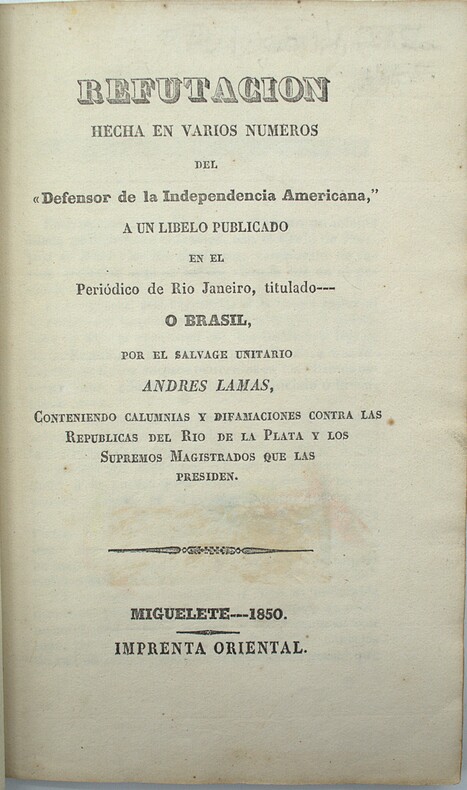
1850réf. PHO-2494Miguelete, Imprenta oriental, 1850, in-12 (20x13,5cm), 147pp., brochage papier postérieur, étiquette de titre manuscrit au plat.
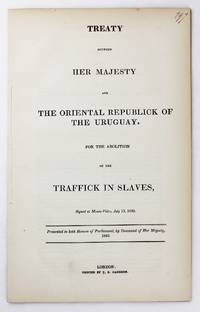
1842réf. 6316London: T.R. Harrison 1842. Near fine. 38pp. stitched. Very minor bumps to top edge of first leaf light dust-soiling to outer leaves. A very rare treaty between Queen Victoria’s Britain and the “Oriental Republick of the Uruguay” printed in both English and Spanish in two parallel columns throughout. According to the text the parties were “mutually animated by a sincere desire to co-operate for the utter extinction of the barbarous Traffick in Slaves.for the special purpose of immediately attaining this object so far as relates to the total and final abolition of the Slave Trade of the Oriental Republick of the Uruguay.” The treaty is comprised of fourteen original articles plus three annexes totaling forty-six additional articles and four additional articles at the end covering a host of issues pertaining to the suppression of the slave trade. These issues included enforcement procedures the establishment of “Mixed Courts of Justice” “Regulations in respect to treatments of liberated negroes” and much more. With regard to slaves found on international vessels the two nations hoped for “permanent good treatment and a full and complete emancipation according to the humane intentions of the Parties of the Treaty.” The present treaty was part of a larger effort by the British Crown to put an end to the transatlantic slave trade in the first half of the 19th century; at this same time Britain had reached terms on a similar treaty with the Republic of Texas and other nations. The document is signed at the end in type by J.H. Mandeville and Jose Ellauri representatives of the two countries who originally signed the treaty at Montevideo on July 13 1839; the present work was “Presented to both Houses of Parliament by Command of Her Majesty” in 1842 likely due to bureaucratic delays. Uruguay would have been an important ally for Great Britain in monitoring the seas against the transatlantic slave trade given its position opposite the South Atlantic Ocean from West Africa. OCLC records just a single physical copy of this treaty at the University of Arizona. Cundall 2854. T.R. Harrison unknown