ARTUCIO FERREIRA, Antonia.MareMagnum
Huard Albert - Huard Albert - CharlysLivre Rare Book
Partition de la chanson : Montevideo
1950réf. 16490Partitions sur l'Amérique Latine Huard Albert 1950 approx.

Le Temps des Chansons · Paris, France8,00 €
1 343 résultats
B., Maucci, s.a., 19’5 x 13 cm., tela original, retrato de la autora – 336 págs.
1950réf. 16490Partitions sur l'Amérique Latine Huard Albert 1950 approx.
Buenos Aires, Editorial Kapelusz, 1971. 4to. menor; 80 pp. Cubiertas originales.
México, Ediciones Cuadernos Americanos, Talleres Gráficos de la Editorial Cultura, 1948. 4to., 98 pp., 1 h. Ejemplar con algunas correcciones autógrafas de la propia autora, hechas en Montevideo, Septiembre de 1970. Cubiertas originales.
Buenos Aires, Editorial Las Ciencias, 1937. 4to. mayor; 33 pp., 1 h. Cubiertas originales. El autor era por aquellas fechas médico en la Embajada Argentina en Roma y notorio admirador del Duce. En Argentina era el presidente de la Asociación Amigos de Alemania.
193848pp.+ 32 bl/w plates out of text + 5 illustrations in colour tipped in, numbered edition limited to 2000 copies: this is no. 1752, 27cm., original softcover, text in Spanish, some foxing, [contains a.o. a list and description of 175 exhibited paintings by the Uruguayan painter Blanes Viale 1879-1926], S95062
1938réf. S95062Montevideo (Uruguay), 1938 48pp.+ 32 bl/w plates out of text + 5 illustrations in colour tipped in, numbered edition limited to 2000 copies: this is no. 1752, 27cm., original softcover, text in Spanish, some foxing, [contains a.o. a list and description of 175 exhibited paintings by the Uruguayan painter Blanes Viale 1879-1926], S95062
1974réf. 31177London Readers Union, 1974. Broschiert
Barcelona, Montaner y Simón, Editores, 1907. 4to. mayor; 360 pp., con numerosas ilustraciones de Ricardo Opisso, entre el texto. Enc. original en tela estampada.
Buenos Aires, Librería La Facultad, de Juan Roldán, 1916. 4to.; 309 pp., y una lámina con el retrato del autor. Encuadernación original en piel estampada.
1925Milano, 1925, stralcio con copertina posticcia muta, pp. 906/910 con 17 illustrazioni. - !! ATTENZIONE !!: Con il termine estratto (o stralcio) intendiamo riferirci ad un fascicolo contenente un articolo di rivista, sia che esso sia stato stampato a parte utilizzando la stessa composizione sia che provenga direttamente da una rivista. Le pagine sono indicate come "da/a", ad esempio: 229/231 significa che il testo è composto da tre pagine. Quando la rivista di provenienza non viene indicata é perchè ci è sconosciuta. - !! ATTENTION !!: : NOT A BOOK : “estratto” or “stralcio” means simply a few pages, original nonetheless, printed in a magazine. Pages are indicated as in "from” “to", for example: 229/231 means the text comprises three pages (229, 230 and 231). If the magazine that contained the pages is not mentioned, it is because it is unknown to us.
2001réf. LFA-126744612Un guide de 256 pages, format 120 x 205 mm, illustré, broché couverture couleurs, publié en 2001, Le Petit Futé bon état
2000Broch?. 254 pages. Jaquette.
Peuples du Monde. 1988. In-4 Carré. Broché. Bon état. Livré sans Couverture. Dos satisfaisant. Intérieur frais. Paginé de 17 à 28. Illustré de photos en couleur et en noir et blanc. Dossier tiré du Magazine 'Peuples du Monde'. Reportage.
1988réf. RO40235851Peuples du Monde. 1988. In-4. Broché. Bon état, Livré sans Couverture, Dos satisfaisant, Intérieur frais. Paginé de 17 à 28. Illustré de photos en couleur et en noir et blanc. Dossier tiré du Magazine 'Peuples du Monde'.. . . . Classification Dewey : 989-Paraguay et Uruguay
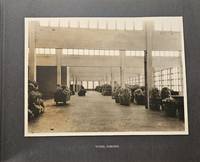
réf. List3132Montevideo Uruguay N.d. Photo album with thirty-six captioned photos measuring 6 ¾ x 9 ¼ inches mounted on heavy cardstock. Album embossed “INDUSTRIA LANERA DEL URUGUAY S.A. / ILDU / MONTEVIDEO URUGUAY”. Photos with fine contrast two missing; slight wear to mounts and album; else Near Fine. Industria Lanera del Uruguay is a Montevideo-based wool manufacturing company that was founded in 1933. Offered here is a photo album likely from the late 1950s to mid-1960s showcasing ILDU’s high-tech factory—an introductory page from the album claims that ILDU had “a policy of yearly replacements” of equipment to keep “abreast of all technological improvements”. The photos which are all captioned document the worsted wool manufacturing process from sorting and scouring to dyeing and weaving; the laboratories that test the product’s moisture level tensile strength and so on; and the luxurious “sample room” where gentlemen examine the finished product while relaxing in leather armchairs. Textiles especially wool made up a large percent of the Uruguayan manufacturing sector before 1960. Though manufacturing was slow to start because of a small population and political instability in the country and because so much of the country’s open space was taken up with ranching there was a massive boom in wool manufacturing in particular between the 1930s and 1950s.1 ILDU was one of the largest worsted wool companies in the ‘30s and is still operational today. Of interest to historians of South America’s manufacturing history. 1 Magdalena Bertino “La industria textil uruguaya 1900–1960” América Latina en la historia económica 31 June 2009: 99–126. unknown
réf. List3132Montevideo Uruguay N.d. Photo album with thirty-six captioned photos measuring 6 ¾ x 9 ¼ inches mounted on heavy cardstock. Album embossed “INDUSTRIA LANERA DEL URUGUAY S.A. / ILDU / MONTEVIDEO URUGUAY”. Photos with fine contrast two missing; slight wear to mounts and album; else Near Fine. Industria Lanera del Uruguay is a Montevideo-based wool manufacturing company that was founded in 1933. Offered here is a photo album likely from the late 1950s to mid-1960s showcasing ILDU’s high-tech factory—an introductory page from the album claims that ILDU had “a policy of yearly replacements” of equipment to keep “abreast of all technological improvements”. The photos which are all captioned document the worsted wool manufacturing process from sorting and scouring to dyeing and weaving; the laboratories that test the product’s moisture level tensile strength and so on; and the luxurious “sample room” where gentlemen examine the finished product while relaxing in leather armchairs. Textiles especially wool made up a large percent of the Uruguayan manufacturing sector before 1960. Though manufacturing was slow to start because of a small population and political instability in the country and because so much of the country’s open space was taken up with ranching there was a massive boom in wool manufacturing in particular between the 1930s and 1950s.1 ILDU was one of the largest worsted wool companies in the ‘30s and is still operational today. Of interest to historians of South America’s manufacturing history. 1 Magdalena Bertino “La industria textil uruguaya 1900–1960” América Latina en la historia económica 31 June 2009: 99–126. unknown books
1893réf. 27979Montevideo 1893 une photographie originale réalisée vers 1893 environ, Format de la photo : 25,5 x 19 cm - photographie collée sur carton de format : 30 x 40 cm, Tirage argentique, Couleur: Noir et blanc, plac ZABALA à Montevideo, 1893 Photographe inconnu,
Buenos Aires, Editorial Nova, 1957. 4to. menor; 136 pp., con dibujos entre el texto, y 63 reproducciones fotográficas. Cubiertas originales.
1943Broch?. XXVIII + 115 pages. 22 x 28,5 cm.
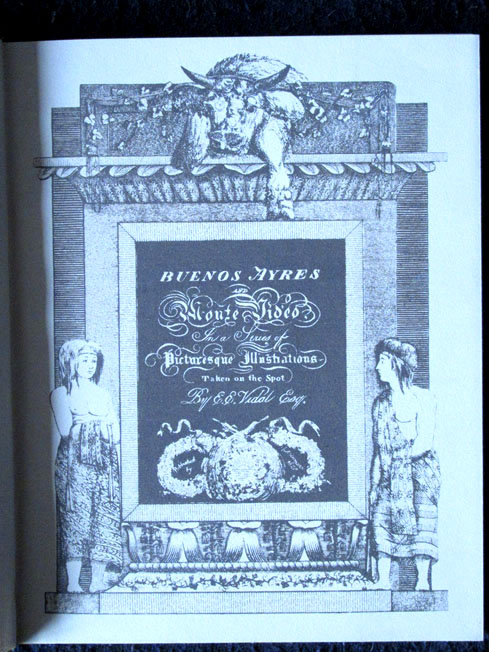
1943réf. 39373Editorial Viau S R Ltda., Buenos Aires, 1943. Reprint der Erstausgabe London, 1820. XXVIII, 115 Seiten / pp., mit zahlreichen Abbildungen / richly illustrated; 4°, 29 x 22,5 cm, Leder / Leather
Barcelona, "El Bardo", 1969. 4to.; 69 pp. Cubiertas originales.
Buenos Aires, Editorial Poseidón, 1943. 4to.; 103 pp. Con 62 ilustraciones en negro y 3 láminas en color. Encuadernación original en cartoné.
Buenos Aires, Editorial Galerna, 1969. 4to.; 167 pp. Segunda edición. Cubiertas originales.
Francia, 1880. Incisione su acciaio, b/n, cm 70 x 97,5 (il foglio). Ampia veduta planimetrica della rada e del porto di Montevideo, la capitale, la città più popolata e il porto più grande dell'Uruguay. Foglio con grande filigrana con stemma e corona. Alcune lievi presenze di umido, bella la carta, discreto stato di conservazione.