De Fer Nicolas edit. & Van Loon inc.MareMagnum

2769 resultados
1705Raffigurazione geografica del territorio nord americano in particolare di Canada o Nouvelle France ed una parte degli Stati Uniti (Florida, Carolaina, Luisiana, Virginia...). Interessante evidenziare come l'estensione del Canada venga aumentata, verso sud, a discapito dei territori delle colonie inglesi.
1927ref. ABE-1246355201736 PAGES FORMAT 20,5 CM X 29 CM-EN COUVERTURE "LE VAINQUEUR DE L4ATLANTIQUE CHARLES LINDBERGH ET M.MYRON T.HERRICK"-LINDBERGH A VAINCU L'ATLANTIQUE,4P PAR JACQUES MORTANE,6 PHOTOS-LA TRAGIQUE HISTOIRE DE L'EXPEDITION DE LAUDONNIERE ET DE RIBAULT EN FLORIDE,3P PAR MAURICE BESSON-NOTRE EMPIRE COLONIAL,LA COTE D'IVOIRE,2P-LES MISSIONS SPECIALES AERIENNES PENDANT LA GUERRE,TROIS HEROS QUI FURENT DES "MISSIONNAIRES":JULES VEDRINES,GEORGES GUYNEMER,JEAN NAVARRE,3P,4 PHOTOS-LE 33e BORDEAUX PARIS,4P PAR MAURICE SCHNEIDER,6 PHOTOS,CARTE,RONSSE-A PROPOS DE LA GUERRE CIVILE EN BOLIVIE,3P,6 PHOTOS-LES CHASSEURS DE DANSES,4P PAR GASTON LEROUX-CHEZ LES ANTHROPOPHAGES DE L'AMAZONE DU PACIFIQUE A L'ATLANTIQUE A TRAVERS LE PUTUMAYO,2P PAR LE COMMANDANT MARCEL,3 PHOTOS
1945ref. ABE-58315387564 PAGES-TRAITRE ET HEROS JEAN GIOT EST CONDAMNE A MORT/PHOTO/RAMBOZ/DUPUIS-ATTENTATS TERRORISTES EN PALESTINE-LA RATION A PARTIR DU 1ER JANVIER 300 GRAMMES DE PAIN PAR JOUR-LE MYSTERE DE VENDAYS/PAULE GUILLOU-LA CONFERENCE DE MOSCOU: UN ECHANGE DE CONCESSIONS ENTRE RUSSES ET AMERICAINS-1946 COMME LE VOIT LA VOYANTE FLORIDA/PHOTO-HITLER AVAIT DONNE RENDEZ VOUS AUX JAPONAIS/RENDEZ VOUS A BASSORAH-TENNIS DESTREMEAU VAINQUEUR DE LUCOT-ARMENIENS ET KURDES S'AGITENT-CINQUANTENAIRE DU CINEMA/2 PHOTOS (PJ18)
1870ref. ABE-1704155220817VOYAGE DANS LES VALLEES DE QUINQUINAS (BAS-PEROU), PAR PAUL MARCOY, 1849-1861-COURSE SUR LES GLACIERS DU MONT ROSE (VALAIS ET PIEMONT), PAR CHARLES GRAD, 1866-EXPLORATION DES AFFLUENTS ABYSSINIENS DU NIL, PAR SAMUEL W BAKER, RECITS DE CHASSE 1861-1862-ROME, PAR FRANCIS WEY, 1864-1870-SOUVENIRS D'UN VOYAGE CHEZ LES SLAVES DU SUD, PAR GEORGES PERROT, DESSINS PAR TH VALERIO, 1868-LE PANDJAB ET LE CACHEMIR, PAR GUILLAUME LEJEAN, 1866-QUATRE MOIS EN FLORIDE, PAR M POUSSIELGUE, 1851-1852-REVUE GEOGRAPHIQUE 1870, PAR M VIVIEN DE SAINT-MARTIN-RELIURE-TITRES DORES-SIGNET-434 PAGES-(EM1223)
ref. 19968Éditions Novalis, 2003. Broché au format 155 x 210 mm, 129 pages. Propre. Peu courant.
ref. 942Montesson, Éditions Novalis, 2003, in-8, br., 129 p. Avec une conférence de Rudolf Steiner: «Le sens de la Terre», Berlin le 14 mai 1912. Bon état.
ref. 0266738001.Gpaperback. Good. Access codes and supplements are not guaranteed with used items. May be an ex-library book. paperback
ref. 0260816345.Ghardcover. Good. Access codes and supplements are not guaranteed with used items. May be an ex-library book. hardcover
ref. 46414054like new. unknown
ref. 1017439567.Ghardcover. Good. Access codes and supplements are not guaranteed with used items. May be an ex-library book. hardcover
ref. 0332070573.Ghardcover. Good. Access codes and supplements are not guaranteed with used items. May be an ex-library book. hardcover
ref. 45472342-nnew. unknown
ref. 1024605353.Ghardcover. Good. Access codes and supplements are not guaranteed with used items. May be an ex-library book. hardcover
ref. 50638700like new. unknown
ref. 0265411416.Ghardcover. Good. Access codes and supplements are not guaranteed with used items. May be an ex-library book. hardcover
ref. 1333543344.Gpaperback. Good. Access codes and supplements are not guaranteed with used items. May be an ex-library book. paperback
2026ref. x-1107171520Cambridge University Press 2026. Hardcover. New. 494 pages. 6.00x1.13x9.00 inches. Cambridge University Press hardcover
ref. 51790238-nnew. unknown
ref. 51790238like new. unknown
1956ref. 705210PN. New. 1956. Soft Cover. Date is original print. This is a reprint edition. . PN paperback
ref. ria9781118301814_inpHardback. New. New Book; Fast Shipping from UK; Not signed; Not First Edition; N/A hardcover
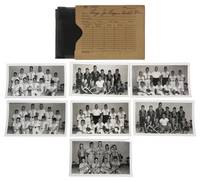
1951ref. 237921951. Largo Florida photograph archive taken by George Fulmer c. 1951 documenting education youth culture housing commerce religion and recreation as a citrus and farming community entered the first phase of its postwar transformation into a suburban city. Largo's population and physical landscape changed rapidly after World War II as groves and grazing land gave way to housing and industrial development; within the wider Pinellas County school system enrollment rose from roughly 16000 students in 1946 to about 69000 in 1962 requiring the construction of 64 new schools between 1948 and 1965. The photographs concentrate unusually closely on the generation educated during this transition recording Largo High School athletics Future Farmers of America Future Homemakers of America youth baseball school music and other organized activities at the moment when the occupational and domestic assumptions of an agricultural community were meeting the demographic and economic conditions of suburban Florida. Photo archive of approximately 87 items including 38 silver gelatin photographs and approximately 38 corresponding large format negatives photograph prints ranging from 4.5 x 2.5 to 5 x 4 inches and each negative about 4 x 5 inches all retained in 11 original numbered photographic job envelopes bearing client subject and occasional date notations Largo Florida principally 1951. The photographs and negatives were made by George Fulmer the longtime Clearwater commercial and civic photographer whose surviving files document decades of local institutional life in central Pinellas County. The original job envelopes preserve Fulmer's assignment structure linking negatives and prints to named Largo clients and subjects rather than leaving the photographs as unidentified local views. The school material includes a large Largo High School Future Homemakers of America group posed beneath the organization's emblem; young women displaying and examining patterned skirts and clothing outdoors; a group identified on its envelope as "Largo High School Boys Girls FFA & FHA"; and children and adolescents posed beneath a sign reading "Largo Chapter Future Farmers of America Department of Vocational Agriculture" some holding hoes shovels and other agricultural implements. Football assignments show night games under field lights players running tackling and breaking through defensive lines referees moving through plays crowded grandstands cheerleaders and a large uniformed marching band packed into the bleachers. Other files document Largo Junior League baseball teams posed with bats gloves coaches and locally lettered uniforms; a Largo Baptist Church choir arranged in the sanctuary; Sinclair gasoline station employees receiving a trophy beside an HC gasoline pump; new residential and commercial buildings; and modern domestic interiors furnished with low upholstered seating lamps paneled walls and contemporary cabinetry. Most negatives duplicate surviving prints. The Largo recorded here was still closely identified with agriculture. Citrus cattle and dairy had dominated the local economy through much of the early twentieth century and Largo had developed into one of Florida's major citrus centers after the arrival of the railroad; within a few years of these photographs freezes in 1957 and 1962 damaged the citrus economy while population growth increased demand for residential and commercial land. Largo High School embodied that transition directly. Its own history recalls an educational culture in which young men studied agriculture tractor repair wood shop and animal science while young women took home economics a gendered vocational division visible here in the paired presence of Future Farmers and Future Homemakers. The Future Homemakers photographs record an educational ideal that treated domestic labor clothing food preparation and household management as formal preparation for female adulthood while the FFA material trained boys for an agricultural economy whose physical basis was already beginning to contract. Largo's accelerating growth soon made the older educational infrastructure inadequate: in 1957 a new Largo High School opened taking 37 acres of land. Postwar industrialization accelerated this transformation as Honeywell and General Electric facilities helped move Largo from an agricultural center toward a suburban economy; housing and trailer parks replaced groves and grazing land and by 1970 the city counted roughly 22300 residents up from 5302 in 1960. The apparently all white school organizations also belong to Pinellas County's segregated educational structure: after the 1954 Brown v. Board of Education decision the county nevertheless built nine additional all Black schools between 1954 and 1963 and only about 200 Black students attended desegregated county schools in 1964. The photographs show some curling but remain in very good condition. Some negatives show fading; original paper job envelopes show handling wear. Overall in very good condition. unknown books
1951ref. 237921951. Largo Florida photograph archive taken by George Fulmer c. 1951 documenting education youth culture housing commerce religion and recreation as a citrus and farming community entered the first phase of its postwar transformation into a suburban city. Largo's population and physical landscape changed rapidly after World War II as groves and grazing land gave way to housing and industrial development; within the wider Pinellas County school system enrollment rose from roughly 16000 students in 1946 to about 69000 in 1962 requiring the construction of 64 new schools between 1948 and 1965. The photographs concentrate unusually closely on the generation educated during this transition recording Largo High School athletics Future Farmers of America Future Homemakers of America youth baseball school music and other organized activities at the moment when the occupational and domestic assumptions of an agricultural community were meeting the demographic and economic conditions of suburban Florida. Photo archive of approximately 87 items including 38 silver gelatin photographs and approximately 38 corresponding large format negatives photograph prints ranging from 4.5 x 2.5 to 5 x 4 inches and each negative about 4 x 5 inches all retained in 11 original numbered photographic job envelopes bearing client subject and occasional date notations Largo Florida principally 1951. The photographs and negatives were made by George Fulmer the longtime Clearwater commercial and civic photographer whose surviving files document decades of local institutional life in central Pinellas County. The original job envelopes preserve Fulmer's assignment structure linking negatives and prints to named Largo clients and subjects rather than leaving the photographs as unidentified local views. The school material includes a large Largo High School Future Homemakers of America group posed beneath the organization's emblem; young women displaying and examining patterned skirts and clothing outdoors; a group identified on its envelope as "Largo High School Boys Girls FFA & FHA"; and children and adolescents posed beneath a sign reading "Largo Chapter Future Farmers of America Department of Vocational Agriculture" some holding hoes shovels and other agricultural implements. Football assignments show night games under field lights players running tackling and breaking through defensive lines referees moving through plays crowded grandstands cheerleaders and a large uniformed marching band packed into the bleachers. Other files document Largo Junior League baseball teams posed with bats gloves coaches and locally lettered uniforms; a Largo Baptist Church choir arranged in the sanctuary; Sinclair gasoline station employees receiving a trophy beside an HC gasoline pump; new residential and commercial buildings; and modern domestic interiors furnished with low upholstered seating lamps paneled walls and contemporary cabinetry. Most negatives duplicate surviving prints. The Largo recorded here was still closely identified with agriculture. Citrus cattle and dairy had dominated the local economy through much of the early twentieth century and Largo had developed into one of Florida's major citrus centers after the arrival of the railroad; within a few years of these photographs freezes in 1957 and 1962 damaged the citrus economy while population growth increased demand for residential and commercial land. Largo High School embodied that transition directly. Its own history recalls an educational culture in which young men studied agriculture tractor repair wood shop and animal science while young women took home economics a gendered vocational division visible here in the paired presence of Future Farmers and Future Homemakers. The Future Homemakers photographs record an educational ideal that treated domestic labor clothing food preparation and household management as formal preparation for female adulthood while the FFA material trained boys for an agricultural economy whose physical basis was already beginning to contract. Largo's accelerating growth soon made the older educational infrastructure inadequate: in 1957 a new Largo High School opened taking 37 acres of land. Postwar industrialization accelerated this transformation as Honeywell and General Electric facilities helped move Largo from an agricultural center toward a suburban economy; housing and trailer parks replaced groves and grazing land and by 1970 the city counted roughly 22300 residents up from 5302 in 1960. The apparently all white school organizations also belong to Pinellas County's segregated educational structure: after the 1954 Brown v. Board of Education decision the county nevertheless built nine additional all Black schools between 1954 and 1963 and only about 200 Black students attended desegregated county schools in 1964. The photographs show some curling but remain in very good condition. Some negatives show fading; original paper job envelopes show handling wear. Overall in very good condition. unknown
ref. H5947Paperback. Very Good. Probably the Whitworth family but possibly the Glasglows and Dunkles -- Apollo PA appears to be the place of residence. Documents family get-togethers friends outings to Vandergrift or the Kiskiminetas River a trip to Atlantic City and the inevitable flat tire on the way there a few pictures of the Grand Canyon and a friend in Sydney Australia some of Niagara Falls and of a horse racing track and then the move in 1927 to Orlando Florida and pictures of other Florida points of interest including Hollywood and Miami. 14 x 9 inches recent sympathetic black paper covers with cloth spine contents inside generally very good well over 100 pictures. paperback
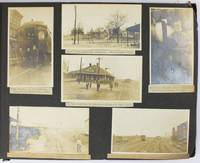
1909ref. 5288Various locations mostly in Cuba and Florida: March 5 to April 1 1909. About very good. 21 leaves illustrated with 235 photographs all with typed captions. Oblong folio. Contemporary full dark brown cloth brad bound. Moderate staining and coiling to covers some edge wear. Bottom corners of all leaves chipped not costing content. Occasional minor wear to photos or captions. A well-organized and meticulously-captioned vernacular photograph album with significant content on Florida and Cuba in the first decade of the 20th century. The album is organized chronologically and features a family from Ohio traveling from home by train to Florida and thence to Cuba then returning home in the spring of 1909. The first seven and the last twenty-five photographs emanate from Ohio where the journey started Tennessee and Georgia but otherwise the album features Florida and Cuba in over 200 pictures. The scenes in Florida range from Jacksonville to Key West and other points in-between featuring the state in almost 120 photos both before and after the traveling party went to Cuba. The images capture portraits of the travelers numerous homes hotels businesses and other buildings including an ostrich farm in Jacksonville numerous scenes in Ocala including one image featuring "Mary and her old colored Mammy" various churches and other scenes in Tampa residences in Key West beach scenes at Long Key various hotels and agricultural fields in Miami and various buildings in Palm Beach Ormand and St. Augustine concluding with a front view of the "Old Slave Market" in the latter city. Most notably the album includes eighty-six photographs of Cuba the nexus point for the present trip where the party arrived on March 20. The Cuba scenes mostly feature Havana with several views of "Beautiful Residences" and other buildings plus some street views and other scenes in the city. Other interesting Havana scenes picture the railroad station "The Bone Yard -- Old destroyed Catacombs" scenes in the Malecon and more. Some of the street scenes in Havana picture local residents one of "Children on the street corner" and another showing "Children scrambling for pennies" in the middle of the street. The album also contains views of the wreck of the Maine Morro Castle the interior of Fort Cabanas and more. The travelers managed to wander outside Havana for a day when they ventured to the countryside and the town of Guines on March 23. While there the compiler took photographs of countryside outside Guines a railroad car full of sugar cane thatched houses a group photograph of the students at a "Spanish School in Guines" a "Child crying in the street" a group of locals outside a cafe captioned "Strangers in a strange land.Where we tried to get something to eat" other street scenes in the town and the local jail. The last photograph of Cuba here features a "Large Sugar Mill in Providencia." The group then returned through Florida Georgia and Tennessee where they spent a day at Lookout Mountain and Orchard Knob before their final stop in Dayton Ohio. A wonderful early-20th century travel album with significant views in Florida and Cuba. March 5 to April 1 unknown books