2 135 résultats
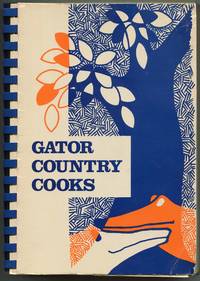
1978réf. 613635Gainesville Florida: The Junior League of Gainesville Florida INC 1978. Softcover. Near Fine. Fourth printing. Comb-bound illustrated wrappers. Ink notation on the title page slight creasing and toning else near fine. The Junior League of Gainesville, Florida, INC unknown books
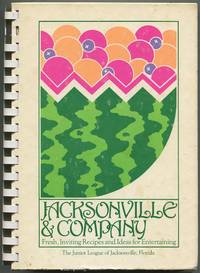
1983réf. 613626Jacksonville Florida: The Junior League of Jacksonville Florida 1983. Hardcover. Very Good. Second edition. Spiral bound illustrated boards. 365pp. Wear on the board edges some toning and a chip on the first page thus very good. The Junior League of Jacksonville, Florida hardcover books
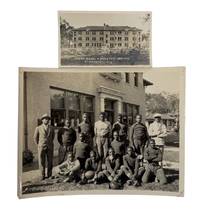
1940réf. 208161940. African American Education Now known as Florida Memorial University Florida Normal & Industrial Institute is a product of two all Black Baptist institutes eventually becoming an accredited University offering 41 undergraduate degree programs. This set of two black and white photographs showcases the university during one of their renaissance periods in the 1940s. One is an 8" x 10" silver gelatin photograph featuring a football team of 13 boys alongside their coach who dons a fedora and pinstriped suit. The second photograph is a 3.5" x 5.5" real photo post card and shows one of the main class buildings at their location in St. Augustine which was formerly a plantation built by enslaved Black persons. In 1918 the junior college controversially moved onto the "Old Hanson Plantation". This act of reclaiming buildings once meant to oppress African Americans was now being turned into the four year institution it is today. The advent of civil rights movement in the 1950s and 1960s brought about a whirlwind of challenges and change to St. Augustine. When local African Americans decided to protest and resist segregation in the city students from Florida Memorial joined the effort participating in sit-ins wade-ins and swim-ins orchestrated by the Southern Christian Leadership Conference and the Rev. Dr. Martin Luther King Jr. The events in St. Augustine significantly influenced federal legislation resulting in the passage of the Civil Rights Act of 1964. Some minor edge wear and corner creasing a few pin holes to the corners of the larger photo. Overall in very good condition. This set of photographs is a testament to the success of Black Americans given the proper resources and opportunities for higher education. unknown books
1911réf. 392022Indianapolis: The Bobbs-Merrill Company 1911. Hardcover. Very Good. First edition. Decorative green cloth stamped in yellow. Illustrated by George Kerr. Wear on the board edges bumped corners and rubbing else very good. "The story of how we look from where the dog sits. The Bobbs-Merrill Company hardcover books
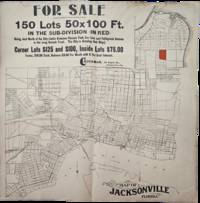
1900réf. List3420Likely Jacksonville Florida 1900. Folded poster on newsprint measuring 16 x 16 inches. With toning stain to top right; very good. A poster published by the C. Buckman Company advertising 50x100 lots in what is currently the Longbranch neighborhood of Jacksonville. The tract is highlighted in red on a larger map of the city. The city saw significant growth during this period from tourism the lumber trade and the expansion of railways. C. Buckman is Courtland Buckman 1863–1952 a lifelong Floridian the son of a Civil War veteran and the brother of Florida State Legislator Henry Holland Buckman for whom the H. H. Buckman Bridge in Orange Park is named. Courtland Buckman was the Deputy County Clerk for Duval County in 1886 and later in the 1880s served one term as the Mayor of Daytona Beach. In 1894 he returned to Jacksonville and joined the C. C. Robertson Real Estate Company before opening his own real estate firm the C. Buckman Company in 1897. He had an active role in the development of Jacksonville and was prominent in business and civic life there including serving on the Jacksonville Board of Trade.1 1 Courtland Buckman Papers Thomas G. Carpenter Library University of North Florida Jacksonville Florida. https://archives.unf.edu/repositories/3/resources/17 Accessed January 16 2026. unknown books
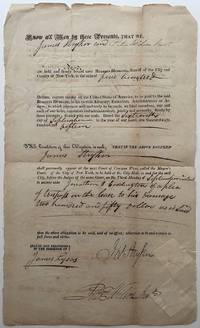
1815réf. 267901New York 1815. unbound. 2 pages front and back 13 x 8 inches signed "Ruggles Hubbard" as Sheriff of New York City -- an arrest warrant for two defendants to appear in Mayors Court September 25 1815 in part: ".I Ruggles Hubbard Sheriff of the City of New York do hereby assign the within written Bail Bond to the use of the plaintiff s to be sued for _____ according to the form of the statute in that case made and provided." Evenly toned with usual folds and a minimum of fraying at the borders; very good condition overall. New York City Sheriff and adventurer who joined his friend General Gregor McGregor's expedition in conquering Spanish Florida June 29 1817 - December 23 1817 culminating in his appointment as Governor of Fernandina. His six-week reign came to an abrupt end after being overthrown by the notorious pirate Luis Aury who claimed Florida in the name of Mexico. unknown books
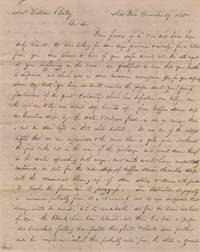
1835réf. BK0025New York City 1835. Autograph letter signed by the merchant firm Baker & Moore 4 pp. addressed to General William Battey care of Dr. Charles Luzenberg at the Franklin Infirmary on the Pontchartrain Railroad New Orleans. Stampless folded letter with red circular "NEW-YORK" December 31 datestamp and manuscript "25" rate. Appx. 1000 words. File folds; otherwise very good. A lengthy commercial letter written thirteen days after the Great Fire of New York describing the destruction of the city's mercantile district and tracing its immediate effects through insurance capital banking commodity prices and trade with New Orleans. Written by the New York firm of Baker & Moore to their associate William Battey the letter provides a near-contemporary account of the fire an assessment of the city's financial resilience and instructions for exploiting the resulting fluctuations in the markets for brandy wine raisins tobacco iron and copper. The fire began on the evening of December 16 during an extraordinary cold spell and northwest gale. Frozen hydrants wells cisterns and hoses left the city's volunteer fire companies largely unable to contain it. By the following day the fire had destroyed much of the commercial district between Wall Street and the East River including the Merchants' Exchange and hundreds of stores and warehouses. Buildings were eventually demolished with gunpowder to create firebreaks at Exchange Place and Coenties Slip. Contemporary estimates varied but approximately 674 buildings were destroyed with losses eventually placed at twenty million dollars or more.1 Baker & Moore begin by describing the extent of the burned district the severe weather and the use of explosives to arrest the flames: "Since my last you have no doubt received the paper sent you giving particulars of the great calamity which has befallen our City. On the 16th our City was about half burned up. From Coffee House Slip to Coenties Slip by the water & William Street is all in ruins. There is but one store left in that whole district. It was one of the coldest nights that we ever experienced & the wind blew a gale from Northwest. The fire broke out in the rear of the Exchange and went down through to the water spreading both ways and would have undoubtedly continued on but for the wide slips of Coffee House & Coenties Slip with the occasional blowing up of some stores & houses with powder to check the flame in its progress" The account quickly turns from the physical destruction to the distribution of its financial losses: "The destruction of property is immense probably from 10 to 15000000$ and it was supposed that many would be ruined but tis remarkable so far we have not heard of one. The Banks have been liberal and there has been a proper and benevolent feeling manifested throughout & should some further aid be brought in which probably will from the State or general government we think there may be no failures. The Insurance companies most of them are ruined and the principal loss is in Insurance capital. The loss will in some instances fall upon those who cannot well afford it. Many widows & orphans have had their all taken from them. The loss is large and New York has met with a great calamity but she is made of such materials & her facilities are so large & varied that the mercantile community will bear up under more than any other place in the Union & we think in one year's time it will be almost forgotten." The confidence expressed here correctly anticipated the city's rapid commercial recovery. Banks and government agencies extended credit and payment terms rebuilding began almost immediately and the burned district was reconstructed with new countinghouses and warehouses. The disaster also exposed the inadequacy of New York's water supply and firefighting arrangements contributing to later infrastructure and institutional reforms. Baker & Moore then apply the disaster to their own trade with New Orleans. Hundreds of warehouses and their contents had been destroyed increasing prices of imported foods wines and spirits. The firm instructs Battey to use the New York price current to obtain higher prices for their consignments: "This fire has advanced most all kinds of goods. Raisins are worth here $3-$3½. Wines such as Mess. Eastman's have advanced with us 4-6 cents. So many hundred casks destroyed must advance it and make it higher through the season. More than one half the Brandy was consumed tis now selling at $1.75 and some are asking $2. We wish what we sent you sold & this will be a favorable time to sell-show N.Y. price current-and get as good a price as you can. There will we think be no want of Brandy. Those raisins we think you had better dispose of at once. We think from N.O. current must pay something handsome for us. In regard to old Iron we find good old iron will always sell for the money for 112½ gross hundred equal to 1c per lb. Cast & wrought are same price. If you can come across a lot to do you may make it answer & pay us well. Copper if you can buy low enough may pay something. We thought hay might pay out but tis so high we cannot buy to send. We are of opinion that goods generally will be higher in consequence of this fire yet when we consign goods we wish them sold when they can to pay and we wish Eastman & Co. to sell and close up our affairs in their hands." The concluding paragraph briefly introduces events in Florida. The Second Seminole War had begun that month following mounting resistance to the forced removal of the Seminole people from Florida. Baker & Moore believed that the conflict might affect the movements of a brig expected in New Orleans: "We observe that trouble is anticipated with the Indians in Florida & if so our Brig may not get a load of them & be in N. Orleans earlier than we anticipated tis uncertain what will be the result they may detain her longer until they can get them on board." The wording appears to indicate that the vessel was expected to transport a group of Native people although the letter does not identify the brig its owners or the precise circumstances of the contemplated voyage. The recipient General William Battey was then in New Orleans apparently acting as Baker & Moore's commercial representative while also attending to his health at the Franklin Infirmary. The firm gave him considerable discretion to supervise consignments collect funds purchase goods when opportunities arose and forward current market information to New York. The address places him in the care of Dr. Charles Aloysius Luzenberg who founded the Franklin Infirmary with municipal support in 1835 and subsequently helped establish the Medical College of Louisiana the forerunner of Tulane's medical school.2 Baker & Moore appear to have been commission or importing merchants whose own affairs escaped direct damage but whose trade was immediately altered by the destruction of competing inventories. The letter thus follows the fire from the burned commercial district into the decisions of a New York firm and its representative in New Orleans. A substantial contemporary account of the Great Fire of 1835 documenting the destruction of New York's commercial center and the disaster's immediate movement through insurance banking commodity markets interregional credit and trade with New Orleans. We find no similar examples on the secondary market or in auction records. 1 Herbert Asbury "The Great Fire of 1835" The New Yorker July 26 1930. 2 Louisiana Historical Association "Luzenberg Charles Aloysius" in Dictionary of Louisiana Biography accessed August 2 2026 https://www.lahistory.org/resources/dictionary-louisiana-biography/dictionary-of-louisiana-biography-l/. . unknown books
1921réf. 40714Washington D.C.: Published by the United States Coast and Geodetic Survey 1921. Large folding nautical sea chart printed on heavy paper stock. Colored. A rare coastal survey of Florida from Jupiter to Miami bisected into two parts including Jupiter West Palm Beach Boca Raton Pompano Beach Fort Lauderdale Hollywood Miami and Key Biscayne. Established by President Thomas Jefferson in 1807 as the Survey of the Coast the U.S. Coast and Geodetic Survey was the United States' first civilian scientific agency. This agency has followed its mission to survey the U.S. coastline create nautical charts of the coast and help increase maritime safety since its founding and has often played fascinating roles in significant chapters of U.S. history. It served in all theaters of the Civil War in the service of the Union Army and Navy pioneered acoustic exploration in the wake of the sinking of the Titanic and during WWI it worked to detect enemy submarines. In addition this agency worked to survey and produce detailed maps and renderings of the U.S. coast. These nautical survey maps commonly referred to as "T-sheets" provide fascinating insights into the history of the United States coastline which has and will continue to shift. These maps are the most important data source for understanding the physical and ecological characteristics of the U.S. shoreline. The present map is a highly detailed and accurate sea chart of the Florida coast from Jupiter to Miami and an important historical view the developing state. Published by the United States Coast and Geodetic Survey unknown books
1921réf. 40681Washington D.C.: Published by the United States Coast and Geodetic Survey 1921. Nautical chart printed on heavy paper stock. Colored. A rare coastal survey of Miami. Established by President Thomas Jefferson in 1807 as the Survey of the Coast the U.S. Coast and Geodetic Survey was the United States' first civilian scientific agency. This agency has followed its mission to survey the U.S. coastline create nautical charts of the coast and help increase maritime safety since its founding and has often played fascinating roles in significant chapters of U.S. history. It served in all theaters of the Civil War in the service of the Union Army and Navy pioneered acoustic exploration in the wake of the sinking of the Titanic and during WWI it worked to detect enemy submarines. In addition this agency worked to survey and produce detailed maps and renderings of the U.S. coast. These nautical survey maps commonly referred to as "T-sheets" provide fascinating insights into the history of the United States coastline which has and will continue to shift. These maps are the most important data source for understanding the physical and ecological characteristics of the U.S. shoreline. The present map is a highly detailed and accurate sea chart of the Miami area and an important historical view of a developing Florida. Published by the United States Coast and Geodetic Survey unknown books
1921réf. 40707Washington D.C.: Published by the United States Coast and Geodetic Survey 1921. Large folding nautical chart printed on heavy paper stock. Colored. A rare coastal survey of Florida from Jupiter to Miami bisected into two parts including Jupiter West Palm Beach Boca Raton Pompano Beach Fort Lauderdale Hollywood Miami and Key Biscayne. Established by President Thomas Jefferson in 1807 as the Survey of the Coast the U.S. Coast and Geodetic Survey was the United States' first civilian scientific agency. This agency has followed its mission to survey the U.S. coastline create nautical charts of the coast and help increase maritime safety since its founding and has often played fascinating roles in significant chapters of U.S. history. It served in all theaters of the Civil War in the service of the Union Army and Navy pioneered acoustic exploration in the wake of the sinking of the Titanic and during WWI it worked to detect enemy submarines. In addition this agency worked to survey and produce detailed maps and renderings of the U.S. coast. These nautical survey maps commonly referred to as "T-sheets" provide fascinating insights into the history of the United States coastline which has and will continue to shift. These maps are the most important data source for understanding the physical and ecological characteristics of the U.S. shoreline. The present map is a highly detailed and accurate sea chart of the Florida coast from Jupiter to Miami and an important historical view the developing state. Published by the United States Coast and Geodetic Survey unknown books
1811réf. 13130Pass Christian West Florida present-day Mississippi: June 4 1811. 3pp. on a single folio sheet addressed and docketed on verso of integral leaf postmarked at New Orleans on June 14. Original mailing folds a few fold line separations some with old small tape repairs light toning and foxing. Very good condition. An intriguing manuscript letter from Lieut. W.M. Littlejohn to Lieut. Charles Kitchell Gardner written from Pass Christian then in Orleans Territory now in Mississippi. Lieutenant Littlejohn was stationed at a United States Army cantonment at Pass Christian which was established in the aftermath of the rebellion in the Republic of West Florida in 1810. The army was dispatched to the area to keep the peace between the parties namely the United States Spain & factions supporting the Republic of West Florida. Littlejohn's letter opens with the news that his passage took him through Natchez Baton Rouge and New Orleans on his way to Pass Christian. Littlejohn then provides an informative then somewhat jarring assessment of Pass Christian: "This place is most delightfully situated on the sea shore & abounds with fish crabs & oysters -- it is also said to be the most healthy part of the country but that is counterbalanced by the total want of female society & the sea breeze & bathing which adds life & vigour wastes their precious gifts for nothing." Littlejohn then describes his quarters and doubles down on the lack of female companionship: "The cantonment is well built & convenient for the number it was intended for but not being sufficient for the last detachment we have to commence our own quarters which is no contemptible undertaking at this hot season with men unaccustomed to the climate & without tools to work with. This is the first time I have been in a country where there were no Ladies & on that account would prefer being at Washington where there is such elegant society." In the course of describing the setting weather general situation at the camp and so forth Littlejohn names the companies of troops present several of the officers some of the movements of said officers and more. He comments on the lack of significant activity noting that "there is not the smallest hope of any fighting with the Spaniards" though he does expect "a small skirmish between two great men" at some point. All artifacts of military activity from this era in Orleans Territory east of New Orleans are extremely scarce as is the New Orleans postmark from its pre-statehood period. June 4 unknown books
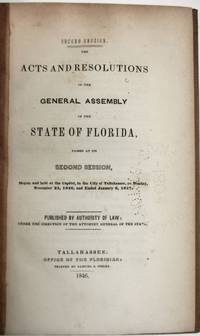
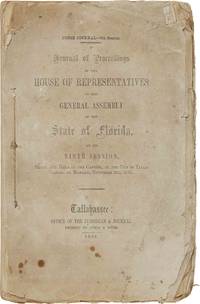
1847réf. 39054Tallahassee: Office of the Floridian: Printed by Samuel S. Sibley. 1847. 99 V pp. Perforation stamp on title leaf a couple of other institutional marks else Very Good. Bound in later buckram with gilt-lettered red morocco spine title Social Law Library stamped at base of spine. Florida joined the Union in 1845. This was its second meeting as a State. Much work was required to establish the framework of State government. The legislature created procedures for selecting presidential electors; enacted fees and costs for civil and criminal cases; regulated slave patrols; enacted incorporations; prohibited vessels from bringing into the Island of Key West any Free Negro or Mulatto; established counties and their boundaries; created pilotage laws and a variety of other Statutes and Resolutions including one to remove the remaining Seminole Indians. Servies 3243. Office of the Floridian: Printed by Samuel S. Sibley. unknown books
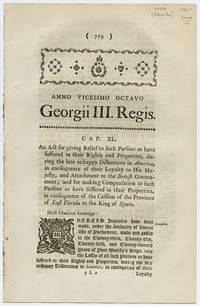
1788réf. 36636London: Printed and Sold by John Nichols. 1788. Folio. Pages 831-839 1 blank. "Numb. 96." at upper left corner at head of title. Disbound light margin spotting else Very Good. The Commons addresses requests to assist planters from East Florida who have suffered from its cession to Spain. Several petitions are presented from "Persons who have suffered in their Rights and Properties during the late unhappy Dissentions in America in Consequence of their Loyalty to His Majesty and Attachment to the British Government. Printed and Sold by John Nichols... unknown books
1872réf. 31647Tallahassee: Charles H. Walton State Printer 1872. Stitched untrimmed and uncut. 350 2 blanks 76 pp. Except for a spotted title page which is chipped at the blank corners a clean Very Good copy. An informative Journal recounting Floridians' resistance to Radical Reconstruction. Governor Harrison Reed's Message addresses ongoing disturbances and "fatal and disgraceful violence. Nine-tenths of the suffering induced has fallen upon Republicans and mainly upon colored citizens-- giving unerring evidence that these excesses have been strongly tinctured by if they have not entirely originated in political prejudice." Many murders and disruptions had occurred in Calhoun and Jackson Counties forcing citizens to flee their homes and seek shelter in other parts of the State. A Committee of Five was appointed "to examine into the cause of said murders and to ascertain why the perpetrators have not been brought to justice." The Committee concluded that "there exists an organized band whose object is to resist the laws and who are the supposed authors of the many murders and outrages committed in the county." Threats of violence and a "reign of terror" had deterred witnesses from coming forward. In Jackson County "no less than one hundred and eighty -four murders fifteen of the number being women and children and almost the entire number being colored people brutally assassinated by this band of outlaws for daring to think for themselves." Similar outrages occurred in Lafayette and other counties. Governor Reed Florida's governor from 1868-73 faced impeachment charges from this Assembly as he had in 1868 and 1870. He was later charged in sixteen Articles with illegally issuing state bonds embezzlement and bribery. The charges were dismissed. The Assembly treated other matters of government including special elections marred by violence; "an act to incorporate Brown's Theological Institute" now Edward Waters College founded in 1866 to educate former slaves and considered the oldest historically black college in Florida. Senate Bill No 82 "to be entitled an act to incorporate the Buckingham Smith Asylum for the colored people of St. Augustine" was passed. Charles H. Walton, State Printer unknown books
1828réf. 26005Washington: Gales & Seaton 1828. House Document 169 20th Congress 1st Session. Bound in modern cloth bookplate on front pastedown gilt-stamped spine title. 53pp 5 folding tables. Light rubberstamp at upper margin of page 3 light to moderate foxing. Good. A compendium of the disposition of claims to land in Florida an important resource for understanding the tangle of land claims in early Florida. AI 36727 2. Servies 1414. Gales & Seaton unknown books
1819réf. 23119Washington: Thomas Allen Printer 1819. 20pp untrimmed uncut Very Good. Secretary of State Forsyth transmits documents to Congress concerning Spanish and French claims to West Florida. Forsyth advises that any such claims were extinguished by the Louisiana Purchase and the Treaty between the United States and Spain. He transmits correspondence occurring in 1810 between Governor Claiborne and others concerning American forces' occupation of the territory. OCLC 10648476 3. Not in Sabin or Eberstadt. Thomas Allen, Printer unknown books
1910réf. 15233St. Augustness: The Record Company 1910. First Edition. Pamphlet. Near fine. Promotional booklet for Orlando located in Orange County Florida published by The Record Company circa 1910. Oblong octavo 32pp. Publisher's maroon wrappers title printed in gold on cover bound at spine with staples. Sunning to covers staples beginning to rust. A scarce pamphlet showing the local infrastructure farming operations municipal buildings and churches all in half tone illustrations. Illustrations likely by Clarence E. Howard who worked as a photographer and newspaper editor. A reference to the first Automobile Carnival dates this pamphlet prior to 1912. OCLC 882242309 A scarce work. Orlando Florida traces its roots back to the 1830s during a period marked by the Seminole Wars where the U.S. Army built Fort Gatlin south of the present-day Orlando city limits to protect settlers from attacks by Native Americans. By 1840 the area around Fort Gatlin was settled leading to the growth of a small community that by 1856 was known as Jernigan named after the Jernigan family who established the first permanent settlement. The name Orlando was adopted in 1857 though the origin of the name is subject to various legends one of the most popular claims it was named after Orlando Reeves a soldier who allegedly died in the area during the Second Seminole War. The city was officially incorporated in 1875 and by the late 19th century Orlando became a significant hub for Florida's citrus industry. The Record Company unknown books
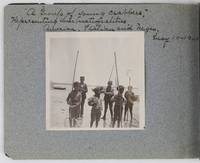
1901réf. 2885Various locations in Florida 1901. About very good. 16 leaves illustrated with thirty-two original vernacular photographs all 3.5 x 3.5 inches most with manuscript captions in ink above the images. Oblong octavo. Contemporary gray paper wrappers white titles on front cover. Spine mostly split a few shallow chips to edges. Internally clean. A small but important vernacular photograph album containing rare views of the devastation wrought by the Great Fire of 1901 in Jacksonville Florida which took place on May 3 1901. The most destructive event in the history of Jacksonville the Great Fire swept through 146 city blocks destroying over 2000 buildings killing seven people and leaving almost 10000 residents without homes. It is considered the third-largest urban fire in United States history after the Great Chicago Fire and the 1906 San Francisco conflagration. The photographs in the present album were taken by an unidentified passenger aboard the Clyde Line steamer Comanche. Eight of the images capture the scene in devastated Jacksonville including a shot of the ruins of the Windsor and St. James hotels shots from atop the "Jacksonville Government Building" a group picture of the city guard "ruins of Jacksonville Court House" "An unknown ruin" a crowded scene at the Jacksonville wharf and a distant shot showing "Ruins of Jacksonville taken from Steamer Comanche May 12." All of the photographs of Jacksonville are dated in manuscript on May 12 1901 nine days after the Great Fire. In addition to the Jacksonville pictures other identified locations along the photographer's voyage include the Hillsborough River near Tampa the Tampa Court House scenes around the Tampa Bay Hotel family pictures in Florida the Comanche and its crew Fort Sumter and four views around Charleston. One particularly notable photograph shows six boys standing in shallow water holding fishing nets likely near Tampa. The image is captioned "A group of young crabbers representing three nationalities American Italian and Negro May 10 1901. unknown books
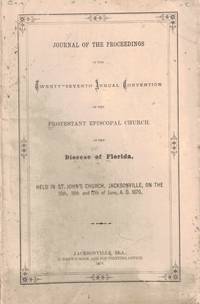
1870réf. 72545Jacksonville: C. Drew's Book and Job Printing Office 1870. Paperback. Good. Paperback. 76pp. Foxed throughout darkened overall rear wrap missing the bottom inch else a good example. C. Drew's Book and Job Printing Office paperback books
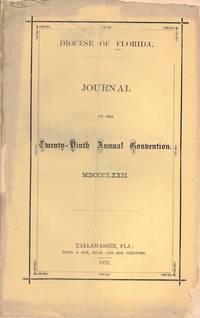
1872réf. 72546Tallahassee: Dyke & Son 1872. Paperback. Good. Paperback. 72pp. Front wrap detached and lightly chipped rear lacking else a good textually complete example. Contents include contributions from several clergy members in Florida. Also included is a lengthy address by Bishop John Freeman Young. Dyke & Son paperback books
1990réf. 46424New York: BasicBooks. Near Fine in Near Fine dust jacket. 1990. First Edition; First Printing. 1/4 Cloth. 046500749X . A bright first edition/first printing in Near Fine condition in alike dust-jacket with trivial edgewear; This book is about the illusion of control and how it can lead to unhappiness and dissatisfaction in our lives. The authors explain how we often take for granted the things we have control over like our jobs our relationships and our health. But when we lose control over these things we can become unhappy. The authors offer advice on how to break through the illusion of control and find happiness and satisfaction in our lives.; 8vo; 262 pages . BasicBooks hardcover books
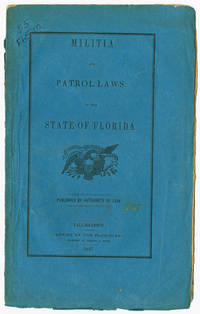
1847réf. 49540Tallahassee: Office of the Floridian 1847. Militia Laws of Florida The first rules governing the militia for the new state of Florida with the first act establishing and organizing the militia in 1846 with subsequent acts laying out the duties of various officers and the rules governing the militia. Very rare. Servies records one copy at the University of Florida's P.K. Yonge Library of Florida History; OCLC records only five others. Original blue printed wrappers. Spine chipped minor soiling old ink call number on front cover. Minor foxing. Else very good. SERVIES 3239. AII FLORIDA 281. McMURTRIE FLORIDA 142. OCLC 28826102. unknown books
1858réf. 31659Tallahassee. 1858. Prints several government reports including those from the state Comptroller and Treasurer and on all manner of public affairs such as issues dealing with Indians and railroads. Also includes Gov. Madison S. Perry's annual message and the appendix contains "Documents Accompanying the Governor's Message." Gathered signatures stitched. Exterior leaves edgeworn and wrinkled. Uniformly tanned scattered foxing. Good untrimmed and unopened. Lacks final two leaves of the "Documents Accompanying the Governor's Message." SERVIES 4374. AII FLORIDA 298. McMURTRIE FLORIDA 216. unknown books
1788réf. 54471London. 1788. Very scarce official printing of this act of Parliament that made provisions for those who lost their property when Great Britain ceded Florida back to Spain as a part of the Treaty of Paris in 1783. ESTC locates five copies. Dbd. Folio. Stab holes at gutter margin. Light tanning. Very good. unknown books
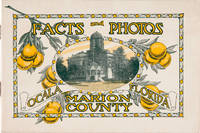
1910réf. 57046Lynchburg Va.: J.P. Bell Company Incorporated ca. 1910. Thoroughly Illustrated Florida Promotional Pamphlet A rare promotional booklet for Marion County Florida around the turn of the 20th century primarily focused on attracting farmers. The county's slogan "Good as the Best for Fruit and Vegetables/ Better than the Rest for 'Hog and Hominy'" adorns the first page. The final page drives home the point stressing that "This county contains good land within its boundaries.Her resources are unlimited; the industrious farmer can succeed." The pamphlet itself is mostly made up of photographic illustrations with occasional text about the climate schools and other amenities in the region. The illustrations show homes farms street scenes flora golf clubs and other recreations and more. An insert at the end comprises two postcards to be detached and mailed to the Marion County Board of Trade for further information. Marion County was greatly affected by the Great Freeze of 1894-5 which saw Orlando reach its all-time record low temperature of eighteen degrees Fahrenheit and wreaked havoc on Florida's citrus crop. Land that had cost as much as $1000 per acre in the early 1890s dropped dramatically in value and even at the time of this pamphlet's printing per-acre prices in Marion County were advertised in a range from ten to a hundred dollars. This pamphlet is quite rare; OCLC locates only two institutional copies at Duke University and the State Library of Florida. Oblong octavo. Original pictorial wrappers stapled. Minor wear. Near fine. OCLC 21247139. unknown books