Test Master Press FloridaBiblio.com

2 566 résultats
réf. 2407P-9499A-1306ECreateSpace Independent Publishing Platform 2018-08-02. paperback. Acceptable. 8x0x10. SOME WRITING ON JUST A FEW PAGES. See our picture for exact item you will receive. All items ship within 24 hours. Packaging is 100% Recyclable. Most items purchased from Charitable organizations. A portion of each sale is also donated to a monthly charity check your package for this month's charity. Reuse-Recycle-Rebook! CreateSpace Independent Publishing Platform paperback
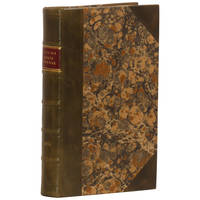
1858réf. 361605Tallahassee FL: Office of the Floridian & Journal Printed by Jones & Dyke 1858. First Edition. Hardcover. Very good. With most of the legislature's time taken up with questions of infrastructure particularly the Florida railroad Governor Madision S. Perry uses his annual address to warn of coming conflict with the north and to encourage the spread of slavery. This is a nicely-bound volume of the daily legislative log and the accompanying state office reports. The session ran from November 22 1858 to January 15 1859. In his prescient call for funding a militia an action that the legislature does not appear to have discussed seriously Gov. Perry warns that "the late elections in the non-slaveholding States forebode no good to us in the South. He would be a false sentinel who under the present aspect of affairs would cry peace" pp. 27–28. He then observes that many White Floridians are ambivalent about slavery and he encourages the legislature to make changes in the law to encourage slaveholding another action the lawmakers seem to have not spent much time on. Another subject that Perry devotes time to is the forcible removal of Native Americans from Florida. After twenty years of conflict the federal government had recently declared victory and ended the war. Both the governor and the legislature make appeals in this document to continue the effort until all the Seminoles and other tribes are gone from the state. 456 journal 70 reports pages. According to the daily log the print run of this issue was 700 copies. Contents heavily foxed; title page laid down on paper; some loss to the margins; fifth gathering duplicated in error; corner loss to final leaves of the reports section with no loss of text. Finely bound in three-quarter's leather and marbled paper-covered boards. The spine has raised bands and is stamped in gilt. A truly lovely period-style binding. Office of the Floridian & Journal, Printed by Jones & Dyke hardcover
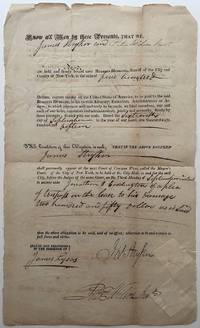
1815réf. 267901New York 1815. unbound. 2 pages front and back 13 x 8 inches signed "Ruggles Hubbard" as Sheriff of New York City -- an arrest warrant for two defendants to appear in Mayors Court September 25 1815 in part: ".I Ruggles Hubbard Sheriff of the City of New York do hereby assign the within written Bail Bond to the use of the plaintiff s to be sued for _____ according to the form of the statute in that case made and provided." Evenly toned with usual folds and a minimum of fraying at the borders; very good condition overall. New York City Sheriff and adventurer who joined his friend General Gregor McGregor's expedition in conquering Spanish Florida June 29 1817 - December 23 1817 culminating in his appointment as Governor of Fernandina. His six-week reign came to an abrupt end after being overthrown by the notorious pirate Luis Aury who claimed Florida in the name of Mexico. unknown
1991réf. BN148957Rizzoli 1991. 1991. Palm Beach Houses Palm Beach Houses Palm Beach Houses Florida - Johnston Shirley Rizzoli unknown
2012réf. BN1926552012. 2012. Softcover. Financial Institutions and Markets International Edition with Stock Trak Coupon Financial Institutions and Markets International Edition with Stock Trak Coupon Jeff Florida Atlantic University Madura paperback
2019réf. BN239752Taylor & Francis Ltd 2019. 2019. Softcover. Gender and Civilian Victimization in War Gender and Civilian Victimization in War Jessica L. University of Southern California USA Peet Laura University of Florida USA Sjoberg Taylor & Francis Ltd paperback
réf. BN324296Mit dem Wohnmobil durch Florida Lahmann Olaf and Lahmann Werner K. Mit dem Wohnmobil durch Florida Lahmann Olaf and Lahmann Werner K. Mit dem Wohnmobil durch Florida Lahmann Olaf and Lahmann Werner K. unknown
2013réf. BN350384Cengage Learning Inc 2013. 2013. Language Development Language Development Hoff Erika Florida Atlantic University Cengage Learning, Inc unknown
2017réf. BN401098Cengage Learning Inc 2017. 2017. Softcover. Principles of Geotechnical Engineering SI Edition Principles of Geotechnical Engineering SI Edition Braja California State University Sacramento Das Khaled Florida Atlantic University Sobhan Cengage Learning, Inc paperback
réf. 44077595-nnew. unknown
réf. 51274615like new. unknown
réf. 6371735-nnew. unknown
réf. 46414054like new. unknown
réf. 44084146-nnew. unknown
réf. 19198692-nnew. unknown
réf. 7218199-nnew. unknown
réf. 19198692like new. unknown
réf. 19759343-nnew. unknown
réf. 2081531-nnew. unknown
réf. 37562938-nnew. unknown
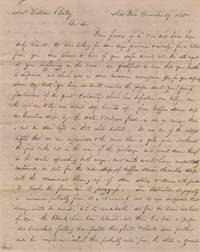
1835réf. BK0025New York City 1835. Autograph letter signed by the merchant firm Baker & Moore 4 pp. addressed to General William Battey care of Dr. Charles Luzenberg at the Franklin Infirmary on the Pontchartrain Railroad New Orleans. Stampless folded letter with red circular "NEW-YORK" December 31 datestamp and manuscript "25" rate. Appx. 1000 words. File folds; otherwise very good. A lengthy commercial letter written thirteen days after the Great Fire of New York describing the destruction of the city's mercantile district and tracing its immediate effects through insurance capital banking commodity prices and trade with New Orleans. Written by the New York firm of Baker & Moore to their associate William Battey the letter provides a near-contemporary account of the fire an assessment of the city's financial resilience and instructions for exploiting the resulting fluctuations in the markets for brandy wine raisins tobacco iron and copper. The fire began on the evening of December 16 during an extraordinary cold spell and northwest gale. Frozen hydrants wells cisterns and hoses left the city's volunteer fire companies largely unable to contain it. By the following day the fire had destroyed much of the commercial district between Wall Street and the East River including the Merchants' Exchange and hundreds of stores and warehouses. Buildings were eventually demolished with gunpowder to create firebreaks at Exchange Place and Coenties Slip. Contemporary estimates varied but approximately 674 buildings were destroyed with losses eventually placed at twenty million dollars or more.1 Baker & Moore begin by describing the extent of the burned district the severe weather and the use of explosives to arrest the flames: "Since my last you have no doubt received the paper sent you giving particulars of the great calamity which has befallen our City. On the 16th our City was about half burned up. From Coffee House Slip to Coenties Slip by the water & William Street is all in ruins. There is but one store left in that whole district. It was one of the coldest nights that we ever experienced & the wind blew a gale from Northwest. The fire broke out in the rear of the Exchange and went down through to the water spreading both ways and would have undoubtedly continued on but for the wide slips of Coffee House & Coenties Slip with the occasional blowing up of some stores & houses with powder to check the flame in its progress" The account quickly turns from the physical destruction to the distribution of its financial losses: "The destruction of property is immense probably from 10 to 15000000$ and it was supposed that many would be ruined but tis remarkable so far we have not heard of one. The Banks have been liberal and there has been a proper and benevolent feeling manifested throughout & should some further aid be brought in which probably will from the State or general government we think there may be no failures. The Insurance companies most of them are ruined and the principal loss is in Insurance capital. The loss will in some instances fall upon those who cannot well afford it. Many widows & orphans have had their all taken from them. The loss is large and New York has met with a great calamity but she is made of such materials & her facilities are so large & varied that the mercantile community will bear up under more than any other place in the Union & we think in one year's time it will be almost forgotten." The confidence expressed here correctly anticipated the city's rapid commercial recovery. Banks and government agencies extended credit and payment terms rebuilding began almost immediately and the burned district was reconstructed with new countinghouses and warehouses. The disaster also exposed the inadequacy of New York's water supply and firefighting arrangements contributing to later infrastructure and institutional reforms. Baker & Moore then apply the disaster to their own trade with New Orleans. Hundreds of warehouses and their contents had been destroyed increasing prices of imported foods wines and spirits. The firm instructs Battey to use the New York price current to obtain higher prices for their consignments: "This fire has advanced most all kinds of goods. Raisins are worth here $3-$3½. Wines such as Mess. Eastman's have advanced with us 4-6 cents. So many hundred casks destroyed must advance it and make it higher through the season. More than one half the Brandy was consumed tis now selling at $1.75 and some are asking $2. We wish what we sent you sold & this will be a favorable time to sell-show N.Y. price current-and get as good a price as you can. There will we think be no want of Brandy. Those raisins we think you had better dispose of at once. We think from N.O. current must pay something handsome for us. In regard to old Iron we find good old iron will always sell for the money for 112½ gross hundred equal to 1c per lb. Cast & wrought are same price. If you can come across a lot to do you may make it answer & pay us well. Copper if you can buy low enough may pay something. We thought hay might pay out but tis so high we cannot buy to send. We are of opinion that goods generally will be higher in consequence of this fire yet when we consign goods we wish them sold when they can to pay and we wish Eastman & Co. to sell and close up our affairs in their hands." The concluding paragraph briefly introduces events in Florida. The Second Seminole War had begun that month following mounting resistance to the forced removal of the Seminole people from Florida. Baker & Moore believed that the conflict might affect the movements of a brig expected in New Orleans: "We observe that trouble is anticipated with the Indians in Florida & if so our Brig may not get a load of them & be in N. Orleans earlier than we anticipated tis uncertain what will be the result they may detain her longer until they can get them on board." The wording appears to indicate that the vessel was expected to transport a group of Native people although the letter does not identify the brig its owners or the precise circumstances of the contemplated voyage. The recipient General William Battey was then in New Orleans apparently acting as Baker & Moore's commercial representative while also attending to his health at the Franklin Infirmary. The firm gave him considerable discretion to supervise consignments collect funds purchase goods when opportunities arose and forward current market information to New York. The address places him in the care of Dr. Charles Aloysius Luzenberg who founded the Franklin Infirmary with municipal support in 1835 and subsequently helped establish the Medical College of Louisiana the forerunner of Tulane's medical school.2 Baker & Moore appear to have been commission or importing merchants whose own affairs escaped direct damage but whose trade was immediately altered by the destruction of competing inventories. The letter thus follows the fire from the burned commercial district into the decisions of a New York firm and its representative in New Orleans. A substantial contemporary account of the Great Fire of 1835 documenting the destruction of New York's commercial center and the disaster's immediate movement through insurance banking commodity markets interregional credit and trade with New Orleans. We find no similar examples on the secondary market or in auction records. 1 Herbert Asbury "The Great Fire of 1835" The New Yorker July 26 1930. 2 Louisiana Historical Association "Luzenberg Charles Aloysius" in Dictionary of Louisiana Biography accessed August 2 2026 https://www.lahistory.org/resources/dictionary-louisiana-biography/dictionary-of-louisiana-biography-l/. . unknown
réf. ria9780443113659_inpPaperback / softback. New. New Book; Fast Shipping from UK; Not signed; Not First Edition; N/A paperback
réf. 22055641-nnew. unknown
réf. 20583648-nnew. unknown
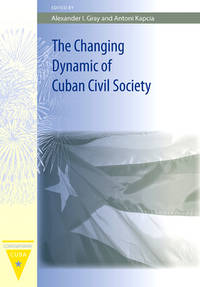
réf. Z1-C-023-02590University Press of Florida. Used - Acceptable. Used - Acceptable. Ships from UK in 48 hours or less usually same day. Ex-library with wear - may contain significant amounts of highlighting and underlining in pen or pencil. Your purchase helps support Sri Lankan Children's Charity 'The Rainbow Centre'. 100% money back guarantee. We are a world class secondhand bookstore based in Hertfordshire United Kingdom and specialize in high quality textbooks across an enormous variety of subjects. We aim to provide a vast range of textbooks rare and collectible books at a great price. Our donations to The Rainbow Centre have helped provide an education and a safe haven to hundreds of children who live in appalling conditions. We provide a 100% money back guarantee and are dedicated to providing our customers with the highest standards of service in the bookselling industry. University Press of Florida unknown