-MareMagnum

2 566 résultats
1926Napoli, 1926, marzo 29, copertina illustrata a colori in fascicolo originale completo di pp. 16 de "Il Mattino Illustrato" .
réf. 108881Partitions sur les États-Unis
1923réf. 27109Partitions sur l'Amérique du Nord,Partitions sur les États-Unis Salabert 1923
Opuscolo (cm 12 x 14,5) all'interno del quale si trovano quattro tavole piu' volte rip. (cm 33 x 14) con quattro foto in b/n raff. il piroscafo Pincio, l'Alsina, il Florida, il Mendoza, il Valdivia, il Formosa, con l'indicazione dei vari menu di terza classe e due illustrazioni d'interni.
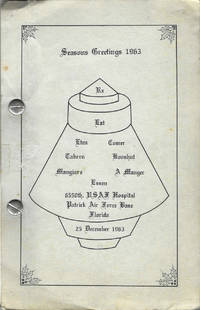
1963réf. 9099Cocoa Beach Florida 1963. Octavo-sized metal post binding 21.5 x 14 cm 100 leaves printed rectos only. Illustrated. Author title and publication information from cover. A community cookbook with recipes attributed from the airmen and airmen's spouses living at Patrick Air Force. Patrick AFB is a significant location in the history of the American space program and 1963 just two years after the first manned space flight Gagarin and the first human-piloted space flight Shephard. Patrick Air Force base is now Space Launch 45 "the premier launch delta of the United States Space Force." Thor and Atlas Missiles as well as the Titan Booster were the stock in trade of PAFB from the time of this cookbook through the 1980s. The illustration of a space capsule on the front wrapper panel is of a Mercury capsule the capsule that carried John Glenn on the first American orbital flight in 1962. A bit of light soiling otherwise fine in publisher's gray card stock titled and illustrated in black. Unrecorded. OCLC locates no copies; no other references found online or otherwise. unknown
1963réf. 9099Cocoa Beach Florida 1963. Octavo-sized metal post binding 21.5 x 14 cm 100 leaves printed rectos only. Illustrated. Author title and publication information from cover. A community cookbook with recipes attributed from the airmen and airmen's spouses living at Patrick Air Force. Patrick AFB is a significant location in the history of the American space program and 1963 just two years after the first manned space flight Gagarin and the first human-piloted space flight Shephard. Patrick Air Force base is now Space Launch 45 "the premier launch delta of the United States Space Force." Thor and Atlas Missiles as well as the Titan Booster were the stock in trade of PAFB from the time of this cookbook through the 1980s. The illustration of a space capsule on the front wrapper panel is of a Mercury capsule the capsule that carried John Glenn on the first American orbital flight in 1962. A bit of light soiling otherwise fine in publisher's gray card stock titled and illustrated in black. Unrecorded. OCLC locates no copies; no other references found online or otherwise. unknown books
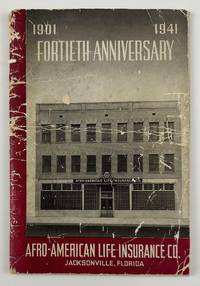
1941réf. 12634N.p. likely Jacksonville Fl. 1941. 4612pp. Original pictorial wrappers stapled. Substantial creasing rubbing dust-soiling and overall wear to wrappers. Faint foxing and spotting to initial and terminal leaves but mostly clean internally. Very good. A rare pamphlet celebrating the fortieth anniversary of the Afro-American Life Insurance Company an important African-American-owned-and-operated insurance company in Florida. The work includes reproductions of congratulatory letters to the company from Florida governor Spessard Holland and others portraits and information on the company’s founders passages on the history of the company information on the successes of the company’s current operations and more. The work is interspersed throughout with a legion of photographs showing the company at work scenes from various branch offices the company’s Funeral Services Division and so forth. "Florida's First African-American Insurance Company -1901-2001. The Afro-American Insurance Company formerly the Afro-American Industrial and Benefits Association was founded in 1901 to provide affordable health insurance and death benefits to the state's African-Americans. Founded by the Reverend E.J. Gregg E.W. Latson Abraham Lincoln Lewis A.W. Price Dr. Arthur W. Smith J.F. Valentine and the Reverend J. Melton Waldron the Afro's first office at 14 Ocean Street was destroyed by the great Jacksonville Fire two months after it opened on May 3 1901. It then moved to 621 Florida Avenue the home of treasurer and future president Abraham Lincoln Lewis 1865-1947. From their next home office at 105 E. Union Street the company wrote millions of dollars of insurance policies and started district offices in Georgia Alabama Louisiana and Texas." - Historical marker at the site of the company's original location in Jacksonville. OCLC reports just two copies at Howard and the University of North Florida. unknown
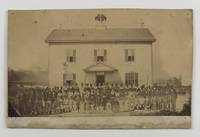
1880réf. 4993N.p. but likely Live Oak FL 1880. Very good. Albumen photograph 4.5 x 7.75 inches mounted on card. Card trimmed with pinholes at corners remnants of printed caption in bottom margin slight surface soiling and spotting. Penciled annotation on verso. A stunning original photograph featuring Rev. Joseph Leroy Atwell Fish 1828-1890 and his wife and children posed amongst their African-American students at an unnamed "colored school" which was very likely the Florida Baptist Institute. The images captures Fish his wife and probably his daughters in the middle of the frame standing in front of a large two-story schoolhouse surrounded by about eighty young Black men and women in suits and dresses. Revered Fish was a graduate of Amherst College and the Newton Theological Seminary who was ordained a Baptist minister in 1856. Fish was also a teacher who helped found Florida Memorial University Florida Baptist Institute in Live Oak in 1880 where he served as first president of the institution until his death there on March 26 1890. Florida Memorial University is the only HBCU in the southern part of the state. The penciled annotation on the present photograph provides some information on the photograph but is probably ultimately misleading in one regard: "Rev. J.L.A. Fish & wife In Virginia teaching a colored school -- He married my Father & Mother Mr. & Mrs. Milan Hills Lucy M. Williams Dec. 21 1875." The latter part of this inscription is indeed true. Reverend Fish married Milan Hills and Lucy Williams on December 21 1875 in Hebron New York where he was serving as a church pastor. But the historical record does not indicate that Reverend Fish ever taught at an African-American school in Virginia if he did it was so brief that it is now lost to history. Fish's first known foray into teaching African American students was a brief six-month stint in Natchez Mississippi in 1879. Immediately thereafter Fish was appointed to the Florida Baptist Institute where he served the last decade of his life. As such it is far more likely that the inscriber here meant to say that Reverend Fish and his wife were "In FLORIDA teaching a colored school." Reverend Fish's work at the Florida Institute is covered in the Obituary Record of Graduates of Amherst College for the Academical Year ending June 27 1883: "His chief work was with the Freedmen as he brought Florida Institute out of all its troubles financial and social changed the feeling of the whites from hatred to sympathy with his work and put the school on a permanent foundation. His aim was to educate leaders for the race and the principal effort of his school was to train teachers and preachers to go out through the state and by their example to lift up and educate both intellectually and morally the colored people. His influence was felt throughout the state both through his training of teachers and preachers and through his counsels given at conventions associations and other gatherings of the colored men and in private. He is mourned by both white and black. By the whites because they knew his teachings would help the colored people without causing trouble to them. By the latter because they miss their leader teacher and friend. unknown
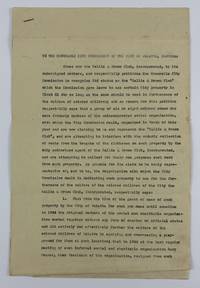
1947réf. 3905Palatka Fl 1947. Very good. 5pp. typed on folio sheets stapled. Old folds minor wear and creasing light dust-soiling. An unsigned petition from the Hallie Q. Brown Club asking "The Honourable City Commission of the City of Palatka Florida.to recognise its status as the 'Hattie Q Brown Club which the Commission gave leave to use certain City property in Block 81.in furtherance of the welfare of colored children." Apparently a splinter group of the club was also claiming to be the Hallie Q. Brown Club and was illegally collecting rents on the groups club house. In asking for official recognition the group details their history of helping African-American youth in the area "by equiping and over-seeing a playground for them." The authors then detail the internal conflicts which occurred amongst the club members the procession of club leadership including several named individuals and the circumstances which led to the club's incorporation ending with the filing of a charter with a Putnam County judge. The fourth section of the club's petition enumerates their activities and plans in "furtherance of the welfare of the colored children of Palatka." The first two points detail the land clearance and construction of the park and their further plans for same; the third point relates to a study the club has undertaken "of the problem of juvenile delinquency among the colored children." Part of their plan is to work with law enforcement "to work out a parole system for first offenders of tender age" as well as "provide a method and place for the incarceration of colored children accused of or guilty of infractions of the law who are less than 12 years of age so that such children may be kept safely in custody and yet not exposed to the bad example and toughening influence of imprisonment in the County jail." Hattie Quinn Brown was a pioneering African-American educator who actively sought the formation of African-American women's clubs throughout the country. unknown
1941réf. 12634N.p. likely Jacksonville Fl. 1941. 4612pp. Original pictorial wrappers stapled. Substantial creasing rubbing dust-soiling and overall wear to wrappers. Faint foxing and spotting to initial and terminal leaves but mostly clean internally. Very good. A rare pamphlet celebrating the fortieth anniversary of the Afro-American Life Insurance Company an important African-American-owned-and-operated insurance company in Florida. The work includes reproductions of congratulatory letters to the company from Florida governor Spessard Holland and others portraits and information on the company’s founders passages on the history of the company information on the successes of the company’s current operations and more. The work is interspersed throughout with a legion of photographs showing the company at work scenes from various branch offices the company’s Funeral Services Division and so forth. "Florida's First African-American Insurance Company -1901-2001. The Afro-American Insurance Company formerly the Afro-American Industrial and Benefits Association was founded in 1901 to provide affordable health insurance and death benefits to the state's African-Americans. Founded by the Reverend E.J. Gregg E.W. Latson Abraham Lincoln Lewis A.W. Price Dr. Arthur W. Smith J.F. Valentine and the Reverend J. Melton Waldron the Afro's first office at 14 Ocean Street was destroyed by the great Jacksonville Fire two months after it opened on May 3 1901. It then moved to 621 Florida Avenue the home of treasurer and future president Abraham Lincoln Lewis 1865-1947. From their next home office at 105 E. Union Street the company wrote millions of dollars of insurance policies and started district offices in Georgia Alabama Louisiana and Texas." - Historical marker at the site of the company's original location in Jacksonville. OCLC reports just two copies at Howard and the University of North Florida. unknown books
1880réf. 4993N.p. but likely Live Oak FL 1880. Very good. Albumen photograph 4.5 x 7.75 inches mounted on card. Card trimmed with pinholes at corners remnants of printed caption in bottom margin slight surface soiling and spotting. Penciled annotation on verso. A stunning original photograph featuring Rev. Joseph Leroy Atwell Fish 1828-1890 and his wife and children posed amongst their African-American students at an unnamed "colored school" which was very likely the Florida Baptist Institute. The images captures Fish his wife and probably his daughters in the middle of the frame standing in front of a large two-story schoolhouse surrounded by about eighty young Black men and women in suits and dresses. Revered Fish was a graduate of Amherst College and the Newton Theological Seminary who was ordained a Baptist minister in 1856. Fish was also a teacher who helped found Florida Memorial University Florida Baptist Institute in Live Oak in 1880 where he served as first president of the institution until his death there on March 26 1890. Florida Memorial University is the only HBCU in the southern part of the state. The penciled annotation on the present photograph provides some information on the photograph but is probably ultimately misleading in one regard: "Rev. J.L.A. Fish & wife In Virginia teaching a colored school -- He married my Father & Mother Mr. & Mrs. Milan Hills Lucy M. Williams Dec. 21 1875." The latter part of this inscription is indeed true. Reverend Fish married Milan Hills and Lucy Williams on December 21 1875 in Hebron New York where he was serving as a church pastor. But the historical record does not indicate that Reverend Fish ever taught at an African-American school in Virginia if he did it was so brief that it is now lost to history. Fish's first known foray into teaching African American students was a brief six-month stint in Natchez Mississippi in 1879. Immediately thereafter Fish was appointed to the Florida Baptist Institute where he served the last decade of his life. As such it is far more likely that the inscriber here meant to say that Reverend Fish and his wife were "In FLORIDA teaching a colored school." Reverend Fish's work at the Florida Institute is covered in the Obituary Record of Graduates of Amherst College for the Academical Year ending June 27 1883: "His chief work was with the Freedmen as he brought Florida Institute out of all its troubles financial and social changed the feeling of the whites from hatred to sympathy with his work and put the school on a permanent foundation. His aim was to educate leaders for the race and the principal effort of his school was to train teachers and preachers to go out through the state and by their example to lift up and educate both intellectually and morally the colored people. His influence was felt throughout the state both through his training of teachers and preachers and through his counsels given at conventions associations and other gatherings of the colored men and in private. He is mourned by both white and black. By the whites because they knew his teachings would help the colored people without causing trouble to them. By the latter because they miss their leader teacher and friend. unknown books
1947réf. 3905Palatka Fl 1947. Very good. 5pp. typed on folio sheets stapled. Old folds minor wear and creasing light dust-soiling. An unsigned petition from the Hallie Q. Brown Club asking "The Honourable City Commission of the City of Palatka Florida.to recognise its status as the 'Hattie Q Brown Club which the Commission gave leave to use certain City property in Block 81.in furtherance of the welfare of colored children." Apparently a splinter group of the club was also claiming to be the Hallie Q. Brown Club and was illegally collecting rents on the groups club house. In asking for official recognition the group details their history of helping African-American youth in the area "by equiping and over-seeing a playground for them." The authors then detail the internal conflicts which occurred amongst the club members the procession of club leadership including several named individuals and the circumstances which led to the club's incorporation ending with the filing of a charter with a Putnam County judge. The fourth section of the club's petition enumerates their activities and plans in "furtherance of the welfare of the colored children of Palatka." The first two points detail the land clearance and construction of the park and their further plans for same; the third point relates to a study the club has undertaken "of the problem of juvenile delinquency among the colored children." Part of their plan is to work with law enforcement "to work out a parole system for first offenders of tender age" as well as "provide a method and place for the incarceration of colored children accused of or guilty of infractions of the law who are less than 12 years of age so that such children may be kept safely in custody and yet not exposed to the bad example and toughening influence of imprisonment in the County jail." Hattie Quinn Brown was a pioneering African-American educator who actively sought the formation of African-American women's clubs throughout the country. unknown books
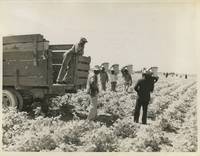
1943réf. List3815United States: Wide World 1943. Photograph measuring 9 x 7 inches. With caption later sticker and manuscript "NEGRO WORKERS" verso. Excellent. A 1943 press photograph of a group of African American men working on a farm in Florida's Everglades. The caption reads: "Before this luxuriant crop could be grown in the Everglades of southern Florida an elaborate system of drainage and irrigation had to be built. After 30 years the project is still unfinished; about 100000 of the Everglades swamps have been reclaimed and are under cultivation. . The problem involves turning spongy peat -- called 'muck' in the Everglades -- into farm land . Reclaimed the land is so productive that it is profitable to farm even though the elaborate reclamation project makes it expensive. It's too costly for most small landowners; so a master plan of reservoirs dikes and pumping stations is being prepared for the entire area." Draining the Everglades in an attempt to turn it into profitable farmland started with the project initiated by Governor William Sherman and continued by Governor Napoleon Bonaparte Broward who promised an "Empire of the Everglades." The project was largely a disaster; hurricanes and flooding in the late 1920s shifted the focus to damming Lake Okeechobee which in turn produced lengthy drought and fires only quenched by another round of massive flooding. However it also created the richly productive Everglades Agricultural Area perhaps best known for the sugarcane-and 1930s and 40s labor abuses-of U.S. Sugar. . Wide World unknown
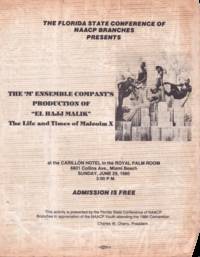
1980réf. List3013Miami Florida: Allied Printing 1980. Single sheet measuring 8 ½ x 11 inches. Worn with some folding at corners; very good plus. A flyer for a production of Louisiana playwright professor and journalist Norbert Davidson Jr.’s “El Hajj Malik”: The Life and Times of Malcom X. This production sponsored by the Florida State Conference of NAACP Branches was put on by the ‘M’ Ensemble Company. Established in 1971 and still operational as of 2025 the ‘M’ Ensemble is Florida’s longest-running African American theater company. Davidson’s El Hajj Malik was written when he was a college student at Dillard University in the 1960s and was widely performed nationally and internationally according to his obituary in the Louisiana Weekly.1 1 Ryan Whirty “Playwright professor and former editor of The Louisiana Weekly dies” The Louisiana Weekly May 6 2019. Allied Printing unknown
1943réf. List3815United States: Wide World 1943. Photograph measuring 9 x 7 inches. With caption later sticker and manuscript "NEGRO WORKERS" verso. Excellent. A 1943 press photograph of a group of African American men working on a farm in Florida's Everglades. The caption reads: "Before this luxuriant crop could be grown in the Everglades of southern Florida an elaborate system of drainage and irrigation had to be built. After 30 years the project is still unfinished; about 100000 of the Everglades swamps have been reclaimed and are under cultivation. . The problem involves turning spongy peat -- called 'muck' in the Everglades -- into farm land . Reclaimed the land is so productive that it is profitable to farm even though the elaborate reclamation project makes it expensive. It's too costly for most small landowners; so a master plan of reservoirs dikes and pumping stations is being prepared for the entire area." Draining the Everglades in an attempt to turn it into profitable farmland started with the project initiated by Governor William Sherman and continued by Governor Napoleon Bonaparte Broward who promised an "Empire of the Everglades." The project was largely a disaster; hurricanes and flooding in the late 1920s shifted the focus to damming Lake Okeechobee which in turn produced lengthy drought and fires only quenched by another round of massive flooding. However it also created the richly productive Everglades Agricultural Area perhaps best known for the sugarcane-and 1930s and 40s labor abuses-of U.S. Sugar. . Wide World unknown books
1980réf. List3013Miami Florida: Allied Printing 1980. Single sheet measuring 8 ½ x 11 inches. Worn with some folding at corners; very good plus. A flyer for a production of Louisiana playwright professor and journalist Norbert Davidson Jr.’s “El Hajj Malik”: The Life and Times of Malcom X. This production sponsored by the Florida State Conference of NAACP Branches was put on by the ‘M’ Ensemble Company. Established in 1971 and still operational as of 2025 the ‘M’ Ensemble is Florida’s longest-running African American theater company. Davidson’s El Hajj Malik was written when he was a college student at Dillard University in the 1960s and was widely performed nationally and internationally according to his obituary in the Louisiana Weekly.1 1 Ryan Whirty “Playwright professor and former editor of The Louisiana Weekly dies” The Louisiana Weekly May 6 2019. Allied Printing unknown books
1998réf. LFA-126737161Une publication de 34 pages, format 210 x 295 mm, illustrée, brochée couverture couleurs, publiée en 1998, SNEP, bon état
2000réf. 16917ABLondon, New York, München, Sydney, Dorling Kindersley Verlag, 2000. 22 cm, 29 Seiten, mit großer Faltkarte (ca. 39 x 79 cm) in Pappeinschub, farbig illustrierter Pappband. 1. Auflage Rücken an den Kapitalen angeplatzt, sonst gut erhalten. Dorling & Kindersley Touring-Karten.
1718réf. 62504Fort Marion Feb. 17 1865. one page. Fine. 12mo. A ms. account of about 70 words unsigned relating an attack on the garrison as they were engaged in improving the ditch; their retreat; and their rally. unknown
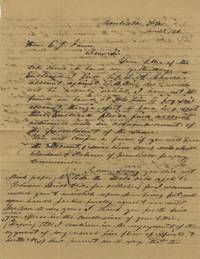
1863réf. BK0082Monticello Florida 1863. Autograph letter signed 2 pp. 7 x 9 inches addressed to the Honorable E. J. Vann Madison Florida. Stampless folded letter with fair circular "MONTICELLO FLA." January 23 datestamp and bold "PAID / 10" handstamp. Back flap removed with a small paper repair at the upper left; otherwise very good. A wartime business letter from James B. Jones of Monticello to E. J. Vann in Madison concerning accounts connected with the estate of D. B. Bird and the collection of local debts. The first portion belongs to the ordinary legal and commercial life of Middle Florida with references to unpaid accounts estate administration and the firms of Denham & Palmer and Johnson Bird & Co. Jones then turns abruptly from bookkeeping to Confederate destiny offering an elaborate blessing. After thanking Vann for his wishes for Jones's health and spirits he writes: "May your shadow become more enlarged and may you live to see the Southern Confederacy one of the most powerful & prosperous nations of the earth . In short may you live to see her Eagle if she even has one with his wings extended with one wing in the Pacific Ocean the other at same time in the Atlantic and his tail in the Gulf of Mexico south of Cuba & at the same time drink from the waters of the Ohio." The letter captures both the routine world of wartime Florida-estate claims merchants lawyers and unpaid accounts-and one Floridian's Confederate imaginary. . unknown
1863réf. BK0082Monticello Florida 1863. Autograph letter signed 2 pp. 7 x 9 inches addressed to the Honorable E. J. Vann Madison Florida. Stampless folded letter with fair circular "MONTICELLO FLA." January 23 datestamp and bold "PAID / 10" handstamp. Back flap removed with a small paper repair at the upper left; otherwise very good. A wartime business letter from James B. Jones of Monticello to E. J. Vann in Madison concerning accounts connected with the estate of D. B. Bird and the collection of local debts. The first portion belongs to the ordinary legal and commercial life of Middle Florida with references to unpaid accounts estate administration and the firms of Denham & Palmer and Johnson Bird & Co. Jones then turns abruptly from bookkeeping to Confederate destiny offering an elaborate blessing. After thanking Vann for his wishes for Jones's health and spirits he writes: "May your shadow become more enlarged and may you live to see the Southern Confederacy one of the most powerful & prosperous nations of the earth . In short may you live to see her Eagle if she even has one with his wings extended with one wing in the Pacific Ocean the other at same time in the Atlantic and his tail in the Gulf of Mexico south of Cuba & at the same time drink from the waters of the Ohio." The letter captures both the routine world of wartime Florida-estate claims merchants lawyers and unpaid accounts-and one Floridian's Confederate imaginary. . unknown books
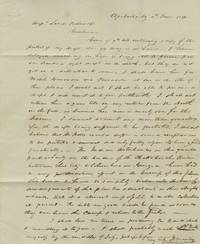
1836réf. BK0192Apalachicola Florida 1836. Autograph letter signed one closely written page on a folded sheet 7 ¾ x 9 ½. Old folds light toning and scattered minor staining. Very good. An account of the effects of the Creek War of 1836 on commerce along the Chattahoochee River written from Apalachicola by the Florida lawyer Hiram Manley 1802-1853. A native of Easton Massachusetts and an 1825 graduate of Harvard Manley practiced law in territorial Florida and later served as a judge. His involvement in the region's commercial development is documented in February 1838 when he joined a five-man committee in Apalachicola petitioning Congress for permission to import iron duty-free for four steamboats intended to navigate the Apalachicola Chattahoochee and Flint rivers.1 Writing to a northern mercantile firm concerning a protested draft Manley explains that he has been unable to obtain a sight draft from the local bank and intends to travel through Pensacola to Mobile to secure funds. Business in Apalachicola is nearly finished for the season and the fighting upriver has made the collection of outstanding debts almost impossible: "The Indian disturbances in this quarter particularly on the banks of the Chattahoochee River between this City & Columbus in Georgia have had a very prejudicious effect on the business of this place this season & have so completely broken into the business arrangements of the Planters & Merchants in their Neighborhood that it is almost impossible to make Collections at present - the debts are good & will be paid as soon as they can leave the camps & return to the Field." The letter was written shortly after the June 9 engagement at Shepherd's Plantation south of Columbus in which Creek forces attacked Georgia militia inflicting heavy casualties. The fighting formed part of the Creek resistance to fraudulent land transactions encroachment by white settlers and the prospect of forced removal from Alabama. Manley's account documents the immediate commercial consequences farther downriver where militia mobilization had interrupted plantation business and left merchants unable to collect debts even as their own obligations fell due. 1 Petition and Papers of Isaac Gage Praying for Leave to Import Iron Vessels Free of Duty 25th Cong. 3rd sess. H. Doc. 92 Congressional Serial Set 346 1839. . unknown
1836réf. BK0192Apalachicola Florida 1836. Autograph letter signed one closely written page on a folded sheet 7 ¾ x 9 ½. Old folds light toning and scattered minor staining. Very good. An account of the effects of the Creek War of 1836 on commerce along the Chattahoochee River written from Apalachicola by the Florida lawyer Hiram Manley 1802-1853. A native of Easton Massachusetts and an 1825 graduate of Harvard Manley practiced law in territorial Florida and later served as a judge. His involvement in the region's commercial development is documented in February 1838 when he joined a five-man committee in Apalachicola petitioning Congress for permission to import iron duty-free for four steamboats intended to navigate the Apalachicola Chattahoochee and Flint rivers.1 Writing to a northern mercantile firm concerning a protested draft Manley explains that he has been unable to obtain a sight draft from the local bank and intends to travel through Pensacola to Mobile to secure funds. Business in Apalachicola is nearly finished for the season and the fighting upriver has made the collection of outstanding debts almost impossible: "The Indian disturbances in this quarter particularly on the banks of the Chattahoochee River between this City & Columbus in Georgia have had a very prejudicious effect on the business of this place this season & have so completely broken into the business arrangements of the Planters & Merchants in their Neighborhood that it is almost impossible to make Collections at present - the debts are good & will be paid as soon as they can leave the camps & return to the Field." The letter was written shortly after the June 9 engagement at Shepherd's Plantation south of Columbus in which Creek forces attacked Georgia militia inflicting heavy casualties. The fighting formed part of the Creek resistance to fraudulent land transactions encroachment by white settlers and the prospect of forced removal from Alabama. Manley's account documents the immediate commercial consequences farther downriver where militia mobilization had interrupted plantation business and left merchants unable to collect debts even as their own obligations fell due. 1 Petition and Papers of Isaac Gage Praying for Leave to Import Iron Vessels Free of Duty 25th Cong. 3rd sess. H. Doc. 92 Congressional Serial Set 346 1839. . unknown books
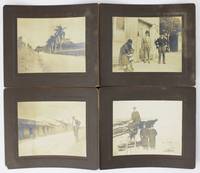
1890réf. 5287Various locations in Cuba and Florida 1890. Very good. Twelve cabinet card photographs each measuring 3.5 x 4.5 inches on matching mounts measuring 5.25 x 6.5 inches all with manuscript captions on verso. Moderate dust-soiling minor overall wear a few small unobtrusive chips to corners. A dozen original photographs picturing a group of men traveling in Florida and Cuba around the turn of the 20th century. The men seem relatively well-to-do and visit several different locations in each place. Four of the photos emanate from Florida while the remainder picture scenes in Cuba. The photographs are all captioned on the verso which read as follows: 1 "In the Court of Ponce De Leon Hotel St. Augustine" 2 "A frozen fountain in St. Augustine Florida - the white is ice" 3 "Fishing in St. Augustine" 4 "A Tree in Tampa Florida where one tree runs up on another takes root up in tree then runs down & takes root in the ground again" 5 "A Street in Nevaelas Cuba" 6 "A Country Road in Cuba" 7 "Natives in Havana" 8 "In Morro Castle Havana Cuba. Prisoners braking sic rocks" 9 "On top of Morro Castle Havana Cuba" 10 "Country Scene in Cuba" 11 "Country Scene in Cuba" different image 12 "Plaza at south of the Prado Havana unknown
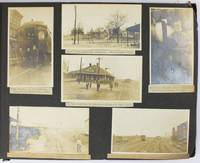
1909réf. 5288Various locations mostly in Cuba and Florida: March 5 to April 1 1909. About very good. 21 leaves illustrated with 235 photographs all with typed captions. Oblong folio. Contemporary full dark brown cloth brad bound. Moderate staining and coiling to covers some edge wear. Bottom corners of all leaves chipped not costing content. Occasional minor wear to photos or captions. A well-organized and meticulously-captioned vernacular photograph album with significant content on Florida and Cuba in the first decade of the 20th century. The album is organized chronologically and features a family from Ohio traveling from home by train to Florida and thence to Cuba then returning home in the spring of 1909. The first seven and the last twenty-five photographs emanate from Ohio where the journey started Tennessee and Georgia but otherwise the album features Florida and Cuba in over 200 pictures. The scenes in Florida range from Jacksonville to Key West and other points in-between featuring the state in almost 120 photos both before and after the traveling party went to Cuba. The images capture portraits of the travelers numerous homes hotels businesses and other buildings including an ostrich farm in Jacksonville numerous scenes in Ocala including one image featuring "Mary and her old colored Mammy" various churches and other scenes in Tampa residences in Key West beach scenes at Long Key various hotels and agricultural fields in Miami and various buildings in Palm Beach Ormand and St. Augustine concluding with a front view of the "Old Slave Market" in the latter city. Most notably the album includes eighty-six photographs of Cuba the nexus point for the present trip where the party arrived on March 20. The Cuba scenes mostly feature Havana with several views of "Beautiful Residences" and other buildings plus some street views and other scenes in the city. Other interesting Havana scenes picture the railroad station "The Bone Yard -- Old destroyed Catacombs" scenes in the Malecon and more. Some of the street scenes in Havana picture local residents one of "Children on the street corner" and another showing "Children scrambling for pennies" in the middle of the street. The album also contains views of the wreck of the Maine Morro Castle the interior of Fort Cabanas and more. The travelers managed to wander outside Havana for a day when they ventured to the countryside and the town of Guines on March 23. While there the compiler took photographs of countryside outside Guines a railroad car full of sugar cane thatched houses a group photograph of the students at a "Spanish School in Guines" a "Child crying in the street" a group of locals outside a cafe captioned "Strangers in a strange land.Where we tried to get something to eat" other street scenes in the town and the local jail. The last photograph of Cuba here features a "Large Sugar Mill in Providencia." The group then returned through Florida Georgia and Tennessee where they spent a day at Lookout Mountain and Orchard Knob before their final stop in Dayton Ohio. A wonderful early-20th century travel album with significant views in Florida and Cuba. March 5 to April 1 unknown