FloridaBiblio.com

2 139 résultats
réf. 0266738001.Gpaperback. Good. Access codes and supplements are not guaranteed with used items. May be an ex-library book. paperback
1705Raffigurazione geografica del territorio nord americano in particolare di Canada o Nouvelle France ed una parte degli Stati Uniti (Florida, Carolaina, Luisiana, Virginia...). Interessante evidenziare come l'estensione del Canada venga aumentata, verso sud, a discapito dei territori delle colonie inglesi.
1945réf. ABE-58315387564 PAGES-TRAITRE ET HEROS JEAN GIOT EST CONDAMNE A MORT/PHOTO/RAMBOZ/DUPUIS-ATTENTATS TERRORISTES EN PALESTINE-LA RATION A PARTIR DU 1ER JANVIER 300 GRAMMES DE PAIN PAR JOUR-LE MYSTERE DE VENDAYS/PAULE GUILLOU-LA CONFERENCE DE MOSCOU: UN ECHANGE DE CONCESSIONS ENTRE RUSSES ET AMERICAINS-1946 COMME LE VOIT LA VOYANTE FLORIDA/PHOTO-HITLER AVAIT DONNE RENDEZ VOUS AUX JAPONAIS/RENDEZ VOUS A BASSORAH-TENNIS DESTREMEAU VAINQUEUR DE LUCOT-ARMENIENS ET KURDES S'AGITENT-CINQUANTENAIRE DU CINEMA/2 PHOTOS (PJ18)
1934Copertina illustrata a colori in fascicolo originale completo de "La Domenica del Corriere" del 6/05/1934
1934La tavola di copertina, a colori, e quella opposta ma non descritta, de "La Domenica del Corriere", n. 18 del 6/05/1934
1927réf. ABE-1246355201736 PAGES FORMAT 20,5 CM X 29 CM-EN COUVERTURE "LE VAINQUEUR DE L4ATLANTIQUE CHARLES LINDBERGH ET M.MYRON T.HERRICK"-LINDBERGH A VAINCU L'ATLANTIQUE,4P PAR JACQUES MORTANE,6 PHOTOS-LA TRAGIQUE HISTOIRE DE L'EXPEDITION DE LAUDONNIERE ET DE RIBAULT EN FLORIDE,3P PAR MAURICE BESSON-NOTRE EMPIRE COLONIAL,LA COTE D'IVOIRE,2P-LES MISSIONS SPECIALES AERIENNES PENDANT LA GUERRE,TROIS HEROS QUI FURENT DES "MISSIONNAIRES":JULES VEDRINES,GEORGES GUYNEMER,JEAN NAVARRE,3P,4 PHOTOS-LE 33e BORDEAUX PARIS,4P PAR MAURICE SCHNEIDER,6 PHOTOS,CARTE,RONSSE-A PROPOS DE LA GUERRE CIVILE EN BOLIVIE,3P,6 PHOTOS-LES CHASSEURS DE DANSES,4P PAR GASTON LEROUX-CHEZ LES ANTHROPOPHAGES DE L'AMAZONE DU PACIFIQUE A L'ATLANTIQUE A TRAVERS LE PUTUMAYO,2P PAR LE COMMANDANT MARCEL,3 PHOTOS
réf. 19968Éditions Novalis, 2003. Broché au format 155 x 210 mm, 129 pages. Propre. Peu courant.
réf. 942Montesson, Éditions Novalis, 2003, in-8, br., 129 p. Avec une conférence de Rudolf Steiner: «Le sens de la Terre», Berlin le 14 mai 1912. Bon état.
1870réf. ABE-1704155220817VOYAGE DANS LES VALLEES DE QUINQUINAS (BAS-PEROU), PAR PAUL MARCOY, 1849-1861-COURSE SUR LES GLACIERS DU MONT ROSE (VALAIS ET PIEMONT), PAR CHARLES GRAD, 1866-EXPLORATION DES AFFLUENTS ABYSSINIENS DU NIL, PAR SAMUEL W BAKER, RECITS DE CHASSE 1861-1862-ROME, PAR FRANCIS WEY, 1864-1870-SOUVENIRS D'UN VOYAGE CHEZ LES SLAVES DU SUD, PAR GEORGES PERROT, DESSINS PAR TH VALERIO, 1868-LE PANDJAB ET LE CACHEMIR, PAR GUILLAUME LEJEAN, 1866-QUATRE MOIS EN FLORIDE, PAR M POUSSIELGUE, 1851-1852-REVUE GEOGRAPHIQUE 1870, PAR M VIVIEN DE SAINT-MARTIN-RELIURE-TITRES DORES-SIGNET-434 PAGES-(EM1223)
1705Carta geografica in cui sono raffigurati i territori della Florida, il Texas ed il Messico. Sia lungo la linea costiera che il territorio del Texas si rifanno alle esplorazioni di La Salle.
1917réf. 40726Washington D.C.: Published by the United States Coast and Geodetic Survey 1917. Nautical chart printed on heavy paper stock. Uncolored with minor wear. A rare original coastal survey of the Legare Anchorage in Florida's Biscayne Bay with Elliot Key and Sands Key. Established by President Thomas Jefferson in 1807 as the Survey of the Coast the U.S. Coast and Geodetic Survey was the United States' first civilian scientific agency. This agency has followed its mission to survey the U.S. coastline create nautical charts of the coast and help increase maritime safety since its founding and has often played fascinating roles in significant chapters of U.S. history. It served in all theaters of the Civil War in the service of the Union Army and Navy pioneered acoustic exploration in the wake of the sinking of the Titanic and during WWI it worked to detect enemy submarines. In addition this agency worked to survey and produce detailed maps and renderings of the U.S. coast. These nautical survey maps commonly referred to as "T-sheets" provide fascinating insights into the history of the United States coastline which has and will continue to shift. These maps are the most important data source for understanding the physical and ecological characteristics of the U.S. shoreline. The present map is a highly detailed and accurate sea chart of the Biscayne Bay region and an important historical view of a developing Florida. Published by the United States Coast and Geodetic Survey unknown books
1917réf. 40688Washington D.C.: Published by the United States Coast and Geodetic Survey 1917. Nautical chart printed on heavy paper stock. Colored. A rare coastal survey of the coast from Tampa to Venice including Sarasota Bradenton Longboat Key and Siesta Key. Established by President Thomas Jefferson in 1807 as the Survey of the Coast the U.S. Coast and Geodetic Survey was the United States' first civilian scientific agency. This agency has followed its mission to survey the U.S. coastline create nautical charts of the coast and help increase maritime safety since its founding and has often played fascinating roles in significant chapters of U.S. history. It served in all theaters of the Civil War in the service of the Union Army and Navy pioneered acoustic exploration in the wake of the sinking of the Titanic and during WWI it worked to detect enemy submarines. In addition this agency worked to survey and produce detailed maps and renderings of the U.S. coast. These nautical survey maps commonly referred to as "T-sheets" provide fascinating insights into the history of the United States coastline which has and will continue to shift. These maps are the most important data source for understanding the physical and ecological characteristics of the U.S. shoreline. The present map is a highly detailed and accurate sea chart of the coast south of Tampa and an important historical view of a developing Florida. Published by the United States Coast and Geodetic Survey unknown books
réf. Het7890Bibliothèque D'Education Et De Récréation - Jules Hetzel Et Cie -Rue Jacob - Paris - 1890 édition originale -322 pages -22 hors texte de H.Meyer - catalogue Hetzel in finé - Volume in 8 ,cartonnage de l'éditeur richement orné pleine percaline rouge - Intérieur assez frais - Léger fendillement de la page de garde du premier plat - Bon état
1982réf. 3724Chaine Graphique 1982 In-4 à l’italienne, reliure illustrée de l’éditeur, illustrations en couleurs, 129 pp., sous emboîtage illustré.
2009réf. LFA-126716809Un ouvrage de 256 pages, format 180 x 225 mm, illustré, broché couverture couleurs rempliée, publié en 2009, Editions E/P/A, bon état
1895réf. ZB333580Washington: 1895. 4 pp issued as 53d Congress 3d Session HED 160; one margin chipped now disbound in self wrappers complete but reading copy only. - If you are reading this this item is actually physically in our stock and ready for shipment once ordered. We are not bookjackers. Buyer is responsible for any additional duties taxes or fees required by recipient's country. Washington: unknown
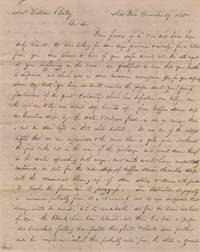
1835réf. BK0025New York City 1835. Autograph letter signed by the merchant firm Baker & Moore 4 pp. addressed to General William Battey care of Dr. Charles Luzenberg at the Franklin Infirmary on the Pontchartrain Railroad New Orleans. Stampless folded letter with red circular "NEW-YORK" December 31 datestamp and manuscript "25" rate. Appx. 1000 words. File folds; otherwise very good. A lengthy commercial letter written thirteen days after the Great Fire of New York describing the destruction of the city's mercantile district and tracing its immediate effects through insurance capital banking commodity prices and trade with New Orleans. Written by the New York firm of Baker & Moore to their associate William Battey the letter provides a near-contemporary account of the fire an assessment of the city's financial resilience and instructions for exploiting the resulting fluctuations in the markets for brandy wine raisins tobacco iron and copper. The fire began on the evening of December 16 during an extraordinary cold spell and northwest gale. Frozen hydrants wells cisterns and hoses left the city's volunteer fire companies largely unable to contain it. By the following day the fire had destroyed much of the commercial district between Wall Street and the East River including the Merchants' Exchange and hundreds of stores and warehouses. Buildings were eventually demolished with gunpowder to create firebreaks at Exchange Place and Coenties Slip. Contemporary estimates varied but approximately 674 buildings were destroyed with losses eventually placed at twenty million dollars or more.1 Baker & Moore begin by describing the extent of the burned district the severe weather and the use of explosives to arrest the flames: "Since my last you have no doubt received the paper sent you giving particulars of the great calamity which has befallen our City. On the 16th our City was about half burned up. From Coffee House Slip to Coenties Slip by the water & William Street is all in ruins. There is but one store left in that whole district. It was one of the coldest nights that we ever experienced & the wind blew a gale from Northwest. The fire broke out in the rear of the Exchange and went down through to the water spreading both ways and would have undoubtedly continued on but for the wide slips of Coffee House & Coenties Slip with the occasional blowing up of some stores & houses with powder to check the flame in its progress" The account quickly turns from the physical destruction to the distribution of its financial losses: "The destruction of property is immense probably from 10 to 15000000$ and it was supposed that many would be ruined but tis remarkable so far we have not heard of one. The Banks have been liberal and there has been a proper and benevolent feeling manifested throughout & should some further aid be brought in which probably will from the State or general government we think there may be no failures. The Insurance companies most of them are ruined and the principal loss is in Insurance capital. The loss will in some instances fall upon those who cannot well afford it. Many widows & orphans have had their all taken from them. The loss is large and New York has met with a great calamity but she is made of such materials & her facilities are so large & varied that the mercantile community will bear up under more than any other place in the Union & we think in one year's time it will be almost forgotten." The confidence expressed here correctly anticipated the city's rapid commercial recovery. Banks and government agencies extended credit and payment terms rebuilding began almost immediately and the burned district was reconstructed with new countinghouses and warehouses. The disaster also exposed the inadequacy of New York's water supply and firefighting arrangements contributing to later infrastructure and institutional reforms. Baker & Moore then apply the disaster to their own trade with New Orleans. Hundreds of warehouses and their contents had been destroyed increasing prices of imported foods wines and spirits. The firm instructs Battey to use the New York price current to obtain higher prices for their consignments: "This fire has advanced most all kinds of goods. Raisins are worth here $3-$3½. Wines such as Mess. Eastman's have advanced with us 4-6 cents. So many hundred casks destroyed must advance it and make it higher through the season. More than one half the Brandy was consumed tis now selling at $1.75 and some are asking $2. We wish what we sent you sold & this will be a favorable time to sell-show N.Y. price current-and get as good a price as you can. There will we think be no want of Brandy. Those raisins we think you had better dispose of at once. We think from N.O. current must pay something handsome for us. In regard to old Iron we find good old iron will always sell for the money for 112½ gross hundred equal to 1c per lb. Cast & wrought are same price. If you can come across a lot to do you may make it answer & pay us well. Copper if you can buy low enough may pay something. We thought hay might pay out but tis so high we cannot buy to send. We are of opinion that goods generally will be higher in consequence of this fire yet when we consign goods we wish them sold when they can to pay and we wish Eastman & Co. to sell and close up our affairs in their hands." The concluding paragraph briefly introduces events in Florida. The Second Seminole War had begun that month following mounting resistance to the forced removal of the Seminole people from Florida. Baker & Moore believed that the conflict might affect the movements of a brig expected in New Orleans: "We observe that trouble is anticipated with the Indians in Florida & if so our Brig may not get a load of them & be in N. Orleans earlier than we anticipated tis uncertain what will be the result they may detain her longer until they can get them on board." The wording appears to indicate that the vessel was expected to transport a group of Native people although the letter does not identify the brig its owners or the precise circumstances of the contemplated voyage. The recipient General William Battey was then in New Orleans apparently acting as Baker & Moore's commercial representative while also attending to his health at the Franklin Infirmary. The firm gave him considerable discretion to supervise consignments collect funds purchase goods when opportunities arose and forward current market information to New York. The address places him in the care of Dr. Charles Aloysius Luzenberg who founded the Franklin Infirmary with municipal support in 1835 and subsequently helped establish the Medical College of Louisiana the forerunner of Tulane's medical school.2 Baker & Moore appear to have been commission or importing merchants whose own affairs escaped direct damage but whose trade was immediately altered by the destruction of competing inventories. The letter thus follows the fire from the burned commercial district into the decisions of a New York firm and its representative in New Orleans. A substantial contemporary account of the Great Fire of 1835 documenting the destruction of New York's commercial center and the disaster's immediate movement through insurance banking commodity markets interregional credit and trade with New Orleans. We find no similar examples on the secondary market or in auction records. 1 Herbert Asbury "The Great Fire of 1835" The New Yorker July 26 1930. 2 Louisiana Historical Association "Luzenberg Charles Aloysius" in Dictionary of Louisiana Biography accessed August 2 2026 https://www.lahistory.org/resources/dictionary-louisiana-biography/dictionary-of-louisiana-biography-l/. . unknown
1835réf. BK0025New York City 1835. Autograph letter signed by the merchant firm Baker & Moore 4 pp. addressed to General William Battey care of Dr. Charles Luzenberg at the Franklin Infirmary on the Pontchartrain Railroad New Orleans. Stampless folded letter with red circular "NEW-YORK" December 31 datestamp and manuscript "25" rate. Appx. 1000 words. File folds; otherwise very good. A lengthy commercial letter written thirteen days after the Great Fire of New York describing the destruction of the city's mercantile district and tracing its immediate effects through insurance capital banking commodity prices and trade with New Orleans. Written by the New York firm of Baker & Moore to their associate William Battey the letter provides a near-contemporary account of the fire an assessment of the city's financial resilience and instructions for exploiting the resulting fluctuations in the markets for brandy wine raisins tobacco iron and copper. The fire began on the evening of December 16 during an extraordinary cold spell and northwest gale. Frozen hydrants wells cisterns and hoses left the city's volunteer fire companies largely unable to contain it. By the following day the fire had destroyed much of the commercial district between Wall Street and the East River including the Merchants' Exchange and hundreds of stores and warehouses. Buildings were eventually demolished with gunpowder to create firebreaks at Exchange Place and Coenties Slip. Contemporary estimates varied but approximately 674 buildings were destroyed with losses eventually placed at twenty million dollars or more.1 Baker & Moore begin by describing the extent of the burned district the severe weather and the use of explosives to arrest the flames: "Since my last you have no doubt received the paper sent you giving particulars of the great calamity which has befallen our City. On the 16th our City was about half burned up. From Coffee House Slip to Coenties Slip by the water & William Street is all in ruins. There is but one store left in that whole district. It was one of the coldest nights that we ever experienced & the wind blew a gale from Northwest. The fire broke out in the rear of the Exchange and went down through to the water spreading both ways and would have undoubtedly continued on but for the wide slips of Coffee House & Coenties Slip with the occasional blowing up of some stores & houses with powder to check the flame in its progress" The account quickly turns from the physical destruction to the distribution of its financial losses: "The destruction of property is immense probably from 10 to 15000000$ and it was supposed that many would be ruined but tis remarkable so far we have not heard of one. The Banks have been liberal and there has been a proper and benevolent feeling manifested throughout & should some further aid be brought in which probably will from the State or general government we think there may be no failures. The Insurance companies most of them are ruined and the principal loss is in Insurance capital. The loss will in some instances fall upon those who cannot well afford it. Many widows & orphans have had their all taken from them. The loss is large and New York has met with a great calamity but she is made of such materials & her facilities are so large & varied that the mercantile community will bear up under more than any other place in the Union & we think in one year's time it will be almost forgotten." The confidence expressed here correctly anticipated the city's rapid commercial recovery. Banks and government agencies extended credit and payment terms rebuilding began almost immediately and the burned district was reconstructed with new countinghouses and warehouses. The disaster also exposed the inadequacy of New York's water supply and firefighting arrangements contributing to later infrastructure and institutional reforms. Baker & Moore then apply the disaster to their own trade with New Orleans. Hundreds of warehouses and their contents had been destroyed increasing prices of imported foods wines and spirits. The firm instructs Battey to use the New York price current to obtain higher prices for their consignments: "This fire has advanced most all kinds of goods. Raisins are worth here $3-$3½. Wines such as Mess. Eastman's have advanced with us 4-6 cents. So many hundred casks destroyed must advance it and make it higher through the season. More than one half the Brandy was consumed tis now selling at $1.75 and some are asking $2. We wish what we sent you sold & this will be a favorable time to sell-show N.Y. price current-and get as good a price as you can. There will we think be no want of Brandy. Those raisins we think you had better dispose of at once. We think from N.O. current must pay something handsome for us. In regard to old Iron we find good old iron will always sell for the money for 112½ gross hundred equal to 1c per lb. Cast & wrought are same price. If you can come across a lot to do you may make it answer & pay us well. Copper if you can buy low enough may pay something. We thought hay might pay out but tis so high we cannot buy to send. We are of opinion that goods generally will be higher in consequence of this fire yet when we consign goods we wish them sold when they can to pay and we wish Eastman & Co. to sell and close up our affairs in their hands." The concluding paragraph briefly introduces events in Florida. The Second Seminole War had begun that month following mounting resistance to the forced removal of the Seminole people from Florida. Baker & Moore believed that the conflict might affect the movements of a brig expected in New Orleans: "We observe that trouble is anticipated with the Indians in Florida & if so our Brig may not get a load of them & be in N. Orleans earlier than we anticipated tis uncertain what will be the result they may detain her longer until they can get them on board." The wording appears to indicate that the vessel was expected to transport a group of Native people although the letter does not identify the brig its owners or the precise circumstances of the contemplated voyage. The recipient General William Battey was then in New Orleans apparently acting as Baker & Moore's commercial representative while also attending to his health at the Franklin Infirmary. The firm gave him considerable discretion to supervise consignments collect funds purchase goods when opportunities arose and forward current market information to New York. The address places him in the care of Dr. Charles Aloysius Luzenberg who founded the Franklin Infirmary with municipal support in 1835 and subsequently helped establish the Medical College of Louisiana the forerunner of Tulane's medical school.2 Baker & Moore appear to have been commission or importing merchants whose own affairs escaped direct damage but whose trade was immediately altered by the destruction of competing inventories. The letter thus follows the fire from the burned commercial district into the decisions of a New York firm and its representative in New Orleans. A substantial contemporary account of the Great Fire of 1835 documenting the destruction of New York's commercial center and the disaster's immediate movement through insurance banking commodity markets interregional credit and trade with New Orleans. We find no similar examples on the secondary market or in auction records. 1 Herbert Asbury "The Great Fire of 1835" The New Yorker July 26 1930. 2 Louisiana Historical Association "Luzenberg Charles Aloysius" in Dictionary of Louisiana Biography accessed August 2 2026 https://www.lahistory.org/resources/dictionary-louisiana-biography/dictionary-of-louisiana-biography-l/. . unknown books
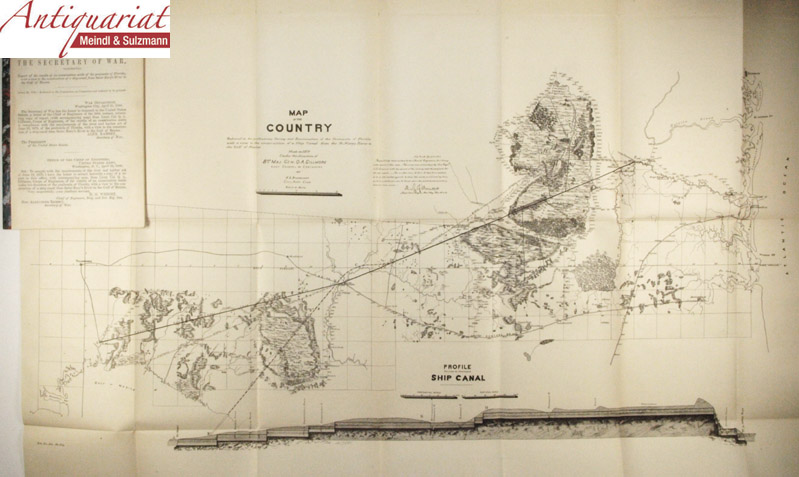
1880réf. 41853Washington, Government Printing Office, 1880. 8°. Mit 1 gef. Karte. 38 SS. Br. mit Rückenfalz (guter Erhaltungszustand).
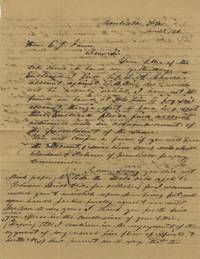
1863réf. BK0082Monticello Florida 1863. Autograph letter signed 2 pp. 7 x 9 inches addressed to the Honorable E. J. Vann Madison Florida. Stampless folded letter with fair circular "MONTICELLO FLA." January 23 datestamp and bold "PAID / 10" handstamp. Back flap removed with a small paper repair at the upper left; otherwise very good. A wartime business letter from James B. Jones of Monticello to E. J. Vann in Madison concerning accounts connected with the estate of D. B. Bird and the collection of local debts. The first portion belongs to the ordinary legal and commercial life of Middle Florida with references to unpaid accounts estate administration and the firms of Denham & Palmer and Johnson Bird & Co. Jones then turns abruptly from bookkeeping to Confederate destiny offering an elaborate blessing. After thanking Vann for his wishes for Jones's health and spirits he writes: "May your shadow become more enlarged and may you live to see the Southern Confederacy one of the most powerful & prosperous nations of the earth . In short may you live to see her Eagle if she even has one with his wings extended with one wing in the Pacific Ocean the other at same time in the Atlantic and his tail in the Gulf of Mexico south of Cuba & at the same time drink from the waters of the Ohio." The letter captures both the routine world of wartime Florida-estate claims merchants lawyers and unpaid accounts-and one Floridian's Confederate imaginary. . unknown
1863réf. BK0082Monticello Florida 1863. Autograph letter signed 2 pp. 7 x 9 inches addressed to the Honorable E. J. Vann Madison Florida. Stampless folded letter with fair circular "MONTICELLO FLA." January 23 datestamp and bold "PAID / 10" handstamp. Back flap removed with a small paper repair at the upper left; otherwise very good. A wartime business letter from James B. Jones of Monticello to E. J. Vann in Madison concerning accounts connected with the estate of D. B. Bird and the collection of local debts. The first portion belongs to the ordinary legal and commercial life of Middle Florida with references to unpaid accounts estate administration and the firms of Denham & Palmer and Johnson Bird & Co. Jones then turns abruptly from bookkeeping to Confederate destiny offering an elaborate blessing. After thanking Vann for his wishes for Jones's health and spirits he writes: "May your shadow become more enlarged and may you live to see the Southern Confederacy one of the most powerful & prosperous nations of the earth . In short may you live to see her Eagle if she even has one with his wings extended with one wing in the Pacific Ocean the other at same time in the Atlantic and his tail in the Gulf of Mexico south of Cuba & at the same time drink from the waters of the Ohio." The letter captures both the routine world of wartime Florida-estate claims merchants lawyers and unpaid accounts-and one Floridian's Confederate imaginary. . unknown books
1974réf. 61572Gainesville: University of Florida Press 1974. Photographic facsimile reprint of the 1868 Philadelphia edition. Thick octavo; publisher's patterned paper-covered boards hardcover; xxxiii53917pp. Fine. In the publisher's "Bicentennial Floridiana Facsimile Series." An attractive reprint adding a substantial introduction and an Index by John K. Mahon. University of Florida Press unknown books
réf. ART128M1982 / 124 pages. Relié avec son coffret cartonné Editions Chaîne graphique
1991réf. vot804Tampa: The Florida Endowment for the Humanities 1991. Oblong quarto spiral-bound white plastic spiral binding; stiff full-color illustrated slick covers 112 pp. Very Good with light edgewear and soiling to covers. Contents: Florida! Its Castles in the Air: A Foreword by Samuel A. Gill; Introduction: Filmmaking and the Florida Dream; Part I: Boom and Bust in the Florida Movie Industry; “Jax” Rivals Hollywood; The Bubble Bursts; The Struggle to Recover; Part II: Florida Faces the Future; New Film Economies Favor Florida; Florida’s Film Development Strategies; Bibliography; Some Important Florida Archive Collections; Chronology. The Florida Endowment for the Humanities, (1991). unknown books
1935réf. 1268631935. San Francisco: The Grabhorn Press 1935. 4to 47 pp. Quarter black fabric orange paper boards illustration of fire helmet to upper board paper label lettered in black to backstrip. Very good copy backstrip slightly rubbed and sunned contents clean. § One of 450 copies. Printed in black and orange illustrated with portraits and facsimile letters. An account by a friend of San Francisco's most famous volunteer firewoman the mascot of the Knickerbocker Company No. 5. A true gambling smoking San Francisco eccentric of the early years a bequest she left to the city was used to build Coit Tower on Telegraph Hill. unknown