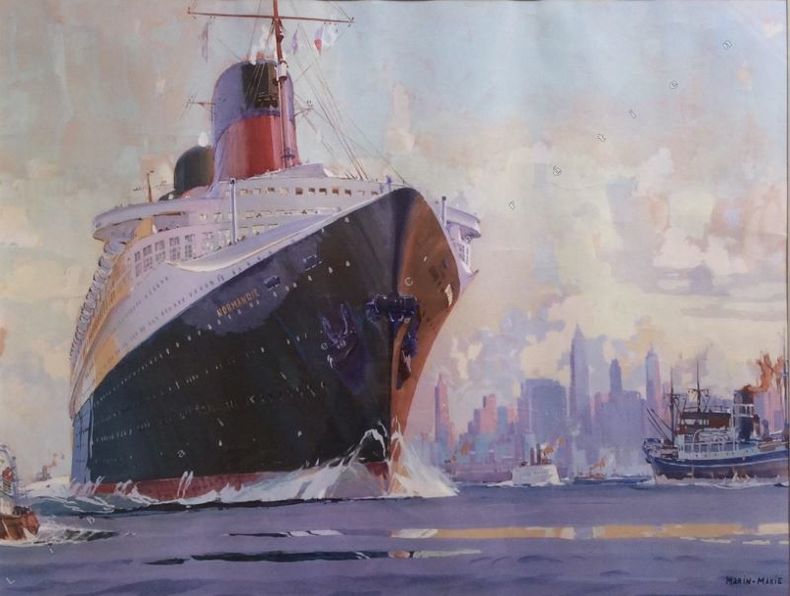
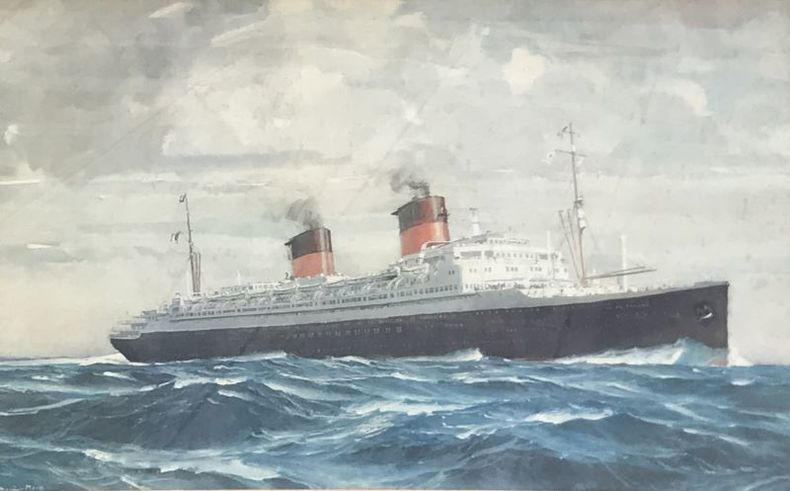
réf. ORD-2471Paris. Barreau. S. d. Vers 1936. Grand dépliant couleurs, en accordéon, de 1280 x 320 mm, présentant la coupe du paquebot, sous couverture illustrée couleurs par WILQUIN, d'une grande vue du paquebot dominant le port de New York. Couverture lgt abîmée , bel état intérieur.
réf. 14020Paris, Furne, Jouvet, (1867-1870 ). 4 volumes grand in-4, [dimension: 280 x 186 mm] de Portrait, (4), 743, (1) / (4), 703, (1) / (4), 752 / (4), 744 pp. Demi-basane tabac , dos lisse. (Reliure de l'époque.) fortes rousseurs,reliures bon etat,
1930Features: Aluminum and its hard-boiled alloys; Super magnetic fields; Influence of the coconut on Philippine industrial life; Birds of a bleak arctic island; Fragmentary molecules of the sun; Beautiful bridges on new rail line - exceptional engineering problems on European railway; Sinanthropus - the Peking man; Coney Island's museum - the first institution designed to show play-reaction; Six great institutions now have naval R.O.T.C.; Linemen of the sea - with the men who splice broken transatlantic cables; Features of speed queen The Europa - faster than the Bremen; Is there an ether?; Better days for aviation; Tangled commerce abides where children smoke and swim - Manus are the pack peddlers of the pacific; Moving a substation underground; Power from the earth's hot interior?; Athens Broadway; an ancient bakery; Light furnishes Ballroom decorations. Camel cigarette ad on back cover features several suave temptors and a temptress. Top inch of spine missing. Cracks to spine. One inch tear to fore-edge of front cover. Significant overall wear. Book
194048 pages. Features: Nice colour ad for International Trucks inside front cover features a pop (beverage) truck at work; Supita (fiction); Design for a new Dominion - The Rowell-Sirois Report is charged with significance for every individual Canadina living today and for his children and his grandchildren after him - with photo of the Dominion-Provincial Relations Committee; Sam Small's Better Half (fiction); Gerard Cote - Canadian Marathon Champ - article with photo; Twilight for Neville Chamberlain; Check Rein (fiction); Treasure in Iron - article and photos of the Steep Rock Mine near Atikokan, Ontario; Murder Off Stage (fiction); A Century in Steam - the story of the first transatlantic steamship to dock at a Canadian port on June 1st, 1840; Nice full-page ad for RCA Victor audio products; Gifts for the Bride; Full-page Dodge truck ad. Front cover nearly loose. Back cover badly chipped and loose. Above-average wear. A worthy reference copy. Book
1912réf. 226391912 Montrouge, Draeger, (1912), in-12, cartonnage éditeur gris, encadrements dorés et écusson doré et bleu surmonté doré.
1912réf. 226421912 Montrouge, Draeger, (1912), in-12, broché, couverture blanche, encadrements dorés et écusson doré et bleu surmonté doré.
réf. 25434Letter from 'S. S. Transylvania' en route from Glasgow to New York 24 26 and 29 November 1928. Postcard undated but contemporaneous. TSS Transylvania the prefix stands for ‘Twin Screw Steamship’ was built in Glasgow for the Anchor Line and launched in 1925. She had three funnels but two were redundant only serving to render the ship more attractive to prospective passengers. In 1940 she requisitioned by the Royal Navy and the following year she was torpedoed by the Germans sinking with the loss of 36 lives. The letter is 13pp 12mo; with neat single-space typing on thirteen leaves. It contains three line diagrams and on a separate 12mo leaf is an ink drawing with captions titled ‘As the Herrewich sic appeared when we last saw her’. Also present is a sepia postcard of ‘T.S.S. TRANSYLVANIA’. The letter and diagram are in fair condition aged and worn but with text clear and entire. The postcard is good with light aging. Signed in type ‘Alex.’ With manuscript diagrams and salutation to ‘Dear Mother and Father’. A well written missive the use of catch-words implies a good education beginning: ‘It is surprising that now more than five days after leaving Glasgow we should be only about 1000 miles from home. The explanation is probably well known to you all: but although you will have had newspaper accounts of the great storm and of the wreck we stood by I’m quite sure that some amplifications in the form of our personal experiences will be both welcome and of interest. In the first place let me hasten to assure you that none of us came to any harm. In the main we are all well. Mary has not been able to be out of bed much so far but on the other hand she has been free from sickness - which is a very remarkable thing considering our experiences.’ After news of ‘Anne’ and ‘Virginia’ ‘Mary’ and ‘Aunt Mima’ are also referred to he reports that they ‘arrived at Moville about midnight on Monday and spent a great night in Lough Foyle. At 10.00 o’clock next morning the Londonderry tender came alongside and we took 350 passengers and their baggage on board - making the total passenger compliment about 1100. There are about 25 in the first class.’ He finds the Transylvania ‘a splendid ship for watching the sea from. The forward extension of B. deck in front of the bridge is very clear of truck and there are no boats on it as there are on the others’. The account of the journey continues followed by a seven-page account of the storm and rescue beginning: ‘In the evening of Tuesday it was apparent that the sea was rising higher and higher as was the wind: and through the night it was obvious that something unusual in the way of weather was blowing up. / Now I’ve thought previously that we have been in Atlantic storms before. Two years ago on the “Cameronia” was a bad time: and one day last year the “Caledonia” was thrown about considerably: but our in pencil ‘my’ farthest stretch of imagination - even my wildest fears - have never pictured anyting so in pencil ‘as’ tremendous as we awoke in pencil ‘the situation’ to on Wednesday morning.’ He gives a vivid description of the ship ‘riding out the storm magnificently’ as he is caught by ‘plants flowerpots chairs and so on’: ‘The second and third class passengers were locked in and battened down for about two days. The stern of the ship was almost completely under water and the hatchways to the steward’s quarters were stove in during the night and all the stewards woke up to find themselves invaded by a foot or two of water.’ The storm subsides and she comes across the wreck of a ‘large German tramp’ he calls the ‘Herrenwich’ ‘a poignant and pathetic spectacle; and more so was the view we had of the hapless crew clinging to what was left on the bare decks. We gradually got the story bit by bit as it filtered through the bridge where it was picked up I suppose by signals. A great wave had landed on the “Herrenwich” and had stove in the hatch of No. 3 hold on the forward well deck. This hold was full of water and the restraining bulkheads were bulging. The captain sent out his S. O. S. and immediately there - after another sea came on board and carried off bodily the bridge the wireless the wireless room and all the boats save one which was stove in. The captain and a quartermaster were swept overboard with the bidge and were lost immediately.’ He describes ‘a masterly exposition magnificently executed of the tactics of sea rescue. It was obviously impossible to go right up to the ship but sometimes we were not more than 100 yards away and communication by megaphone was possible. It was equally impossible for us simply to take up a position on the nether side and so act as a breakwater. The manoeuvre which was carried out time after time therefore was to circle the wreck as quickly as possible and to drift past her on the weather side and so give her a certain degree of intermittent protection. This meant that twice in every circuit the captain had to bring the “Transylvania” broadside on to the seas and every time this happened there came the sickening sense of going over on our beam ends - as I believe many less seaworthy and splendid ships would have done. And each time of course until everything was secured anything movable was thrown about in the wildest way. Oil was poured on the water with each circuit and the difference it made was wonderful.’ The seven-page account of the storm and rescue ends with the information that ‘the bridge is 62 feet from the waterline and when we were in the trough 19 out of every 20 waves were seen to be on a level with or higher than the bridge’. It reflects: ‘I’ve often told myself that I wanted to experience a real Atlantic storm. Now I have experienced it. I’d like it again but never again would I like to take Mary and the children into it.’ The letter finishes with two two-page updates from 26 and 29 November the last beginning with the information that the ship has ‘passed Nantucket light ship and may therefore expect to reach quarantine to-night’. See Image. Letter from 'S. S. Transylvania' (en route from Glasgow to New York), 24, 26 and 29 November 1928. Postcard undated, but contemp unknown
1898réf. 23101New York: Outing Publishing Company 1898. First Edition. Original publisher's gilt stamped and printed cloth; t.e.g.; untrimmed. Very good; some wear to the head of the spine; small puncture to the front cover. 8vo 12 17 - 160 frontispiece and text illustrations. All the illustrations are half-tones. The frontispiece is by T S Johnson. The Yampa was an American ocean-going cruising schooner yacht for pleasure use from 1887 to 1899. The yacht was originally built for Chester W. Chapin a rail baron and U.S. Congressman from Massachusetts. Richard S Palmer member of the NY Yacht Club was its final owner. It was constructed in 1887 by the firm Harlan and Hollingsworth in Wilmington Delaware. She was considered the best in her class until 1891. The Yampa was 135 ft overall 110 ft at the water line and her draft was 13.8 ft. The author was on board when she sailed to the Baltic and to Southampton in England in 1897 on the occasion of Queen Victoria's Diamond Jubilee. From there she went to the North Sea and to Kiel Germany and on to St. Petersburg. The return voyage took the boat to the Caribbean St Thomas St Vincent and then north. She was eventually purchased by Kaiser Wilhelm as a gift for his wife. An entertaining account. Absent from Toy. Outing Publishing Company hardcover books
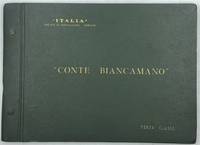
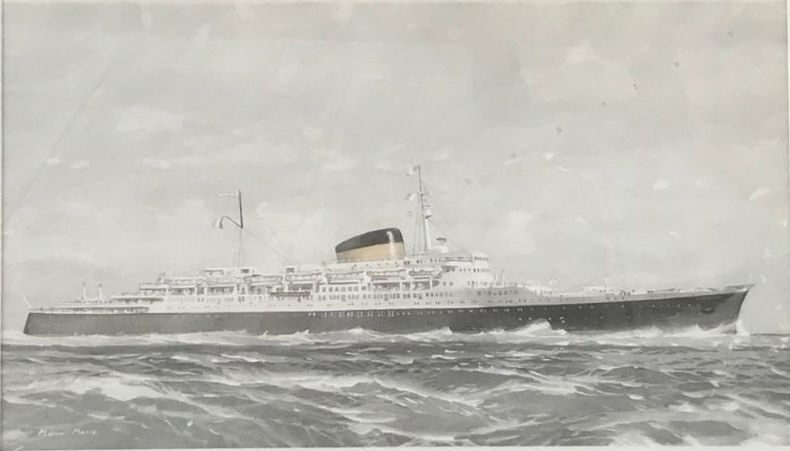
réf. 14650SD anni ’40. Alcune foto lievemente scollate ma ben conservato nel complesso. . Album fotografico in percallina verde con titoli dorati e legatura a vista con bulloni d'ottone cm 24 x 34 contenente 8 fotografie in bianco e nero cm 23.5 x 29.25 montate su tavole telate. Alcune foto lievemente scollate ma ben conservato nel complesso. Pubblicazione promozionale riservata presumibilmente alle agenzie turistiche ed agli agenti della compagnia di navigazione che presenta il transatlantico Conte Biancamano e in particolare le cabine gli spazi comuni e i servizi per la terza classe. La nave venne varata nel 1925 per il Lloyd Triestino e con il riassetto delle flotte passò negli anni '30 alla compagnia Italia di Navigazione venendo destinata alle rotte per il Sud America. Questo album risale agli anni '40 e testimonia il riallestimento civile del dopoguerra con arredi progettati da Gustavo Pulitzer Finali Giò Ponti e Nino Zoncada. Le fotografie con didascalia in lastra mostrano una veduta del transatlantico e alcuni ambienti della terza classe: Sala da Pranzo Sala fumatori e bar Sala delle Signore Cabina a quattro posti Cabina a due posti La piscina Ambulatorio medico chirurgico. Cat. 26 n. 20. unknown
1933réf. 7185Rouen Lecerf 1933 1 in-4 Illustrations de MONSNERGUE. Rouen, Lecerf, 1933, in-4, broché, couverture titrée sous chemise illustrée d'une carte marine, en demi-toile grise.
réf. 160644419 Six menus et chansons signés dans la planche, de 4 pages in-4 sous étui tryptique illustré, orné d'attributs marins et musicaux, disque "Nos vieilles chansons" interprétées par André Claveau, Mathé Altéry, Brigitte, Les Engels, production Pathé-Marconi, (1965).
1959This is a very good substantial run of the Transatlantic Review with just light wear. Very clean inside and out. All issues softcovers in their original wrappers. The run contains issues 2, 3, 4, 5, 6, 9, 12, 13, 14, 18, 19, 20, 22, 23, 24, 26, 27, 32, 35, 36, 42 & 43, 44, 45, 49 and the Index volume. 25 issues in all from 1959 to 1974. Size varies a bit, typically 8" or 9" X 6". Heavy set, foreign shipping will be extra. This set will be securely wrapped and packed in a sturdy box and shipped with tracking.
1938réf. 54768Coupe longitudinale dépliante en 7 panneaux (format déplié 32 x 128 cm) sous chemise imprimée, J. Barreau & Cie, Albert Sébille dél., s.d. [ circa 1938 ]
1935réf. 191331935 Gouache, titrée, 1935, 22.3 x 19 cm, encadrée.
1935réf. 21821ATLANTIQUE 1935 1 Atlantique, 1935, petit in-4, broché illustré en couleurs, couverture en couleur illustrée d'un paquebot et d'une Marianne à la cocarde tricolore, 28 pages.
1934réf. 96700Paris, éditions de l’Atlantique 1934 7 numéros. In-4 31 x 23,5 cm. Agrafés, 8 pp. par numéro, première page en bichromie, photographies en noir & blanc, illustrations et cartes hors texte, textes de G. la Roërie, Firmin Roz, Constantin-Weyer, Montpetit, de la Roncière, Maurice Guierre, Valéry Larbaud, etc, illustrations de Chancel, V. Le Champion, ..., publicités. Ensemble en excellent état.
réf. 97101875. Gibson & Sons Penzance & Scilly Isles. Three striking unfamiliar photographs the last two in particular excellent compositions of a significant historical event. The three slides are bound in 8 cm glass squares with none of the glass shattered and the images themselves in good condition clear and unfaded. Each mount carries the stamp of the photographers Gibson & Sons. With numbered labels carrying a shelfmark. Each mount titled in manuscript. ONE: ' Schiller" wreck. Lifeboat in which Survivors came ashore'. Shows the white lifeboat with 'SCHILLER' and 'HAMBURG' on the bow on a beach with the background showing sailing ships in the bay. TWO: ' "Schiller" wreck - Digging the last graves. <> Scilly'. Striking composition showing five workmen toiling among stones before a country wall in front of which appears to be a long row of wooden markers. Stone building and horse in background. THREE: 'Schiller wreck at Scilly. A Funeral.' Strking composition show a large group of people one lady with an umbrella gathered around a country grave with metal railings with a stone building behind. The Schiller has been dubbed in the title of a 2001 book by Keith Austin 'The Victorian Titanic'. It is said that the German army in both world wars were instructed to spare the Scilly Isles in recognition of the inhabitants' assistance to the survivors of the wreck. [1875.] Gibson & Sons, Penzance & Scilly Isles. unknown
1952réf. 231381952 Affiche tirage offset signée en bas à gauche dans la planche, (1952), 48 x 63.5 cm., encadrée.
1958réf. 241951958 Affiche signée en bas à droite dans la planche, tirage offset, (1958), 100 x 62 cm.
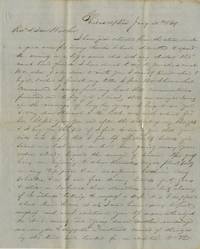
1849réf. List3737Philadelphia Pennsylvania 1849. Eight page letter measuring 8 x 10 pages appx. 1800 words. Fine condition. A lengthy and literary 1849 family letter from Robert Lind Philadelphia to his brother discussing enslavement and the growing sectional crisis California Gold Rush migration and Presbyterian intellectual life and including a remarkable inherited family narrative concerning a clandestine aristocratic marriage in pre-Revolutionary Ireland that ultimately forced the writer's grandfather into exile. Lind provides a rich cross-section of American intellectual and family life on the eve of the 1850s. He discusses the state of the church the movement of ministers westward the instability of clerical life and the increasingly volatile national debate over enslavement and sectionalism. The letter meditates extensively on the survival of the Union just months after the conclusion of the Mexican-American War and amid the gathering crisis that would soon erupt into the Compromise of 1850. Lind responds to his brother's pessimism about the future of the republic with an expression of moderate antebellum Unionism: "I am sorry to find you had such discouraging hopes of the Republic for my own part I don't think that even the subject of Slavery with all the violence of the fanatical Abolitionists of the North & the disunionists of the South will be able to divide us - the people of the U.S. in each and every direction love the Union too much to permit such a catastrophe". Lind captures an aspect of political belief widespread among educated Northerners in the late 1840s that controversy over enslavement was dangerous but ultimately containable because emotional attachment to the Union would remain stronger than sectional extremism. He condemns both radical abolitionism and Southern disunionism in nearly symmetrical language reflecting the outlook of conservative or moderate Northerners who viewed themselves as defenders of national stability rather than partisans of either section. Equally revealing is his discussion of John C. Calhoun who "has regarded the subject in a partial light so long that I give him the credit of honestly believing it a blessed Institution"-Lind attempts to understand Calhoun's ideology as a sincere product of his environment. Yet he immediately contrasts that worldview with what he sees as the inevitable moral direction of modern civilization: "we live in an age of progress & enlightenment - the sympathies of Christendom is being fast enlisted in favour of the black republic sentiment is decidedly opposed to its enslavement's enlargement or extension." Lind is not a radical abolitionist yet neither is he proslavery; he represents the uneasy center of antebellum Northern opinion still convinced in 1849 that compromise and national affection would ultimately prevent disunion. The letter is equally valuable for its vivid contemporary references. California dominates conversation in Philadelphia: "For the last few months this has been the engrossing topic of conversation a great many have shipped from this city for the El Dorado." One relative is preparing to leave for San Francisco "not to dig but to plant himself" there professionally as a physician. Lind also discusses assembling material for a biography of his father to be included in a major Presbyterian biographical work by the noted minister and historian William Buell Sprague. However the heart of the letter is the extraordinary anecdote occupying nearly a third of the manuscript. Lind recounts a family story newly uncovered during a visit to Ireland involving his grandfather a clandestine aristocratic marriage mistaken identity scandal and eventual exile from the country. According to the narrative a young Irish nobleman had fallen in love with a peasant girl but could not openly marry her without jeopardizing his inheritance. A secret marriage was arranged and Lind's grandfather became mistakenly implicated: "They employed this person who resembled him very much in appearance procured him a suit of clothes & horse just like his learned him the marriage service & they were married in a woods close by where Grandfather lodged." The consequences were devastating. Rumors spread that Reverend Lind had in fact secretly performed the illicit marriage ceremony and "The proofs were so strong against him . that his congregation ceased to visit his church & he was eventually compelled to leave the country." Only much later-nearly half a century after the Reverend's death-the truth finally emerged. Lind describes how an aged participant confessed the deception on his deathbed before assembled witnesses: "He wished to relieve his conscience that Mr. Lind had nothing to do in the matter but that it was him who had performed the service & consequently that he was the guilty man." The episode is an interesting example of transatlantic memory: an eighteenth-century Irish scandal survived orally within a Presbyterian emigrant family before being partially verified decades later through renewed contact with the old country. An exceptional and highly literary mid-nineteenth century family letter combining antebellum political commentary Presbyterian intellectual networks California Gold Rush migration and an unforgettably dramatic Irish emigration narrative.
1849réf. List3737Philadelphia Pennsylvania 1849. Eight page letter measuring 8 x 10 pages appx. 1800 words. Fine condition. A lengthy and literary 1849 family letter from Robert Lind Philadelphia to his brother discussing enslavement and the growing sectional crisis California Gold Rush migration and Presbyterian intellectual life and including a remarkable inherited family narrative concerning a clandestine aristocratic marriage in pre-Revolutionary Ireland that ultimately forced the writer's grandfather into exile. Lind provides a rich cross-section of American intellectual and family life on the eve of the 1850s. He discusses the state of the church the movement of ministers westward the instability of clerical life and the increasingly volatile national debate over enslavement and sectionalism. The letter meditates extensively on the survival of the Union just months after the conclusion of the Mexican-American War and amid the gathering crisis that would soon erupt into the Compromise of 1850. Lind responds to his brother's pessimism about the future of the republic with an expression of moderate antebellum Unionism: "I am sorry to find you had such discouraging hopes of the Republic for my own part I don't think that even the subject of Slavery with all the violence of the fanatical Abolitionists of the North & the disunionists of the South will be able to divide us - the people of the U.S. in each and every direction love the Union too much to permit such a catastrophe". Lind captures an aspect of political belief widespread among educated Northerners in the late 1840s that controversy over enslavement was dangerous but ultimately containable because emotional attachment to the Union would remain stronger than sectional extremism. He condemns both radical abolitionism and Southern disunionism in nearly symmetrical language reflecting the outlook of conservative or moderate Northerners who viewed themselves as defenders of national stability rather than partisans of either section. Equally revealing is his discussion of John C. Calhoun who "has regarded the subject in a partial light so long that I give him the credit of honestly believing it a blessed Institution"-Lind attempts to understand Calhoun's ideology as a sincere product of his environment. Yet he immediately contrasts that worldview with what he sees as the inevitable moral direction of modern civilization: "we live in an age of progress & enlightenment - the sympathies of Christendom is being fast enlisted in favour of the black republic sentiment is decidedly opposed to its enslavement's enlargement or extension." Lind is not a radical abolitionist yet neither is he proslavery; he represents the uneasy center of antebellum Northern opinion still convinced in 1849 that compromise and national affection would ultimately prevent disunion. The letter is equally valuable for its vivid contemporary references. California dominates conversation in Philadelphia: "For the last few months this has been the engrossing topic of conversation a great many have shipped from this city for the El Dorado." One relative is preparing to leave for San Francisco "not to dig but to plant himself" there professionally as a physician. Lind also discusses assembling material for a biography of his father to be included in a major Presbyterian biographical work by the noted minister and historian William Buell Sprague. However the heart of the letter is the extraordinary anecdote occupying nearly a third of the manuscript. Lind recounts a family story newly uncovered during a visit to Ireland involving his grandfather a clandestine aristocratic marriage mistaken identity scandal and eventual exile from the country. According to the narrative a young Irish nobleman had fallen in love with a peasant girl but could not openly marry her without jeopardizing his inheritance. A secret marriage was arranged and Lind's grandfather became mistakenly implicated: "They employed this person who resembled him very much in appearance procured him a suit of clothes & horse just like his learned him the marriage service & they were married in a woods close by where Grandfather lodged." The consequences were devastating. Rumors spread that Reverend Lind had in fact secretly performed the illicit marriage ceremony and "The proofs were so strong against him . that his congregation ceased to visit his church & he was eventually compelled to leave the country." Only much later-nearly half a century after the Reverend's death-the truth finally emerged. Lind describes how an aged participant confessed the deception on his deathbed before assembled witnesses: "He wished to relieve his conscience that Mr. Lind had nothing to do in the matter but that it was him who had performed the service & consequently that he was the guilty man." The episode is an interesting example of transatlantic memory: an eighteenth-century Irish scandal survived orally within a Presbyterian emigrant family before being partially verified decades later through renewed contact with the old country. An exceptional and highly literary mid-nineteenth century family letter combining antebellum political commentary Presbyterian intellectual networks California Gold Rush migration and an unforgettably dramatic Irish emigration narrative. books
1960réf. 231601960 Affiche tirage offset signée en bas à droite dans la planche, (1960), 50 X 65 cm., encadrée.
1950réf. 231371950 Estampe signée en bas à gauche dans la planche, (1950), 61 x 81 cm, encadrée
1935réf. 231361935 Estampe signée dans la planche, légendée et datée dans la planche en bas à droite, 1935, 48.5 x 76 cm., cadre d'origine de La Compagnie avec sa plaque en laiton gravée.