rif. KIBO105387Nobel Akademik Yayincilik n/a. n/a Nobel Akademik Yayincilik unknown
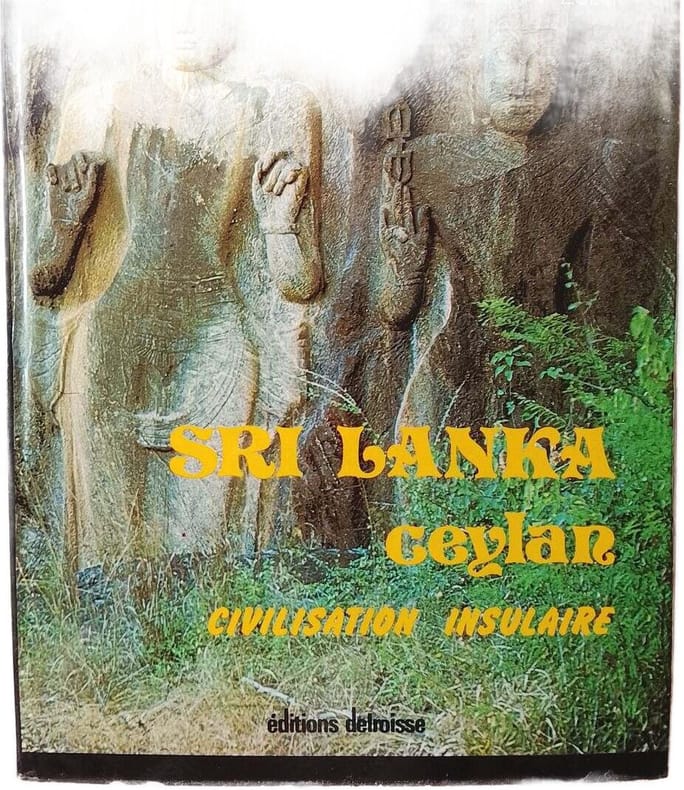
rif. 500386286éditions delroisse Sans date. Cet ouvrage illustré par les photographies de Christian et Nadine Zuber et accompagné d'un texte de Senake Bandaranayake présente la civilisation insulaire du Sri Lanka (Ceylan) à travers ses paysages sa faune et sa flore avec un accent sur la richesse naturelle de l'île
1987rif. 2787Berlin, Aufbau-Verlag 1987. Oleinen, 8 , 182 S., 1. Auflage, Reiseerzählungen aus Srilanka (Ceylon). guter Zustand. Hardcover
1930rif. PHO-1015Éditions Duchartre et Van Buggenhoudt, Paris, 1930, in-8° carré (210x165) ,xliv-296 pp. , illustré de 16 gravures H.T. ,broché .Bon exemplaire.
1930rif. PHO-989Éditions Duchartre et Van Buggenhoudt, Paris, 1930, in-8° carré (210x165) ,xliv-296 pp. , illustré de 16 gravures H.T. , relié demi chagrin vert , dos à 5 nerfs avec auteur et titre , couverture conservée , bel exemplaire.P2-5A
rif. 68694Paris, Berger-Levrault, 1931. "19 x 24, 328 pp., 66 photos en N/B, 24 ornements et lettrines, 1 carte planisphérique dépliante, broché, bon état (rousseurs; dos et arrière défraîchis)."
rif. 9251Ceylan, Java, Tahiti. In 8 broché, couverture illustrée en couleurs, au pochoir, de Lucien LANTIER. Arte dépliante en frontispice, titre, XIII, 328 pages, 66 illustrations en 32 planches, hors-texte, sur papier couché. 24 ornements et lettrines. Berger Levrault 30/11/1925 Trace de mouillure au deuxième plat de couverture, bon état d’ensemble
rif. 0267977433.Ghardcover. Good. Access codes and supplements are not guaranteed with used items. May be an ex-library book. hardcover
rif. 133259221X.Gpaperback. Good. Access codes and supplements are not guaranteed with used items. May be an ex-library book. paperback
rif. 0656129816.Ghardcover. Good. Access codes and supplements are not guaranteed with used items. May be an ex-library book. hardcover
rif. 0267495692.Ghardcover. Good. Access codes and supplements are not guaranteed with used items. May be an ex-library book. hardcover
rif. 0265818869.Ghardcover. Good. Access codes and supplements are not guaranteed with used items. May be an ex-library book. hardcover
rif. 0266609651.Ghardcover. Good. Access codes and supplements are not guaranteed with used items. May be an ex-library book. hardcover
rif. 0656959428.Ghardcover. Good. Access codes and supplements are not guaranteed with used items. May be an ex-library book. hardcover
rif. 1330736745.Gpaperback. Good. Access codes and supplements are not guaranteed with used items. May be an ex-library book. paperback
rif. 1331126398.Gpaperback. Good. Access codes and supplements are not guaranteed with used items. May be an ex-library book. paperback
rif. 1330899873.Gpaperback. Good. Access codes and supplements are not guaranteed with used items. May be an ex-library book. paperback
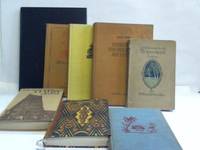
rif. 2f5265Verschiedene Verlage und Orte 1911 - 1958. Zusammen ca. 2000 S. unterschiedliche Einbände leichte Gebrauchsspuren. - Enthält: Eine Reise von Madras nach Ceylon. Britischer Raub und Verwüstung Niederländischer Kolonien von E. A. P. Dzur/ Ceylon-Masken. Der Tanz der Krankheits-Dämonen von Heinz Lucas/ John Hagenbeck Fünfundzwanzig Jahre Ceylon herausgegeben von Victor Ottmann/ Ceylon Die Insel der Götter von Annie France-Harrar/ Von Ceylon zum Himalaya von Erwin Drinneberg/ Einführung in die Tropenwelt - Ceylon - von Konrad Guenther/ Exorzismus und Heilunde auf Ceylon von Paul Wirz/ Der indische Kulturkreis in Einzeldarstellungen herausgegeben von Karl Döhring - unknown
rif. 1330245350.Gpaperback. Good. Access codes and supplements are not guaranteed with used items. May be an ex-library book. paperback
rif. 0331950294.Gpaperback. Good. Access codes and supplements are not guaranteed with used items. May be an ex-library book. paperback
1880rif. 237851880. Ceylon colonial photo archive depicting tea cultivation estate labor transportation and urban life circa 1880s to 1910s documenting the plantation economy that made the island one of Britain's principal sources of tea as British merchants shifted the enormous domestic tea market away from China and toward production within the Empire. Coffee leaf rust appeared in Ceylon in 1869 and spread rapidly through the island's coffee districts precipitating the collapse of the crop that had dominated the colonial export economy and accelerating planters' conversion of the central highlands to tea. James Taylor had established commercial tea cultivation at Loolecondera Estate near Kandy in 1867 and the new industry expanded rapidly as coffee failed; by 1900 some 380000 acres in Ceylon were planted in tea. By 1879 the results showed that in more than 70 percent of tea sold in London still came from China while by 1900 China supplied only about 10 percent and black teas from British controlled India and Ceylon constituted the bulk of the market. Photo archive of albumen and silver gelatin photographs and photographic postcards ranging from approximately 3½ x 5 to 4 x 6 inches Ceylon circa 1880s to 1910s. Tea production forms the strongest body of imagery. Women and men stand among densely planted tea bushes or work through rows of plants with women carrying the large woven baskets used to collect leaves; individual and group views are captioned "Tea plucker" "Tea picking Ceylon" "Pruning tea Kandy" and in French "Cueillette du thé à Ceylan." One Skeen & Co. Colombo card numbered 84 and captioned "Tea plucker" isolates a woman at work with a large basket strapped behind her while another shows a large group of workers seated with baskets and gathered tea in a plantation clearing. A card captioned "Estate coolies Ceylon" depicts an estate employee in European dress standing with women and a child outside a thatched dwelling preserving in its printed terminology the racial and labor classifications through which plantation workers were presented to contemporary consumers of colonial imagery. Other photographs move from plantation production into the roads vehicles and cities of colonial Ceylon: rickshaw pullers pose with European passengers and beside their vehicles; a street scene records "Native town Kandy Ceylon"; Colombo appears in views of the "Colpetty Road near Galle Face Colombo" a crowded procession captioned in French "Colombo départ des troupes Anglaises" and a civic monument among palms. Another postcard depicts "Royal visitors leaving Ceylon" while a country road scene shows pedestrians carts and roadside activity. Skeen & Co. one of the principal commercial photographic firms operating from Colombo in the late nineteenth and early twentieth centuries is identified on several cards but no single photographer can be assigned to the archive as a whole. The tea scenes record the labor at the center of one of the fastest agricultural conversions in the nineteenth century British Empire. Coffee rust Hemileia vastatrix was first observed in Ceylon in 1869 and within little more than a decade had destroyed the commercial basis of the coffee plantation system; tea already demonstrated commercially by Taylor replaced it across much of the highlands. Ceylon tea exports to Britain rose from only 282 pounds in 1875 to more than 4.3 million pounds in 1885 while the plantation landscape expanded until almost all former coffee districts had been replanted with tea during the 1890s. That expansion depended on a large year round plantation workforce much of it composed of Tamil laborers brought from southern India and on the colonial infrastructure that connected the highlands with Colombo and overseas markets. Roads and the railway between Kandy and Colombo had initially served the coffee economy and could be redirected toward tea after the blight while Colombo developed as the commercial and shipping center through which the crop entered imperial markets. The archive therefore records several stages and social spaces of the same colonial economy from plucking and pruning in the highlands to estate communities road transport Kandy and the metropolitan port city of Colombo while the postcards themselves show how plantation labor and colonial development were converted into commercial images for circulation beyond the island. Light to moderate surface wear toning occasional fading and creasing with some photographs showing age related discoloration and edge wear. Overall in good condition. A visual record of the plantation labor and colonial infrastructure behind Ceylon's transformation from a failed coffee economy into a major tea producer that helped Britain replace Chinese tea with supplies produced under imperial control. unknown books
1880rif. 237851880. Ceylon colonial photo archive depicting tea cultivation estate labor transportation and urban life circa 1880s to 1910s documenting the plantation economy that made the island one of Britain's principal sources of tea as British merchants shifted the enormous domestic tea market away from China and toward production within the Empire. Coffee leaf rust appeared in Ceylon in 1869 and spread rapidly through the island's coffee districts precipitating the collapse of the crop that had dominated the colonial export economy and accelerating planters' conversion of the central highlands to tea. James Taylor had established commercial tea cultivation at Loolecondera Estate near Kandy in 1867 and the new industry expanded rapidly as coffee failed; by 1900 some 380000 acres in Ceylon were planted in tea. By 1879 the results showed that in more than 70 percent of tea sold in London still came from China while by 1900 China supplied only about 10 percent and black teas from British controlled India and Ceylon constituted the bulk of the market. Photo archive of albumen and silver gelatin photographs and photographic postcards ranging from approximately 3½ x 5 to 4 x 6 inches Ceylon circa 1880s to 1910s. Tea production forms the strongest body of imagery. Women and men stand among densely planted tea bushes or work through rows of plants with women carrying the large woven baskets used to collect leaves; individual and group views are captioned "Tea plucker" "Tea picking Ceylon" "Pruning tea Kandy" and in French "Cueillette du thé à Ceylan." One Skeen & Co. Colombo card numbered 84 and captioned "Tea plucker" isolates a woman at work with a large basket strapped behind her while another shows a large group of workers seated with baskets and gathered tea in a plantation clearing. A card captioned "Estate coolies Ceylon" depicts an estate employee in European dress standing with women and a child outside a thatched dwelling preserving in its printed terminology the racial and labor classifications through which plantation workers were presented to contemporary consumers of colonial imagery. Other photographs move from plantation production into the roads vehicles and cities of colonial Ceylon: rickshaw pullers pose with European passengers and beside their vehicles; a street scene records "Native town Kandy Ceylon"; Colombo appears in views of the "Colpetty Road near Galle Face Colombo" a crowded procession captioned in French "Colombo départ des troupes Anglaises" and a civic monument among palms. Another postcard depicts "Royal visitors leaving Ceylon" while a country road scene shows pedestrians carts and roadside activity. Skeen & Co. one of the principal commercial photographic firms operating from Colombo in the late nineteenth and early twentieth centuries is identified on several cards but no single photographer can be assigned to the archive as a whole. The tea scenes record the labor at the center of one of the fastest agricultural conversions in the nineteenth century British Empire. Coffee rust Hemileia vastatrix was first observed in Ceylon in 1869 and within little more than a decade had destroyed the commercial basis of the coffee plantation system; tea already demonstrated commercially by Taylor replaced it across much of the highlands. Ceylon tea exports to Britain rose from only 282 pounds in 1875 to more than 4.3 million pounds in 1885 while the plantation landscape expanded until almost all former coffee districts had been replanted with tea during the 1890s. That expansion depended on a large year round plantation workforce much of it composed of Tamil laborers brought from southern India and on the colonial infrastructure that connected the highlands with Colombo and overseas markets. Roads and the railway between Kandy and Colombo had initially served the coffee economy and could be redirected toward tea after the blight while Colombo developed as the commercial and shipping center through which the crop entered imperial markets. The archive therefore records several stages and social spaces of the same colonial economy from plucking and pruning in the highlands to estate communities road transport Kandy and the metropolitan port city of Colombo while the postcards themselves show how plantation labor and colonial development were converted into commercial images for circulation beyond the island. Light to moderate surface wear toning occasional fading and creasing with some photographs showing age related discoloration and edge wear. Overall in good condition. A visual record of the plantation labor and colonial infrastructure behind Ceylon's transformation from a failed coffee economy into a major tea producer that helped Britain replace Chinese tea with supplies produced under imperial control. unknown
rif. 260101964 to 1972. Cymru Plantation Dimbula Ceylon Sri Lanka. The Cymru Estate in Dimbula was established in 1870. The invaluable ‘History of Ceylon Tea’ website only has data regarding the estate up to the year 1929. The present item provides a mass of statistical information for the years 1964 to 1972. It is entirely in manuscript in several hands and comprises 73pp 16mo written with portrait orientation in a 12.5 x 8 cm ruled notebook with 69pp in blue and red ink at the front and the other four pages in pencil at the back. In rough black cloth with brown patterned endpapers and cloth pencil-holder. Internally in good condition lightly aged in heavily-worn covers. The plantation was clearly a substantial concern: at 1 May 1964 the number of ‘Workers on Cymru’ is given as 737 with breakdown for ‘U. D.’ meaning unclear and ‘LD’ i.e. ‘Labour Day - Fridays’ and with a similar breakdown for ‘Non-Workers’ total 527 and details of ‘Labour per acre’ and ‘Workers live room’. A further breakdown of men and women workers UD and LD is given on 29 February 1968 with a total of 352 men and 322 women. The final page gives a useful list under the heading ‘OUTPUT’ ‘Optimum Crop 12000 lbs.’ of the aspects involved in the running of such a concern. These include spreading tatting rolling roll breaking fermenting sifting packing stencilling also ‘On overtime’. The notebook is entirely statistical in nature apart from a four-page list of instructions for the cultivation of ‘Coffee Arabica’ a page of ‘Bees Instructions’ and a page headed ‘Formula for pre-mix for light traffic’ as well as lists of native names of native ‘Field Staff’ both on ‘Labour. Day.’ and ‘U. D.’ Also several lists of names of employees with job descriptions planting mistblowing compost pruning storekeeper field officer ‘Creeper’ ‘Sen. Asst Clk - Rice store’ ‘Driver Cymru’ ‘boys weeding’ with some marked as ‘Ret’ retired or ‘Dis.’ dismissed. Although the information relates to the Cymru Estate mention is made of Kangales and Tangakelle. Details are given of employment wages ‘Bonuses - Excess Rates’ manuring including breakdowns for various ‘Manure Mixtures’ pruning weeding plucking nursery planting sifting estimates. Numerous tables including two full double-page ones: ‘Cymru - Manuring / Pruning Programme 64 1964’ and ‘Manuring & Pruning Programme 1965’. Also a two-page table of ‘Clonal Clearings’; four pages of statistics on ‘Sifting Gookookoya’; and full-page tables for ‘Rolling Programme’ and on adjoining pages ‘Lower Division’ and ‘Upper Division’ with nine columns headed: Fld Acs Weed Contr Jat. date of Prune Total Nitro AM Due in pencil: ‘Urea / April’ Last Yield Weed. Another table of ‘Plucking Cost Per M. T. / Yield Ra.’ Loosely inserted are two leaves one on a page torn from a calendar dated 31 March 1973. 1964 to 1972. Cymru Plantation, Dimbula, Ceylon [Sri Lanka]. hardcover
rif. A9781346057286Hardback. New. hardcover
rif. B9781346057286Hardback. New. hardcover