SCHOUTEN (Gautier)Livre Rare Book

877 résultats
1707réf. PHO-767Amsterdam, Étienne Roger, 1707. 2 volumes in-12 (160x100) ,relié plein veau époque , dos à nerfs orné , tranches rouges , titre en rouge et noir , coiffes usées . 508pp-515pp illustré d’un frontispice et de 15 figures sur 10 planches .Ex-libris Mich Comitis vandalini Mniszech (1742-1806)
1782réf. PHO-10601782 , A Paris , Chez l'auteur & Froulé & Nyon, In-8 (150x225mm), xxij, 340pp. et (6) 376pp. et (6) 362pp.,illustré de 7 planches dépliantes gravées par Poison d’après l’auteur, relié plein veau marbré époque , dos lisse avec pièces de titre et tomaison vertes, tranches mouchetées rouges, filets sur les plats , dos frottés , coiffes et coins usés , petites rousseurs.
1899réf. R108410Bruxelles, Charles Bulens 1899-1913 Série complète des premières 15 années/volumes, ensemble plus de 7000 pages, richement illustré (principalement des photos en n/bl, des cartes et des dessins), 27cm., reliures uniformes d'époque en rouge (dos en cuir avec titré doré, dos à cinq nerfs, charnières peu passées et qqs. traces d'usage), brochures originales conservées et reliées, feuilles de garde marbrées, qqs. vagues taches d'humidité dans les tomes 1 à 4 (dans le marge du texte, pas dans le texte), texte frais, poids: 30 kg., R108410
1899Série complète des premières 15 années/volumes, ensemble plus de 7000 pages, richement illustré (principalement des photos en n/bl, des cartes et des dessins), 27cm., reliures uniformes d'époque en rouge (dos en cuir avec titré doré, dos à cinq nerfs, charnières peu passées et qqs. traces d'usage), brochures originales conservées et reliées, feuilles de garde marbrées, qqs. vagues taches d'humidité dans les tomes 1 à 4 (dans le marge du texte, pas dans le texte), texte frais, poids: 30 kg., R108410
1701réf. 109761701 un volume, reliure plein veau brun raciné (binding full calfskin) in-douze (duodecimo), dos à nerfs (spine with raised bands), important manque de cuir au dos (dos cassé à restaurer)décoré or (gilt decoration) frotté (spine rubbed) manque de dorure (lack of gilt)- entre-nerfs - compartiments or à fleuron fleurette (floweret) - titre frappé or (gilt title), pièce de titre à filets sur fond bordeaux foncé (label of title with gilt line), plats épidermés (lights scratches), charnière fendue (cracked joints) et coins écornés (corners dog-eared), tranches lisses (edges smoothes), légère trace d'eau en marge, ex-libris Caroli Joan. B. EDM. Machart 1771 dans une étiquette blanche à encadrement illustré en noir, orné de 6 planches dépliantes hors-texte , [34]-352 pages avec Approbation & Privilège du Roy + [6] feuillets de planches, 1701 à Trévoux et à Paris Jean Boudot Editeur,
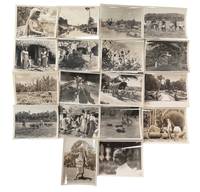
1934réf. 237251934. British Ceylon photographic archive circa 1934 documenting the labor systems that sustained one of the British Empire's most profitable plantation economies. Rather than emphasizing colonial administration or metropolitan life the photographs concentrate on the people whose agricultural work produced tea coconuts rice and other commodities that defined Ceylon's export economy during the final decades of British rule. The archive records both plantation labor and village agriculture placing field workers animal labor transportation and rural settlements within the same narrative of production that underpinned the island's economy before independence in 1948. Photo archive of 18 silver gelatin photographs each 4 x 5 inches British Ceylon circa 1934. The photographs depict women plucking tea leaves into large wicker baskets; groups of men women and children harvesting grain by hand; buffalo drawing plows through cultivated fields; coconut gathering and processing; elephants employed in heavy labor; cattle standing in flooded waterways; and villagers sorting agricultural products outside thatched dwellings. Other photographs show a village street lined with tiled roof buildings waterways with native boats landscaped gardens flowering branches tree-lined roads and portrait studies of rural residents including a Kandyan dancer in ceremonial costume and an elderly man identified only through the original negative caption. Several negatives retain contemporary handwritten captions identifying locations including Hambantota and describing subjects and related scenes indicating production for documentary or promotional use rather than private photography. The photographs were apparently produced during the S.S. Resolute World Cruise which departed on January 14 1934 for a 134 day itinerary through twenty nine countries and territories. Within that context the images record not only British Ceylon's plantation economy but also the way commercial world cruises presented the colony to Western travelers emphasizing tea estates agricultural labor village life wildlife and staged cultural performance as representative scenes of imperial Ceylon before independence in 1948. In reality production depended heavily upon Tamil labor recruited from southern India while Sinhalese villagers continued to dominate much of the island's rice cultivation and local agriculture distinctions reflected in the archive's movement between commercial plantations and village landscapes. Light surface wear with occasional curling at the corners; overall very good condition. A concentrated visual record of agricultural labor and rural production in British Ceylon during the final years of imperial rule. unknown
1934réf. 237251934. British Ceylon photographic archive circa 1934 documenting the labor systems that sustained one of the British Empire's most profitable plantation economies. Rather than emphasizing colonial administration or metropolitan life the photographs concentrate on the people whose agricultural work produced tea coconuts rice and other commodities that defined Ceylon's export economy during the final decades of British rule. The archive records both plantation labor and village agriculture placing field workers animal labor transportation and rural settlements within the same narrative of production that underpinned the island's economy before independence in 1948. Photo archive of 18 silver gelatin photographs each 4 x 5 inches British Ceylon circa 1934. The photographs depict women plucking tea leaves into large wicker baskets; groups of men women and children harvesting grain by hand; buffalo drawing plows through cultivated fields; coconut gathering and processing; elephants employed in heavy labor; cattle standing in flooded waterways; and villagers sorting agricultural products outside thatched dwellings. Other photographs show a village street lined with tiled roof buildings waterways with native boats landscaped gardens flowering branches tree-lined roads and portrait studies of rural residents including a Kandyan dancer in ceremonial costume and an elderly man identified only through the original negative caption. Several negatives retain contemporary handwritten captions identifying locations including Hambantota and describing subjects and related scenes indicating production for documentary or promotional use rather than private photography. The photographs were apparently produced during the S.S. Resolute World Cruise which departed on January 14 1934 for a 134 day itinerary through twenty nine countries and territories. Within that context the images record not only British Ceylon's plantation economy but also the way commercial world cruises presented the colony to Western travelers emphasizing tea estates agricultural labor village life wildlife and staged cultural performance as representative scenes of imperial Ceylon before independence in 1948. In reality production depended heavily upon Tamil labor recruited from southern India while Sinhalese villagers continued to dominate much of the island's rice cultivation and local agriculture distinctions reflected in the archive's movement between commercial plantations and village landscapes. Light surface wear with occasional curling at the corners; overall very good condition. A concentrated visual record of agricultural labor and rural production in British Ceylon during the final years of imperial rule. unknown books
1920Sm. 8vo., Tenth Edition, on India Paper, with 38 folding coloured maps, 11 full-page maps and plans (a number coloured), numerous illustrations, plans and tables (several full-page) in the text, and a very large folding coloured map mounted on cloth in pocket at rear, some mild offsetting to blank preliminaries, endpapers very lightly age-soiled; handsomely bound in full crushed red morocco BY HATCHARDS, upper board lettered in gilt, back with five shaped raised bands, second compartment lettered in gilt, all edges gilt, wide gilt doublures elaborately tooled in gilt with a floral border enclosing multiple frames, laid paper endpapers, red, yellow and green silk head- and tail-bands, red buckram pocket, a splendid and ornate copy ideal as a gift or for presentation. THE BINDING IS SIGNED ON FRONT PASTE-DOWN. IT WAS COMMISSIONED BY GUY WESTMACOTT WHOSE NAME IS LETTERED IN GILT ON FRONT BOARD (this could well be Guy Randolph Westmacott of the Grenadier Guards). A SPLENDID AND UNIQUE COPY OF THE ONE OF THE BEST EDITIONS OF THE FINEST TRAVELLER'S GUIDE TO INDIA AND SURROUNDING REGION. VERY SCARCE IN ANY CONDITION.
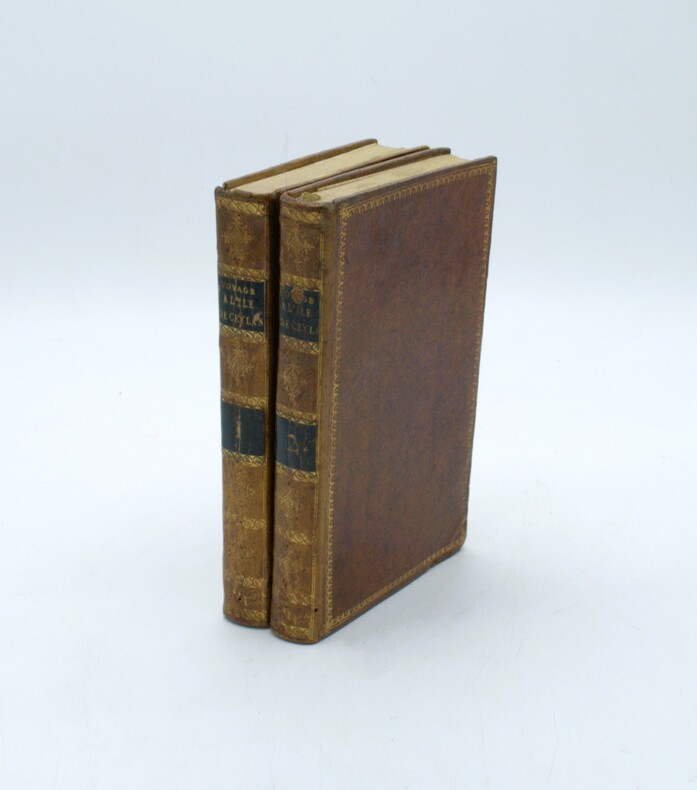
1803réf. PHO-1636Paris, Dentu, an XI (1803). 2 volumes in-8 (191 x 124 mm). 4 cartes et plans repliés hors texte : une carte de l'île de Ceylan par Arrowsmith et de la pêche des perles et les plans des ports de Trinquemale et Colombo, basane mouchetée de l'époque, dos lisses ornés avec pièces de titre et tomaison, dentelles dorées sur les plats, frottements et vieille épidermure au tome 2.
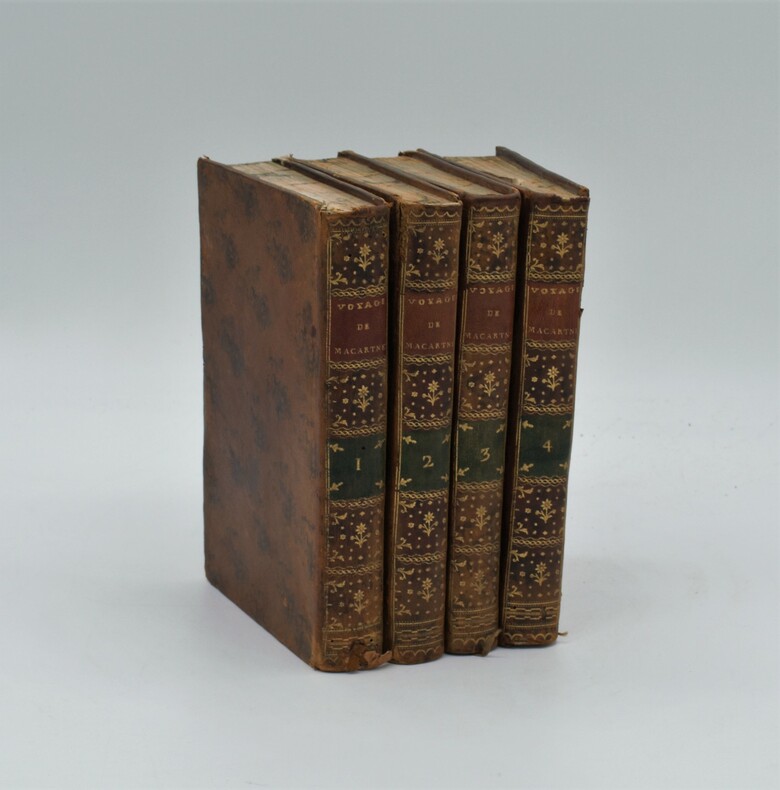
1798réf. PHO-1309Paris, F. Buisson, An 6 de la République (1798). 4 volumes in-8 (21x13,5cm) , relié plein cuir tacheté époque , dos lisse orné avec pièces de titre et de tomaison , tranches marbrées, coins et coiffes usés avec manque, charnière faible au tome 4, (4) viij, 515pp. et (4) 412pp. et (4) 399pp. et (4) 326pp. et (4) ij, 402pp. ; (2) , illustré de 4 frontispices et 3 grandes cartes dépliantes (déchirures sans manques) gravés par Tardieu l’Ainé , mouillure sur quelques pages au tome 1.
1804réf. PHO-2366Paris, Chez Buisson, 1804, in-4 (32x23,5cm), 2ff. et 41 planches dont 3 cartes (complet), reliure d’attente, étiquette au plat dans une pochette en toile bleu, réparations aux cartes.
1796réf. PHO-1991Paris, Benoît Dandré, Garnery, Obré, An IV [1796]. — 4 volumes in-8, (130x200), portrait, lxiv, 417 pp., 1 planche, viij pp., (1 f.), 430 pp., 4 planches ; viij, 445 pp., 4 planches ; xij, 462 pp., 19 planches, basane marbrée, pièces fauve et verte au dos, tranches rouges (Reliure de l’époque), reliure usée, manque un feuillet T4 (p33-34), mouillures, quelques brunissures Cordier, Japonica, p. 447. - Chadenat, 1763.
réf. 260101964 to 1972. Cymru Plantation Dimbula Ceylon Sri Lanka. The Cymru Estate in Dimbula was established in 1870. The invaluable ‘History of Ceylon Tea’ website only has data regarding the estate up to the year 1929. The present item provides a mass of statistical information for the years 1964 to 1972. It is entirely in manuscript in several hands and comprises 73pp 16mo written with portrait orientation in a 12.5 x 8 cm ruled notebook with 69pp in blue and red ink at the front and the other four pages in pencil at the back. In rough black cloth with brown patterned endpapers and cloth pencil-holder. Internally in good condition lightly aged in heavily-worn covers. The plantation was clearly a substantial concern: at 1 May 1964 the number of ‘Workers on Cymru’ is given as 737 with breakdown for ‘U. D.’ meaning unclear and ‘LD’ i.e. ‘Labour Day - Fridays’ and with a similar breakdown for ‘Non-Workers’ total 527 and details of ‘Labour per acre’ and ‘Workers live room’. A further breakdown of men and women workers UD and LD is given on 29 February 1968 with a total of 352 men and 322 women. The final page gives a useful list under the heading ‘OUTPUT’ ‘Optimum Crop 12000 lbs.’ of the aspects involved in the running of such a concern. These include spreading tatting rolling roll breaking fermenting sifting packing stencilling also ‘On overtime’. The notebook is entirely statistical in nature apart from a four-page list of instructions for the cultivation of ‘Coffee Arabica’ a page of ‘Bees Instructions’ and a page headed ‘Formula for pre-mix for light traffic’ as well as lists of native names of native ‘Field Staff’ both on ‘Labour. Day.’ and ‘U. D.’ Also several lists of names of employees with job descriptions planting mistblowing compost pruning storekeeper field officer ‘Creeper’ ‘Sen. Asst Clk - Rice store’ ‘Driver Cymru’ ‘boys weeding’ with some marked as ‘Ret’ retired or ‘Dis.’ dismissed. Although the information relates to the Cymru Estate mention is made of Kangales and Tangakelle. Details are given of employment wages ‘Bonuses - Excess Rates’ manuring including breakdowns for various ‘Manure Mixtures’ pruning weeding plucking nursery planting sifting estimates. Numerous tables including two full double-page ones: ‘Cymru - Manuring / Pruning Programme 64 1964’ and ‘Manuring & Pruning Programme 1965’. Also a two-page table of ‘Clonal Clearings’; four pages of statistics on ‘Sifting Gookookoya’; and full-page tables for ‘Rolling Programme’ and on adjoining pages ‘Lower Division’ and ‘Upper Division’ with nine columns headed: Fld Acs Weed Contr Jat. date of Prune Total Nitro AM Due in pencil: ‘Urea / April’ Last Yield Weed. Another table of ‘Plucking Cost Per M. T. / Yield Ra.’ Loosely inserted are two leaves one on a page torn from a calendar dated 31 March 1973. 1964 to 1972. Cymru Plantation, Dimbula, Ceylon [Sri Lanka]. hardcover
réf. Bloomsbury-9781848854253I.B.Tauris. Hardback. New. 320 pages I.B.Tauris hardcover
réf. Bloomsbury-9781848854253I.B.Tauris. Hardback. New. 320 pages I.B.Tauris hardcover
réf. 62771c.1875. . Albumen print. Very good tonal range and in good condition pasted on original mount. Dimensions: 214 x 269mm. 8.5 x 10.6 inches. [c.1875]. unknown
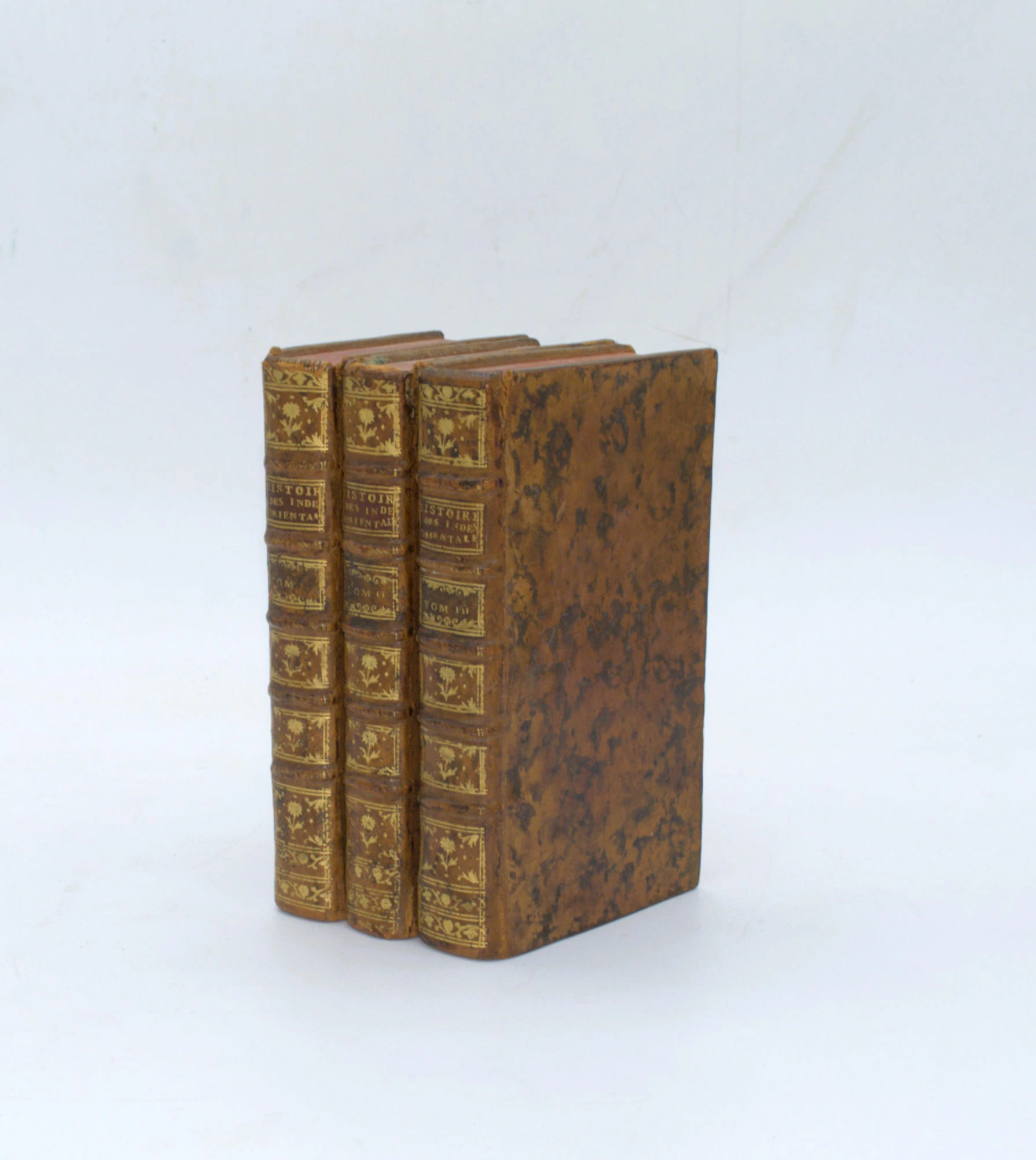
1744réf. PHO-2518Paris, Ph. N. Lottin, Jean Desaint et Charles Saillant, 1744. 3 volumes in-12 (17x10cm), 11ff-396 pp. ; 1f.-353 pp. ; 1f.-475 pp., basane marbrée époque, dos à nerfs orné avec pièces de titre et tomaison, tranches rouges. Quelques frottements, charnière fendillée tome 3, 1 coin enfoncé, déchirure au pli de la seconde carte. Illustré de 2 cartes (complet) représentant les Indes à l’époque d’Alexandre le Grand et les Indes orientales, cette dernière comprenant un plan de Pondichéry en 1741.
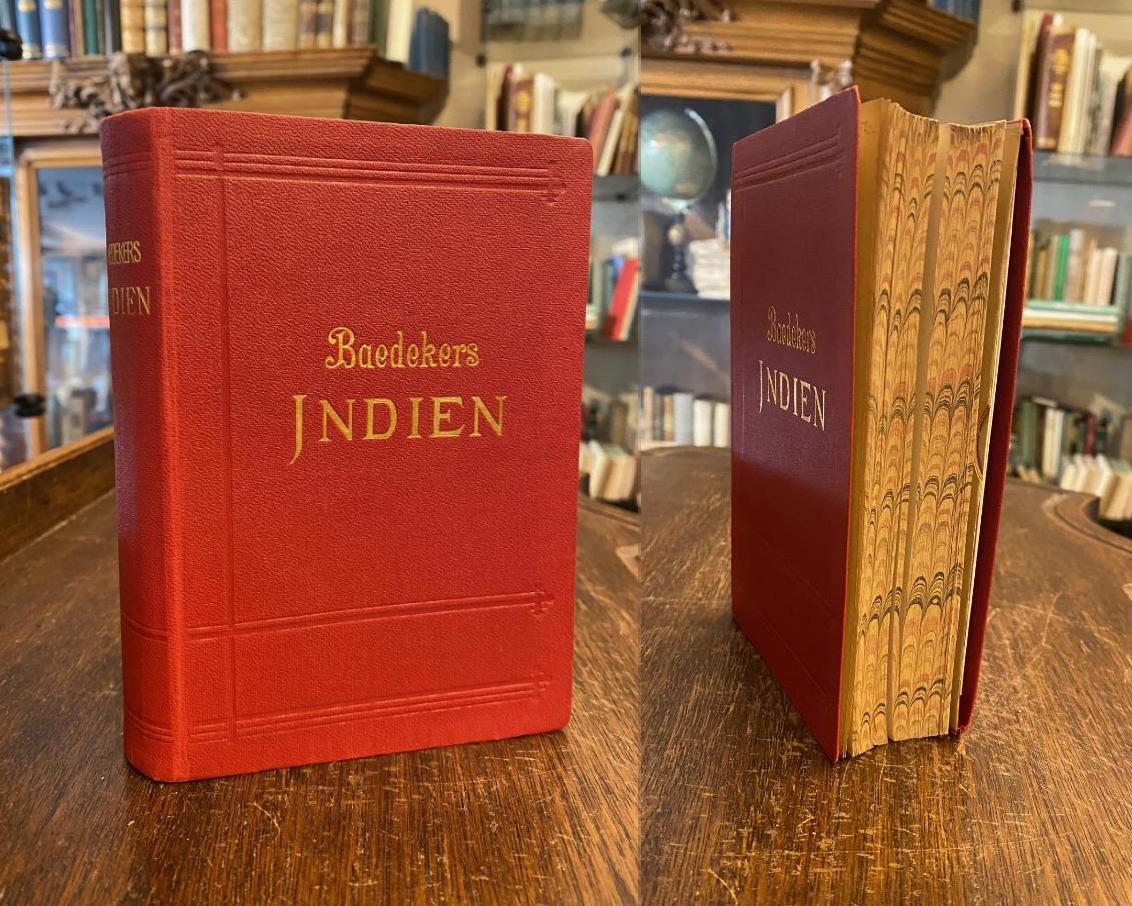
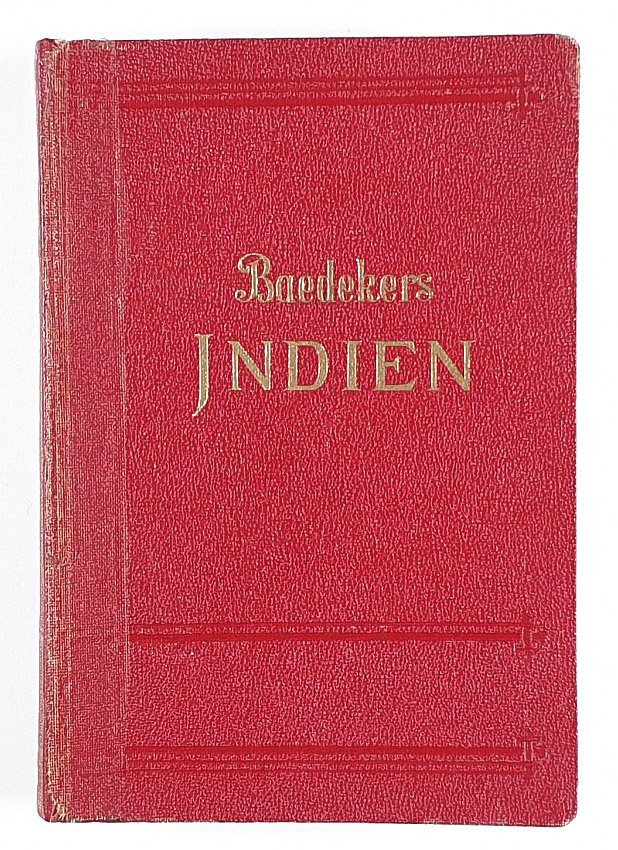
1914réf. 57476ABLeipzig, Karl Baedeker, 1914. kl8° (16x11), LXXIV, 358 S., mit 22 Karten, 33 Plänen und 8 Grundrissen, die große Übersichtskarte in Deckeltasche des hinteren Deckels (so komplett), roter Oln (Kaliko) mit goldTitel, marmorSchnitt, 2 Lesebändchen, nahezu ungenutzt, schönes gepflegtes Exemplar,
195283 plus 448 pages. Twenty-four maps. Many dozens of tables, charts and graphs. Prepared by request of the Government of Ceylon to survey the development potentialities of the country with special consideration given to: Agriculture (particularly rice cultivation, mixed farming, dairying, colonization and resettlement), Irrigation, Fisheries, Forestry, Minerals, Power, Industrial development, Inland transport and shipping, vocational training, Health (including housing and water schemes), General Economics (including public finance, money and banking, savings and investment, balance of payment). Unmarked. Somewhat above-average wear. Bindings intact. A sound copy of this comprehensive snapshot of Ceylon's state of economic development in 1952. Book
1890réf. 236871890. British Ceylon and Japan photo archive circa 1890 to 1910 documenting public ceremony craft production daily life during the expansion of imperial travel in Asia. The Japanese images record religious processions rickshaw travel workshops and leisure scenes associated with the late Meiji period while the Ceylon photographs depict Colombo streets architecture ceremonial dress and colonial urban space. Verso inscriptions identify Nagoya and Colombo without establishing a single photographer or original sequence. Photo archive of 24 photographs comprising eight hand colored photographs mounted to cardstock approximately 5 x 3½ inches and sixteen glossy and matte silver gelatin prints ranging from approximately 2½ x 2½ to 3 x 4½ inches Japan and British Ceylon circa 1890 to 1910. The hand colored Japanese views show women in rickshaws beneath flowering trees artisans making paper umbrellas workers shaping timber a cooper surrounded by tubs and hoops and a lantern shop filled with suspended paper lanterns. Other photographs depict monks attendants musicians and costumed participants moving through public squares with parasols banners and ceremonial objects. The Ceylon views include a Colombo street leading toward a clock tower palm lined compounds civic and religious buildings harbor craft and men in formal ceremonial dress. Inscriptions include "Nagoya" "Colombo" and "Vue de Colombo." The Japanese photographs belong to the commercial visual culture of the Meiji era when photographers produced hand colored views of occupations transport festivals costume and craft work for foreign travelers. These images often arranged workers and tools for clarity while the smaller prints record crowds streets and religious movement with less formal staging. The Colombo photographs reflect the parallel growth of photography under British colonial rule in Ceylon where ports municipal buildings and ethnographic subjects circulated through travel albums and commercial view markets. Light to moderate surface wear fading abrasions edge wear and occasional creasing; several mounts show staining or loss. Overall good condition. A compact visual record of Asian urban life religious practice artisanal labor and colonial travel at the turn of the twentieth century. unknown
1890réf. 236871890. British Ceylon and Japan photo archive circa 1890 to 1910 documenting public ceremony craft production daily life during the expansion of imperial travel in Asia. The Japanese images record religious processions rickshaw travel workshops and leisure scenes associated with the late Meiji period while the Ceylon photographs depict Colombo streets architecture ceremonial dress and colonial urban space. Verso inscriptions identify Nagoya and Colombo without establishing a single photographer or original sequence. Photo archive of 24 photographs comprising eight hand colored photographs mounted to cardstock approximately 5 x 3½ inches and sixteen glossy and matte silver gelatin prints ranging from approximately 2½ x 2½ to 3 x 4½ inches Japan and British Ceylon circa 1890 to 1910. The hand colored Japanese views show women in rickshaws beneath flowering trees artisans making paper umbrellas workers shaping timber a cooper surrounded by tubs and hoops and a lantern shop filled with suspended paper lanterns. Other photographs depict monks attendants musicians and costumed participants moving through public squares with parasols banners and ceremonial objects. The Ceylon views include a Colombo street leading toward a clock tower palm lined compounds civic and religious buildings harbor craft and men in formal ceremonial dress. Inscriptions include "Nagoya" "Colombo" and "Vue de Colombo." The Japanese photographs belong to the commercial visual culture of the Meiji era when photographers produced hand colored views of occupations transport festivals costume and craft work for foreign travelers. These images often arranged workers and tools for clarity while the smaller prints record crowds streets and religious movement with less formal staging. The Colombo photographs reflect the parallel growth of photography under British colonial rule in Ceylon where ports municipal buildings and ethnographic subjects circulated through travel albums and commercial view markets. Light to moderate surface wear fading abrasions edge wear and occasional creasing; several mounts show staining or loss. Overall good condition. A compact visual record of Asian urban life religious practice artisanal labor and colonial travel at the turn of the twentieth century. unknown books
1914réf. 9682ABLeipzig, Baedeker, 1914 (Mai 1939). LXXIV, 358 S. Mit 22 Karten, 33 Plänen u. 8 Grundrissen. OLn., 9682A.jpg (etwas berieben, Rücken unter Verwendung des Orig.-Rückens fachgerecht erneuert).
réf. 91429Paris, Nepveu, Libraire, 1823, 1 volume in-16 de 140x85 mm environ, viij-291 pages, demi chagrin vert, dos à nerfs portant titre doré, orné de caissons dorés, gardes marbrées. Complet des 12 gravures hors texte annoncées (dont 1 dépliante), + 1 plan, et 2 planches (alphabet et instruments). Dos insolé, frottements sur les coupes, infimes rousseurs, sinon bon état.
1914réf. 26808ABLeipzig, Karl Baedeker Verlag, 1914. Kl.-8°. LXXIV, 358 S. Mit einigen Textabb., 22 Karten, 33 Plänen, 8 Grundrissen und 1 Panorama. OLeinen. [2 Warenabbildungen]
1803réf. 58217ABLeipzig, Rein, 1803. XVI, 510 S., 1 Bl. Mit gest. Faltkarte. Halblederband der Zeit mit Rückenschild und -vergoldung.