877 risultati
2018rif. x-3658221941Springer VS 2018. Paperback. New. 275 pages. German language. 8.27x5.83x0.63 inches. Springer VS paperback
2011rif. DADAX3640906942Grin Publishing 2011-05-07. paperback. New. 5.83x0.12x8.27. Buy with confidence. Excellent Customer Service & Return policy. Grin Publishing paperback
rif. 1343882478.Ghardcover. Good. Access codes and supplements are not guaranteed with used items. May be an ex-library book. hardcover
rif. A9781343798168Hardback. New. hardcover
rif. A9781343882478Hardback. New. hardcover
rif. Z1-F-061-00165Nabu Press. Used - Like New. Used - Like New. This is a reproduction of an out of print title. This book may have occasional imperfections such as missing or blurred pages poor pictures errant marks etc. that were either part of the original artifact or were introduced by the scanning process. Ships from UK in 48 hours or less usually same day. Your purchase helps support Sri Lankan Children's Charity 'The Rainbow Centre'. 100% money back guarantee. We are a world class secondhand bookstore based in Hertfordshire United Kingdom and specialize in high quality textbooks across an enormous variety of subjects. We aim to provide a vast range of textbooks rare and collectible books at a great price. Our donations to The Rainbow Centre have helped provide an education and a safe haven to hundreds of children who live in appalling conditions. We provide a 100% money back guarantee and are dedicated to providing our customers with the highest standards of service in the bookselling industry. Nabu Press unknown
rif. 0265244048.Ghardcover. Good. Access codes and supplements are not guaranteed with used items. May be an ex-library book. hardcover
1905rif. CEYLON014028Plat� Ltd Colombo Kandy & Nuwara Eliya. c 1905. First edition. Oblong quarto. Unpaginated. Sewn card wrappers. Not dated but one and only one of the photographs shows a couple of cars; the first car arrived in Ceylon in 1902.Some creasing to covers. Very good. Plat� Ltd, Colombo, Kandy & Nuwara Eliya. unknown
rif. a48227Ceylon 1955-56 Government Press. 4 volumes. Sm.4to. 1770pp. bound into two folders cardboard boards covers with cloth spine with mounted typed spine labels. We do not know if additional volumes were published. Bank address stamped on covers. Good some wear. Four volumes: . hardcover
rif. 46050London : CIGM c.1920. Wooden box 152 x 80 x 70 mm with chromolithographic label on five sides one illustrated; surface wear commensurate with extensive use. The Ceylon and India General Mission CIGM was a non-denominational organisation founded in 1892. Initially its evangelical work was carried out among Ceylon’s Sinhalese Buddhists and Tamil Hindus but its operations soon expanded from Ceylon into South India and then throughout whole of the subcontinent. Eventually missions were established as far away as the Philippines. CIGM merged with the Poona & Indian Village Mission PIVM to become the International Christian Fellowship ICF which in turn merged with SIM in 1989. unknown
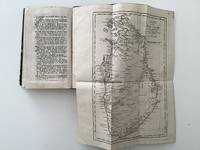
1804rif. 20204AB1804. Vienna Doll 1804. 21 : 135 cm. Titel 452 pages 2 engraved platges 1 many-folded map. Contemporary boards 2 back labels. First German edition of the Account of the Island of Ceylon 1803. Published at the same time as the Weimar edition but with the addition of the two engravings depicting the natives and pearl fishing. - "Percival lived in Ceylon for three years as an English colonial officer. Here he provides a regional description of the island covering the nature of the country as well as the population and economy and the colonial history to date" Griep/L. Includes an addition by the translator on pearl fishing.- Binding stained and rubbed inside fine. hardcover
rif. 631441924. Oblong folio. 19.5 x 29 cm. Contemporary grey cloth grey endpapers spine with manuscript title "Ceylon II". Each page with date February-April 1924. 95 black & white photographs including one panoramic view of Galle on 12 leaves of card each photograph with manuscript captions and measuring c.6 x 10 cm. The final 30 photographs being of Egypt and Europe. Some minimal fading to photographs generally a very handsome album. The photographs depict show a variety of subjects including ancient ruins natural scenery schools the native population and colonial past times like tennis and the races. 1924. hardcover
rif. B9781014312037Paperback / softback. New. paperback
rif. 0266571980.Ghardcover. Good. Access codes and supplements are not guaranteed with used items. May be an ex-library book. hardcover
rif. 0484440217.Ghardcover. Good. Access codes and supplements are not guaranteed with used items. May be an ex-library book. hardcover
rif. 19-7805London: Ceylon Company Ltd. 1870. Folio. Single page. Very Good. Framed in mountboard. Dated September 30 1870. Signed by company secretary. [London?]: Ceylon Company Ltd., 1870. unknown
rif. 0260163902.Ghardcover. Good. Access codes and supplements are not guaranteed with used items. May be an ex-library book. hardcover
1938rif. A64521Colombo: Ceylon Government Press 1938. Second Edition. Hardback. No Dustjacket. Hardcover Hardcover. Good. Second Edition. Hardback. No Dustjacket. 8vo. Commonwealth Office Library copy with copious correction slips and notes added in and with corrections and updates in ink in text. Ex British Foreign Office library with a few library markings else VG. Ceylon Government Press, hardcover
rif. 0483100196.Ghardcover. Good. Access codes and supplements are not guaranteed with used items. May be an ex-library book. hardcover
rif. 1331853257.Gpaperback. Good. Access codes and supplements are not guaranteed with used items. May be an ex-library book. paperback
2026rif. LRB38010144Paris: Editions Recreasoft 2026 Language: English. Approximately 576 pages. English: Print-on-demand reprint. Original edition : 1862. Text in English. This volume compiles the decisions of the Supreme Court of Ceylon from 1833 to 1847 following the promulgation charter. Edited by multiple legal scholars it includes four parts covering different periods with the final part extending to 1852. The work is a valuable resource for legal historians and researchers interested in colonial-era jurisprudence in Sri Lanka then Ceylon. Book images are non-contractual. Editions Recreasoft. Softcover. New. Editions Recreasoft paperback
rif. A9781346057286Hardback. New. hardcover
rif. A9781344829038Hardback. New. hardcover
1880rif. 237851880. Ceylon colonial photo archive depicting tea cultivation estate labor transportation and urban life circa 1880s to 1910s documenting the plantation economy that made the island one of Britain's principal sources of tea as British merchants shifted the enormous domestic tea market away from China and toward production within the Empire. Coffee leaf rust appeared in Ceylon in 1869 and spread rapidly through the island's coffee districts precipitating the collapse of the crop that had dominated the colonial export economy and accelerating planters' conversion of the central highlands to tea. James Taylor had established commercial tea cultivation at Loolecondera Estate near Kandy in 1867 and the new industry expanded rapidly as coffee failed; by 1900 some 380000 acres in Ceylon were planted in tea. By 1879 the results showed that in more than 70 percent of tea sold in London still came from China while by 1900 China supplied only about 10 percent and black teas from British controlled India and Ceylon constituted the bulk of the market. Photo archive of albumen and silver gelatin photographs and photographic postcards ranging from approximately 3½ x 5 to 4 x 6 inches Ceylon circa 1880s to 1910s. Tea production forms the strongest body of imagery. Women and men stand among densely planted tea bushes or work through rows of plants with women carrying the large woven baskets used to collect leaves; individual and group views are captioned "Tea plucker" "Tea picking Ceylon" "Pruning tea Kandy" and in French "Cueillette du thé à Ceylan." One Skeen & Co. Colombo card numbered 84 and captioned "Tea plucker" isolates a woman at work with a large basket strapped behind her while another shows a large group of workers seated with baskets and gathered tea in a plantation clearing. A card captioned "Estate coolies Ceylon" depicts an estate employee in European dress standing with women and a child outside a thatched dwelling preserving in its printed terminology the racial and labor classifications through which plantation workers were presented to contemporary consumers of colonial imagery. Other photographs move from plantation production into the roads vehicles and cities of colonial Ceylon: rickshaw pullers pose with European passengers and beside their vehicles; a street scene records "Native town Kandy Ceylon"; Colombo appears in views of the "Colpetty Road near Galle Face Colombo" a crowded procession captioned in French "Colombo départ des troupes Anglaises" and a civic monument among palms. Another postcard depicts "Royal visitors leaving Ceylon" while a country road scene shows pedestrians carts and roadside activity. Skeen & Co. one of the principal commercial photographic firms operating from Colombo in the late nineteenth and early twentieth centuries is identified on several cards but no single photographer can be assigned to the archive as a whole. The tea scenes record the labor at the center of one of the fastest agricultural conversions in the nineteenth century British Empire. Coffee rust Hemileia vastatrix was first observed in Ceylon in 1869 and within little more than a decade had destroyed the commercial basis of the coffee plantation system; tea already demonstrated commercially by Taylor replaced it across much of the highlands. Ceylon tea exports to Britain rose from only 282 pounds in 1875 to more than 4.3 million pounds in 1885 while the plantation landscape expanded until almost all former coffee districts had been replanted with tea during the 1890s. That expansion depended on a large year round plantation workforce much of it composed of Tamil laborers brought from southern India and on the colonial infrastructure that connected the highlands with Colombo and overseas markets. Roads and the railway between Kandy and Colombo had initially served the coffee economy and could be redirected toward tea after the blight while Colombo developed as the commercial and shipping center through which the crop entered imperial markets. The archive therefore records several stages and social spaces of the same colonial economy from plucking and pruning in the highlands to estate communities road transport Kandy and the metropolitan port city of Colombo while the postcards themselves show how plantation labor and colonial development were converted into commercial images for circulation beyond the island. Light to moderate surface wear toning occasional fading and creasing with some photographs showing age related discoloration and edge wear. Overall in good condition. A visual record of the plantation labor and colonial infrastructure behind Ceylon's transformation from a failed coffee economy into a major tea producer that helped Britain replace Chinese tea with supplies produced under imperial control. unknown
rif. 260101964 to 1972. Cymru Plantation Dimbula Ceylon Sri Lanka. The Cymru Estate in Dimbula was established in 1870. The invaluable ‘History of Ceylon Tea’ website only has data regarding the estate up to the year 1929. The present item provides a mass of statistical information for the years 1964 to 1972. It is entirely in manuscript in several hands and comprises 73pp 16mo written with portrait orientation in a 12.5 x 8 cm ruled notebook with 69pp in blue and red ink at the front and the other four pages in pencil at the back. In rough black cloth with brown patterned endpapers and cloth pencil-holder. Internally in good condition lightly aged in heavily-worn covers. The plantation was clearly a substantial concern: at 1 May 1964 the number of ‘Workers on Cymru’ is given as 737 with breakdown for ‘U. D.’ meaning unclear and ‘LD’ i.e. ‘Labour Day - Fridays’ and with a similar breakdown for ‘Non-Workers’ total 527 and details of ‘Labour per acre’ and ‘Workers live room’. A further breakdown of men and women workers UD and LD is given on 29 February 1968 with a total of 352 men and 322 women. The final page gives a useful list under the heading ‘OUTPUT’ ‘Optimum Crop 12000 lbs.’ of the aspects involved in the running of such a concern. These include spreading tatting rolling roll breaking fermenting sifting packing stencilling also ‘On overtime’. The notebook is entirely statistical in nature apart from a four-page list of instructions for the cultivation of ‘Coffee Arabica’ a page of ‘Bees Instructions’ and a page headed ‘Formula for pre-mix for light traffic’ as well as lists of native names of native ‘Field Staff’ both on ‘Labour. Day.’ and ‘U. D.’ Also several lists of names of employees with job descriptions planting mistblowing compost pruning storekeeper field officer ‘Creeper’ ‘Sen. Asst Clk - Rice store’ ‘Driver Cymru’ ‘boys weeding’ with some marked as ‘Ret’ retired or ‘Dis.’ dismissed. Although the information relates to the Cymru Estate mention is made of Kangales and Tangakelle. Details are given of employment wages ‘Bonuses - Excess Rates’ manuring including breakdowns for various ‘Manure Mixtures’ pruning weeding plucking nursery planting sifting estimates. Numerous tables including two full double-page ones: ‘Cymru - Manuring / Pruning Programme 64 1964’ and ‘Manuring & Pruning Programme 1965’. Also a two-page table of ‘Clonal Clearings’; four pages of statistics on ‘Sifting Gookookoya’; and full-page tables for ‘Rolling Programme’ and on adjoining pages ‘Lower Division’ and ‘Upper Division’ with nine columns headed: Fld Acs Weed Contr Jat. date of Prune Total Nitro AM Due in pencil: ‘Urea / April’ Last Yield Weed. Another table of ‘Plucking Cost Per M. T. / Yield Ra.’ Loosely inserted are two leaves one on a page torn from a calendar dated 31 March 1973. 1964 to 1972. Cymru Plantation, Dimbula, Ceylon [Sri Lanka]. hardcover