1.219 Ergebnisse
Best.-Nr. DADAX0880016035New unknown
Best.-Nr. SONG0521331811Used: Good unknown
Best.-Nr. DADAX0691129762New unknown
Best.-Nr. DADAX1576076946New unknown
Best.-Nr. SONG9020979779Used: Good unknown
Best.-Nr. SONG0691129762Used: Good unknown
Best.-Nr. SONG0836859197Used: Good unknown
Best.-Nr. SONG184351009XUsed: Good unknown
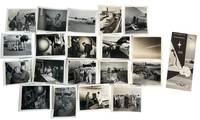
1962Best.-Nr. 236861962. Allyn Z. Baum Antarctic photography archive principally 1962 to 1964 documenting the United States Antarctic Research Program during Operation Deep Freeze. Baum photographed McMurdo Station the South Pole Ross Island the Ross Sea and the McMurdo Dry Valleys while the National Science Foundation directed the research program and the United States Navy supplied transport aviation and station support. The archive records the movement of scientists equipment animals and field parties through a continent dependent on aircraft tracked vehicles helicopters dog teams and temporary camps. Baum's captions technical notes press markings editorial papers and unpublished memoir also preserve the working methods of a New York Times photographer covering federally sponsored science during the Cold War. Photo archive of 116 mounted 2 x 2 inch color transparencies; eight black and white photographic prints measuring approximately 11 x 14 inches; six black and white photographic prints measuring approximately 7½ x 9½ inches; two additional silver gelatin photographs; two pieces of printed ephemera; numerous newspaper clippings; correspondence; memoranda; and a 245 page unpublished typescript memoir. The large and medium prints appear to be professional double weight silver gelatin press or exhibition prints. The transparencies bear handwritten captions and Monkmeyer Press Rapho Guillumette and New York Times markings. Subjects include Weddell seals on the Ross Sea dog teams at Mount Erebus and Scott Base pressure ridges crevasses helicopter landings LC 130 aircraft Shackleton's hut at Cape Royds Scott's hut at Cape Evans Lake Bonney and the Taylor Dry Valley field camps biological research and tracked vehicles hauling personnel and structures. Captions include "Loading an expedition party into U.S. Navy C 130 in Antarctica" "Scientific camp on edge of Lake Bonney Taylor Dry Valley Antarctica" and "Pressure ridges on Ross Sea Antarctica." The black and white prints show a dog team crossing open snow crews beside aircraft a man hauling a disabled motor sledge scientists harnessing dogs a rocket launch and vehicles surrounding a mobile unit marked "U.S. Antarctic Research Program." Versos identify Baum The New York Times and his use of a Leica M2 Summicron lenses Ilford FP3 film filters shutter speeds and apertures. The 116 mounted color transparencies constitute early professional color press coverage of Antarctica and retain Baum's handwritten captions exposure notes and distribution markings from The New York Times Monkmeyer Press and Rapho Guillumette. The captions identify McMurdo Station the South Pole Scott Base Cape Royds Cape Evans Lake Bonney the Taylor Dry Valley Ross Sea pressure ridges Weddell seal research Navy C 130 transport helicopter support dog teams trail parties and United States Antarctic Research Program vehicles. A memorandum dated September 28 1962 addressed to Harrison Salisbury Walter Sullivan and John Nedea outlines possible coverage of the 1962 to 1963 National Science Foundation Antarctic program including the PM 3A nuclear reactor at McMurdo biological research and the Dry Valleys. The reactor began operating in 1962 and the archive places that project within the larger system of aircraft vehicles mobile structures and field labor required to sustain American research in Antarctica. Baum's memoir broadens the record beyond the polar assignment. Its chapters discuss the shift from Speed Graphic cameras to 35 mm equipment the development of modern photojournalism and his reporting in postwar Europe including the Berlin Airlift and British military administration in occupied Germany. Transparency mounts with extensive handling and editorial markings; clippings toned and unevenly cut; prints with edge wear creasing abrasions and occasional minor losses; memoir and papers toned from use. Overall in fair to good condition. A working archive of Antarctic logistics Cold War science and midcentury newspaper photography seen through the field practice of Allyn Z. Baum. unknown
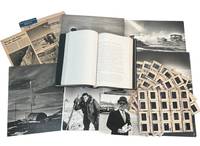
1963Best.-Nr. 237791963. Operation Deep Freeze U.S. Navy photo archive documenting the preparation and execution of the first flight from Africa to Antarctica September 27 to October 1 1963 a 4700-mile airlift that demonstrated the expanding reach of the American Antarctic logistics network. The flight occurred as the United States was transforming its Antarctic presence from the expeditionary operations of the International Geophysical Year into a permanent scientific program dependent upon military transportation and infrastructure. Photographed principally by Lt. jg H. S. Hemphill for Task Force Forty Three the archive follows two VX 6 LC 130F Hercules aircraft through preparations in South Africa the flight to Antarctica and arrival at McMurdo Station. The aircraft departed Cape Town on September 30 carrying 9600 gallons of fuel each and weighing approximately 10000 pounds above their usual operating weight; after 14 hours and 26 minutes they reached McMurdo where Rear Admiral James R. Reedy formally opened Deep Freeze 64 operations on October 1. Photo archive of 17 silver gelatin photographs approximately 4 x 5 inches Cape Town South Africa aboard VX 6 LC 130F aircraft and McMurdo Station Antarctica September 27 to October 1 1963; with the U.S. Naval Support Force Antarctica pamphlet Antarctic Highlights Washington 1969. The photographs form a contemporary visual record of the first Cape Town-to-McMurdo flight from ground preparation through arrival with Navy captions identifying personnel aircraft and stages of the operation. At Cape Town crews remove unnecessary equipment and clothing to reduce aircraft weight test communications inspect fuel systems and prepare the 3600-gallon auxiliary tank required to extend the range of the LC 130F. James P. Houghton appears beside the tank; Claude C. Stanley and John E. Wood inspect aircraft 148318 before departure. A crew portrait identifies Andrew C. Huggins William B. Kurlak John D. Stitch Thomas H. Dunn M. E. Westlund Robert Wolcott George H. Fuller E. R. Simpson Jack H. Tankersley and Houghton. In flight Staff Sergeant Arthur L. Kreing works over navigation charts Alan F. Blanchard and Richard A. Millington play cards and other crewmen rest receive oxygen and change into cold-weather clothing as the aircraft approaches Antarctica. One image captioned "The morning after Cairo" shows John Wood administering oxygen to Chief Claude C. Stanley while Chief Earl D. Gordinier waits nearby. At McMurdo Hemphill records Rear Admiral Reedy leaving the aircraft after the 4700-mile flight and being met by Commander R. R. McGregor of Antarctic Support and wintering commander Robert Marvel. The accompanying Antarctic Highlights pamphlet describes the Navy's Antarctic stations aircraft ships communications power systems and support of scientific work. The flight came only a few years after the International Geophysical Year of 1957 to 1958 and two years after the Antarctic Treaty entered into force. Sustaining the expanding American scientific presence required a logistical system capable of moving personnel equipment fuel and supplies across thousands of miles into one of the world's least accessible regions. The Cape Town-to-McMurdo flight demonstrated that the Navy's developing LC 130 airlift system could reach Antarctica directly from Africa as well as through the established New Zealand approach. Hemphill's photographs consequently document more than an aviation first: they record the military transportation infrastructure that helped transform American activity in Antarctica from periodic expeditions into sustained scientific operations. Slight curling to the photographs with contemporary verso annotations intact; photographs overall in very good condition and pamphlet in good condition. unknown
Best.-Nr. SONG1467783455Used: Good unknown
Best.-Nr. SONG3030183696Used: Good unknown
Best.-Nr. DADAX1786572478New unknown
Best.-Nr. SONG0521855985Used: Good unknown
Best.-Nr. SONG9400743203Used: Good unknown
Best.-Nr. DADAX0393031853New unknown
Best.-Nr. DADAX0803212283New unknown
Best.-Nr. SONG0904180905Used: Good unknown
Best.-Nr. SONG0471969923Used: Good unknown
Best.-Nr. SONG1845377001Used: Good unknown
Best.-Nr. SONG110700392XUsed: Good unknown
Best.-Nr. DADAX0691090351New unknown
Best.-Nr. DADAX0792293452New unknown
Best.-Nr. SONG1588109461Used: Good unknown
1963Best.-Nr. 63517New York: Holt Rinehart & Winston 1963. 8vo. 135 5 pp. Frontisp. numerous illustrations. Blue pictorial cloth illustration & lettering in black w/ d.j. wraparound cover art by Geer minor chipping at foot of spine minor scuffing couple minor closed tears still NF/G copy. First edition stated of this Junior Science-Fiction Novel by the noted science fiction author set against the backdrop of espionage and adventure in the future under Antarctica. Holt, Rinehart & Winston, hardcover