HIROSHIGE, Ando (1797-1858)Biblio.com
6.033 Ergebnisse
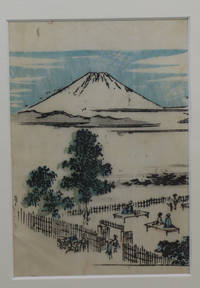
Best.-Nr. X16Sipping Tea Viewing Mount Fuji. Original woodblock from the series "Ehon Edo Miyage" published by Kikuya Kozaburo Volume 3 printed in Japan 1850-68. 295 x 210 mm. This original print is delivered to you in its unframed state carefully protected in a solid cardboard tube. Utagawa Hiroshige born AndÅ TokutarÅ 安藤 徳太郎; 1797 – 12 October 1858 was a Japanese ukiyo-e artist considered the last great master of that tradition. Hiroshige is best known for his horizontal-format landscape series The Fifty-three Stations of the TÅkaidÅ and for his vertical-format landscape series One Hundred Famous Views of Edo. The subjects of his work were atypical of the ukiyo-e genre whose typical focus was on beautiful women popular actors and other scenes of the urban pleasure districts of Japan's Edo period 1603–1868. The popular series Thirty-six Views of Mount Fuji by Hokusai was a strong influence on Hiroshige's choice of subject though Hiroshige's approach was more poetic and ambient than Hokusai's bolder more formal prints. Subtle use of color was essential in Hiroshige's prints often printed with multiple impressions in the same area and with extensive use of bokashi color gradation both of which were rather labor-intensive techniques. For scholars and collectors Hiroshige's death marked the beginning of a rapid decline in the ukiyo-e genre especially in the face of the westernization that followed the Meiji Restoration of 1868. Hiroshige's work came to have a marked influence on western European painting towards the close of the 19th century as a part of the trend in Japonism. Western European artists such as Manet and Monet collected and closely studied Hiroshige's compositions: Vincent van Gogh for instance painted copies of some Hiroshige prints. Japanese woodblock prints known as ukiyo-e Produced in their many thousands and hugely popular during the Edo period 1615 – 1868 these colourful woodblock prints known as ukiyo-e depicted scenes from everyday Japan. Ukiyo-e literally means 'pictures of the floating world'. The 'floating world' referred to the licensed brothel and theatre districts of Japan's major cities during the Edo period. Inhabited by prostitutes and Kabuki actors Kabuki is a traditional Japanese form of theatre these were the playgrounds of the newly wealthy merchant class. Despite their low status in the strict social hierarchy of the time actors and courtesans became the style icons of their day and their fashions spread to the general population via inexpensive woodblock prints. The ukiyo-e style was developed in 1765 and remained popular until the closing decades of the Meiji period 1868 – 1912. While only the wealthy could afford paintings by the artists of the day ukiyo-e prints were enjoyed by a wide audience because they could be produced quite cheaply and in large numbers. The production process The earliest woodblock prints were simple black and white prints taken from a single block. Sometimes they were coloured by hand but this process was expensive. In the 1740s additional woodblocks were used to print the colours pink and green but it wasn't until 1765 that the technique of using multiple colour woodblocks was perfected. The glorious full-colour prints that resulted were known as nishiki-e or 'brocade pictures'. The team involved in the production of ukiyo-e was known as the 'ukiyo-e quartet'. It comprised the publisher who usually had overall control of the process the designer/artist the block cutter and the printer. The artist would draw the design on paper. Once complete an exact copy was made and placed face-down on a cherry wood block. Cherry wood was favoured due to the fine even grain and consistent density. The block cutter then carved directly through the copy to produce what is known as the 'key-block'. The printer used the key-block to produce a number of black and white prints from which further blocks could be made for each colour needed in the final print. Known as 'key-block proofs' these prints feature registration marks: small rectangles outside the area of the picture. When the colour blocks were carved these marks were used to create stops so that the printer could line up the separate colours precisely.
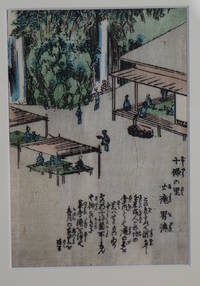
Best.-Nr. X13HIROSHIGE Ando J 797-1858. Waterfall at Jujyo No Sato. Original woodblock from the series "Ehon Edo Miyage" published by Kikuya Kozaburo Volume 3 printed in Japan 1850-68. 295 x 210 mm. This original print is delivered to you in its unframed state carefully protected in a solid cardboard tube. Utagawa Hiroshige born AndÅ TokutarÅ 安藤 徳太郎; 1797 – 12 October 1858 was a Japanese ukiyo-e artist considered the last great master of that tradition. Hiroshige is best known for his horizontal-format landscape series The Fifty-three Stations of the TÅkaidÅ and for his vertical-format landscape series One Hundred Famous Views of Edo. The subjects of his work were atypical of the ukiyo-e genre whose typical focus was on beautiful women popular actors and other scenes of the urban pleasure districts of Japan's Edo period 1603–1868. The popular series Thirty-six Views of Mount Fuji by Hokusai was a strong influence on Hiroshige's choice of subject though Hiroshige's approach was more poetic and ambient than Hokusai's bolder more formal prints. Subtle use of color was essential in Hiroshige's prints often printed with multiple impressions in the same area and with extensive use of bokashi color gradation both of which were rather labor-intensive techniques. For scholars and collectors Hiroshige's death marked the beginning of a rapid decline in the ukiyo-e genre especially in the face of the westernization that followed the Meiji Restoration of 1868. Hiroshige's work came to have a marked influence on western European painting towards the close of the 19th century as a part of the trend in Japonism. Western European artists such as Manet and Monet collected and closely studied Hiroshige's compositions: Vincent van Gogh for instance painted copies of some Hiroshige prints. Japanese woodblock print known as ukiyo-e were produced in their many thousands and hugely popular during the Edo period 1615 – 1868 These colourful woodblock prints depicted scenes from everyday Japan. Ukiyo-e literally means 'pictures of the floating world'. The 'floating world' referred to the licensed brothel and theatre districts of Japan's major cities during the Edo period. Inhabited by prostitutes and Kabuki actors Kabuki is a traditional Japanese form of theatre these were the playgrounds of the newly wealthy merchant class. Despite their low status in the strict social hierarchy of the time actors and courtesans became the style icons of their day and their fashions spread to the general population via inexpensive woodblock prints. The ukiyo-e style was developed in 1765 and remained popular until the closing decades of the Meiji period 1868 – 1912. While only the wealthy could afford paintings by the artists of the day ukiyo-e prints were enjoyed by a wide audience because they could be produced quite cheaply and in large numbers. The production process The earliest woodblock prints were simple black and white prints taken from a single block. Sometimes they were coloured by hand but this process was expensive. In the 1740s additional woodblocks were used to print the colours pink and green but it wasn't until 1765 that the technique of using multiple colour woodblocks was perfected. The glorious full-colour prints that resulted were known as nishiki-e or 'brocade pictures'. The team involved in the production of ukiyo-e was known as the 'ukiyo-e quartet'. It comprised the publisher who usually had overall control of the process the designer/artist the block cutter and the printer. The artist would draw the design on paper. Once complete an exact copy was made and placed face-down on a cherry wood block. Cherry wood was favoured due to the fine even grain and consistent density. The block cutter then carved directly through the copy to produce what is known as the 'key-block'. The printer used the key-block to produce a number of black and white prints from which further blocks could be made for each colour needed in the final print. Known as 'key-block proofs' these prints feature registration marks: small rectangles outside the area of the picture. When the colour blocks were carved these marks were used to create stops so that the printer could line up the separate colours precisely.
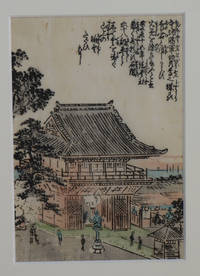
Best.-Nr. X15HIROSHIGE Ando 1797-1858. Visiting the Temple. Original woodblock from the series "Ehon Edo Miyage" published by Kikuya Kozaburo Volume 3 printed in Japan 1850-68. 295 x 210 mm. This original print is delivered to you in its unframed state carefully protected in a solid cardboard tube. Utagawa Hiroshige born AndÅ TokutarÅ 安藤 徳太郎; 1797 – 12 October 1858 was a Japanese ukiyo-e artist considered the last great master of that tradition. Hiroshige is best known for his horizontal-format landscape series The Fifty-three Stations of the TÅkaidÅ and for his vertical-format landscape series One Hundred Famous Views of Edo. The subjects of his work were atypical of the ukiyo-e genre whose typical focus was on beautiful women popular actors and other scenes of the urban pleasure districts of Japan's Edo period 1603–1868. The popular series Thirty-six Views of Mount Fuji by Hokusai was a strong influence on Hiroshige's choice of subject though Hiroshige's approach was more poetic and ambient than Hokusai's bolder more formal prints. Subtle use of color was essential in Hiroshige's prints often printed with multiple impressions in the same area and with extensive use of bokashi color gradation both of which were rather labor-intensive techniques. For scholars and collectors Hiroshige's death marked the beginning of a rapid decline in the ukiyo-e genre especially in the face of the westernization that followed the Meiji Restoration of 1868. Hiroshige's work came to have a marked influence on western European painting towards the close of the 19th century as a part of the trend in Japonism. Western European artists such as Manet and Monet collected and closely studied Hiroshige's compositions: Vincent van Gogh for instance painted copies of some Hiroshige prints. Japanese woodblock prints known as ukiyo-e were produced in their many thousands and hugely popular during the Edo period 1615 – 1868 these colourful woodblock prints known as ukiyo-e depicted scenes from everyday Japan. Ukiyo-e literally means 'pictures of the floating world'. The 'floating world' referred to the licensed brothel and theatre districts of Japan's major cities during the Edo period. Inhabited by prostitutes and Kabuki actors Kabuki is a traditional Japanese form of theatre these were the playgrounds of the newly wealthy merchant class. Despite their low status in the strict social hierarchy of the time actors and courtesans became the style icons of their day and their fashions spread to the general population via inexpensive woodblock prints. The ukiyo-e style was developed in 1765 and remained popular until the closing decades of the Meiji period 1868 – 1912. While only the wealthy could afford paintings by the artists of the day ukiyo-e prints were enjoyed by a wide audience because they could be produced quite cheaply and in large numbers. The production process The earliest woodblock prints were simple black and white prints taken from a single block. Sometimes they were coloured by hand but this process was expensive. In the 1740s additional woodblocks were used to print the colours pink and green but it wasn't until 1765 that the technique of using multiple colour woodblocks was perfected. The glorious full-colour prints that resulted were known as nishiki-e or 'brocade pictures'. The team involved in the production of ukiyo-e was known as the 'ukiyo-e quartet'. It comprised the publisher who usually had overall control of the process the designer/artist the block cutter and the printer. The artist would draw the design on paper. Once complete an exact copy was made and placed face-down on a cherry wood block. Cherry wood was favoured due to the fine even grain and consistent density. The block cutter then carved directly through the copy to produce what is known as the 'key-block'. The printer used the key-block to produce a number of black and white prints from which further blocks could be made for each colour needed in the final print. Known as 'key-block proofs' these prints feature registration marks: small rectangles outside the area of the picture. When the colour blocks were carved these marks were used to create stops so that the printer could line up the separate colours precisely.
1960Best.-Nr. mon0003582237Takamizawa Ukiyoe Co. 1960T. hardcover. Good. . Takamizawa Ukiyoe Co. hardcover
1986Best.-Nr. 501945New York : George Braziller Inc 1986. Hardcover. As New/As New. 10 x 14.5 inches approximately. As new condition. Blue cover with red script. Colour illustrated dust jacket protected in Brodart. 188 splendid woodblock landscape and genre scenes of mid-nineteenth century Tokyo full colour full page prints. Reproduced from a first edition set in the Brooklyn Museum of Art. Introductory essays and commentaries by Henry D Smith. George Braziller Inc hardcover
1956Best.-Nr. 705290PN. New. 1956. Soft Cover. Date is original print. This is a reprint edition. . PN paperback
Best.-Nr. FORT982833Taschen America Llc. Used - Very Good. Taschen America Llc unknown
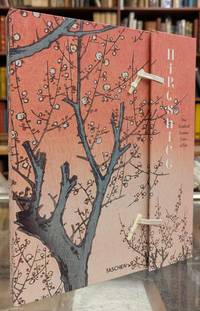
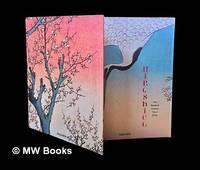
2010Best.-Nr. 109500Taschen 2010. Softcover. Fine/No jacket. Japanese style bound book in a folding case with bone ties. Taschen unknown
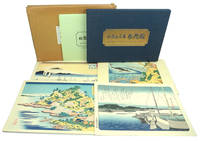
Best.-Nr. 54672np: np nd. Hardcover. Very good. Hardcover. Suite of four sets of 9.75 by 14.5 inch prints 37 total each in a rice paper folder all contained in a blue cloth box with bone claps and original shipping carton. Information sheet in both English and Japanese. Prints in fine condition box near fine carton very good with some wear. np hardcover
Best.-Nr. 54672np: np nd. Hardcover. Very good. Hardcover. Suite of four sets of 9.75 by 14.5 inch prints 37 total each in a rice paper folder all contained in a blue cloth box with bone claps and original shipping carton. Information sheet in both English and Japanese. Prints in fine condition box near fine carton very good with some wear. np hardcover books
2008Best.-Nr. 2255Ateneum Art Museum 2008. 1. Very Good. Released alongside an exhibition of the same name held at Ateneum Art Museum in 2008. The articles in the richly illustrated book shed light on the lives of Hokusai and Hiroshige as well as the development of Japanese woodcut art and the process of making the works. Many of the works in the Ateneum's exhibition are also presented in more detail with pictures. Yellowing on the cover. Text in English and Finnish. 190 pp. Ateneum Art Museum unknown
1955Best.-Nr. 42796Paris, Huguette Berès, (1955). Large 4to. Orig. printed wrappers. (42) pp. and 16 plates, of which 4 are lithographed in colour.
1955Best.-Nr. 42796Paris Huguette Berès 1955. Large 4to. Orig. printed wrappers. 42 pp. and 16 plates of which 4 are lithographed in colour. Ce catalogue tiré à 1200 exemplaires tiré à 1200 exemplaires a été réalisé par l'Imprimerie Union. Les Lithographies en couleurs sortent des presses de Mourlot frères. unknown
A beautiful two-sided accordion book with dark purple paper covered boards containing purple and silver threads. 18 tipped-in plates show the stages of color separation of a woodblock print, printed on mulberry paper. A few of the plates have small creases. 5 1/8"w x 6 3/4"h. Introductory text in English and Japanese. No date given; circa 1970's.
Best.-Nr. 0860083640.Ghardcover. Good. Access codes and supplements are not guaranteed with used items. May be an ex-library book. hardcover
2010Best.-Nr. 478423Koln : Taschen 2010. First Edition. Softcover. Fine side-stitched copy in a fine case with illustrated boards. Held closed by pins light staining on ribbons. Remains well-preserved overall. Physical description; 272 pages : color illustrations ; 32 cm. Notes; On double leaves oriental style fukurotoji. English with some Japanese. Includes bibliographical references. Subjects; And Hiroshige 1797-1858. Meisho Edo hyakkei. Tokyo Japan In art. Ukiyoe. Trede Melanie. Bichler Lorenz. Ukiyoe ta Kinen Bijutsukan. Ko?ln : Taschen paperback
1923Best.-Nr. 2083002116204309Nankodo Bookstore Hiroshige Shiota 1923. Soft Cover. Fine. Number of books: 7 Nankodo Bookstore Hiroshige Shiota paperback
Best.-Nr. 51-2009Tokyo : Takamizawa Ukiyoe circa 1960s. Oblong accordion format with miniature woodcuts pasted on pages. 13 x 19.5 cm. Red brocade silk covered cloth in buckram slipcase. OCLC Number: 893642632 Tokyo : Takamizawa Ukiyoe, circa 1960s hardcover
1930Best.-Nr. 5608Tokyo N.P C1930 Une magnifique estampe sur bois reproduisant l'une des célèbres illustrations d'Hiroshige. Bien qu'elle ne porte pas de date, elle date probablement des années 1930. Bien qu'il s'agisse d'une reproduction, c'est une véritable estampe sur bois (et non une impression numérique ou lithographique moderne). En excellent état, elle est légèrement collée sur une feuille de carton et est accompagnée d'un étui rigide. Un poème humoristique de Hachijintei est inscrit en haut de cette estampe. Peu après avoir achevé « Les cinquante-trois stations du Tokaido », Hiroshige publia « Les lieux célèbres d'Edo au fil des quatre saisons », un ensemble de quatre estampes : « La lune sur Ryogoku », « La neige sur la rivière Sumida », « Les fleurs sur Gotenyama » et « Les érables rouges au temple Kaimoji ». Chacune de ces uvres combine habilement composition et couleur dans un style « à poils longs », et bien qu'il s'agisse de petites pièces datant de l'apogée de Hiroshige, elles sont considérées comme l'une de ses séries de chefs-d'uvre. Il n'y a aucune mention de l'éditeur sur l'uvre. Dans un excellent état général, avec juste une légère tache due au procédé d'impression d'origine sur le bord droit. L'estampe mesure 44,5 cm x 15,5 cm. Le carton de support et le dossier mesurent 44,5 cm x 31 cm.
Best.-Nr. B39203-FCThe Sansei-Sha Co. Ltd. Collectible - Good. JAPAN: Sensei-Sha. No date given c. early 1900s Edition unknown. Hardcover 32mo pgs not numbered. Small fold-out accordian style binding with color tipped in plates. Near very good. Covers are lightly edgeworn and soiled. Contents clean and binding sound pgs are lightly toned. Tokaido Japan Art Inquire if you need further information. The Sansei-Sha Co., Ltd. hardcover
Best.-Nr. 04-1693ca. 1930s. Portfolio of 6 silkscreens after Hiroshige. 26 x 41 cm. sheet size. ca. 1930s. unknown
1921Best.-Nr. 85896New York: Orientalia. Very Good. 1921. First Edition. Softcover in hardcover wrapper. A portfolio of 19 examples of the mostly landscape art of Utagawa Hiroshige 1797-1858 Japanese master 'ukiyo-e' artist. Includes his tipped-in tissue-guarded frontis color "Evening Rain at Karasaki." The remaining paintings in black and white. With a 32-page essay and chronological table depicting eras coinciding with the life of Hirshige both preceding the paintings. One of limitation of 750 copies produced for sale in America and Europe. --- A delicate softcover portfolio in soft-to-the-touch Japanese paper in French folds also sometimes called Japanese fold in which all printing is on the outsides of uncut folded leaves. In flexible ivory wraps with gilt-stamped cover titling and tied with external silky white string. The book is surrounded by a blue cloth-covered hardcover three-sided custom binding held closed with two small bone 'daggers' which align with blue cloth eyelets paper labels to cover and spine. --- With conspicuous sunning to spine and covers otherwise a well-preserved excellent copy.; Tall Octavo - 9 to 10 in. tall; 12 32 44 pages . Orientalia hardcover
1930Best.-Nr. 5608Tokyo: N.P C1930. A beautiful woodblock print reproducing one of Hiroshige's famous illustrations. Although undated it is likely from the 1930's. Although a reproduction it is a genuine woodblock copy not a modern digital or lithographic print. In excellent clean condition it is loosely tipped onto a card backing sheet and has a stiff car folder with it. A humorous poem by Hachijintei written at the top of this painting. Shortly after completing "The Fifty-Three Stations of the TÅkaidÅ" Hiroshige published "Famous Places of Edo in the Four Seasons" a set of four prints: "Moon over RyÅgoku" "Snow over the Sumida River" "Flowers over Gotenyama" and "Red Maple Trees at KaimÅji Temple." Each of these works skillfully combines composition and color in a long-haired style and despite being small pieces from Hiroshige's prime they are considered one of his masterpiece series. There are no publisher details to the work. Overall in excellent condition with just a touch of staining from the original process to the right hand edge. Print is 44.5cm x 15.5cm. backing card and folder are 44.5cm x 31cm. . Une magnifique estampe sur bois reproduisant l'une des célèbres illustrations d'Hiroshige. Bien qu'elle ne porte pas de date elle date probablement des années 1930. Bien qu'il s'agisse d'une reproduction c'est une véritable estampe sur bois et non une impression numérique ou lithographique moderne. En excellent état elle est légèrement collée sur une feuille de carton et est accompagnée d'un étui rigide. Un poème humoristique de Hachijintei est inscrit en haut de cette estampe. Peu après avoir achevé « Les cinquante-trois stations du TÅkaidÅ » Hiroshige publia « Les lieux célèbres d'Edo au fil des quatre saisons » un ensemble de quatre estampes : « La lune sur RyÅgoku » « La neige sur la rivière Sumida » « Les fleurs sur Gotenyama » et « Les érables rouges au temple KaimÅji ». Chacune de ces œuvres combine habilement composition et couleur dans un style « à poils longs » et bien qu'il s'agisse de petites pièces datant de l'apogée de Hiroshige elles sont considérées comme l'une de ses séries de chefs-d'œuvre. Il n'y a aucune mention de l'éditeur sur l'œuvre. Dans un excellent état général avec juste une légère tache due au procédé d'impression d'origine sur le bord droit. L'estampe mesure 445 cm x 155 cm. Le carton de support et le dossier mesurent 445 cm x 31 cm. N.P unknown
1987Best.-Nr. BN158460Hazan 1987. 1987. Hardcover. Cent vues celebres d'Edo Introduction de Henry D. Smith II et Amy G. Poster Commentaires des planches de Henry D. Smith II Preface de Robert Buck Traduit de l'anglais par Dominique Le Bourg Cent vues celebres d'Edo Introduction de Henry D. Smith II et Amy G. Poster Commentaires des planches de Henry D. Smith II Preface de Robert Buck Traduit de l'anglais par Dominique Le Bourg Ando Hiroshige Hazan hardcover
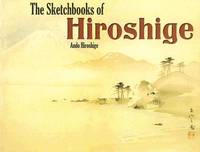
Best.-Nr. BN134513Dover Publications. Softcover. The Sketchbooks of Hiroshige Pictorial Archive Series The Sketchbooks of Hiroshige Pictorial Archive Series Ando Hiroshige Dover Publications paperback