6 163 résultats
1987réf. RO80171079HAZAN. 1987. In-Folio. Relié. Parfait état, Couv. convenable, Dos satisfaisant, Intérieur frais. 256 pages augmentées de nombreuses illustrations en couleur hors texte.. Avec Jaquette. . . Classification Dewey : 702-Ouvrages divers sur les beaux-arts et les arts décoratifs
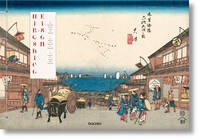
2017réf. BN513541TASCHEN 2017. 2017. Softcover. Hiroshige & Eisen: the sixty-nine stations along the Kisokaid = Hiroshige & Eisen: die neunundsechzig Stationen des Kisokaid = Hiroshige & Eisen les soixante-neuf stations de la route Kisokaid Hiroshige & Eisen: the sixty-nine stations along the Kisokaid = Hiroshige & Eisen: die neunundsechzig Stationen des Kisokaid = Hiroshige & Eisen les soixante-neuf stations de la route Kisokaid And Hiroshige Künstler;Ikeda Eisen Künstler;Marks Andreas Herausgeber TASCHEN paperback
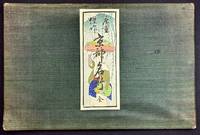
1908réf. 1797SSTokyo: Fujisawa Mankado 1908. Postcards in custom photo album. Postcards Very Good. Hiroshige. Interesting variation to present Hiroshige's work. All postcards except one have actually a stamp and have been sent and cancelled. --- --- --- Tokyo Fujisawa Mankado July 1908 sold in custom photo album 9.25" x 7.25" on first page are one cut-out map with all stations in Japanese one paper strip with name of stations 53 postcards 5.5" x 3.5. All postcards have a handwritten address. All except one have actually a stamp and have been sent and cancelled. Front board of album is separated spine repaired book block solid post cards very good. Fujisawa Mankado unknown
1975réf. mon0003426165Shueisha 1975. Hardcover. Very Good. . Japanese language text. Profusely illustrated including large full-color plates. Shueisha hardcover
1975réf. mon0003426163Shueisha 1975. Hardcover. Very Good. . Japanese language text. Profusely illustrated including large full-color plates. Fine in slipcase. Shueisha hardcover
réf. 51-0870Japan: 19th Century. Color woodcut. 36 x 24 cm. Edo period–Meiji era1868 Keiô 4/Meiji 1 intercalary 4th monthPublisher Maruya Heijirô Artist Utagawa Hiroshige III Japanese 1842–1894. Hiroshige giga on left sheet åºƒé‡æˆ¯ç”». Provenance: Pacific Asia Museum Pasadena. Japan: 19th Century. unknown
réf. 41045801Japan n.d. ca. 1920's. Oban sheet color woodblock printed sheet: 38 x 25.5 cm. print size: 34.5 x 22 cm. an unusually clean bright copy excellent registry and color a superbly executed example far and above average. . . . . A LOVELY DUSK SNOW SCENE ALONG THE SUMIDA RIVER . . This is a RARE reprint of the original nicely done the colors are true to the original. . A lovely & tender snow scene. The sun has just set its dusk snowing two coolies and two other people scurry along the snow-covered road. . Elongated flowing style clouds adorn the lower edge. This is typical Hiroshige style. With print title cartouche at upper left and Hiroshige's signature with Kiwame censor seal at upper right corner. . HIROSHIGE I: 1797-1858. Master of Japanese scenery illustrates his superb skill in the winter scene of a snowy dusk along the Sumida river. . A horizontal format print from the series of eight titled: TOTO YUKIMI HYAKKEI: VIEW OF EDO SNOW ALONG THE SUMIDA RIVER . Color photos are posted to our website. . CONDITION: The print is flawless no issues pristine clean firm and Solid in "collector's condition." . The colors are vivid with excellent impression & registry. As good as it can get ! Seldom found in such stunning condit on. . A superb example of fine color woodblock printing. . . unknown
1875réf. 2110502150908260Morimoto-ban 1875. Soft Cover. Fine. Number of books: 1 Morimoto-ban paperback
1875réf. 2110502150909036Morimoto-ban 1875. Soft Cover. Fine. Number of books: 1 Morimoto-ban paperback
1875réf. 2110502150909079Morimoto-ban 1875. Soft Cover. Fine. Number of books: 1 Morimoto-ban paperback
1875réf. 2110502150909118Morimoto-ban 1875. Soft Cover. Fine. Number of books: 1 Morimoto-ban paperback
1991réf. 2081402109800524Koku kuchi shoten 1991. Soft Cover. Fine. Volume: 1 Koku kuchi shoten paperback
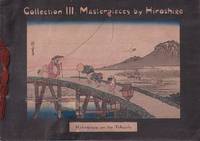
1914réf. 224622東京. Tokyo.: 長谷川武次郎. Hasegawa Takejiro. Taisho 3 1914. Volume III only of three. Twelve full page colour woodblocks in original pictorial wrappers printed on what appears to be hōsho or a similar Japanese mulberry paper tassel tie. 20.5 x 14.5cm. Some later hand-colouring to the margins of the upper cover; lower cover marked with small tears along its lower edge neatly repaired. Good copy. . 長谷川武次郎. [Hasegawa Takejiro]. unknown
1876réf. 2111902160200267Not Available 1876. Soft Cover. Fine. Size: 18.5cmx25cm Number of books: 1 Not Available paperback
1935réf. H41217Osaka: Hanga Geijutsu Kyokai 1935. Hardcover. Very good. 15.75 x 10.5 inches 27 x 40 cm silk bound oblong folio with 10 color woodcut illustrations of famous scenes in Kyoto accordion folded. Information on publication taken from OCLC their number 897119182. Light wear to binding some light bumping to outer corners of plates. Hanga Geijutsu Kyokai hardcover
réf. 42133201Tokyo n.d. ca 1860. Color Oban print sheet:24.2 x 36 cm. print size 23 x 34 cm. very good impression & registryvery bright & cleanleft margin a bit trimmeda few old pin holes mended on verso now firm & solid shows 2 foreigners. RARE ! . . . . A DELIGHTFUL LOOK AT THE WATERFALLS . . . AT JUNISO SHRINE TSUNOHARAZU-MURA KOHSHUU KAIDO HIGHWAY . . . NEAR SHINJUKU EDO . This is an early period print ca. 1860 issued just a few years after the opening of Japan by the American Commodore M.C. Perry. . The arrival of foreigners to Japan came after 1854 with the new treaty. . Following Tokubei's interest in the modernization and western influence on Japan he sought to record foreign innovations including images of foreigners in Japan. . This print shows just how two foreigners managed to go and see the waterfalls. They are 'minded' and 'protected' by a Samurai wearing the Dai & Sho large & small swords. Another non-related Japanese is looking at the waterfalls. . In these early days of foreigners visiting Japan incidents of Samurai killing foreigners was not an unusual event. In that case foreigners were commonly 'protected' by other Samurai following the Shogun's orders. It was a crime to assault foreigners during this time. . The cartouche at the top left gives the details of print contents including stating this is #12 of the series showing the county seat of this view along the EDO MEISHO ZUE: PICTURES OF FAMOUS SIGHTS IN EDO from the series. series . THE ARTIST: HIROSHIGE Tokubei III 1842 or 1843-1894: He was a Ukiyo-e printmaker and a pupil of the most famous and eminent and well-known icon Ando Hiroshige I. . Tokubei took his master's surname after 1865. He produced a good number of fakes after his famous master but the colors never matched the originals. He also produced his own prints and color illustrated books after his master's style. . Color photos are posted to our website. . CONDITION: The print is Oban vertical orientation the impression is excellent and the registry is very good clear clean solid and stable. . There a few tiny pin but neatly mended holes on the left margin that were mended in the distant past using Washi handmade Japanese mulberry fiber paper where this print was bound and stitched into a book format. . The left margin was trimmed in the distant past. Otherwise this is a clean example the verso is also clean no marks. . . unknown
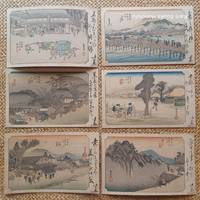
1960réf. 24022Tokyo: Takamizawa Ukiyoe. Ltd 1960. Hoeido Miniature Edition. Fine. Hoeido Miniature Edition. Fifty-three color woodblocks tipped-in with legends beneath in English and Japanese. Bound in orihon style accordion notebook the covers in woven cloth with paper cover label in Japanese and with silver endpapers. The prints are very bright and well-executed measuring 5 1/2 x 3 1/2". Housed in string-tied folding case with paper title label. The scenes are of 53 lodging stations along the coast line from Yedo Tokyo to Kyoto. Takamizawa Ukiyoe., Ltd unknown
1930réf. 5585Tokyo Yuyudo C1930 Une magnifique estampe sur bois reproduisant l'une des célèbres illustrations d'Hiroshige issues de la collection « Cent vues célèbres d'Edo ». Cette estampe représente le temple Komagata-do et le pont Azuma. Publiée à l'origine par Uoei en 1857, cette reproduction est l'uvre de Yuyudo. Bien qu'elle ne porte pas de date, elle date probablement des années 1930. Bien qu'il s'agisse d'une reproduction, il s'agit d'une véritable copie sur bois (et non d'une impression numérique ou lithographique moderne). En excellent état, elle est simplement collée dans un passe-partout, mais peut être retirée pour être encadrée. Le temple Komagata-do est situé sur un terrain triangulaire près du pont Komagata, dans le quartier de Kaminarimon 2-chome, arrondissement de Taito. À l'origine, il s'agissait d'un temple de style entrepôt situé sur les berges de la rivière à Komagata 1-chome, abritant un Bato Kannon (Kannon à tête de cheval). Les habitants d'Edo prononcent le nom du temple Komagata-do « Komando ». L'illustration, peut-être inspirée du célèbre poème de la geisha Takao, « Tu es maintenant près de Komagata, chantant le coucou », représente un coucou volant dans le ciel. La reproduction du ciel pluvieux de mai est magnifique et met en valeur le talent de l'imprimeur. L'image montre le pont Azuma depuis le toit du temple Komagata-do, représentant les maisons sur la rive de la rivière Honjo de l'autre côté. Le mur blanc appartient à la résidence inférieure de Hosokawa Notonokami. Un drapeau rouge est visible au premier plan. Il s'agit du drapeau-enseigne d'un magasin général appelé « Hyakusuke », situé en face du Komagata-do, qui vendait du rouge à lèvres et de la poudre pour le visage. Il était conçu pour être visible de loin, mettant en avant le rouge à lèvres qu'ils vendaient. C'était une enseigne très accrocheuse à l'époque. 34 cm x 23 cm. Le passe-partout mesure 49 cm x 34 cm.
1881réf. 2110502150908604Okura Magobe version 1881. Soft Cover. Fine. Number of books: 1 Okura Magobe version paperback
1976réf. mon0003427031Shueisha Co. Ltd. 1976. Hardcover. Like New. . Japanese language text. Profusely illustrated. Full page full color plates. Shueisha Co. Ltd. hardcover
1940réf. 72741London / Tokyo: Kegan Paul Trench Trubner / Maruzen Co. 1940. First edition thus: expanded and corrected from the 1934 edition. Two softcover volumes in publisher's chemise. One of only 300 copies offered for sale from a total edition of 2200 copies. Issued to commemorate the 2600th anniversary of the founding of the Japanese empire -- at a time when Japan was still embroiled in war with China and on the brink of entering World War II in alliance with Germany and Italy and just a year away from bombing Pearl Harbor. "To-day under a tumult and battle-cry the whole world is upset and gloomy; then even for that reason only I think it is meaningful to us to reconsider what Hiroshige had done in art and remind ourselves of a peaceful lovely life that awaits us" -- from the introduction. One can only hope. Utagawa Hiroshige 1797 - 1858 was a Japanese master artist best known for his beautiful landscapes. Volume one primarily consists of essays on Hiroshige's life and work and discussions of the 99 plates appearing in the second volume. Two 4to fukuro-toji soft covers a traditional Japanese cord-sewn stab binding with pages printed on outsides only of folded sheets; volume one with folding color frontispiece color portrait of Hiroshige by Toyokuni the Third and black-and-white and grayscale illustrations in and under the text throughout; volume two with 99 wood block color collotype and black-and-white engravings some of which are folding; 156 plus pages in first volume second volume unnumbered. Near fine with front blank misfolded at upper inside corner volume one and touch of minor foxing to cover edges of both volumes. Housed in gilt-stamped bone-clasped blue silk-covered chemise very good with some spotting few tiny edge splits and touch up to small scrap in gilt stamping on front cover. Kegan Paul, Trench, Trubner / Maruzen Co. unknown
1833réf. 448651833. First edition HÅeidÅ edition aka "Great Tokaido". Oblong oban yoko-e format. Color woodblock print. 10x15". White heavy-stock mat. 12th station of the Tokaido. From the first edition of "The Fifty-three Stations of the Tokaido Road" series by Utagawa Hiroshige. Some foxing to the image. unknown
1833réf. 448651833. First edition HÅeidÅ edition aka "Great Tokaido". Oblong oban yoko-e format. Color woodblock print. 10x15". White heavy-stock mat. 12th station of the Tokaido. From the first edition of "The Fifty-three Stations of the Tokaido Road" series by Utagawa Hiroshige. Some foxing to the image. unknown books
1930réf. 5585Tokyo: Yuyudo C1930. A beautiful woodblock print reproducing one of Hiroshige's famous illustrations from the collection "One Hundred Famous Views of Edo." This print shows Komagata-do Temple and Azuma Bridge. Originally published by Uoei 1857 this reproduction is by Yuyudo. Although undated it is likely from the 1930's. Although a reproduction it is a genuine woodblock copy not a modern digital or lithographic print. In excellent clean condition it is loosely tipped into a card folder / passe partout but can be removed for framing. Komagata-do Temple is located in the triangular plot of land near Komagata Bridge in Kaminarimon 2-chome Taito Ward. Originally it was a storehouse-style temple located on the riverbank in Komagata 1-chome enshrining a Bato Kannon Horse-Headed Kannon. Edoites pronounce Komagata-do Temple as "Komando." The illustration perhaps inspired by the famous poem by the geisha Takao "You are now near Komagata singing the cuckoo" depicts a cuckoo flying in the sky. The print of the rainy May sky is magnificent showcasing the skill of the printer. The picture shows Azuma Bridge from the roof of Komagata-do Temple depicting houses on the Honjo riverbank on the other side. The white wall belongs to the lower residence of Hosokawa Notonokami. A red flag is visible in the foreground. This is the signboard flag of a general store called "Hyakusuke" located across the street from Komagata-do which sold rouge and face powder. It was designed to be visible from a distance featuring the rouge they sold. It was a very eye-catching signboard at the time. 34cm x 23cm. Passe partout is 49cm x 34cm. . Une magnifique estampe sur bois reproduisant l'une des célèbres illustrations d'Hiroshige issues de la collection « Cent vues célèbres d'Edo ». Cette estampe représente le temple Komagata-do et le pont Azuma. Publiée à l'origine par Uoei en 1857 cette reproduction est l'œuvre de Yuyudo. Bien qu'elle ne porte pas de date elle date probablement des années 1930. Bien qu'il s'agisse d'une reproduction il s'agit d'une véritable copie sur bois et non d'une impression numérique ou lithographique moderne. En excellent état elle est simplement collée dans un passe-partout mais peut être retirée pour être encadrée. Le temple Komagata-do est situé sur un terrain triangulaire près du pont Komagata dans le quartier de Kaminarimon 2-chome arrondissement de Taito. À l'origine il s'agissait d'un temple de style entrepôt situé sur les berges de la rivière à Komagata 1-chome abritant un Bato Kannon Kannon à tête de cheval. Les habitants d'Edo prononcent le nom du temple Komagata-do « Komando ». L'illustration peut-être inspirée du célèbre poème de la geisha Takao « Tu es maintenant près de Komagata chantant le coucou » représente un coucou volant dans le ciel. La reproduction du ciel pluvieux de mai est magnifique et met en valeur le talent de l'imprimeur. L'image montre le pont Azuma depuis le toit du temple Komagata-do représentant les maisons sur la rive de la rivière Honjo de l'autre côté. Le mur blanc appartient à la résidence inférieure de Hosokawa Notonokami. Un drapeau rouge est visible au premier plan. Il s'agit du drapeau-enseigne d'un magasin général appelé « Hyakusuke » situé en face du Komagata-do qui vendait du rouge à lèvres et de la poudre pour le visage. Il était conçu pour être visible de loin mettant en avant le rouge à lèvres qu'ils vendaient. C'était une enseigne très accrocheuse à l'époque. 34 cm x 23 cm. Le passe-partout mesure 49 cm x 34 cm. Yuyudo unknown
réf. 2092902138101112Not Available N.A. Soft Cover. Fine. Size: 25.5cmx37.5cm Number of books: 1 Not Available paperback