Utagawa, HiroshigeBiblio.com
6160 resultados
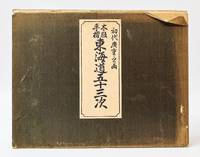
1930ref. 1417073Japan c.1930s. Hardcover. Disbound Plates fifty-three plates. In Poor condition. Accordion binding with two green cloth boards. Front board has a paper label with black ink titling; has heavy shelfwear and sunning to edges cloth in corner creased and peeling away from board dampstaining to bottom left corner and heavy scuffing throughout; rear board has heavy shelfwear and sunning to edges peeling to cloth at corners scattered holes in cloth and heavy scuffing throughout. Interior has heavy toning to edges of cardstock backing for prints and tearing and separation to edges of cardstock throughout. Prints have light to moderate scuffing but are in good condition. Plates have been numbered in pencil but the numbering starts with the preface plate rather than the station plates. Inside of rear cover has a gift inscription: "To/Mr & Mrs J.E. Knippe/November 18th 1938./From Setsuko Sasaki". Missing colophon and five plates: #1 Nihonbashi 日本橋; #28 Fukuroi 袋井; #47 Kameyama 亀山; #53 Kusatsu è‰æ´¥; #56 KyÅto: The Imperial Palace 京 内è£. Text in Japanese. Shelved in Room A octavo overflow. This 20th-century homage to one of feudal Japan's greatest artistic journeys is an example of the type of facsimile set made for tourists art lovers or collectors that became popular at the time. Though time has softened the outer cover and separated its pages the prints inside retain their vivid inkwork carrying viewers past the iconic pine-lined road of Yoshiwara where Mount Fuji famously appears on the traveler's left. It stands as a remarkable bridge between eras where ShÅwa-period master craftsmen faithfully preserved Hiroshige's immortal vision of Edo-period travel for a whole new generation of art lovers. In his lifetime Hiroshige created up to twenty different editions of his popular Fifty-three Stations of TÅkaidÅ changing each location's art every time. This album's contents are facsimiles of the second version which he made six years after the first Great TÅkaidÅ and are nicknamed the KyÅka TÅkaidÅ for his inclusion of comical poetry kyÅka on each print. 1417073. Special Collections - Upstairs. hardcover
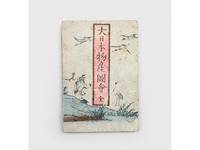
1877ref. 186040Tokyo: Okura Magobee 10 August 1877. Vivid scenes of industry from across Japan A striking set of prints produced at the time of the First National Industrial Exhibition 1877 an event designed to promote Japanese local craftmanship and encourage a growing export industry. This example shows tatami mat production in Bingo Hiroshima indigo farming in Awa Tokushima camphor logging in Hyuga Miyazaki and whaling in Iki Nagasaki. The First National Industrial Exhibition was held from 21 August to 30 November 1877 with a total of 16172 exhibitors showing 84353 items. "In anticipation of the event the government clearly stated its interest in encouraging the growth of export industries and requested that every prefecture in Japan participate in the exhibition suggesting that the domestic fairs were intended to provide a survey of the products and industries of the entire country and to offer a venue for assessing which of those products might be suitable for export" Lavenberg. At the same time Utagawa Hiroshige III 1842-1894 released approximately 120 prints showing local industries across Japan. He was known for his representations of Meiji period society and was one of the most popular artists of his age. Only 118 of the Dai nihon bussan zue prints survive representing 58 provinces. These were sold as individual sheets that could be bound into books with each book containing a different number and configuration of prints. The 30 prints in this example cover 14 provinces stretching from Hokkaido in the north to Hyuga in the south. The construction of the books mean that splits are often found along the central joints such as in the copy held by the British Museum 197307230.116. Octavo concertina-style. With 30 double-page colour woodblock prints; text in Japanese. Original patterned paper boards decorated with scenes of Japanese cranes red printed paper label on front board. Housed in grey archival box. Contemporary price sticker on one print. Boards a little creased and abraded prints bright with some light foxing in margins some split along central fold as usual: a very good example. "Dai Nippon Bussan Zue Products of Greater Japan 1877" The Lavenberg Collection of Japanese Prints 2018. hardcover
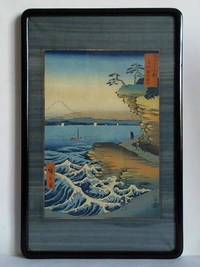
ref. 6a375Tsutaya Kichizo Japan 1858. Maße: ca. 192 x 278 cm mit Stempel unten rechts im Motiv auf colorierten Stoff gezogen hinter Glas in schwarzer Holzleiste mit abgerundeten Ecken Leiste gering berieben/rückseitig zwei Papierschilder. - Japanische Kunst - unknown
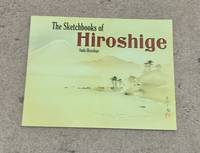
2007ref. 002968Dover Publications 2007. 1st Edition 1st Printing. Soft cover. Very Good. About the book: Softcover. First Printing. Book is in very good condition with moderate wear to all edges. Additional photos available upon requiest. Dover Publications paperback
ref. DADAX3836539381New unknown
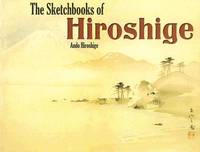
2007ref. ANAIS-0486460479Dover Publications 2007-08-31. Not Indicated. paperback. Good. 27.9x1.3x21.6. Buy with confidence. Excellent Customer Service & Return policy. Dover Publications paperback
ref. 85550Tokai Bank. VG. Oversize paperback / Boxed / Text: English & Japanese / Commemorating the Tokai Bank's 50th Anniversary Tokai Bank paperback
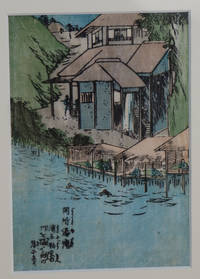
ref. X14HIROSHIGE Ando 1797-1858. Relaxing by the Water. Original woodblock from the series "Ehon Edo Miyage" published by Kikuya Kozaburo Volume 3 printed in Japan 1850-68. 295 x 210mm. This original print is delivered to you in its unframed state carefully protected in a solid cardboard tube. Utagawa Hiroshige born AndÅ TokutarÅ 安藤 徳太郎; 1797 – 12 October 1858 was a Japanese ukiyo-e artist considered the last great master of that tradition. Hiroshige is best known for his horizontal-format landscape series The Fifty-three Stations of the TÅkaidÅ and for his vertical-format landscape series One Hundred Famous Views of Edo. The subjects of his work were atypical of the ukiyo-e genre whose typical focus was on beautiful women popular actors and other scenes of the urban pleasure districts of Japan's Edo period 1603–1868. The popular series Thirty-six Views of Mount Fuji by Hokusai was a strong influence on Hiroshige's choice of subject though Hiroshige's approach was more poetic and ambient than Hokusai's bolder more formal prints. Subtle use of color was essential in Hiroshige's prints often printed with multiple impressions in the same area and with extensive use of bokashi color gradation both of which were rather labor-intensive techniques. For scholars and collectors Hiroshige's death marked the beginning of a rapid decline in the ukiyo-e genre especially in the face of the westernization that followed the Meiji Restoration of 1868. Hiroshige's work came to have a marked influence on western European painting towards the close of the 19th century as a part of the trend in Japonism. Western European artists such as Manet and Monet collected and closely studied Hiroshige's compositions: Vincent van Gogh for instance painted copies of some Hiroshige prints. Japanese woodblock prints known as ukiyo-e Produced in their many thousands and hugely popular during the Edo period 1615 – 1868 these colourful woodblock prints known as ukiyo-e depicted scenes from everyday Japan. Ukiyo-e literally means 'pictures of the floating world'. The 'floating world' referred to the licensed brothel and theatre districts of Japan's major cities during the Edo period. Inhabited by prostitutes and Kabuki actors Kabuki is a traditional Japanese form of theatre these were the playgrounds of the newly wealthy merchant class. Despite their low status in the strict social hierarchy of the time actors and courtesans became the style icons of their day and their fashions spread to the general population via inexpensive woodblock prints. The ukiyo-e style was developed in 1765 and remained popular until the closing decades of the Meiji period 1868 – 1912. While only the wealthy could afford paintings by the artists of the day ukiyo-e prints were enjoyed by a wide audience because they could be produced quite cheaply and in large numbers. The production process The earliest woodblock prints were simple black and white prints taken from a single block. Sometimes they were coloured by hand but this process was expensive. In the 1740s additional woodblocks were used to print the colours pink and green but it wasn't until 1765 that the technique of using multiple colour woodblocks was perfected. The glorious full-colour prints that resulted were known as nishiki-e or 'brocade pictures'. The team involved in the production of ukiyo-e was known as the 'ukiyo-e quartet'. It comprised the publisher who usually had overall control of the process the designer/artist the block cutter and the printer. The artist would draw the design on paper. Once complete an exact copy was made and placed face-down on a cherry wood block. Cherry wood was favoured due to the fine even grain and consistent density. The block cutter then carved directly through the copy to produce what is known as the 'key-block'. The printer used the key-block to produce a number of black and white prints from which further blocks could be made for each colour needed in the final print. Known as 'key-block proofs' these prints feature registration marks: small rectangles outside the area of the picture. When the colour blocks were carved these marks were used to create stops so that the printer could line up the separate colours precisely.
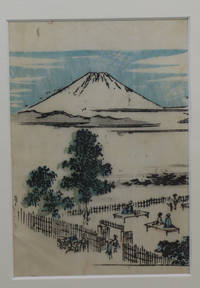
ref. X16Sipping Tea Viewing Mount Fuji. Original woodblock from the series "Ehon Edo Miyage" published by Kikuya Kozaburo Volume 3 printed in Japan 1850-68. 295 x 210 mm. This original print is delivered to you in its unframed state carefully protected in a solid cardboard tube. Utagawa Hiroshige born AndÅ TokutarÅ 安藤 徳太郎; 1797 – 12 October 1858 was a Japanese ukiyo-e artist considered the last great master of that tradition. Hiroshige is best known for his horizontal-format landscape series The Fifty-three Stations of the TÅkaidÅ and for his vertical-format landscape series One Hundred Famous Views of Edo. The subjects of his work were atypical of the ukiyo-e genre whose typical focus was on beautiful women popular actors and other scenes of the urban pleasure districts of Japan's Edo period 1603–1868. The popular series Thirty-six Views of Mount Fuji by Hokusai was a strong influence on Hiroshige's choice of subject though Hiroshige's approach was more poetic and ambient than Hokusai's bolder more formal prints. Subtle use of color was essential in Hiroshige's prints often printed with multiple impressions in the same area and with extensive use of bokashi color gradation both of which were rather labor-intensive techniques. For scholars and collectors Hiroshige's death marked the beginning of a rapid decline in the ukiyo-e genre especially in the face of the westernization that followed the Meiji Restoration of 1868. Hiroshige's work came to have a marked influence on western European painting towards the close of the 19th century as a part of the trend in Japonism. Western European artists such as Manet and Monet collected and closely studied Hiroshige's compositions: Vincent van Gogh for instance painted copies of some Hiroshige prints. Japanese woodblock prints known as ukiyo-e Produced in their many thousands and hugely popular during the Edo period 1615 – 1868 these colourful woodblock prints known as ukiyo-e depicted scenes from everyday Japan. Ukiyo-e literally means 'pictures of the floating world'. The 'floating world' referred to the licensed brothel and theatre districts of Japan's major cities during the Edo period. Inhabited by prostitutes and Kabuki actors Kabuki is a traditional Japanese form of theatre these were the playgrounds of the newly wealthy merchant class. Despite their low status in the strict social hierarchy of the time actors and courtesans became the style icons of their day and their fashions spread to the general population via inexpensive woodblock prints. The ukiyo-e style was developed in 1765 and remained popular until the closing decades of the Meiji period 1868 – 1912. While only the wealthy could afford paintings by the artists of the day ukiyo-e prints were enjoyed by a wide audience because they could be produced quite cheaply and in large numbers. The production process The earliest woodblock prints were simple black and white prints taken from a single block. Sometimes they were coloured by hand but this process was expensive. In the 1740s additional woodblocks were used to print the colours pink and green but it wasn't until 1765 that the technique of using multiple colour woodblocks was perfected. The glorious full-colour prints that resulted were known as nishiki-e or 'brocade pictures'. The team involved in the production of ukiyo-e was known as the 'ukiyo-e quartet'. It comprised the publisher who usually had overall control of the process the designer/artist the block cutter and the printer. The artist would draw the design on paper. Once complete an exact copy was made and placed face-down on a cherry wood block. Cherry wood was favoured due to the fine even grain and consistent density. The block cutter then carved directly through the copy to produce what is known as the 'key-block'. The printer used the key-block to produce a number of black and white prints from which further blocks could be made for each colour needed in the final print. Known as 'key-block proofs' these prints feature registration marks: small rectangles outside the area of the picture. When the colour blocks were carved these marks were used to create stops so that the printer could line up the separate colours precisely.
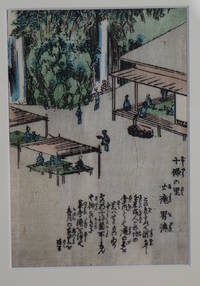
ref. X13HIROSHIGE Ando J 797-1858. Waterfall at Jujyo No Sato. Original woodblock from the series "Ehon Edo Miyage" published by Kikuya Kozaburo Volume 3 printed in Japan 1850-68. 295 x 210 mm. This original print is delivered to you in its unframed state carefully protected in a solid cardboard tube. Utagawa Hiroshige born AndÅ TokutarÅ 安藤 徳太郎; 1797 – 12 October 1858 was a Japanese ukiyo-e artist considered the last great master of that tradition. Hiroshige is best known for his horizontal-format landscape series The Fifty-three Stations of the TÅkaidÅ and for his vertical-format landscape series One Hundred Famous Views of Edo. The subjects of his work were atypical of the ukiyo-e genre whose typical focus was on beautiful women popular actors and other scenes of the urban pleasure districts of Japan's Edo period 1603–1868. The popular series Thirty-six Views of Mount Fuji by Hokusai was a strong influence on Hiroshige's choice of subject though Hiroshige's approach was more poetic and ambient than Hokusai's bolder more formal prints. Subtle use of color was essential in Hiroshige's prints often printed with multiple impressions in the same area and with extensive use of bokashi color gradation both of which were rather labor-intensive techniques. For scholars and collectors Hiroshige's death marked the beginning of a rapid decline in the ukiyo-e genre especially in the face of the westernization that followed the Meiji Restoration of 1868. Hiroshige's work came to have a marked influence on western European painting towards the close of the 19th century as a part of the trend in Japonism. Western European artists such as Manet and Monet collected and closely studied Hiroshige's compositions: Vincent van Gogh for instance painted copies of some Hiroshige prints. Japanese woodblock print known as ukiyo-e were produced in their many thousands and hugely popular during the Edo period 1615 – 1868 These colourful woodblock prints depicted scenes from everyday Japan. Ukiyo-e literally means 'pictures of the floating world'. The 'floating world' referred to the licensed brothel and theatre districts of Japan's major cities during the Edo period. Inhabited by prostitutes and Kabuki actors Kabuki is a traditional Japanese form of theatre these were the playgrounds of the newly wealthy merchant class. Despite their low status in the strict social hierarchy of the time actors and courtesans became the style icons of their day and their fashions spread to the general population via inexpensive woodblock prints. The ukiyo-e style was developed in 1765 and remained popular until the closing decades of the Meiji period 1868 – 1912. While only the wealthy could afford paintings by the artists of the day ukiyo-e prints were enjoyed by a wide audience because they could be produced quite cheaply and in large numbers. The production process The earliest woodblock prints were simple black and white prints taken from a single block. Sometimes they were coloured by hand but this process was expensive. In the 1740s additional woodblocks were used to print the colours pink and green but it wasn't until 1765 that the technique of using multiple colour woodblocks was perfected. The glorious full-colour prints that resulted were known as nishiki-e or 'brocade pictures'. The team involved in the production of ukiyo-e was known as the 'ukiyo-e quartet'. It comprised the publisher who usually had overall control of the process the designer/artist the block cutter and the printer. The artist would draw the design on paper. Once complete an exact copy was made and placed face-down on a cherry wood block. Cherry wood was favoured due to the fine even grain and consistent density. The block cutter then carved directly through the copy to produce what is known as the 'key-block'. The printer used the key-block to produce a number of black and white prints from which further blocks could be made for each colour needed in the final print. Known as 'key-block proofs' these prints feature registration marks: small rectangles outside the area of the picture. When the colour blocks were carved these marks were used to create stops so that the printer could line up the separate colours precisely.
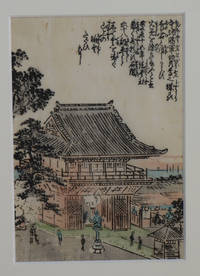
ref. X15HIROSHIGE Ando 1797-1858. Visiting the Temple. Original woodblock from the series "Ehon Edo Miyage" published by Kikuya Kozaburo Volume 3 printed in Japan 1850-68. 295 x 210 mm. This original print is delivered to you in its unframed state carefully protected in a solid cardboard tube. Utagawa Hiroshige born AndÅ TokutarÅ 安藤 徳太郎; 1797 – 12 October 1858 was a Japanese ukiyo-e artist considered the last great master of that tradition. Hiroshige is best known for his horizontal-format landscape series The Fifty-three Stations of the TÅkaidÅ and for his vertical-format landscape series One Hundred Famous Views of Edo. The subjects of his work were atypical of the ukiyo-e genre whose typical focus was on beautiful women popular actors and other scenes of the urban pleasure districts of Japan's Edo period 1603–1868. The popular series Thirty-six Views of Mount Fuji by Hokusai was a strong influence on Hiroshige's choice of subject though Hiroshige's approach was more poetic and ambient than Hokusai's bolder more formal prints. Subtle use of color was essential in Hiroshige's prints often printed with multiple impressions in the same area and with extensive use of bokashi color gradation both of which were rather labor-intensive techniques. For scholars and collectors Hiroshige's death marked the beginning of a rapid decline in the ukiyo-e genre especially in the face of the westernization that followed the Meiji Restoration of 1868. Hiroshige's work came to have a marked influence on western European painting towards the close of the 19th century as a part of the trend in Japonism. Western European artists such as Manet and Monet collected and closely studied Hiroshige's compositions: Vincent van Gogh for instance painted copies of some Hiroshige prints. Japanese woodblock prints known as ukiyo-e were produced in their many thousands and hugely popular during the Edo period 1615 – 1868 these colourful woodblock prints known as ukiyo-e depicted scenes from everyday Japan. Ukiyo-e literally means 'pictures of the floating world'. The 'floating world' referred to the licensed brothel and theatre districts of Japan's major cities during the Edo period. Inhabited by prostitutes and Kabuki actors Kabuki is a traditional Japanese form of theatre these were the playgrounds of the newly wealthy merchant class. Despite their low status in the strict social hierarchy of the time actors and courtesans became the style icons of their day and their fashions spread to the general population via inexpensive woodblock prints. The ukiyo-e style was developed in 1765 and remained popular until the closing decades of the Meiji period 1868 – 1912. While only the wealthy could afford paintings by the artists of the day ukiyo-e prints were enjoyed by a wide audience because they could be produced quite cheaply and in large numbers. The production process The earliest woodblock prints were simple black and white prints taken from a single block. Sometimes they were coloured by hand but this process was expensive. In the 1740s additional woodblocks were used to print the colours pink and green but it wasn't until 1765 that the technique of using multiple colour woodblocks was perfected. The glorious full-colour prints that resulted were known as nishiki-e or 'brocade pictures'. The team involved in the production of ukiyo-e was known as the 'ukiyo-e quartet'. It comprised the publisher who usually had overall control of the process the designer/artist the block cutter and the printer. The artist would draw the design on paper. Once complete an exact copy was made and placed face-down on a cherry wood block. Cherry wood was favoured due to the fine even grain and consistent density. The block cutter then carved directly through the copy to produce what is known as the 'key-block'. The printer used the key-block to produce a number of black and white prints from which further blocks could be made for each colour needed in the final print. Known as 'key-block proofs' these prints feature registration marks: small rectangles outside the area of the picture. When the colour blocks were carved these marks were used to create stops so that the printer could line up the separate colours precisely.
1988ref. 1-0807611999George Braziller 1988. Hardcover. New. 192 pages. 17.00x10.25x1.25 inches. George Braziller hardcover
ref. DADAX3791382659New unknown
ref. 29961-Global Oriental 2000-. First edition first impression 2000. xxvii147 pages. Illustrated in colour. Near fine in dustjacket. This copy signed and inscribed by the author. For the first time in an English language edition published outside Japan all 55 prints of Hiroshige's 'Fifty-three Stages of the Tokaido' are reproduced in full colour supporting a detailed and intriguing account of the author's rediscovery on foot of the historic 303-mile road from Edo Tokyo to Kyoto. Remarkably the Old Tokaido can still be found in many locations and photographs of the modern parallel the old. We are specialists in Artists Monographs Catalogues and Illustrated items. All items are as described and dispatched within 24 hours in a secure package. We are professional booksellers with over 38 years experience you may order with confidence. Other titles by this artist maybe in stock please ask for our list or link. Rediscovering the Old Tokaido: In the Footsteps of Hiroshige Japanese artist 1901903109 -Global Oriental (2000)- unknown
2018ref. __1983174262Independently published 2018. Paperback. New. 461 pages. 11.00x8.50x1.09 inches. Independently published paperback
ref. 75359München Prestel 1988. . Birds and flowers dt. - Mit Bibliographie. - Hiroshige 1797-1858 einer der letzten großen Meister des japanischen Farbholzschnittes wird hier mit hervorragenden Beispielen seiner schönsten Vogel- u. Blumen-Darstellungen vorgestellt Klappentext. - Gutes sauberes Exemplar München, Prestel, (1988). unknown
ref. DADAX4770016581New unknown
ref. DADAX0295977663New unknown
ref. SONG0807611433Used: Good unknown
ref. SONG3836521202Used: Good unknown
ref. SONG0807614998Used: Good unknown
ref. SONG0807611050Used: Good unknown
2008ref. 081509-LNew York: George Braziller 2008. Book. Illus. by Hiroshige. New. Hardcover. 1st Edition. 1st. Edition 1st. Printing 2008 Red cloth hardcover in the dust jacket 159 page book with 71 full color plates . Condition : NEW. Size: 4to - over 9¾" - 12" tall. George Braziller Hardcover
1991ref. SBBIH-CE46LG5KEDNGHonolulu Academy of Arts 1991. paperback. Acceptable. Please see the condition note after this for details if this is missing please consider Acceptable to mean poor quality that could include major staining water damage writing missing dustjacket etc etc. Our books are dispatched from a Yorkshire former cotton mill. We list via barcode/ISBN so please note that the images are stock images and may not be the exact copy you receive furthermore the details about edition and year might not be accurate as many publishers reuse the same ISBN for multiple editions and as we simply scan a barcode or enter an ISBN we do not check the validity of the edition data when listing. If you're looking for an exact edition please don't order at least not without checking with us first although we don't always have time to check. We aim to dispatch prompty the service used will depend on order value and book size. We can ship to most countries see our shipping policies. Payment is via Abe only. Honolulu Academy of Arts paperback
1930ref. 5585Tokyo: Yuyudo C1930. A beautiful woodblock print reproducing one of Hiroshige's famous illustrations from the collection "One Hundred Famous Views of Edo." This print shows Komagata-do Temple and Azuma Bridge. Originally published by Uoei 1857 this reproduction is by Yuyudo. Although undated it is likely from the 1930's. Although a reproduction it is a genuine woodblock copy not a modern digital or lithographic print. In excellent clean condition it is loosely tipped into a card folder / passe partout but can be removed for framing. Komagata-do Temple is located in the triangular plot of land near Komagata Bridge in Kaminarimon 2-chome Taito Ward. Originally it was a storehouse-style temple located on the riverbank in Komagata 1-chome enshrining a Bato Kannon Horse-Headed Kannon. Edoites pronounce Komagata-do Temple as "Komando." The illustration perhaps inspired by the famous poem by the geisha Takao "You are now near Komagata singing the cuckoo" depicts a cuckoo flying in the sky. The print of the rainy May sky is magnificent showcasing the skill of the printer. The picture shows Azuma Bridge from the roof of Komagata-do Temple depicting houses on the Honjo riverbank on the other side. The white wall belongs to the lower residence of Hosokawa Notonokami. A red flag is visible in the foreground. This is the signboard flag of a general store called "Hyakusuke" located across the street from Komagata-do which sold rouge and face powder. It was designed to be visible from a distance featuring the rouge they sold. It was a very eye-catching signboard at the time. 34cm x 23cm. Passe partout is 49cm x 34cm. . Une magnifique estampe sur bois reproduisant l'une des célèbres illustrations d'Hiroshige issues de la collection « Cent vues célèbres d'Edo ». Cette estampe représente le temple Komagata-do et le pont Azuma. Publiée à l'origine par Uoei en 1857 cette reproduction est l'œuvre de Yuyudo. Bien qu'elle ne porte pas de date elle date probablement des années 1930. Bien qu'il s'agisse d'une reproduction il s'agit d'une véritable copie sur bois et non d'une impression numérique ou lithographique moderne. En excellent état elle est simplement collée dans un passe-partout mais peut être retirée pour être encadrée. Le temple Komagata-do est situé sur un terrain triangulaire près du pont Komagata dans le quartier de Kaminarimon 2-chome arrondissement de Taito. À l'origine il s'agissait d'un temple de style entrepôt situé sur les berges de la rivière à Komagata 1-chome abritant un Bato Kannon Kannon à tête de cheval. Les habitants d'Edo prononcent le nom du temple Komagata-do « Komando ». L'illustration peut-être inspirée du célèbre poème de la geisha Takao « Tu es maintenant près de Komagata chantant le coucou » représente un coucou volant dans le ciel. La reproduction du ciel pluvieux de mai est magnifique et met en valeur le talent de l'imprimeur. L'image montre le pont Azuma depuis le toit du temple Komagata-do représentant les maisons sur la rive de la rivière Honjo de l'autre côté. Le mur blanc appartient à la résidence inférieure de Hosokawa Notonokami. Un drapeau rouge est visible au premier plan. Il s'agit du drapeau-enseigne d'un magasin général appelé « Hyakusuke » situé en face du Komagata-do qui vendait du rouge à lèvres et de la poudre pour le visage. Il était conçu pour être visible de loin mettant en avant le rouge à lèvres qu'ils vendaient. C'était une enseigne très accrocheuse à l'époque. 34 cm x 23 cm. Le passe-partout mesure 49 cm x 34 cm. Yuyudo unknown