Hiroshige, UtagawaBiblio.com
6.163 resultados
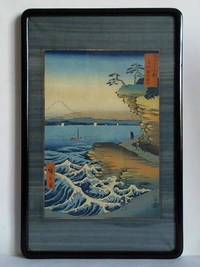
ref. 6a375Tsutaya Kichizo Japan 1858. Maße: ca. 192 x 278 cm mit Stempel unten rechts im Motiv auf colorierten Stoff gezogen hinter Glas in schwarzer Holzleiste mit abgerundeten Ecken Leiste gering berieben/rückseitig zwei Papierschilder. - Japanische Kunst - unknown
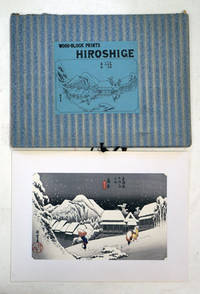
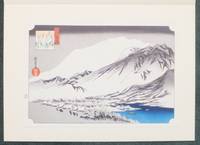
ref. 106705o. Angaben o. Vlg. . 38 x 28 cm 6 lose Blätter 22 x 32 cm unter Passepartout 1 gefalzt. Textblatt. Flügelmappe m Schnurrverschluss m. losen Blättern unter Passepartout Mappe a. Rücken lädiert etwas berieben Blätter tadell. Text: engl./ jap.- Ando Hiroshige 1797–1858 war ein berühmter japanischer Ukiyo-e-Holzschnittkünstler bekannt für seine atmosphärischen Landschaftsdrucke die oft das tägliche Leben und berühmte Orte Japans darstellten insbesondere mit Serien wie den "53 Stationen des T kaid " und den "100 berühmten Ansichten von Edo" die auch den europäischen Impressionismus stark beeinflussten. Sein korrekter Name war Utagawa Hiroshige da er Schüler der Utagawa-Schule war aber "And Hiroshige" ist gebräuchlich.- Set of 6 woodblock prints each mounted in a cream overlay. Housed in a brown rice papered card stock string-tied portfolio. Includes explanations of each print in English and Japanese. Titles include: 1. Snowfall of Kambara; 2. Sudden shower at Shono; 3. Moon light by river Tama; 4. Stage-Town Nagakubo; 5.Asakusa Kinryuzan Temple; 6. Sudden Rain-Storm at Atake. 010 o. Angaben, o. Vlg., unknown
1940ref. 72741London / Tokyo: Kegan Paul Trench Trubner / Maruzen Co. 1940. First edition thus: expanded and corrected from the 1934 edition. Two softcover volumes in publisher's chemise. One of only 300 copies offered for sale from a total edition of 2200 copies. Issued to commemorate the 2600th anniversary of the founding of the Japanese empire -- at a time when Japan was still embroiled in war with China and on the brink of entering World War II in alliance with Germany and Italy and just a year away from bombing Pearl Harbor. "To-day under a tumult and battle-cry the whole world is upset and gloomy; then even for that reason only I think it is meaningful to us to reconsider what Hiroshige had done in art and remind ourselves of a peaceful lovely life that awaits us" -- from the introduction. One can only hope. Utagawa Hiroshige 1797 - 1858 was a Japanese master artist best known for his beautiful landscapes. Volume one primarily consists of essays on Hiroshige's life and work and discussions of the 99 plates appearing in the second volume. Two 4to fukuro-toji soft covers a traditional Japanese cord-sewn stab binding with pages printed on outsides only of folded sheets; volume one with folding color frontispiece color portrait of Hiroshige by Toyokuni the Third and black-and-white and grayscale illustrations in and under the text throughout; volume two with 99 wood block color collotype and black-and-white engravings some of which are folding; 156 plus pages in first volume second volume unnumbered. Near fine with front blank misfolded at upper inside corner volume one and touch of minor foxing to cover edges of both volumes. Housed in gilt-stamped bone-clasped blue silk-covered chemise very good with some spotting few tiny edge splits and touch up to small scrap in gilt stamping on front cover. Kegan Paul, Trench, Trubner / Maruzen Co. unknown
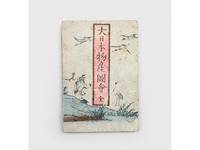
1877ref. 186040Tokyo: Okura Magobee 10 August 1877. Vivid scenes of industry from across Japan A striking set of prints produced at the time of the First National Industrial Exhibition 1877 an event designed to promote Japanese local craftmanship and encourage a growing export industry. This example shows tatami mat production in Bingo Hiroshima indigo farming in Awa Tokushima camphor logging in Hyuga Miyazaki and whaling in Iki Nagasaki. The First National Industrial Exhibition was held from 21 August to 30 November 1877 with a total of 16172 exhibitors showing 84353 items. "In anticipation of the event the government clearly stated its interest in encouraging the growth of export industries and requested that every prefecture in Japan participate in the exhibition suggesting that the domestic fairs were intended to provide a survey of the products and industries of the entire country and to offer a venue for assessing which of those products might be suitable for export" Lavenberg. At the same time Utagawa Hiroshige III 1842-1894 released approximately 120 prints showing local industries across Japan. He was known for his representations of Meiji period society and was one of the most popular artists of his age. Only 118 of the Dai nihon bussan zue prints survive representing 58 provinces. These were sold as individual sheets that could be bound into books with each book containing a different number and configuration of prints. The 30 prints in this example cover 14 provinces stretching from Hokkaido in the north to Hyuga in the south. The construction of the books mean that splits are often found along the central joints such as in the copy held by the British Museum 197307230.116. Octavo concertina-style. With 30 double-page colour woodblock prints; text in Japanese. Original patterned paper boards decorated with scenes of Japanese cranes red printed paper label on front board. Housed in grey archival box. Contemporary price sticker on one print. Boards a little creased and abraded prints bright with some light foxing in margins some split along central fold as usual: a very good example. "Dai Nippon Bussan Zue Products of Greater Japan 1877" The Lavenberg Collection of Japanese Prints 2018. hardcover
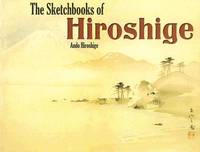
2007ref. ANAIS-0486460479Dover Publications 2007-08-31. Not Indicated. paperback. Good. 27.9x1.3x21.6. Buy with confidence. Excellent Customer Service & Return policy. Dover Publications paperback
1988ref. 1-0807611999George Braziller 1988. Hardcover. New. 192 pages. 17.00x10.25x1.25 inches. George Braziller hardcover
2018ref. __1983174262Independently published 2018. Paperback. New. 461 pages. 11.00x8.50x1.09 inches. Independently published paperback
ref. DADAX3791318608New unknown
ref. DADAX0807611999New unknown
1964ref. 0049822 Hitotsubashi Kanda Tokyo Japan: Shuei-Sha Publishing Co Ltd 1964. Limited Edition . No Binding. Near Fine. Elephant Folio - over 15 - 23" tall. Ando Hiroshige. In white vinyl clamshell box titles to top cover and spine in blue inks. 24 superbly printed colour plates loose as issued each mounted in a paper folder with plate number and title in green to lower corner plates are bright and unmarked 3735 cm either folio or oblong with a 4 pp red paper contents list and a 20 pp cream loose folder containing an introduction biography and plate listing with description in both Japanese and English. Titles include Soto to Uchi Tokaido 53-Tsugi No Uchi Kiso Kaido 69 Tsubaki ni Kotori etc. Housed in a cardboard boz with corners gone titles to spine and top cover. Stunning colour plates! These 24 plates make up the Hiroshige 24 Masterpieces which were part 4 of a broader set of Japanese woodblock illustrations. Utagawa Hiroshige was a Japanese ukiyo-e artist and one of the last great artists in that tradition. He was also referred to as Ando Hiroshige an irregular combination of family name and art name and by the art name of Ichiyusai Hiroshige. See Wiki for a full Bio. Shuei-Sha Publishing Co Ltd unknown
ref. SONG0807611050Used: Good unknown
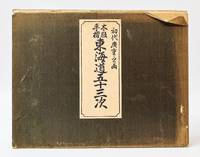
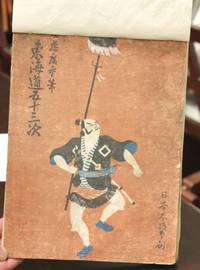
1930ref. 1417073Japan c.1930s. Hardcover. Disbound Plates fifty-three plates. In Poor condition. Accordion binding with two green cloth boards. Front board has a paper label with black ink titling; has heavy shelfwear and sunning to edges cloth in corner creased and peeling away from board dampstaining to bottom left corner and heavy scuffing throughout; rear board has heavy shelfwear and sunning to edges peeling to cloth at corners scattered holes in cloth and heavy scuffing throughout. Interior has heavy toning to edges of cardstock backing for prints and tearing and separation to edges of cardstock throughout. Prints have light to moderate scuffing but are in good condition. Plates have been numbered in pencil but the numbering starts with the preface plate rather than the station plates. Inside of rear cover has a gift inscription: "To/Mr & Mrs J.E. Knippe/November 18th 1938./From Setsuko Sasaki". Missing colophon and five plates: #1 Nihonbashi 日本橋; #28 Fukuroi 袋井; #47 Kameyama 亀山; #53 Kusatsu è‰æ´¥; #56 KyÅto: The Imperial Palace 京 内è£. Text in Japanese. Shelved in Room A octavo overflow. This 20th-century homage to one of feudal Japan's greatest artistic journeys is an example of the type of facsimile set made for tourists art lovers or collectors that became popular at the time. Though time has softened the outer cover and separated its pages the prints inside retain their vivid inkwork carrying viewers past the iconic pine-lined road of Yoshiwara where Mount Fuji famously appears on the traveler's left. It stands as a remarkable bridge between eras where ShÅwa-period master craftsmen faithfully preserved Hiroshige's immortal vision of Edo-period travel for a whole new generation of art lovers. In his lifetime Hiroshige created up to twenty different editions of his popular Fifty-three Stations of TÅkaidÅ changing each location's art every time. This album's contents are facsimiles of the second version which he made six years after the first Great TÅkaidÅ and are nicknamed the KyÅka TÅkaidÅ for his inclusion of comical poetry kyÅka on each print. 1417073. Special Collections - Upstairs. hardcover
ref. 85550Tokai Bank. VG. Oversize paperback / Boxed / Text: English & Japanese / Commemorating the Tokai Bank's 50th Anniversary Tokai Bank paperback
ref. DADAX3836593084New unknown
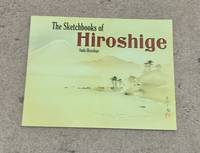
2007ref. 002968Dover Publications 2007. 1st Edition 1st Printing. Soft cover. Very Good. About the book: Softcover. First Printing. Book is in very good condition with moderate wear to all edges. Additional photos available upon requiest. Dover Publications paperback
ref. SONG3836539381Used: Good unknown
ref. DADAX3791382659New unknown
ref. DADAX3836539381New unknown
1958ref. B5149Tokyo: Charles E. Tuttle c. 1958. The book is in very good condition. Slip case is in good condition. . Edition: Second Edition Binding: Contemporary decorative cloth wrapping tied together with violet string. Pasted and free wood-grained endpapers. Decorative slipcase. Notes: Utagawa Hiroshige 1797-1858 also AndÅ Hiroshige was a Japanese ukiyo-e artist considered the last great master of that tradition. For scholars and collectors Hiroshige's death marked the beginning of a rapid decline in the ukiyo-e genre especially in the face of the westernization that followed the Meiji Restoration of 1868. Hiroshige's work came to have a marked influence on Western painting towards the close of the 19th century as a part of the trend in Japonism. Western artists closely studied Hiroshige's compositions and some such as van Gogh painted copies of Hiroshige's prints. Size: 12mo 98x150mm. Illustration: Illustrated with small reprints of woodblock prints from Hiroshige’s fifty-three stopping places during his journey from Tokyo to Kyoto with Haiku's and poems that accompany each of the stopping places. A colour 4 page map of his journey is at the beginning of the book. Provenance: Inscription on endpaper “To Alfred and Doris with affection Helen and Dean.” Category: Book Asia Far East Charles E. Tuttle hardcover
1890ref. B6305Japan. c.1890. A very good example of this beautifully designed book. . Binding: period soft paper wrapper. Notes: The Fifty-Three Stations of the TÅkaidÅ is a series of ukiyo-e woodcut prints created by Utagawa Hiroshige after his travel along the TÅkaidÅ. The TÅkaidÅ road linking the shÅgun's capital Edo to the imperial one KyÅto was the main travel and transport artery of old Japan. It is also the most important of the "Five Roads" GokaidÅ—the five major roads of Japan created or developed during the Edo period to further strengthen the control of the central shogunate administration over the whole country. The Fifty-Three Stations of the TÅkaidÅ was such a popular subject that it led Hiroshige to create some 30 different series of woodcut prints on it all very different one from the other by their size Åban or chuban their designs or even their number some series include just a few prints. Utagawa Hiroshige 1797 – 1858 was a Japanese ukiyo-e artist considered the last great master of that tradition. In terms of style Hiroshige is especially noted for using unusual vantage points seasonal allusions and striking colors. In particular he worked extensively within the realm of meisho-e pictures of famous places. During the Edo period tourism was also booming leading to increased popular interest in travel. Travel guides abounded and towns appeared along routes such as the TÅkaidÅ a road that connected Edo with Kyoto. Size: Oblong quarto Illustration: Illustrated title and 56 full page landscape woodcut prints. Category: Book Asia Far East unknown
1980ref. 89043Tokyo: Hakuhodo Inc 1980. Paperback. Near Fine. illustrations several color 36 unnumbered pages. Softcover in original wrapper. Oblong 21 x 30 cm. Original somewhat worn white protective envelope present. Sponsored by the Department of Culture and History of the State of West Virginia and presumably exhibited somewhere in West Virginia. Hakuhodo, Inc paperback
ref. DADAX0870110683New unknown
ref. SONG0807611433Used: Good unknown
ref. SONG3836521202Used: Good unknown
ref. SONG0807614998Used: Good unknown