Frontera, Walter RBiblio.com

536 results
2019ref. __1496374967Lippincott Williams & Wilkins 2019. Hardcover. New. 6th har/psc edition. 1447 pages. 10.75x8.50x2.25 inches. Lippincott Williams & Wilkins hardcover
2012ref. x-0415505321Routledge 2012. Hardcover. New. 1st edition. 584 pages. 9.25x6.25x1.25 inches. Routledge hardcover
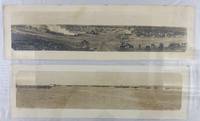
1916ref. 3738N.p. probably Portland 1916. Near fine. 36pp. plus two multi-panel folding panoramic photographic plates. Original tan wrappers printed in brown accompanied by original printed mailing envelope reading "A Souvenir of The Third Oregon Infantry on the Mexican Border." Very light wear. A scarce work featuring the officers staff and soldiers of the Third Oregon Infantry while stationed on the Mexican border near San Diego during the conflict with Mexico just before World War I. The work includes field and staff lists rosters organized by company and a list of "men who have enlisted at Clackamas since the Regiment left" in the summer of 1916. The work is profusely illustrated with photographs of each company within the text usually on the recto facing the roster lists. Each inside cover includes a folding panoramic photographic plate - the first titled "First Battalion at San Diego Exposition July 9 1916" and the second featuring the "Third Battalion on the Border - Mexico in the Background." Both panoramic images were produced from photographs by O.A. Tunnell. unknown
1916ref. 2445Brownsville 1916. Very good. Panoramic photograph approximately 7.5 x 39.5 inches. Mounted on card manuscript identifications along foot. Light wear minor soiling. A large formal portrait of Troop C of the 1st Virginia Cavalry in camp at Fort Brown Brownsville Texas. National guard units were called up in 1916 to guard the border while General Pershing made his incursions into Mexico against revolutionary and regular military units involved in the Mexican revolution and civil war of the 1910s. The image depicts the entire troop mounted in a single file with the commissioned officers at far left sixty-six men in all. Although the photographer does not identify himself each man in the unit is named in clear manuscript along the foot of the photograph making the present image a valuable record of the Virginia Cavalry's service in Texas during the Border War. unknown
ref. cbs 9789395736718US Edition. New. Brand New! Fast Delivery This is an International Edition and ship within 24-48 hours. Deliver by FedEx and Dhl & Aramex UPS & USPS and we do accept APO and PO BOX Addresses. Order can be delivered worldwide within 6-10 days and we do have flat rate for up to 2LB. Extra shipping charges will be requested if the Book weight is more than 5 LB. This Item May be shipped from India United states & United Kingdom. Depending on your location and availability. unknown
2026ref. CBS-9780443235160Elsevier Np43 2026. New. Elsevier (Np)43 unknown
2026ref. CBS-9780443235160Elsevier Np43 2026. New. Elsevier (Np)43 unknown
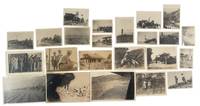
1910ref. 218961910. Large photograph archive circa 1910s-1930s documenting U.S. and Mexican military presence along the Rio Grande border and in Sinaloa during a period of revolution intervention and military modernization. The photographs depict soldiers fortifications and daily military activity across multiple locations providing primary-source visual evidence for the study of U.S.-Mexico border tensions the Mexican Revolution and interwar military development. One photograph identified en verso as taken at the "United States Immigration Station on the Rio Grande River - Border Service - 1916" situates the archive within the period of the Mexican Revolution and the U.S. Punitive Expedition while other images extend into the 1920s and 1930s reflecting continued military presence and surveillance. Archive comprises 22 vernacular silver gelatin photographs ranging from approximately 3.25 x 5.5 inches to 4.5 x 6.5 inches several with manuscript annotations en versos and studio stamps including "Laboratorio Vega Mazatlán Sin." and "La Foto Madero 42." Images include U.S. soldiers positioned atop sandbag fortifications with rifles standing at border outposts and posing beside military vehicles including an early Dodge touring car. Mexican Army scenes depict officers and enlisted men in varied uniforms including kepis and high-collared tunics assembled in formations occupying trenches and constructing earthen defenses. A photograph inscribed "12º Rgto. Mazatlán Sin. Marzo 1929" identifies the 12th Infantry Regiment during a coastal inspection. Additional images show cavalry units riding in formation across fields soldiers resting near agave plants and encampments along beaches with troops engaged in labor or recreation. One aerial photograph taken from a biplane captures a valley settlement while another image shows a rural structure marked "U.S. 19" on its roof suggesting identification or surveillance use. Across the archive soldiers appear in both formal and informal groupings sometimes posed in relaxed settings with visible gestures of camaraderie. These photographs document a period of sustained militarization along the U.S.-Mexico border and within northern Mexico following the upheaval of the Mexican Revolution and subsequent stabilization efforts. The presence of both U.S. Border Service personnel and Mexican Army units illustrates parallel and overlapping military activities including patrol construction and occupation of strategic terrain. The imagery of trenches transport and aerial observation reflects evolving military practices in the early twentieth century while the combination of formal and informal scenes provides insight into daily life within these environments. Surface wear to several prints; overall very good condition. A concentrated visual record of binational military activity and borderland conditions during a formative period of regional conflict and modernization. unknown
1994ref. BN713954Springer 1994. 1994. Infinite Dimensional Analysis: A Hitchhikers Guide Studies in Economic Theory Infinite Dimensional Analysis: A Hitchhikers Guide Studies in Economic Theory Aliprantis Charalambos D. and C. Border Kim Springer unknown
2020ref. CBS-9781496374967LWW 2020. New. LWW unknown
2020ref. CBS-9781496374967LWW 2020. New. LWW unknown
ref. 250706012Time Life. unknown_binding. New. 0x0x0. ~ Cover has some minor shelf wear. ~ NEW inside and Out! Clean & Crisp Pages w/No markings. Email for more info./pics Time Life unknown
1991ref. 2082702114611734Sada Sanman En Shinjin Oraisha Heisei 3-5 1991. Soft Cover. Fine. The book is in fine condition. Sada Sanman En Shinjin Oraisha Heisei 3-5 paperback
1916ref. 3127El Paso Tx: J.W. Medley & I. Shulman 1916. Good plus. About 9.5 x 51.25 inches. Backed on board. Some tanning to board. Minor spotting along edges minor staining and some surface lift along top left edge left edge and left bottom edge from being previously framed. One of a group of panoramic photographs depicting Camp Stewart at El Paso during the Mexican Revolution 1910-1919 known here as the Mexican Border War or Pershing's Punitive Expedition. The camp was set up in 1916 and the goal of the conflict was to stop Pancho Villa's military actions on the United States side of the border. American and Mexican forces pursued Villa for months and managed to quash the rebellion but Pancho Villa himself was never captured. This photograph provides a good view of the tents and small building erected in this dry Texas landscape. The photographers J. Urban Medley and Isaac Shulman of El Paso Texas were prolific chroniclers of the American Southwest and Mexican borderlands with a studio at 1709 Montana. A striking panoramic image of a large camp near El Paso during the Texas Border War. J.W. Medley & I. Shulman unknown
1916ref. 3373McAllen: Photo. by Murff & Robinson 1916. Very good. Two panoramic photographs measuring 8 x 28 and 8 x 26.5 inches. Rolled. A couple of short closed tears and small perforations otherwise minor wear and soiling. Two detailed panoramic photographs that depict the First Cavalry Regiment of the New York National Guard one unit of the 15000 guardsmen from the state that were sent to garrison the Rio Grande in South Texas during the Border War with Mexican revolutionaries and Pershing's Punitive Expedition against Pancho Villa. The New Yorkers were stationed at inadequate parched camps in Mission McAllen and Pharr. The slightly larger of the two images here shows the camp of the First Cavalry at McAllen with field tents and temporary camp buildings on the left and the regiment's allotment of horses tethered together at right. The second images shows the unit on parade being reviewed by General Frederick Funston the commander of the border garrisons. The photos are each captioned in the negative and dated August 28 1916 and October 1 1916 respectively. Scarce images of New York's encampment in Texas during the Border War. Photo. by Murff & Robinson unknown
1952ref. 2082702114611533Yamaguchi Prefecture Agricultural Group History Compilation Committee 1952. Soft Cover. Fine. Number of books: 1 Yamaguchi Prefecture Agricultural Group History Compilation Committee paperback
1936ref. 2082702114600105Kobakuzan Manpuku-ji Temple Edition 1936. Soft Cover. Fine. Number of books: 1 Kobakuzan Manpuku-ji Temple Edition paperback
1916ref. 221871916. Photographs of United States Army troops along the U.S.-Mexico border circa 1916 document military operations associated with the Pancho Villa Expedition led by John J. Pershing and record the deployment of cavalry and artillery units during a period of heightened border conflict. Produced in field conditions these images capture soldiers equipment and encampments in arid terrain providing direct visual evidence of U.S. military logistics mounted patrols and cross-border mobilization during the Mexican Border War. The archive supports research into early twentieth century warfare U.S.-Mexico relations and the operational structure of pre-World War I American military forces. Archive consists of approximately twenty two original silver gelatin photographs most measuring about 3.25 x 5.5 inches with several larger examples including some printed on postcard stock. The images depict cavalrymen in standard issue M1912 wool field shirts campaign hats riding boots and wrap puttees posed on horseback and alongside artillery equipment. Multiple photographs show tent encampments supply convoys horse and mule trains and field kitchens distributed across desert landscapes. One recurring unidentified soldier appears in several images including a view at a marked "Continental Divide Elevation 6900 ft Tombstone 25 Miles" and another near a roadside marker reading "Road constructed by Prison Labor A.D 1913-1914." Artillery scenes include horse drawn caissons transporting field guns and a close view of a 3 inch M1902 field gun with spoked wooden wheels and riveted barrel. Additional images show soldiers positioned beside artillery pieces and within organized camp environments documenting both operational readiness and daily military life. These photographs were created during a period when the U.S. Army relied heavily on mounted units and animal powered transport prior to widespread mechanization and they record the logistical demands of sustaining military presence across the borderlands. The Punitive Expedition marked a significant moment in U.S. military modernization as lessons learned from these operations informed subsequent participation in World War I. The images also document the physical infrastructure of border militarization including constructed roads and encampments within a contested geopolitical region. Minor edge wear and handling creases consistent with field use; images remain clear and well preserved; overall very good condition. This archive provides concentrated visual documentation of U.S. Army field operations and border conflict during a formative moment in American military history. unknown
2023ref. CBS-9789395736718Lww Rs Reprint Exclusive 2023. New. Lww Rs Reprint Exclusive unknown
2023ref. CBS-9789395736718Lww Rs Reprint Exclusive 2023. New. Lww Rs Reprint Exclusive unknown
ref. DADAX0814778496New unknown
1985ref. SBBIH-YZZVR6BKKE7ZMacdonald 1985. paperback. Good. Our good condition books are generally good for reading but not for gifting or collecting. They could have imperfections such as creasing fanning inscriptions margin notes yellowing staining on edge or cover or pages bumps scuffs etc etc sometimes multiple of these. It's a wide category that encompasses anything that isn't almost-new down to anything that is slightly better than poor. We would NOT recommend gifting Good books - these should be considered reading copies. Our books are dispatched from a Yorkshire former cotton mill. We list via barcode/ISBN so please note that the images are stock images and may not be the exact copy you receive furthermore the details about edition and year might not be accurate as many publishers reuse the same ISBN for multiple editions and as we simply scan a barcode or enter an ISBN we do not check the validity of the edition data when listing. If you're looking for an exact edition please don't order at least not without checking with us first although we don't always have time to check. We aim to dispatch prompty the service used will depend on order value and book size. We can ship to most countries see our shipping policies. Payment is via Abe only. Macdonald paperback
1916ref. 12895Des Moines IA: Hebard-Showers Company September 1916. Panoramic photograph 8 x 37.5 inches with numerous captions in the negative. Rolled tightly. A few soft creases minor wear at bottom right corner. Very good. An unusually informative panorama of Brownsville and Matamoros taken from the American side of the Rio Grande during the heat of the Mexican Revolution. The photograph was produced by the form of Hebard-Showers here spelled Hedard-Showers likely scratched backwards in the negative of Des Moines Iowa. The image captures the scene along the Red River from a portion of Fort Brown in the east west to Brownsville's Union Station with the International Bridge visible downriver. Directly across the river from Brownsville is labeled "Santa Cruz Mexico" with Matamoros a bit further south. Other landmarks identified on the Brownsville side include the aforementioned Union Station and the International Bridge as well as Fort Brown a river landing the customs house and various locations for American state guard units. Near the landing is the Brownsville Transfer Company's building. More pertinent to the Mexican Revolution are some of the captions identifying locations on the Mexican side. These include "Casa Mata Fort or place of execution" "Blanco's Battlefield June 3rd 1913" and "Villa's Battlefield March 27 - Apr. 13 1915. 100 Killed." Also identified on the Mexican side are a Mexican bull ring the "Bone yard" and a river landing. Interestingly a small rowboat containing a few people can be seen approaching the Mexican side on the Rio Grande. Naturally Hebard-Showers Company mainly documented Des Moines and its surrounding areas but they shot a handful of Brownsville border views over several years at least between the present example and about 1921. SMU holds an example of the later panorama; comparisons between the present example and SMU's does reveal some changes in the area over the course of those five years and the present example includes many more detailed captions in the negative. Hebard-Showers Company, September unknown
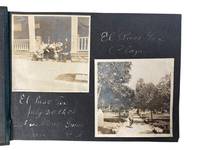
1905ref. 231541905. Texas HistoryBorderlands U.S.-Mexico borderlands photograph album 1905-1906 centered on El Paso and Juárez with additional views in New Mexico Arizona California Oregon and Alaska. The album documents an early twentieth-century traveler's movement through the southern border of the U.S. when El Paso and Ciudad Juárez were being promoted through rail travel tourism and cross-border entertainment and when American visitors regularly treated Mexican religious sites plazas bullrings and street life as part of a border excursion circuit. Its strongest historical value lies in the concentration of images tied to the Texas-Mexico border including Juárez bullfight and cockfight scenes street and church views and domestic group portraits in El Paso alongside a labeled photograph of a Santo Domingo Pueblo corn dance likely Kewa Pueblo north of Albuquerque showing non-Native travelers recording Indigenous life in the Southwest. Photograph album containing 81 original photographs most measuring approximately 2 x 3 to 4 x 5 inches mounted on thick black paper leaves in a cloth-bound album. Contemporary manuscript captions identify numerous locations and subjects including "El Paso Tex" "Juarez Mex" "Bull Fight" "Cock Fight" "Near Albuquerque 1906" "1906 New Mexico" "New Mexico 1905" "Juarez Mex Church over 350 years old" and "Corn Dance. Santo Domingo." Visible subjects include family and social group portraits posed on porches and in front of residences; women in white dresses and men in coats hats and ties; a tree-lined park path in El Paso; religious architecture and church interiors in Juárez; a fountain identified as Robinson Park in Albuquerque; river and landscape views labeled Rio Grande; a saguaro cactus study; a donkey; a seated elderly woman in a doorway; and multiple arena photographs showing matadors horses attendants spectators and ring action in Juárez. Several photographs bear later ink inscriptions including one later image of five men captioned "Alaska" en recto and with names on verso including "Mayor Goldstein" a prominent Jewish businessman and six time Juneau Mayor Isadore Goldstein. The album records border travel encompassing scenes of domestic life in El Paso tourism in Juárez and excursions into New Mexico and the wider West. The Juárez images are especially strong preserving direct vernacular views of public spectacle in the bullring and cockfight pit as well as church architecture and urban settings seen from the perspective of a visiting American observer. Photographs mounted throughout; some images faded or silvered with scattered surface wear corner wear occasional discoloration and a few later annotations or tape remnants visible. Overall very good condition. unknown
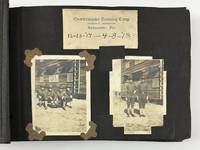
1918ref. 2322Various locations in Texas 1918. Very good. Fifteen leaves illustrated with fifty-five mounted photographs and a few ephemeral clippings identifying locations. Oblong octavo. Contemporary black cloth string-tied. Light soiling to covers. Minor wear to some photographs but overall a handsome selection. A unique collection of vernacular photographs collected by a soldier in the 8th U.S. Cavalry identified simply as D. Watson serving in southwest Texas during the Mexican Border War. The first two pictures emanate from Quartermaster Training Camp in Jacksonville Florida. This is followed by one photo from Barron Field in Everman Texas. The remaining photographs document Watson's time in Ruidosa Texas an unincorporated Texas-Mexico border town in Presidio County about a hundred miles from Terlingua. Here Watson includes photographs of himself and other soldiers and their horses posed in front of old stone structures in orange groves amongst canyons in front of an automobile and more with images of Mexican adobes a wagon advertising an "electric light company" the cavalry preparing their horses scenes of the wilds of southwest Texas and the E.H. Carlton company store. E.H. Carlton was also a principal in the Carlton Van Loan Company an oil speculation firm active in the 1920s. An eclectic and intriguing selection of Texas-Mexico border images from an important period in history. unknown