Chernin, KimAntiquariat.de
578 results
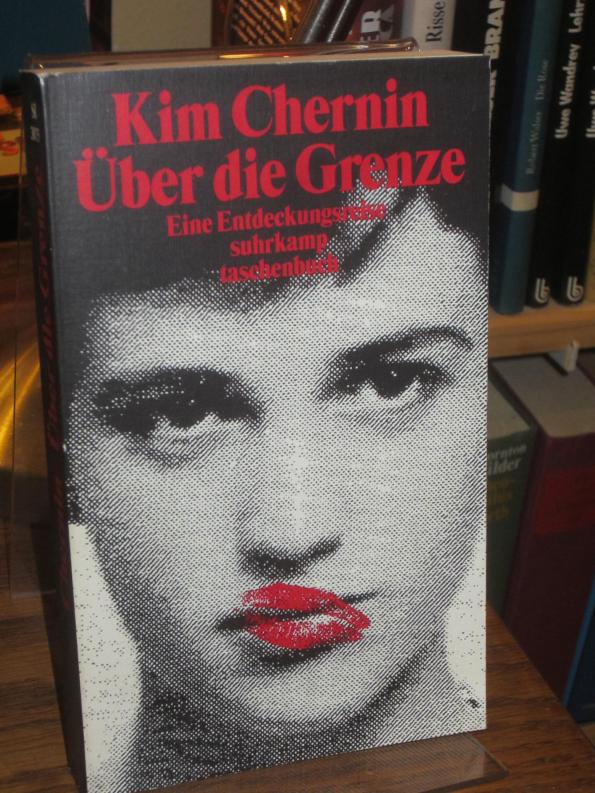
2000ref. 54786Frankfurt am Main: Suhrkamp, 2000. 1. Aufl.; 317 S.; 18 cm; OKart. (Taschenbuch);
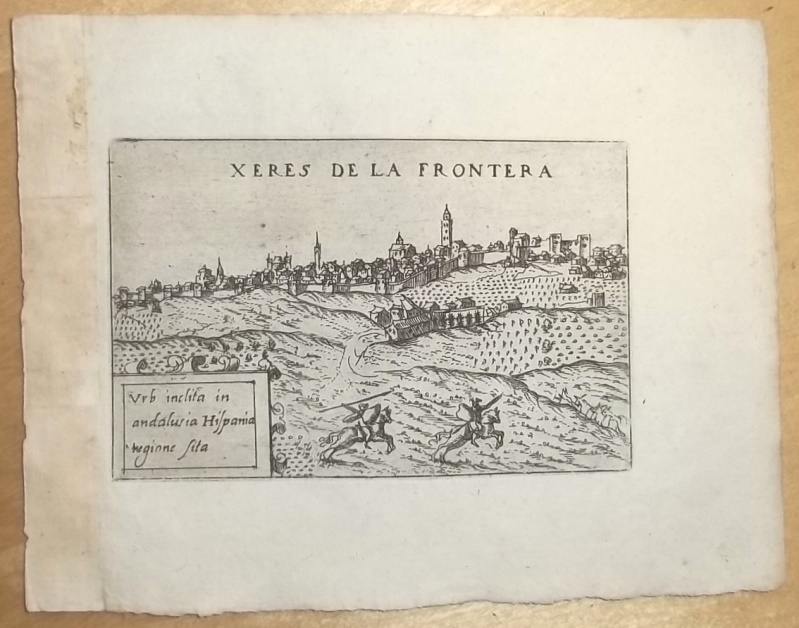
1600ref. 17001Venedig, Valegio, um 1600. Ca. 8,5 cm x 13 cm.
1992ref. 24692Paris, Editions Chandeigne, 1992. 4°. With numerous color. Illustrations. 140 p., Hardcover with dust jacket. Good and clean copy.
ref. 47618Various publishers & dates. Extensive photographic archive documenting events on both sides of the U.S.-Mexico Border during the Mexican Revolution focused primarily on the Border Wars in Texas and the Veracruz Incident of 1914 comprised entirely of contemporary images all but a few of which are original vintage prints. The collection includes: • Sixty-one commercially-produced real-photo postcards ca. 14cm x 9cm or the reverse; • Six commercially-printed postcards using non-photographic processes same dimensions; • Three carte-de-visite portraits ca 9cm x 6cm mounted to cards; • Eight small-format photographs ranging from 14cm x 8cm to 11cm x 16cm of which three appear to be commercial images; • Three 8x10 20cm x 25cm photographic prints printed at some later date from original plates but apparently not contemporary; • One vintage 4x6 10cm x 16cm photograph mounted on board. All but a dozen or so images are captioned in the negative and most are additionally captioned in pencil in a later hand on verso. Approximately half the images include no photo credit; of those that do we have identified the following photographers: W.H. Horne D.W. Hoffman Walter P. Hadsell Van Zile & Chalk and L.O. She. Condition is generally Very Good. Two of the photo postcards are damaged with abrasions to significant portions of image area; the remainder show various degrees of edge wear aging and creasing but by and large image quality remains excellent. None of the postcards are postally used though a few include brief contemporary notes on verso. The refusal of Mexican President Porfirio Dîaz to cede power to his rival Francisco Madero in the elections of 1910 resulted in a violent large-scale revolt by campesinos and leftists setting off the thirty-year long Mexican Revolution. American involvement in the conflict began in 1911 when President William H. Taft under the guise of heightening border security moved to back Díaz against the rebels. The resulting mobilization - Taft sent more than 20000 American troops nearly a quarter of all American forces to the Mexican border with especially heavy concentrations in Texas and New Mexico - was to that date the largest mobilization of American military forces in peacetime. At the same time many Americans whose sympathies were not aligned with the Díaz dictatorship including anarchists wobblies Native Americans and more than a few soldiers of fortune went south to fight on the side of the rebels. The resulting border conflict which took place over nearly a decade occasionally pitting American insurrectos against American Federal troops resulted in thousands of Mexican and hundreds of American deaths. The Border Wars reached their climax around the period 1912-1914 which happened to coincide with a near-hysterical vogue for postcards among the American public. The result is that the Mexican Revolution is perhaps the first major armed conflict to have been extensively photo-documented in real time and certainly the first to have had a significant mass audience for that documentation. At least three hundred commercial photographers have been identified in association with the Mexican Revolution and they produced tens of thousands of images ranging from the relatively innocuous e.g. peaceful street and harbor scenes in Veracruz to the horrific lynchings and sidewalk cremations. This entire range of content is represented in the current collection along with portraits of most of the key players on the Mexican side including El Presidente Porfirio Díaz; his primary rival and successor Francisco Madero; Madero's successor by coup Victoriano Huerta; and various military figures including General Juan Navarro Felipe Angeles Ramírez and numerous others. Many of these semi-professional images though produced with commercial intent "professional" remains a guarded term in the context of what was essentially battlefield exploitation photography are valuable for their almost off-hand depictions of violent day-to-day life on the contested border including the casual destruction and acceptance of death from both sides that seemed to define this conflict. Of particular note are numerous of photographs of African-American troops the so-called "Buffalo Soldiers" as well as at least one image depicting Native American soldiers in uniform. Locales represented include Camp Grossmont in California; El Paso and Laredo in Texas and their cross-border sister cities Juarez and Nuevo Laredo; Veracruz site of the American incursion of 1914 known as the "Veracruz Incident"; and various unidentified encampments and battle sites in both Texas and Mexico. A wide-ranging and compelling photographic collection documenting not only a key period in U.S. military diplomacy - one which for better or worse set the tone for American-Mexican relations for the succeeding century - but also a tangible manifestation of the first widespread public incarnation in America of the picture-postcard as a vehicle for both propaganda and photojournalism. unknown books
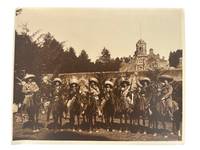
1911ref. 220241911. Pancho Villa and División del Norte Mounted Troops of the Mexican Revolution. A vintage Extra Large silver gelatin photograph by Agustín Casasola measuring 16" x 20" . Striking and rare original photograph from the early years of the Mexican Revolution depicting Pancho Villa and a detachment of his División del Norte mounted on horseback before a weathered colonial-era convent or mission compound likely in the state of Chihuahua or Durango. All men are in uniform heavily armed with bandoliers and rifles wearing wide-brimmed sombreros characteristic of the revolutionary norteño aestheticn. The image documents revolutionary leader Pancho Villa and a group of armed fighters assembled before a walled ecclesiastical compound in the mountainous regions of northern Mexico. Villa emerged as one of the central military figures of the Mexican Revolution commanding cavalry forces known as the División del Norte that operated across Chihuahua Durango and other northern states during the uprising against the long dictatorship of Porfirio Díaz. Photographs produced during the early revolutionary campaigns played an important role in circulating images of insurgent leadership and helped establish Villa's reputation as a charismatic popular commander. Casasola Agustín Víctor photograph. Casasola Studio circa 1911. Large silver gelatin photograph with "Casasola Praga No. 16 Mexico" studio stamp on versoPancho Villa and revolutionary cavalry before church compound. Mexico City: The photograph depicts Villa and a detachment of mounted soldiers positioned before a colonial era church or mission compound likely located in the northern Mexican states where Villa's forces operated. The men are mounted on horseback and dressed in revolutionary military attire including bandoliers rifles and wide brimmed sombreros associated with the norteño revolutionary aesthetic. Villa believed to be the third rider from the right appears in the central grouping of mounted officers. The architectural background features domed towers and high walls characteristic of colonial religious buildings creating a visual contrast between the armed revolutionary force and the remnants of Mexico's colonial institutional landscape. Agustín Víctor Casasola founded one of the most influential photographic studios documenting the Mexican Revolution producing images that later formed the core of the Archivo Casasola. Casasola photographers recorded revolutionary leaders soldiers civilians and daily life during the conflict shaping both Mexican historical memory and international visual understanding of the revolution. Large format prints such as this example were produced in limited numbers for press circulation archives or exhibitions documenting the conflict. Photograph measures approximately 16 × 20 inches. Minor edge wear with a small closed tear at the upper left margin and light creasing at the lower right margin away from the image area; print surface clean with strong tonal range and detail. Overall condition very good. unknown books
1916ref. 239811916. Fifth Massachusetts Infantry Mexican Border photo and ephemera archive 1916 to 1917 documenting the mobilization encampment training movement and social organization of a Massachusetts National Guard regiment sent to the Southwest during the crisis surrounding Pancho Villa and the U.S. Punitive Expedition into Mexico. President Woodrow Wilson called National Guard units into federal service in June 1916 after Villa's March attack on Columbus New Mexico and Brigadier General John J. Pershing's subsequent advance into Mexico; by the end of the campaign most of the National Guard had been federalized and concentrated along the border. The Fifth Massachusetts Infantry was among the state organizations serving in the El Paso region contemporary reports identifying its soldiers among the thousands of militiamen stationed there while individual companies also operated from points including Las Cruces. The photographs and accompanying papers record that mobilization from inside the regiment identifying officers and enlisted men mapping camps and patrol country recording the material organization of military life and preserving the correspondence and commemorative culture that connected service on the border to home. Disbound album archive of 56 silver gelatin photographs and 13 pieces of ephemera including a piece of Texas cotton and a "Mexican cigarette" handwritten letters and verse newspaper clippings and a First Annual Dinner handout for the Fifth Massachusetts Infantry; photographs approximately 3 x 4.75 inches and album leaves approximately 5.5 x 7.25 inches principally Texas and New Mexico 1916 to 1917. Many photographs carry handwritten captions identifying people locations and events. A regimental band poses with cornets horns drums and other instruments the large bass drum lettered "Fifth Massachusetts Infantry Boston"; a lineup of five uniformed men before wooden camp buildings is identified as "Sergt. Maj. Gamble; Maj. Thomas; Sergt. Peters; Sergt. Murphy; Sergt. Bugler Ray." Individual portraits identify "Francis Smith" and "Chaplain Rollins" among others while other photographs record color guards soldiers with rifles mounted men trucks and military transport tent streets inspections camp formations and servicemen relaxing outside quarters. Landscape views follow the regiment through the border environment with captions referring to Camp Cotton El Paso Mount Franklin Las Cruces the Rio Grande and the Mexican border. One photograph captioned "Wrecked Tent Aug 17 1916" records damage within camp; another "Mexican Doby Hut / Aug. 23 1916" shows four Mexican children before an adobe dwelling. Ephemera extends the record beyond the camera: newspaper clippings concern the Fifth Massachusetts and border duty the unit dinner program documents post deployment regimental commemoration and handwritten correspondence includes a poem describing the anticipation of seeing a loved one again from the train home. The 1916 mobilization placed citizen soldiers from state National Guard organizations into a rapidly expanded federal border defense system while Pershing's Regular Army expedition pursued Villa inside Mexico. Guardsmen arriving in the Southwest encountered tent encampments shortages unfamiliar heat and terrain road marches drills trench digging weapons training patrol assignments and border guard duty; Army histories describe Camp Cotton near El Paso as initially austere with soldiers sleeping on the ground and constructing drainage and sanitation works before facilities improved later that summer. The 1916 border deployment also preceded American entry into the First World War by less than a year giving National Guard organizations practical experience in mobilization camp administration transport discipline and field service immediately before a much larger federal call to arms. Album leaves disbound with edge chipping tears losses around binding holes and scattered mounting residue; photographs show light to moderate silvering fading creasing and surface wear with ephemera variously toned and worn. Overall in good condition. A regimental record of how the Fifth Massachusetts Infantry lived trained moved and maintained unit identity during the United States military mobilization along the Mexican border in 1916. unknown books
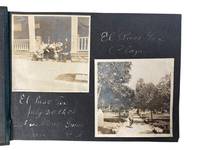
1905ref. 231541905. Texas HistoryBorderlands U.S.-Mexico borderlands photograph album 1905-1906 centered on El Paso and Juárez with additional views in New Mexico Arizona California Oregon and Alaska. The album documents an early twentieth-century traveler's movement through the southern border of the U.S. when El Paso and Ciudad Juárez were being promoted through rail travel tourism and cross-border entertainment and when American visitors regularly treated Mexican religious sites plazas bullrings and street life as part of a border excursion circuit. Its strongest historical value lies in the concentration of images tied to the Texas-Mexico border including Juárez bullfight and cockfight scenes street and church views and domestic group portraits in El Paso alongside a labeled photograph of a Santo Domingo Pueblo corn dance likely Kewa Pueblo north of Albuquerque showing non-Native travelers recording Indigenous life in the Southwest. Photograph album containing 81 original photographs most measuring approximately 2 x 3 to 4 x 5 inches mounted on thick black paper leaves in a cloth-bound album. Contemporary manuscript captions identify numerous locations and subjects including "El Paso Tex" "Juarez Mex" "Bull Fight" "Cock Fight" "Near Albuquerque 1906" "1906 New Mexico" "New Mexico 1905" "Juarez Mex Church over 350 years old" and "Corn Dance. Santo Domingo." Visible subjects include family and social group portraits posed on porches and in front of residences; women in white dresses and men in coats hats and ties; a tree-lined park path in El Paso; religious architecture and church interiors in Juárez; a fountain identified as Robinson Park in Albuquerque; river and landscape views labeled Rio Grande; a saguaro cactus study; a donkey; a seated elderly woman in a doorway; and multiple arena photographs showing matadors horses attendants spectators and ring action in Juárez. Several photographs bear later ink inscriptions including one later image of five men captioned "Alaska" en recto and with names on verso including "Mayor Goldstein" a prominent Jewish businessman and six time Juneau Mayor Isadore Goldstein. The album records border travel encompassing scenes of domestic life in El Paso tourism in Juárez and excursions into New Mexico and the wider West. The Juárez images are especially strong preserving direct vernacular views of public spectacle in the bullring and cockfight pit as well as church architecture and urban settings seen from the perspective of a visiting American observer. Photographs mounted throughout; some images faded or silvered with scattered surface wear corner wear occasional discoloration and a few later annotations or tape remnants visible. Overall very good condition. unknown books
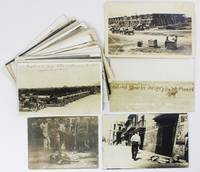
1910ref. 229401910. This compelling photo archive consists of 22 real photo postcards most with white-ink captions in the negative depicting U.S. soldiers Mexican Federal troops executions trench-warfare scenes and cross-border skirmish zones along the Rio Grande during the Mexican Revolution and the U.S.-Mexican Border War of the 1910s. Printed in sepia and black and white each measure 3.5" x 5". The images were taken in and around Ciudad Juárez El Paso and other Chihuahua and Texas borderlands a region where U.S. military units including African American regiments National Guard troops and cavalry detachments were deployed in response to revolutionary activity and cross-border raids. The RPPC range from composed group portraits of armed U.S. soldiers in "Boys in Khaki Guarding the Rio Grande" to stark documentary imagery such as the bodies of executed revolutionaries bearing gunshot wounds. Several cards show rifle pits trench emplacements large military encampments and convoys of mounted troops crossing dry riverbeds or moving toward the border line. One of the most visually significant images documents a crowd of U.S. cavalry passing along a raised river embankment underscoring the scale of the troop buildup. Another captures a large encampment beside the Rio Grande flags raised above a broad sweep of desert landscape. Group portraits of American troops emphasize uniformity weaponry and camaraderie; many subjects appear to be young white or Mexican soldiers with sporadic presence of Mexican civilians at the margins of certain frames sometimes photographed as laborers. A powerful and historically significant archive offering an unflinching visual record of the U.S.-Mexican Border War capturing not only military maneuvers and border fortifications but also the human cost of the conflict. Minor edge wear light toning to some images inscriptions in the negative remain legible throughout. Overall good to very good condition. unknown books
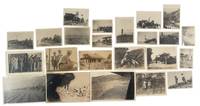
1916ref. 221871916. Photographs of United States Army troops along the U.S.-Mexico border circa 1916 document military operations associated with the Pancho Villa Expedition led by John J. Pershing and record the deployment of cavalry and artillery units during a period of heightened border conflict. Produced in field conditions these images capture soldiers equipment and encampments in arid terrain providing direct visual evidence of U.S. military logistics mounted patrols and cross-border mobilization during the Mexican Border War. The archive supports research into early twentieth century warfare U.S.-Mexico relations and the operational structure of pre-World War I American military forces. Archive consists of approximately twenty two original silver gelatin photographs most measuring about 3.25 x 5.5 inches with several larger examples including some printed on postcard stock. The images depict cavalrymen in standard issue M1912 wool field shirts campaign hats riding boots and wrap puttees posed on horseback and alongside artillery equipment. Multiple photographs show tent encampments supply convoys horse and mule trains and field kitchens distributed across desert landscapes. One recurring unidentified soldier appears in several images including a view at a marked "Continental Divide Elevation 6900 ft Tombstone 25 Miles" and another near a roadside marker reading "Road constructed by Prison Labor A.D 1913-1914." Artillery scenes include horse drawn caissons transporting field guns and a close view of a 3 inch M1902 field gun with spoked wooden wheels and riveted barrel. Additional images show soldiers positioned beside artillery pieces and within organized camp environments documenting both operational readiness and daily military life. These photographs were created during a period when the U.S. Army relied heavily on mounted units and animal powered transport prior to widespread mechanization and they record the logistical demands of sustaining military presence across the borderlands. The Punitive Expedition marked a significant moment in U.S. military modernization as lessons learned from these operations informed subsequent participation in World War I. The images also document the physical infrastructure of border militarization including constructed roads and encampments within a contested geopolitical region. Minor edge wear and handling creases consistent with field use; images remain clear and well preserved; overall very good condition. This archive provides concentrated visual documentation of U.S. Army field operations and border conflict during a formative moment in American military history. unknown books
1917ref. 223051917. Wakefield Ben. U.S. field artillery soldier photograph archive documenting National Guard mobilization and artillery training at the United States-Mexico border during the Border War created in El Paso Texas and surrounding areas in 1917. The photographs record the service of Ben Wakefield of Toledo Ohio a member of Battery C 1st Battalion Ohio Field Artillery stationed at Fort Bliss during the period of heightened border militarization following the 1916 raid on Columbus New Mexico led by Francisco "Pancho" Villa and the subsequent U.S. Punitive Expedition under General John J. Pershing. The images provide visual documentation of field artillery operations mounted logistics and daily camp life among National Guard troops deployed to reinforce the border during a moment when the United States was simultaneously confronting instability in northern Mexico and preparing for entry into the First World War. Through portraits training scenes and encampment views the archive records the mobilization of state militia forces into federal service during one of the most significant domestic military deployments of the early twentieth century. Photo archive consisting of 31 silver gelatin photographs produced in El Paso Texas and nearby encampments in 1917. Approximately half bear pencil inscriptions on the verso identifying Wakefield or the location including captions reading "Wakefield" "Ben Center Wakefield" "Wakefield Horse" and "El Paso." One photograph bears a developing stamp from Bohne's Studio of Toledo Ohio. The photographs depict Wakefield and fellow artillerymen posed in regulation campaign hats breeches and puttees along with multiple images of horse-drawn artillery equipment including the standard U.S. Army M1902 3-inch field gun. In one photograph Wakefield and three soldiers pose beside the artillery piece with Wakefield seated before the gun wearing a slouch cap. Additional images show artillery teams maneuvering guns across open desert terrain using horses and mules soldiers marching in formation against the mountainous landscape of the Chihuahuan Desert and a photograph captioned "game Football El Paso" depicting soldiers playing football on a dusty parade ground with rows of canvas tents behind them. Another image shows the field gun positioned behind a brush screen during nighttime operations suggesting artillery drills or simulated combat exercises conducted during the border deployment. Archive of 31 photographs. Silver gelatin prints ranging approximately from 2 x 1 inches to 5 x 3 inches. The photographs collectively document the material culture and operational structure of U.S. National Guard artillery units stationed along the border during the 1916-1917 mobilization period when Fort Bliss served as a major staging ground for forces supporting the Punitive Expedition and guarding against further cross-border conflict. The images illustrate horse-drawn artillery transport tent encampments arranged in orderly rows and the social life of soldiers during extended deployments in the Southwest. Light edge wear and minor silvering visible on several prints with occasional handling marks consistent with age. Images remain clear with strong contrast. Overall very good condition. A cohesive visual record of National Guard field artillery service on the U.S.-Mexico border during the final phase of the Border War and the broader military mobilization preceding American entry into the First World War. unknown books
1900ref. 225561900. Mexico Mexico and Mexico border early 20th century photo archive. 38 images total including 22 hand-tinted lithographic scenes from 11 double-sided perforated travel-album postcards plus 16 loose photographs and real photo postcards; most measuring 3.5" x 5.5". A visually rich assemblage documenting Mexican urban rural and border life from the late Porfiriato through the early post-revolutionary era blending formal travel site views with candid street and travel photography. The large booklet contains 11 double-sided perforated postcards which was likely sold as a fold-out travel souvenir featuring printed captions and hand-coloring. These depict notable sites across Ciudad Juárez Tijuana and other key locations including the Juárez Bull Ring the Monumento a la Independencia in Mexico City interior and exterior views of Mission Guadalupe in Juárez street markets adobe homes rail stations and border architecture. Several El Paso Texas scenes are also included highlighting the transnational urban corridor. The 16 loose real photo postcards and snapshots expand the geographical and thematic range showing rural adobe dwellings market women carrying pottery and baskets men in sombreros carrying baskets waterfront and harbor scenes indigenous vendors and panoramic urban streetscapes. Identified locations include Taxco Guaymas and Mexico City alongside images from northern border towns with clear signs of U.S.-Mexico economic and cultural exchange. One image shows a young Mexican man and boy holding up fishing game on craggy ocean cliffs another shows farm laborers tilling the field led by ox and another shows a group of young men with oversized pestle and mortars likely grinding corn. Minor wear to some images;but overall very good condition. A cohesive visual record ideal for researchers of Mexican social history borderland studies urban development and early 20th-century travel culture illustrating both the monumental landmarks and everyday life encountered by travelers during this transformative period. unknown books
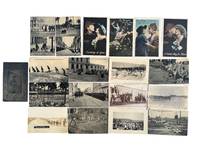
1916ref. 225131916. Mexico Border Wars United States and Mexican Border War photograph archive circa 1914-1916 documents military operations and occupation scenes produced during the period of armed confrontation between the United States and revolutionary Mexico in the years surrounding the Mexican Revolution. Created during the escalation of cross border conflict that followed the Tampico Affair and the subsequent United States occupation of Veracruz in April 1914 the photographs record American and Mexican troops engaged in urban combat military drills occupation ceremonies and field movements along the Gulf Coast and northern borderlands. The images provide visual documentation of the military campaign ordered by President Woodrow Wilson during a decade of instability in Mexico when revolutionary conflict cross border raids and American intervention shaped relations between the two nations. Archive of nineteen photographs created between approximately 1914 and 1916 primarily real photo postcards with one tintype portrait. Most photographs measure approximately 3.5 × 5.5 inches and several retain contemporary captions identifying locations and military activity. Scenes documenting the United States occupation of Veracruz include captions such as "The 5th Brigade U.S. Army Commanded by General Funston taking Possession of Vera Cruz April 30th 1914" and "Federal Mexican Soldiers Firing from Street Corner First Day of Battle April 21st." Additional images depict United States troops in training or formation including "U.S. Soldiers Hiking in the Sand Hills around Vera Cruz Mexico" "U.S. Army at Vera Cruz Mexico" and "Nebraska's Battalion." Mexican federal troops appear in photographs captioned "Serving Machine Guns" and assembled "for Grand Review Vera Cruz Mex." A dramatic real photo postcard titled "Firing Squad Mexico" depicts six riflemen firing upon a condemned prisoner kneeling at the water's edge. Another image captioned "Adobe House Destroyed by Artillery in Mexico" shows a bullet scarred building façade with mounted troops nearby. Panoramic troop movements appear in photographs captioned "Mexican Infantry entering Juárez Mex." and "Scene at Vera Cruz Mexico during Battle of April 21st and 22nd" the latter showing soldiers lying prone in firing positions. The archive also includes four hand colored patriotic "sweetheart" postcards sent by soldiers to loved ones bearing sentimental captions such as "Don't Forget the One You Left Behind." The tintype depicts an American soldier wearing a campaign hat and service uniform standing before a canvas tent. One postcard bears a lengthy manuscript letter written from McAllen Texas dated September 27 1916 in which the writer reports: "Still here! & it's hot! but I have a nice job and plenty to do. I love it and I'm sure you would enjoy it. It is a splendid experience and I am proud of the N.G. The flag is O.K. in our hands." These photographs emerge from the years of heightened tension along the United States Mexico border between 1910 and 1919 when revolutionary upheaval within Mexico and armed incursions across the frontier led to repeated military mobilization by the United States. The occupation of Veracruz in 1914 marked one of the most significant American interventions of the period and produced several days of street fighting between United States Marines Army units and Mexican defenders. Light handling wear to several cards with occasional corner creasing and one example with minor margin loss. Tintype shows light surface spotting but retains clear detail. Overall very good condition. The photographs collectively record both the violence of the conflict and the symbolic displays of military presence that accompanied the occupation including troop drills reviews and staged patriotic imagery circulated through postcards. unknown books
1910ref. 218961910. Large photograph archive circa 1910s-1930s documenting U.S. and Mexican military presence along the Rio Grande border and in Sinaloa during a period of revolution intervention and military modernization. The photographs depict soldiers fortifications and daily military activity across multiple locations providing primary-source visual evidence for the study of U.S.-Mexico border tensions the Mexican Revolution and interwar military development. One photograph identified en verso as taken at the "United States Immigration Station on the Rio Grande River - Border Service - 1916" situates the archive within the period of the Mexican Revolution and the U.S. Punitive Expedition while other images extend into the 1920s and 1930s reflecting continued military presence and surveillance. Archive comprises 22 vernacular silver gelatin photographs ranging from approximately 3.25 x 5.5 inches to 4.5 x 6.5 inches several with manuscript annotations en versos and studio stamps including "Laboratorio Vega Mazatlán Sin." and "La Foto Madero 42." Images include U.S. soldiers positioned atop sandbag fortifications with rifles standing at border outposts and posing beside military vehicles including an early Dodge touring car. Mexican Army scenes depict officers and enlisted men in varied uniforms including kepis and high-collared tunics assembled in formations occupying trenches and constructing earthen defenses. A photograph inscribed "12º Rgto. Mazatlán Sin. Marzo 1929" identifies the 12th Infantry Regiment during a coastal inspection. Additional images show cavalry units riding in formation across fields soldiers resting near agave plants and encampments along beaches with troops engaged in labor or recreation. One aerial photograph taken from a biplane captures a valley settlement while another image shows a rural structure marked "U.S. 19" on its roof suggesting identification or surveillance use. Across the archive soldiers appear in both formal and informal groupings sometimes posed in relaxed settings with visible gestures of camaraderie. These photographs document a period of sustained militarization along the U.S.-Mexico border and within northern Mexico following the upheaval of the Mexican Revolution and subsequent stabilization efforts. The presence of both U.S. Border Service personnel and Mexican Army units illustrates parallel and overlapping military activities including patrol construction and occupation of strategic terrain. The imagery of trenches transport and aerial observation reflects evolving military practices in the early twentieth century while the combination of formal and informal scenes provides insight into daily life within these environments. Surface wear to several prints; overall very good condition. A concentrated visual record of binational military activity and borderland conditions during a formative period of regional conflict and modernization. unknown books
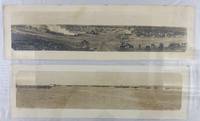
1916ref. 3738N.p. probably Portland 1916. Near fine. 36pp. plus two multi-panel folding panoramic photographic plates. Original tan wrappers printed in brown accompanied by original printed mailing envelope reading "A Souvenir of The Third Oregon Infantry on the Mexican Border." Very light wear. A scarce work featuring the officers staff and soldiers of the Third Oregon Infantry while stationed on the Mexican border near San Diego during the conflict with Mexico just before World War I. The work includes field and staff lists rosters organized by company and a list of "men who have enlisted at Clackamas since the Regiment left" in the summer of 1916. The work is profusely illustrated with photographs of each company within the text usually on the recto facing the roster lists. Each inside cover includes a folding panoramic photographic plate - the first titled "First Battalion at San Diego Exposition July 9 1916" and the second featuring the "Third Battalion on the Border - Mexico in the Background." Both panoramic images were produced from photographs by O.A. Tunnell. unknown books
1921ref. 6158Various places in Mexico Texas and Arizona 1921. Overall about very good. 106 real photo postcards including six duplicates. Varying sizes but most approximately 3.5 x 5.5 inches. Scattered contemporary and later manuscript annotations. Light wear at edges occasionally a bit heavier. Some scattered damp and dust soiling. A substantial collection of over 100 real photo postcards that depict scenes from the Mexican Revolution and the related border war interventions of the United States Army. The images included here some quite violent in nature are dated from 1913 to 1922; most are captioned in the negative. They show ruined buildings military encampments injured soldiers and corpses on both sides of the U.S.-Mexican border and in Veracruz. Also included are identified portraits of individuals such as Francisco Madero Pancho Villa on his deathbed and American General John Pershing. Many of the images are by El Paso photographer W.H. Horne who was one of the most prominent photographers of Border War incidents captured the Columbus Raid in New Mexico and photographed skirmishes near his home in El Paso. Also present are a short series of images by Cal Osborn who documented border incidents near Douglass Arizona and a group by William Hadsell William Hadsell an American resident of Veracruz who ran a Kodak store and was a prolific recorder of events there. Several Mexican photographers are represented as well. Many of the photos are quite gruesome in nature and show corpses in various states of decomposition as well as the aftermath of battles and executions but in all provide an arresting visual document of the interventions by the United States in Mexico during the 1910s. Powerful images of the Mexican Revolution and the resulting upheaval there and along the border with the United States. unknown books
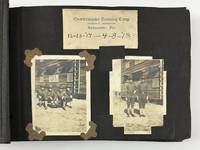
1918ref. 2322Various locations in Texas 1918. Very good. Fifteen leaves illustrated with fifty-five mounted photographs and a few ephemeral clippings identifying locations. Oblong octavo. Contemporary black cloth string-tied. Light soiling to covers. Minor wear to some photographs but overall a handsome selection. A unique collection of vernacular photographs collected by a soldier in the 8th U.S. Cavalry identified simply as D. Watson serving in southwest Texas during the Mexican Border War. The first two pictures emanate from Quartermaster Training Camp in Jacksonville Florida. This is followed by one photo from Barron Field in Everman Texas. The remaining photographs document Watson's time in Ruidosa Texas an unincorporated Texas-Mexico border town in Presidio County about a hundred miles from Terlingua. Here Watson includes photographs of himself and other soldiers and their horses posed in front of old stone structures in orange groves amongst canyons in front of an automobile and more with images of Mexican adobes a wagon advertising an "electric light company" the cavalry preparing their horses scenes of the wilds of southwest Texas and the E.H. Carlton company store. E.H. Carlton was also a principal in the Carlton Van Loan Company an oil speculation firm active in the 1920s. An eclectic and intriguing selection of Texas-Mexico border images from an important period in history. unknown books
1916ref. 3373McAllen: Photo. by Murff & Robinson 1916. Very good. Two panoramic photographs measuring 8 x 28 and 8 x 26.5 inches. Rolled. A couple of short closed tears and small perforations otherwise minor wear and soiling. Two detailed panoramic photographs that depict the First Cavalry Regiment of the New York National Guard one unit of the 15000 guardsmen from the state that were sent to garrison the Rio Grande in South Texas during the Border War with Mexican revolutionaries and Pershing's Punitive Expedition against Pancho Villa. The New Yorkers were stationed at inadequate parched camps in Mission McAllen and Pharr. The slightly larger of the two images here shows the camp of the First Cavalry at McAllen with field tents and temporary camp buildings on the left and the regiment's allotment of horses tethered together at right. The second images shows the unit on parade being reviewed by General Frederick Funston the commander of the border garrisons. The photos are each captioned in the negative and dated August 28 1916 and October 1 1916 respectively. Scarce images of New York's encampment in Texas during the Border War. Photo. by Murff & Robinson unknown books
ref. ST20972dParis: Nicolas Vivien early 16th century. 197 x 130 mm. 7 3/4 x 5 1/8". Single column 28 lines gothic typeface. Ruled in red each leaf with several one- to three-line initials painted gold on red or blue ground and A LOVELY ANIMATED FULL BORDER DONE IN MANUSCRIPT with trompe-l'oeil flowers a moth a fly and a bird on painted gold ground. Light soiling and a couple small stains to vellum one initial a bit smudged but in excellent condition overall. This beautifully embellished leaf from a printed Book of Hours demonstrates the enduring demand for manuscript illumination in the incunabular period and beyond. While the text here was completed on a printing press the initials and border were done entirely by hand adding luxury and luster to an otherwise unadorned page. Although this leaf likely belonged to a Book of Hours printed in Paris possibly an edition printed for Nicolas Vivien in or around 1503 the trompe-l'oeil style seen in the border was particularly popular among Flemish and Netherlandish illuminators of the period. The large blossoms and acanthus here seem to pop off the page because of the artist's use of subtle shading to indicate shadows and there is additional pleasure to be found in the small creatures--a bird carrying a small flower a moth and a housefly--that share the space. Nicolas Vivien(?) unknown books
1972ref. 27841New York: The Metropolitan Museum of Art New York 1972. Softcover. VG- May have slight soiling or pen writing on upper wrap corner with clear text and illus. White B&W illustrated stapled wraps 20 pp. 7 bw illustrations. Issued in conjunction with a 1972 exhibition that features the Baltimore-made Federal furniture in the collection of The Metropolitan Museum of Art. The exhibition catalogue lists 20 pieces including desks sideboards tables and chairs. 7 items are pictured here. The Metropolitan Museum of Art, New York paperback books
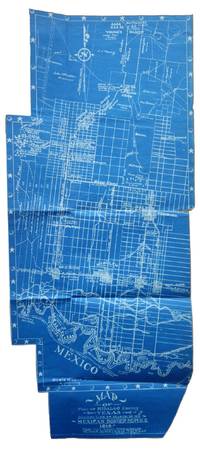
1917ref. List2530VP 1917. Scrapbook measuring 15 ½ x 10 ½ inches. With forty leaves most with newspaper clippings and varied ephemera attached. Boards detached contents generally fine. Laid in is a blueprint map entitled Map of Part of Hidalgo County Texas Showing Line of March in my Mexican Border Service 1916. Made from Survey Notes taken on the march by Corp. C.A. Rice 74 Inf. N.G.U.S. Buffalo N.Y. Armory. Map measuring 33 ½ x 14 ¾ inches irregularly shaped and apparently complete. Very Good. A scrapbook documenting the military service of 1st Sergeant Samuel Gaffney of the 74th National Guard New York in the Mexican Border Service. Gaffney documents the campaign in great detail through printed matter - with each of the forty leaves containing material affixed including panoramic photographs advertisements from local businesses along the routes programs from entertainment offered to the troops military orders and official correspondence and many affixed newspaper articles and photographs. The scrapbook is most notable for the inclusion of an unrecorded map by Charles A. Rice the Buffalo native who would eventually map the campaign in larger fashion in a map entitled Map Showing Lines and March and Border Patrols in my Mexican Border Service 1916-1917. The map here just showing the route through Hidalgo County is unrecorded. The larger map - which was produced as souvenirs for the other members of the 74th - is quite scarce as well with five copies known to exist per OCLC with two different numbers. This blueprint map which appears to be complete cartographically and missing only the ornamental border on one portion shows the route taken early in the campaign in 1916. The Buffalo native Rice 1885-1931 who would eventually settle in Texas after the conflict also wrote a history of the 74th during the campaign. Rice published the maps and memoir himself. The map shows the route in great detail showing the location of wells farms roads and identifying landowners. Water quality and abundance is understandably a common theme in Rice’s notes. Some notes show the location of bandits smugglers and the like. We find no other examples of blueprint maps by Rice. Other highlights from the scrapbook include seven panoramic photographs of the 74th encamped at Pharr; a broadside advertisement for the shop of Agustin Acevedo in Pharr listing prices of goods; a handbill advertising the 74th’s Minstrels and Great Entertainment show on September 16 1916; an advertisement for a production entitled Glorious Liberty at the National Theatre in Pharr; two circulars instructing troop movement issued by Headquarters Brownsville District; several postcards with songs about the campaign; several snapshots; a mounted albumen photograph of troops at rest with the notation “Corp Frederick Paid” verso; a typed poem entitled “Home Again” and a notebook page describing his activities from January 1917 onward; and a thanksgiving menu for 1916 for the holiday spent at Pharr. The remainder of the scrapbook is composed of affixed newspaper clippings which provide extensive information on the 74th collected in a single volume. Overall a significant scrapbook with much information to glean for students of the 74th’s activities with the map providing a unique cartographic reference of the early days of the campaign. unknown books
1916ref. 12895Des Moines IA: Hebard-Showers Company September 1916. Panoramic photograph 8 x 37.5 inches with numerous captions in the negative. Rolled tightly. A few soft creases minor wear at bottom right corner. Very good. An unusually informative panorama of Brownsville and Matamoros taken from the American side of the Rio Grande during the heat of the Mexican Revolution. The photograph was produced by the form of Hebard-Showers here spelled Hedard-Showers likely scratched backwards in the negative of Des Moines Iowa. The image captures the scene along the Red River from a portion of Fort Brown in the east west to Brownsville's Union Station with the International Bridge visible downriver. Directly across the river from Brownsville is labeled "Santa Cruz Mexico" with Matamoros a bit further south. Other landmarks identified on the Brownsville side include the aforementioned Union Station and the International Bridge as well as Fort Brown a river landing the customs house and various locations for American state guard units. Near the landing is the Brownsville Transfer Company's building. More pertinent to the Mexican Revolution are some of the captions identifying locations on the Mexican side. These include "Casa Mata Fort or place of execution" "Blanco's Battlefield June 3rd 1913" and "Villa's Battlefield March 27 - Apr. 13 1915. 100 Killed." Also identified on the Mexican side are a Mexican bull ring the "Bone yard" and a river landing. Interestingly a small rowboat containing a few people can be seen approaching the Mexican side on the Rio Grande. Naturally Hebard-Showers Company mainly documented Des Moines and its surrounding areas but they shot a handful of Brownsville border views over several years at least between the present example and about 1921. SMU holds an example of the later panorama; comparisons between the present example and SMU's does reveal some changes in the area over the course of those five years and the present example includes many more detailed captions in the negative. Hebard-Showers Company, September unknown books
1916ref. 2445Brownsville 1916. Very good. Panoramic photograph approximately 7.5 x 39.5 inches. Mounted on card manuscript identifications along foot. Light wear minor soiling. A large formal portrait of Troop C of the 1st Virginia Cavalry in camp at Fort Brown Brownsville Texas. National guard units were called up in 1916 to guard the border while General Pershing made his incursions into Mexico against revolutionary and regular military units involved in the Mexican revolution and civil war of the 1910s. The image depicts the entire troop mounted in a single file with the commissioned officers at far left sixty-six men in all. Although the photographer does not identify himself each man in the unit is named in clear manuscript along the foot of the photograph making the present image a valuable record of the Virginia Cavalry's service in Texas during the Border War. unknown books
1916ref. 3127El Paso Tx: J.W. Medley & I. Shulman 1916. Good plus. About 9.5 x 51.25 inches. Backed on board. Some tanning to board. Minor spotting along edges minor staining and some surface lift along top left edge left edge and left bottom edge from being previously framed. One of a group of panoramic photographs depicting Camp Stewart at El Paso during the Mexican Revolution 1910-1919 known here as the Mexican Border War or Pershing's Punitive Expedition. The camp was set up in 1916 and the goal of the conflict was to stop Pancho Villa's military actions on the United States side of the border. American and Mexican forces pursued Villa for months and managed to quash the rebellion but Pancho Villa himself was never captured. This photograph provides a good view of the tents and small building erected in this dry Texas landscape. The photographers J. Urban Medley and Isaac Shulman of El Paso Texas were prolific chroniclers of the American Southwest and Mexican borderlands with a studio at 1709 Montana. A striking panoramic image of a large camp near El Paso during the Texas Border War. J.W. Medley & I. Shulman unknown books
1997ref. 1070208vo hard cover illustrated 119 pp. Near mint condition. Nicely illustrated history of pulp books. Chronicle Books, books
1993ref. 1329963Nedlands W.A.: Swan Publishing Ltd 1993. First Edition. Hardcover. Quarto 272 pages; VG/VG; spine is green with green lettering on a white label; dust jacket is in a mylar covering has minimal shelf wear along the top and bottom edges; binding has minimal wear along the bottom edge; pages clear; signed by Border on the ffep; shelved Popular Culture. 1329963. Shelved Dupont Bookstore. Swan Publishing, Ltd hardcover books