780 results
ref. 250706012Time Life. unknown_binding. New. 0x0x0. ~ Cover has some minor shelf wear. ~ NEW inside and Out! Clean & Crisp Pages w/No markings. Email for more info./pics Time Life unknown
1985ref. 2082702114605383Kokusho Publishing Association: 2800 yen 1985. Soft Cover. Fine. Number of books: 1 Kokusho Publishing Association: 2,800 yen paperback
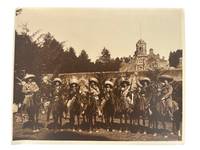
1911ref. 220241911. Pancho Villa and División del Norte Mounted Troops of the Mexican Revolution. A vintage Extra Large silver gelatin photograph by Agustín Casasola measuring 16" x 20" . Striking and rare original photograph from the early years of the Mexican Revolution depicting Pancho Villa and a detachment of his División del Norte mounted on horseback before a weathered colonial-era convent or mission compound likely in the state of Chihuahua or Durango. All men are in uniform heavily armed with bandoliers and rifles wearing wide-brimmed sombreros characteristic of the revolutionary norteño aestheticn. The image documents revolutionary leader Pancho Villa and a group of armed fighters assembled before a walled ecclesiastical compound in the mountainous regions of northern Mexico. Villa emerged as one of the central military figures of the Mexican Revolution commanding cavalry forces known as the División del Norte that operated across Chihuahua Durango and other northern states during the uprising against the long dictatorship of Porfirio Díaz. Photographs produced during the early revolutionary campaigns played an important role in circulating images of insurgent leadership and helped establish Villa's reputation as a charismatic popular commander. Casasola Agustín Víctor photograph. Casasola Studio circa 1911. Large silver gelatin photograph with "Casasola Praga No. 16 Mexico" studio stamp on versoPancho Villa and revolutionary cavalry before church compound. Mexico City: The photograph depicts Villa and a detachment of mounted soldiers positioned before a colonial era church or mission compound likely located in the northern Mexican states where Villa's forces operated. The men are mounted on horseback and dressed in revolutionary military attire including bandoliers rifles and wide brimmed sombreros associated with the norteño revolutionary aesthetic. Villa believed to be the third rider from the right appears in the central grouping of mounted officers. The architectural background features domed towers and high walls characteristic of colonial religious buildings creating a visual contrast between the armed revolutionary force and the remnants of Mexico's colonial institutional landscape. Agustín Víctor Casasola founded one of the most influential photographic studios documenting the Mexican Revolution producing images that later formed the core of the Archivo Casasola. Casasola photographers recorded revolutionary leaders soldiers civilians and daily life during the conflict shaping both Mexican historical memory and international visual understanding of the revolution. Large format prints such as this example were produced in limited numbers for press circulation archives or exhibitions documenting the conflict. Photograph measures approximately 16 × 20 inches. Minor edge wear with a small closed tear at the upper left margin and light creasing at the lower right margin away from the image area; print surface clean with strong tonal range and detail. Overall condition very good. unknown
1911ref. 220241911. Pancho Villa and División del Norte Mounted Troops of the Mexican Revolution. A vintage Extra Large silver gelatin photograph by Agustín Casasola measuring 16" x 20" . Striking and rare original photograph from the early years of the Mexican Revolution depicting Pancho Villa and a detachment of his División del Norte mounted on horseback before a weathered colonial-era convent or mission compound likely in the state of Chihuahua or Durango. All men are in uniform heavily armed with bandoliers and rifles wearing wide-brimmed sombreros characteristic of the revolutionary norteño aestheticn. The image documents revolutionary leader Pancho Villa and a group of armed fighters assembled before a walled ecclesiastical compound in the mountainous regions of northern Mexico. Villa emerged as one of the central military figures of the Mexican Revolution commanding cavalry forces known as the División del Norte that operated across Chihuahua Durango and other northern states during the uprising against the long dictatorship of Porfirio Díaz. Photographs produced during the early revolutionary campaigns played an important role in circulating images of insurgent leadership and helped establish Villa's reputation as a charismatic popular commander. Casasola Agustín Víctor photograph. Casasola Studio circa 1911. Large silver gelatin photograph with "Casasola Praga No. 16 Mexico" studio stamp on versoPancho Villa and revolutionary cavalry before church compound. Mexico City: The photograph depicts Villa and a detachment of mounted soldiers positioned before a colonial era church or mission compound likely located in the northern Mexican states where Villa's forces operated. The men are mounted on horseback and dressed in revolutionary military attire including bandoliers rifles and wide brimmed sombreros associated with the norteño revolutionary aesthetic. Villa believed to be the third rider from the right appears in the central grouping of mounted officers. The architectural background features domed towers and high walls characteristic of colonial religious buildings creating a visual contrast between the armed revolutionary force and the remnants of Mexico's colonial institutional landscape. Agustín Víctor Casasola founded one of the most influential photographic studios documenting the Mexican Revolution producing images that later formed the core of the Archivo Casasola. Casasola photographers recorded revolutionary leaders soldiers civilians and daily life during the conflict shaping both Mexican historical memory and international visual understanding of the revolution. Large format prints such as this example were produced in limited numbers for press circulation archives or exhibitions documenting the conflict. Photograph measures approximately 16 × 20 inches. Minor edge wear with a small closed tear at the upper left margin and light creasing at the lower right margin away from the image area; print surface clean with strong tonal range and detail. Overall condition very good. unknown books
ref. DADAX022651188XNew unknown
ref. SONG0820353167Used: Good unknown
ref. 2110502150411762Not Available N.A. Soft Cover. Fine. Number of books: 1 Not Available paperback
1969Pianeta n. 27 marzo/aprile 1969. Periodico bimestrale fondato da Louis Pauwels. In questo numero articoli di: Patrick Ravignant - La dinamica della mutazione Jean Montorsier - La bionica o l'arte di copiare la natura Dominique Desanti - Lo psicanalista: un uomo di fronte a se stesso Ismael Leprince - Gli Ittiti nella trappola della storia Una guerra immaginaria Raymond De Becker - Le medicine antiche non sono da disprezzare Jacques Bergier - Storie straordinarie sui misteri del fuoco Un pittore senza frontiere: Michael Di Coudenhove-Kalergi Han Suyin e la Cina. Prima edizione italiana. Libro in ottime condizioni. Non ci sono strappi o scritte al suo interno. Spedizioni tracciabili con raccomandata entro 24 ore dall'ordine. First italian edition, first printing. Soft cover in fine conditions, no inscriptions or markings inside. Worldwide delivery.
ref. DADAX0822942615New unknown
ref. DADAX0791427188New unknown
ref. DADAX0415934907New unknown
2021br. Laddove le frontiere non delimitano nazioni, nascono instabilità croniche che inaspriscono conflitti e miseria. L'ex Jugoslavia, i Paesi del Sahel, l'Afghanistan e la Siria sono solo alcuni esempi. Malcolm, Laji, Hamid e Mohammed, protagonisti delle quattro conversazioni, ripercorreranno i drammatici eventi che hanno caratterizzato la storia di questi Paesi. Attraverso le loro visionarie congetture, tracceranno nuove linee di confine, ristabilendo l'identità di quei popoli soggiogati dai vincitori della Grande Guerra, sventrati dal colonialismo ottocentesco o smembrati dall'imperialismo britannico. Un viaggio fatto di parole per revisionare i confini e, infine, ritrovare le nazioni.
ref. DADAX0791418065New unknown
ref. DADAX0415804744New unknown
1988ref. DZN-643Ibos éditions J.C. Bihet 1988 nouvelle édition. In-4, 160 pages, 150 illustrations photographiques en noir et en couleurs. Toile bleue sous jaquette illustrée en couleurs
ref. DADAX041595553XNew unknown
ref. SONG1137395885Used: Good unknown
ref. DADAX0861932544New unknown
1998ref. 2090502113717844Not Available 1998. Soft Cover. Fine. The book is in fine condition. Not Available paperback
1904ref. WOC-427Paris,Imprimerie Française,J.Dangon,1904. In-8 (22,5x13,5cm) broché dans sa couverture d'origine, avec l'étiquette de la nouvelle maison de vente:A.Storck & Cie à Lyon et Paris.115pp.
1992ref. 24692Paris, Editions Chandeigne, 1992. 4°. With numerous color. Illustrations. 140 p., Hardcover with dust jacket. Good and clean copy.
1975ref. GEOGRAPHIEFRA0322Lausanne, Editions L'Age d'Homme, "Mobiles", 1975, 15,5 x 23, 231 pages sous couverture souple illustrée.
ref. DADAX0451192370New unknown
ref. DADAX0367337150New unknown
ref. DADAX0367337185New unknown