731 résultats
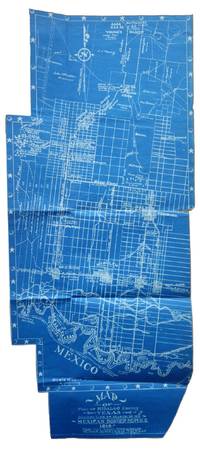
1917réf. List2530VP 1917. Scrapbook measuring 15 ½ x 10 ½ inches. With forty leaves most with newspaper clippings and varied ephemera attached. Boards detached contents generally fine. Laid in is a blueprint map entitled Map of Part of Hidalgo County Texas Showing Line of March in my Mexican Border Service 1916. Made from Survey Notes taken on the march by Corp. C.A. Rice 74 Inf. N.G.U.S. Buffalo N.Y. Armory. Map measuring 33 ½ x 14 ¾ inches irregularly shaped and apparently complete. Very Good. A scrapbook documenting the military service of 1st Sergeant Samuel Gaffney of the 74th National Guard New York in the Mexican Border Service. Gaffney documents the campaign in great detail through printed matter - with each of the forty leaves containing material affixed including panoramic photographs advertisements from local businesses along the routes programs from entertainment offered to the troops military orders and official correspondence and many affixed newspaper articles and photographs. The scrapbook is most notable for the inclusion of an unrecorded map by Charles A. Rice the Buffalo native who would eventually map the campaign in larger fashion in a map entitled Map Showing Lines and March and Border Patrols in my Mexican Border Service 1916-1917. The map here just showing the route through Hidalgo County is unrecorded. The larger map - which was produced as souvenirs for the other members of the 74th - is quite scarce as well with five copies known to exist per OCLC with two different numbers. This blueprint map which appears to be complete cartographically and missing only the ornamental border on one portion shows the route taken early in the campaign in 1916. The Buffalo native Rice 1885-1931 who would eventually settle in Texas after the conflict also wrote a history of the 74th during the campaign. Rice published the maps and memoir himself. The map shows the route in great detail showing the location of wells farms roads and identifying landowners. Water quality and abundance is understandably a common theme in Rice’s notes. Some notes show the location of bandits smugglers and the like. We find no other examples of blueprint maps by Rice. Other highlights from the scrapbook include seven panoramic photographs of the 74th encamped at Pharr; a broadside advertisement for the shop of Agustin Acevedo in Pharr listing prices of goods; a handbill advertising the 74th’s Minstrels and Great Entertainment show on September 16 1916; an advertisement for a production entitled Glorious Liberty at the National Theatre in Pharr; two circulars instructing troop movement issued by Headquarters Brownsville District; several postcards with songs about the campaign; several snapshots; a mounted albumen photograph of troops at rest with the notation “Corp Frederick Paid” verso; a typed poem entitled “Home Again” and a notebook page describing his activities from January 1917 onward; and a thanksgiving menu for 1916 for the holiday spent at Pharr. The remainder of the scrapbook is composed of affixed newspaper clippings which provide extensive information on the 74th collected in a single volume. Overall a significant scrapbook with much information to glean for students of the 74th’s activities with the map providing a unique cartographic reference of the early days of the campaign. unknown books
1917réf. List2530VP 1917. Scrapbook measuring 15 ½ x 10 ½ inches. With forty leaves most with newspaper clippings and varied ephemera attached. Boards detached contents generally fine. Laid in is a blueprint map entitled Map of Part of Hidalgo County Texas Showing Line of March in my Mexican Border Service 1916. Made from Survey Notes taken on the march by Corp. C.A. Rice 74 Inf. N.G.U.S. Buffalo N.Y. Armory. Map measuring 33 ½ x 14 ¾ inches irregularly shaped and apparently complete. Very Good. A scrapbook documenting the military service of 1st Sergeant Samuel Gaffney of the 74th National Guard New York in the Mexican Border Service. Gaffney documents the campaign in great detail through printed matter - with each of the forty leaves containing material affixed including panoramic photographs advertisements from local businesses along the routes programs from entertainment offered to the troops military orders and official correspondence and many affixed newspaper articles and photographs. The scrapbook is most notable for the inclusion of an unrecorded map by Charles A. Rice the Buffalo native who would eventually map the campaign in larger fashion in a map entitled Map Showing Lines and March and Border Patrols in my Mexican Border Service 1916-1917. The map here just showing the route through Hidalgo County is unrecorded. The larger map - which was produced as souvenirs for the other members of the 74th - is quite scarce as well with five copies known to exist per OCLC with two different numbers. This blueprint map which appears to be complete cartographically and missing only the ornamental border on one portion shows the route taken early in the campaign in 1916. The Buffalo native Rice 1885-1931 who would eventually settle in Texas after the conflict also wrote a history of the 74th during the campaign. Rice published the maps and memoir himself. The map shows the route in great detail showing the location of wells farms roads and identifying landowners. Water quality and abundance is understandably a common theme in Rice’s notes. Some notes show the location of bandits smugglers and the like. We find no other examples of blueprint maps by Rice. Other highlights from the scrapbook include seven panoramic photographs of the 74th encamped at Pharr; a broadside advertisement for the shop of Agustin Acevedo in Pharr listing prices of goods; a handbill advertising the 74th’s Minstrels and Great Entertainment show on September 16 1916; an advertisement for a production entitled Glorious Liberty at the National Theatre in Pharr; two circulars instructing troop movement issued by Headquarters Brownsville District; several postcards with songs about the campaign; several snapshots; a mounted albumen photograph of troops at rest with the notation “Corp Frederick Paid” verso; a typed poem entitled “Home Again” and a notebook page describing his activities from January 1917 onward; and a thanksgiving menu for 1916 for the holiday spent at Pharr. The remainder of the scrapbook is composed of affixed newspaper clippings which provide extensive information on the 74th collected in a single volume. Overall a significant scrapbook with much information to glean for students of the 74th’s activities with the map providing a unique cartographic reference of the early days of the campaign. unknown
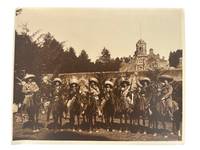
1911réf. 220241911. Pancho Villa and División del Norte Mounted Troops of the Mexican Revolution. A vintage Extra Large silver gelatin photograph by Agustín Casasola measuring 16" x 20" . Striking and rare original photograph from the early years of the Mexican Revolution depicting Pancho Villa and a detachment of his División del Norte mounted on horseback before a weathered colonial-era convent or mission compound likely in the state of Chihuahua or Durango. All men are in uniform heavily armed with bandoliers and rifles wearing wide-brimmed sombreros characteristic of the revolutionary norteño aestheticn. The image documents revolutionary leader Pancho Villa and a group of armed fighters assembled before a walled ecclesiastical compound in the mountainous regions of northern Mexico. Villa emerged as one of the central military figures of the Mexican Revolution commanding cavalry forces known as the División del Norte that operated across Chihuahua Durango and other northern states during the uprising against the long dictatorship of Porfirio Díaz. Photographs produced during the early revolutionary campaigns played an important role in circulating images of insurgent leadership and helped establish Villa's reputation as a charismatic popular commander. Casasola Agustín Víctor photograph. Casasola Studio circa 1911. Large silver gelatin photograph with "Casasola Praga No. 16 Mexico" studio stamp on versoPancho Villa and revolutionary cavalry before church compound. Mexico City: The photograph depicts Villa and a detachment of mounted soldiers positioned before a colonial era church or mission compound likely located in the northern Mexican states where Villa's forces operated. The men are mounted on horseback and dressed in revolutionary military attire including bandoliers rifles and wide brimmed sombreros associated with the norteño revolutionary aesthetic. Villa believed to be the third rider from the right appears in the central grouping of mounted officers. The architectural background features domed towers and high walls characteristic of colonial religious buildings creating a visual contrast between the armed revolutionary force and the remnants of Mexico's colonial institutional landscape. Agustín Víctor Casasola founded one of the most influential photographic studios documenting the Mexican Revolution producing images that later formed the core of the Archivo Casasola. Casasola photographers recorded revolutionary leaders soldiers civilians and daily life during the conflict shaping both Mexican historical memory and international visual understanding of the revolution. Large format prints such as this example were produced in limited numbers for press circulation archives or exhibitions documenting the conflict. Photograph measures approximately 16 × 20 inches. Minor edge wear with a small closed tear at the upper left margin and light creasing at the lower right margin away from the image area; print surface clean with strong tonal range and detail. Overall condition very good. unknown books
1911réf. 220241911. Pancho Villa and División del Norte Mounted Troops of the Mexican Revolution. A vintage Extra Large silver gelatin photograph by Agustín Casasola measuring 16" x 20" . Striking and rare original photograph from the early years of the Mexican Revolution depicting Pancho Villa and a detachment of his División del Norte mounted on horseback before a weathered colonial-era convent or mission compound likely in the state of Chihuahua or Durango. All men are in uniform heavily armed with bandoliers and rifles wearing wide-brimmed sombreros characteristic of the revolutionary norteño aestheticn. The image documents revolutionary leader Pancho Villa and a group of armed fighters assembled before a walled ecclesiastical compound in the mountainous regions of northern Mexico. Villa emerged as one of the central military figures of the Mexican Revolution commanding cavalry forces known as the División del Norte that operated across Chihuahua Durango and other northern states during the uprising against the long dictatorship of Porfirio Díaz. Photographs produced during the early revolutionary campaigns played an important role in circulating images of insurgent leadership and helped establish Villa's reputation as a charismatic popular commander. Casasola Agustín Víctor photograph. Casasola Studio circa 1911. Large silver gelatin photograph with "Casasola Praga No. 16 Mexico" studio stamp on versoPancho Villa and revolutionary cavalry before church compound. Mexico City: The photograph depicts Villa and a detachment of mounted soldiers positioned before a colonial era church or mission compound likely located in the northern Mexican states where Villa's forces operated. The men are mounted on horseback and dressed in revolutionary military attire including bandoliers rifles and wide brimmed sombreros associated with the norteño revolutionary aesthetic. Villa believed to be the third rider from the right appears in the central grouping of mounted officers. The architectural background features domed towers and high walls characteristic of colonial religious buildings creating a visual contrast between the armed revolutionary force and the remnants of Mexico's colonial institutional landscape. Agustín Víctor Casasola founded one of the most influential photographic studios documenting the Mexican Revolution producing images that later formed the core of the Archivo Casasola. Casasola photographers recorded revolutionary leaders soldiers civilians and daily life during the conflict shaping both Mexican historical memory and international visual understanding of the revolution. Large format prints such as this example were produced in limited numbers for press circulation archives or exhibitions documenting the conflict. Photograph measures approximately 16 × 20 inches. Minor edge wear with a small closed tear at the upper left margin and light creasing at the lower right margin away from the image area; print surface clean with strong tonal range and detail. Overall condition very good. unknown
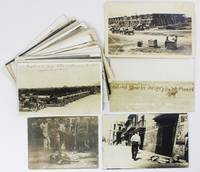
1921réf. 6158Various places in Mexico Texas and Arizona 1921. Overall about very good. 106 real photo postcards including six duplicates. Varying sizes but most approximately 3.5 x 5.5 inches. Scattered contemporary and later manuscript annotations. Light wear at edges occasionally a bit heavier. Some scattered damp and dust soiling. A substantial collection of over 100 real photo postcards that depict scenes from the Mexican Revolution and the related border war interventions of the United States Army. The images included here some quite violent in nature are dated from 1913 to 1922; most are captioned in the negative. They show ruined buildings military encampments injured soldiers and corpses on both sides of the U.S.-Mexican border and in Veracruz. Also included are identified portraits of individuals such as Francisco Madero Pancho Villa on his deathbed and American General John Pershing. Many of the images are by El Paso photographer W.H. Horne who was one of the most prominent photographers of Border War incidents captured the Columbus Raid in New Mexico and photographed skirmishes near his home in El Paso. Also present are a short series of images by Cal Osborn who documented border incidents near Douglass Arizona and a group by William Hadsell William Hadsell an American resident of Veracruz who ran a Kodak store and was a prolific recorder of events there. Several Mexican photographers are represented as well. Many of the photos are quite gruesome in nature and show corpses in various states of decomposition as well as the aftermath of battles and executions but in all provide an arresting visual document of the interventions by the United States in Mexico during the 1910s. Powerful images of the Mexican Revolution and the resulting upheaval there and along the border with the United States. unknown books
1921réf. 6158Various places in Mexico Texas and Arizona 1921. Overall about very good. 106 real photo postcards including six duplicates. Varying sizes but most approximately 3.5 x 5.5 inches. Scattered contemporary and later manuscript annotations. Light wear at edges occasionally a bit heavier. Some scattered damp and dust soiling. A substantial collection of over 100 real photo postcards that depict scenes from the Mexican Revolution and the related border war interventions of the United States Army. The images included here some quite violent in nature are dated from 1913 to 1922; most are captioned in the negative. They show ruined buildings military encampments injured soldiers and corpses on both sides of the U.S.-Mexican border and in Veracruz. Also included are identified portraits of individuals such as Francisco Madero Pancho Villa on his deathbed and American General John Pershing. Many of the images are by El Paso photographer W.H. Horne who was one of the most prominent photographers of Border War incidents captured the Columbus Raid in New Mexico and photographed skirmishes near his home in El Paso. Also present are a short series of images by Cal Osborn who documented border incidents near Douglass Arizona and a group by William Hadsell William Hadsell an American resident of Veracruz who ran a Kodak store and was a prolific recorder of events there. Several Mexican photographers are represented as well. Many of the photos are quite gruesome in nature and show corpses in various states of decomposition as well as the aftermath of battles and executions but in all provide an arresting visual document of the interventions by the United States in Mexico during the 1910s. Powerful images of the Mexican Revolution and the resulting upheaval there and along the border with the United States. unknown