Pocceschi GianlucaMareMagnum

580 résultats
2021br. Laddove le frontiere non delimitano nazioni, nascono instabilità croniche che inaspriscono conflitti e miseria. L'ex Jugoslavia, i Paesi del Sahel, l'Afghanistan e la Siria sono solo alcuni esempi. Malcolm, Laji, Hamid e Mohammed, protagonisti delle quattro conversazioni, ripercorreranno i drammatici eventi che hanno caratterizzato la storia di questi Paesi. Attraverso le loro visionarie congetture, tracceranno nuove linee di confine, ristabilendo l'identità di quei popoli soggiogati dai vincitori della Grande Guerra, sventrati dal colonialismo ottocentesco o smembrati dall'imperialismo britannico. Un viaggio fatto di parole per revisionare i confini e, infine, ritrovare le nazioni.
1969Pianeta n. 27 marzo/aprile 1969. Periodico bimestrale fondato da Louis Pauwels. In questo numero articoli di: Patrick Ravignant - La dinamica della mutazione Jean Montorsier - La bionica o l'arte di copiare la natura Dominique Desanti - Lo psicanalista: un uomo di fronte a se stesso Ismael Leprince - Gli Ittiti nella trappola della storia Una guerra immaginaria Raymond De Becker - Le medicine antiche non sono da disprezzare Jacques Bergier - Storie straordinarie sui misteri del fuoco Un pittore senza frontiere: Michael Di Coudenhove-Kalergi Han Suyin e la Cina. Prima edizione italiana. Libro in ottime condizioni. Non ci sono strappi o scritte al suo interno. Spedizioni tracciabili con raccomandata entro 24 ore dall'ordine. First italian edition, first printing. Soft cover in fine conditions, no inscriptions or markings inside. Worldwide delivery.
réf. 2110502150411762Not Available N.A. Soft Cover. Fine. Number of books: 1 Not Available paperback
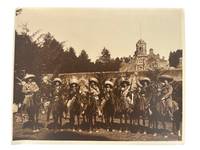
1911réf. 220241911. Pancho Villa and División del Norte Mounted Troops of the Mexican Revolution. A vintage Extra Large silver gelatin photograph by Agustín Casasola measuring 16" x 20" . Striking and rare original photograph from the early years of the Mexican Revolution depicting Pancho Villa and a detachment of his División del Norte mounted on horseback before a weathered colonial-era convent or mission compound likely in the state of Chihuahua or Durango. All men are in uniform heavily armed with bandoliers and rifles wearing wide-brimmed sombreros characteristic of the revolutionary norteño aestheticn. The image documents revolutionary leader Pancho Villa and a group of armed fighters assembled before a walled ecclesiastical compound in the mountainous regions of northern Mexico. Villa emerged as one of the central military figures of the Mexican Revolution commanding cavalry forces known as the División del Norte that operated across Chihuahua Durango and other northern states during the uprising against the long dictatorship of Porfirio Díaz. Photographs produced during the early revolutionary campaigns played an important role in circulating images of insurgent leadership and helped establish Villa's reputation as a charismatic popular commander. Casasola Agustín Víctor photograph. Casasola Studio circa 1911. Large silver gelatin photograph with "Casasola Praga No. 16 Mexico" studio stamp on versoPancho Villa and revolutionary cavalry before church compound. Mexico City: The photograph depicts Villa and a detachment of mounted soldiers positioned before a colonial era church or mission compound likely located in the northern Mexican states where Villa's forces operated. The men are mounted on horseback and dressed in revolutionary military attire including bandoliers rifles and wide brimmed sombreros associated with the norteño revolutionary aesthetic. Villa believed to be the third rider from the right appears in the central grouping of mounted officers. The architectural background features domed towers and high walls characteristic of colonial religious buildings creating a visual contrast between the armed revolutionary force and the remnants of Mexico's colonial institutional landscape. Agustín Víctor Casasola founded one of the most influential photographic studios documenting the Mexican Revolution producing images that later formed the core of the Archivo Casasola. Casasola photographers recorded revolutionary leaders soldiers civilians and daily life during the conflict shaping both Mexican historical memory and international visual understanding of the revolution. Large format prints such as this example were produced in limited numbers for press circulation archives or exhibitions documenting the conflict. Photograph measures approximately 16 × 20 inches. Minor edge wear with a small closed tear at the upper left margin and light creasing at the lower right margin away from the image area; print surface clean with strong tonal range and detail. Overall condition very good. unknown books
1911réf. 220241911. Pancho Villa and División del Norte Mounted Troops of the Mexican Revolution. A vintage Extra Large silver gelatin photograph by Agustín Casasola measuring 16" x 20" . Striking and rare original photograph from the early years of the Mexican Revolution depicting Pancho Villa and a detachment of his División del Norte mounted on horseback before a weathered colonial-era convent or mission compound likely in the state of Chihuahua or Durango. All men are in uniform heavily armed with bandoliers and rifles wearing wide-brimmed sombreros characteristic of the revolutionary norteño aestheticn. The image documents revolutionary leader Pancho Villa and a group of armed fighters assembled before a walled ecclesiastical compound in the mountainous regions of northern Mexico. Villa emerged as one of the central military figures of the Mexican Revolution commanding cavalry forces known as the División del Norte that operated across Chihuahua Durango and other northern states during the uprising against the long dictatorship of Porfirio Díaz. Photographs produced during the early revolutionary campaigns played an important role in circulating images of insurgent leadership and helped establish Villa's reputation as a charismatic popular commander. Casasola Agustín Víctor photograph. Casasola Studio circa 1911. Large silver gelatin photograph with "Casasola Praga No. 16 Mexico" studio stamp on versoPancho Villa and revolutionary cavalry before church compound. Mexico City: The photograph depicts Villa and a detachment of mounted soldiers positioned before a colonial era church or mission compound likely located in the northern Mexican states where Villa's forces operated. The men are mounted on horseback and dressed in revolutionary military attire including bandoliers rifles and wide brimmed sombreros associated with the norteño revolutionary aesthetic. Villa believed to be the third rider from the right appears in the central grouping of mounted officers. The architectural background features domed towers and high walls characteristic of colonial religious buildings creating a visual contrast between the armed revolutionary force and the remnants of Mexico's colonial institutional landscape. Agustín Víctor Casasola founded one of the most influential photographic studios documenting the Mexican Revolution producing images that later formed the core of the Archivo Casasola. Casasola photographers recorded revolutionary leaders soldiers civilians and daily life during the conflict shaping both Mexican historical memory and international visual understanding of the revolution. Large format prints such as this example were produced in limited numbers for press circulation archives or exhibitions documenting the conflict. Photograph measures approximately 16 × 20 inches. Minor edge wear with a small closed tear at the upper left margin and light creasing at the lower right margin away from the image area; print surface clean with strong tonal range and detail. Overall condition very good. unknown
1985réf. 2082702114605383Kokusho Publishing Association: 2800 yen 1985. Soft Cover. Fine. Number of books: 1 Kokusho Publishing Association: 2,800 yen paperback
réf. 250706012Time Life. unknown_binding. New. 0x0x0. ~ Cover has some minor shelf wear. ~ NEW inside and Out! Clean & Crisp Pages w/No markings. Email for more info./pics Time Life unknown
1991réf. 2082702114603117Okinawa Times Co. Ltd. 12000 yen 1991. Soft Cover. Fine. Number of books: 1 Okinawa Times Co., Ltd. 12,000 yen paperback
réf. Magdalena Boman and Bo LeIn Pristine Condition. unknown
réf. 9786556403236-11-73375Nova Fronteira. New. Nova Fronteira unknown
réf. 9788520946572NOVA FRONTEIRA. new. A arte da guerra e da liderana: Napoleo Bonaparte revolucionou a estrat�gia militar no s�culo XIX. frente da tropa francesa em diversas campanhas de sucesso o monarca foi fundamental para tornar a Frana o maior imp�rio continental desde Roma. Napoleo ento virou uma esp�cie de her�i nacional e � considerado um dos maiores l�deres da hist�ria mundial. Neste volume esto reunidas 78 m�ximas e citaes desse lend�rio militar que so potentes lies sobre poder e liderana seja no campo de batalha ou na vida. A mo invis�vel do mercado: a riqueza das naes estabeleceu as bases do pensa-mento econmico. Este volume rene trechos do livro original que expem um dos conceitos centrais obra de Adam Smith: ""a mo invis�vel"" pela qual o mercado � capaz de se autorregular de forma a por meio do consumo proporcionar tanto lucro aos produtores quanto bem-estar populao. Neste s�culo XXI suas ideias seguem essenciais na busca de um equil�brio entre lucro e civilizao. A arte de ter razo: Em a arte de ter razo Schopenhauer traz orientaes b�sicas para o enfrentamento de contendas e dilemas deste s�culo XXI. Para o fil�sofo o ser humano � por natureza vaidoso desonesto e imperfeito mas precisa sobreviver entre seus iguais por meio dos 38 estratagemas expostos neste livro. Estratagemas ""teis tanto para uso pr�prio quanto para frustr�-los quando outra pessoa lanar mo deles"". Um manual de sobrevivncia cotidiana num mundo regido pela expanso da internet e das s sociais. NOVA FRONTEIRA unknown
réf. 9786556404585-11-14573Nova Fronteira. New. Nova Fronteira unknown
1940réf. 2082702114605345Fuchusha 17 1940. Soft Cover. Fine. Number of books: 1 Fuchusha 17 paperback
1982réf. 2082702114608120Shinchosha 1982. Soft Cover. Fine. Number of books: 1 Shinchosha paperback
1996réf. 2082702114607443Nichigai Associates fixed price 9800 yen 1996. Soft Cover. Fine. Number of books: 1 Nichigai Associates fixed price 9800 yen paperback
1993réf. 2082702114603916Kadokawa Shoten 1600 yen 1993. Soft Cover. Fine. Number of books: 1 Kadokawa Shoten 1,600 yen paperback
1917réf. 223051917. Wakefield Ben. U.S. field artillery soldier photograph archive documenting National Guard mobilization and artillery training at the United States-Mexico border during the Border War created in El Paso Texas and surrounding areas in 1917. The photographs record the service of Ben Wakefield of Toledo Ohio a member of Battery C 1st Battalion Ohio Field Artillery stationed at Fort Bliss during the period of heightened border militarization following the 1916 raid on Columbus New Mexico led by Francisco "Pancho" Villa and the subsequent U.S. Punitive Expedition under General John J. Pershing. The images provide visual documentation of field artillery operations mounted logistics and daily camp life among National Guard troops deployed to reinforce the border during a moment when the United States was simultaneously confronting instability in northern Mexico and preparing for entry into the First World War. Through portraits training scenes and encampment views the archive records the mobilization of state militia forces into federal service during one of the most significant domestic military deployments of the early twentieth century. Photo archive consisting of 31 silver gelatin photographs produced in El Paso Texas and nearby encampments in 1917. Approximately half bear pencil inscriptions on the verso identifying Wakefield or the location including captions reading "Wakefield" "Ben Center Wakefield" "Wakefield Horse" and "El Paso." One photograph bears a developing stamp from Bohne's Studio of Toledo Ohio. The photographs depict Wakefield and fellow artillerymen posed in regulation campaign hats breeches and puttees along with multiple images of horse-drawn artillery equipment including the standard U.S. Army M1902 3-inch field gun. In one photograph Wakefield and three soldiers pose beside the artillery piece with Wakefield seated before the gun wearing a slouch cap. Additional images show artillery teams maneuvering guns across open desert terrain using horses and mules soldiers marching in formation against the mountainous landscape of the Chihuahuan Desert and a photograph captioned "game Football El Paso" depicting soldiers playing football on a dusty parade ground with rows of canvas tents behind them. Another image shows the field gun positioned behind a brush screen during nighttime operations suggesting artillery drills or simulated combat exercises conducted during the border deployment. Archive of 31 photographs. Silver gelatin prints ranging approximately from 2 x 1 inches to 5 x 3 inches. The photographs collectively document the material culture and operational structure of U.S. National Guard artillery units stationed along the border during the 1916-1917 mobilization period when Fort Bliss served as a major staging ground for forces supporting the Punitive Expedition and guarding against further cross-border conflict. The images illustrate horse-drawn artillery transport tent encampments arranged in orderly rows and the social life of soldiers during extended deployments in the Southwest. Light edge wear and minor silvering visible on several prints with occasional handling marks consistent with age. Images remain clear with strong contrast. Overall very good condition. A cohesive visual record of National Guard field artillery service on the U.S.-Mexico border during the final phase of the Border War and the broader military mobilization preceding American entry into the First World War. unknown books
1917réf. 223051917. Wakefield Ben. U.S. field artillery soldier photograph archive documenting National Guard mobilization and artillery training at the United States-Mexico border during the Border War created in El Paso Texas and surrounding areas in 1917. The photographs record the service of Ben Wakefield of Toledo Ohio a member of Battery C 1st Battalion Ohio Field Artillery stationed at Fort Bliss during the period of heightened border militarization following the 1916 raid on Columbus New Mexico led by Francisco "Pancho" Villa and the subsequent U.S. Punitive Expedition under General John J. Pershing. The images provide visual documentation of field artillery operations mounted logistics and daily camp life among National Guard troops deployed to reinforce the border during a moment when the United States was simultaneously confronting instability in northern Mexico and preparing for entry into the First World War. Through portraits training scenes and encampment views the archive records the mobilization of state militia forces into federal service during one of the most significant domestic military deployments of the early twentieth century. Photo archive consisting of 31 silver gelatin photographs produced in El Paso Texas and nearby encampments in 1917. Approximately half bear pencil inscriptions on the verso identifying Wakefield or the location including captions reading "Wakefield" "Ben Center Wakefield" "Wakefield Horse" and "El Paso." One photograph bears a developing stamp from Bohne's Studio of Toledo Ohio. The photographs depict Wakefield and fellow artillerymen posed in regulation campaign hats breeches and puttees along with multiple images of horse-drawn artillery equipment including the standard U.S. Army M1902 3-inch field gun. In one photograph Wakefield and three soldiers pose beside the artillery piece with Wakefield seated before the gun wearing a slouch cap. Additional images show artillery teams maneuvering guns across open desert terrain using horses and mules soldiers marching in formation against the mountainous landscape of the Chihuahuan Desert and a photograph captioned "game Football El Paso" depicting soldiers playing football on a dusty parade ground with rows of canvas tents behind them. Another image shows the field gun positioned behind a brush screen during nighttime operations suggesting artillery drills or simulated combat exercises conducted during the border deployment. Archive of 31 photographs. Silver gelatin prints ranging approximately from 2 x 1 inches to 5 x 3 inches. The photographs collectively document the material culture and operational structure of U.S. National Guard artillery units stationed along the border during the 1916-1917 mobilization period when Fort Bliss served as a major staging ground for forces supporting the Punitive Expedition and guarding against further cross-border conflict. The images illustrate horse-drawn artillery transport tent encampments arranged in orderly rows and the social life of soldiers during extended deployments in the Southwest. Light edge wear and minor silvering visible on several prints with occasional handling marks consistent with age. Images remain clear with strong contrast. Overall very good condition. A cohesive visual record of National Guard field artillery service on the U.S.-Mexico border during the final phase of the Border War and the broader military mobilization preceding American entry into the First World War. unknown
1896réf. 2082702114609962Kinko-do 1896. Soft Cover. Fine. Number of books: 1 Kinko-do paperback
1944réf. 2082702114602520Yamaguchi Prefecture 1944. Soft Cover. Fine. The book is in fine condition. Yamaguchi Prefecture paperback
1971réf. 2082702114607820Department of Obstetrics and Gynecology Kyushu University School of Medicine 1971. Soft Cover. Fine. Number of books: 1 Department of Obstetrics and Gynecology, Kyushu University School of Medicine paperback
2005In 8 (21x14) Brossura illustrata; pp. 128; Molto buono
2014New New English Original bdg. Dust wrapper. 4to. (30 x 21 cm). In Turkish. 15 volumes set: (6620 p.). This is an exhaustive study on the administrative division of vilayets (provinces) and kazas (districts of provinces) of the Turkish Republic. Order in alphabetical. a heavy and oversize full set.
1998Features: German Nuke Activists Derailed; Burmese Pipeline Resisted in Thailand; Rethinking the Border; An interview with John Trudell; Timber Certification - The Real Dirt; TVA Development Evicted Grannies; Lubicon Win Boycott Ruling Against Daishowa; Mink Liberation; and much more. Sound copy. Book
187114 pages. Contents: Cover Illustration "Child's Gabrielle Dress and Walking Coat and Ladies' Summer Dresses"; Politeness at Home; Manners Upon the Road - of summer friends; New York Fashions; Nice illustration "The Peddler"; Births in Holland; Hugh Damer's Last Leger - continued; Handkerchief with tatted border; fringe for trimming coverlets, curtains, etc.; crochet rosette for covers, lingerie; Medallions for cigar-cases, etc.; cover for prayer-books, bibles; Hair Dressing - with illustrations; A Very Natural Flower; Chat from the Capital; Useful Recipes; The Empress Augusta - full-page illustration; Invalidism; Notable Sleepers; humor. Average wear. Page 420 loose but present. Book