Mark Fairweather, Rosy BorderBiblio.com

578 résultats
réf. 28120055-nnew. unknown
réf. 28120055like new. unknown
réf. 0259318337.Gpaperback. Good. Access codes and supplements are not guaranteed with used items. May be an ex-library book. paperback
réf. 065690772X.Ghardcover. Good. Access codes and supplements are not guaranteed with used items. May be an ex-library book. hardcover
réf. 11-0864Mexico: Frontera Films 1987. Mexican movie poster. 26 x 38 inches. Starring Alfonso Zayas. Madcap fun! Folded some wrinkling else very good. Mexico: Frontera Films, 1987. unknown
1950réf. 114323 partitions manuscrites recto-verso musique de D. Frontière.Au recto : Elvire - Cricri, 1er violon A, cello et contrebasse.Au verso : Sorel, Les traditions se perdent - 1er violon A, cello et contrebasse.2 partitions manuscrites recto-verso musique de D. Frontière.Au recto : Tino Rossi - Sous un rayon de lune - 1er violon A et contrebasse.Au verso : Mistinguette - Moulin rouge - 1er violon A et contrebasse. Gabriello - Poussah Polka - 1er violon A et contrebasse.1 partition manuscrite à double page recto-verso musique de D. Frontière. Sorel, Les traditions se perdent. Sacha - Nuit blanche. Raimu - Dans la pampa.1 partition manuscrite Les mains de femmes de B. Berniaux - Piano.joint : une carte de l'école Chopin. Bon état. Format in-folio (35x22).
réf. 109510aafMAE-ERTI / Cabédita, CTJ, 2004, in-4to, 293 p., richement ill. de photographies n./b. et couleurs, cartonnage original.
1983Features: Afghan exiles agony; Trudeau's bad press over expensive foreign junket; A hard choice for viewers - First Choice pay TV seeks to run soft-core porn in the face of protests; Large weapons haul by RCMP on highway 99 near Whistler, BC; Cover story - Winnipeg '83 - Joe Clark on Trial - major article with colour photos; Q&A with Joe Clark on the politics of leadership; Maureen McTeer - more than just a political wife; Boston's Kevin H. White; Dark Stain on British Bobbies - tragic mistaken identity killing; Greymac, Seaway Trust Crown Trust - unfolding affair; Apple computer upstages its rivals - interesting article from the early days of PCs; Peter C. Newman on the potential of Pay TV; Canadian Pro Golfers begin a new season - photo of Dan Halldorson; The mob, a death and the NFL; Physics article on the results of proton decay research; Donald Forster and the University of Toronto - a restrained President; Time magazine quibbles with a red border around The Alberta Report; Relentless growth in private cops - Intertec. Average wear. Address label removed from front cover resulting in some peeling. Book
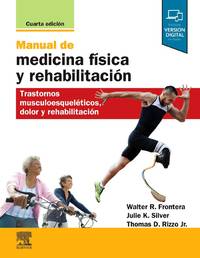
réf. SAL8491136347España: ELSEVIER. Rústica. Nuevo/Nuevo. AZTUNIV ELSEVIER paperback
réf. 18-5762Jerez de la Frontera: Sala de Arte Pescaderia Vieja 1997. . 4to. 26 pp. Soft stapled color illustrated wraps with white titling and French folds. Very good. Color plates. Includes text by Carlos M. Lopez Ramos. Catalogue created on occasion of exhibition “Manuel Caballero: ‘Crucifixus’: Dibujos y Pinturas 1983 - 1996” in Jerez de la Frontera Spain at the Sala de Arte Pescaderia Vieja from April 5 through 20 1997. Includes as insert 1 typed single-sided page containing “English synopsis” of catalogue. Scarce. En Espanol. Jerez de la Frontera: Sala de Arte Pescaderia Vieja, 1997. paperback
1902Outside dimensions 14.5" x 10.5". Circa 1902. Centerfold. Light wear. Please see our photo for details. Book
réf. 40965Detroit. Compiled and Published by Douglas Printing Co. 1923. 56x 86vm large folding colour map with street indexes folded to 12mo 15x 11.5cm in red printed card wraps cracking at the fold corners split at a few folds on somewhat fragile paper considering that this is a fine copy. not many copies in this condition could survive rare.on. No auction records or listing located. WorldCat locates two other similar verisons 1919 & 1920 1 at the UofT Fisher but none of this 1923 issue. From the early days when travel and trips by car were beginning to expand. By the 1940's and 50's getting a car meant unparallel "freedom". You could go anywhere any time. A whole new world. Detroit. Compiled and Published by Douglas Printing Co. 1923 unknown
2001Features: Viking Pop Culture on Display - the Case of the Horned Helmets; Baseball Landscapes Civically Considered; Decouvir, etudier et mettre en valeur la culture materielle - dialectique entre cultures populaire et savante, l'exemple quebecois au 20e siecle; Hooked Mat Mania and Cross Border Shopping in the early Twentieth Century; Images, Objects and Ideas in the Popular Culture of Seafaring; Minivans, Gender and Family Values; Recuperer pour creer - les enjeux de la recuperation des textiles dans le design de mode quebecois depuis 1980; Popular Culture in the Museum context - Hitchcock, Hip Hop, and the Hockey Hall of Fame; Six book reviews. Average wear. Usual library markings. A sound copy. Book
1991réf. 2082702114611734Sada Sanman En Shinjin Oraisha Heisei 3-5 1991. Soft Cover. Fine. The book is in fine condition. Sada Sanman En Shinjin Oraisha Heisei 3-5 paperback
1948réf. 2082702114606888Tozai shubbansha 1948. Soft Cover. Fine. Number of books: 1 Tozai shubbansha paperback
réf. BN91899Piepenbrock G. Mein Leben mit Border Collies: Training Handling Trialling Jones Glyn; Collins Barbara; Halsall Eric; Hubbard Gillian; Owen Ann G and Piepenbrock Günter Mein Leben mit Border Collies: Training Handling Trialling Jones Glyn; Collins Barbara; Halsall Eric; Hubbard Gillian; Owen Ann G and Piepenbrock Günter Mein Leben mit Border Collies: Training Handling Trialling Jones Glyn; Collins Barbara; Halsall Eric; Hubbard Gillian; Owen Ann G and Piepenbrock Günter Piepenbrock, G unknown
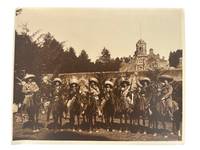
1911réf. 220241911. Pancho Villa and División del Norte Mounted Troops of the Mexican Revolution. A vintage Extra Large silver gelatin photograph by Agustín Casasola measuring 16" x 20" . Striking and rare original photograph from the early years of the Mexican Revolution depicting Pancho Villa and a detachment of his División del Norte mounted on horseback before a weathered colonial-era convent or mission compound likely in the state of Chihuahua or Durango. All men are in uniform heavily armed with bandoliers and rifles wearing wide-brimmed sombreros characteristic of the revolutionary norteño aestheticn. The image documents revolutionary leader Pancho Villa and a group of armed fighters assembled before a walled ecclesiastical compound in the mountainous regions of northern Mexico. Villa emerged as one of the central military figures of the Mexican Revolution commanding cavalry forces known as the División del Norte that operated across Chihuahua Durango and other northern states during the uprising against the long dictatorship of Porfirio Díaz. Photographs produced during the early revolutionary campaigns played an important role in circulating images of insurgent leadership and helped establish Villa's reputation as a charismatic popular commander. Casasola Agustín Víctor photograph. Casasola Studio circa 1911. Large silver gelatin photograph with "Casasola Praga No. 16 Mexico" studio stamp on versoPancho Villa and revolutionary cavalry before church compound. Mexico City: The photograph depicts Villa and a detachment of mounted soldiers positioned before a colonial era church or mission compound likely located in the northern Mexican states where Villa's forces operated. The men are mounted on horseback and dressed in revolutionary military attire including bandoliers rifles and wide brimmed sombreros associated with the norteño revolutionary aesthetic. Villa believed to be the third rider from the right appears in the central grouping of mounted officers. The architectural background features domed towers and high walls characteristic of colonial religious buildings creating a visual contrast between the armed revolutionary force and the remnants of Mexico's colonial institutional landscape. Agustín Víctor Casasola founded one of the most influential photographic studios documenting the Mexican Revolution producing images that later formed the core of the Archivo Casasola. Casasola photographers recorded revolutionary leaders soldiers civilians and daily life during the conflict shaping both Mexican historical memory and international visual understanding of the revolution. Large format prints such as this example were produced in limited numbers for press circulation archives or exhibitions documenting the conflict. Photograph measures approximately 16 × 20 inches. Minor edge wear with a small closed tear at the upper left margin and light creasing at the lower right margin away from the image area; print surface clean with strong tonal range and detail. Overall condition very good. unknown
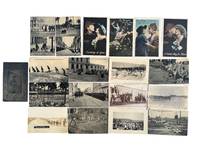
1916réf. 225131916. Mexico Border Wars United States and Mexican Border War photograph archive circa 1914-1916 documents military operations and occupation scenes produced during the period of armed confrontation between the United States and revolutionary Mexico in the years surrounding the Mexican Revolution. Created during the escalation of cross border conflict that followed the Tampico Affair and the subsequent United States occupation of Veracruz in April 1914 the photographs record American and Mexican troops engaged in urban combat military drills occupation ceremonies and field movements along the Gulf Coast and northern borderlands. The images provide visual documentation of the military campaign ordered by President Woodrow Wilson during a decade of instability in Mexico when revolutionary conflict cross border raids and American intervention shaped relations between the two nations. Archive of nineteen photographs created between approximately 1914 and 1916 primarily real photo postcards with one tintype portrait. Most photographs measure approximately 3.5 × 5.5 inches and several retain contemporary captions identifying locations and military activity. Scenes documenting the United States occupation of Veracruz include captions such as "The 5th Brigade U.S. Army Commanded by General Funston taking Possession of Vera Cruz April 30th 1914" and "Federal Mexican Soldiers Firing from Street Corner First Day of Battle April 21st." Additional images depict United States troops in training or formation including "U.S. Soldiers Hiking in the Sand Hills around Vera Cruz Mexico" "U.S. Army at Vera Cruz Mexico" and "Nebraska's Battalion." Mexican federal troops appear in photographs captioned "Serving Machine Guns" and assembled "for Grand Review Vera Cruz Mex." A dramatic real photo postcard titled "Firing Squad Mexico" depicts six riflemen firing upon a condemned prisoner kneeling at the water's edge. Another image captioned "Adobe House Destroyed by Artillery in Mexico" shows a bullet scarred building façade with mounted troops nearby. Panoramic troop movements appear in photographs captioned "Mexican Infantry entering Juárez Mex." and "Scene at Vera Cruz Mexico during Battle of April 21st and 22nd" the latter showing soldiers lying prone in firing positions. The archive also includes four hand colored patriotic "sweetheart" postcards sent by soldiers to loved ones bearing sentimental captions such as "Don't Forget the One You Left Behind." The tintype depicts an American soldier wearing a campaign hat and service uniform standing before a canvas tent. One postcard bears a lengthy manuscript letter written from McAllen Texas dated September 27 1916 in which the writer reports: "Still here! & it's hot! but I have a nice job and plenty to do. I love it and I'm sure you would enjoy it. It is a splendid experience and I am proud of the N.G. The flag is O.K. in our hands." These photographs emerge from the years of heightened tension along the United States Mexico border between 1910 and 1919 when revolutionary upheaval within Mexico and armed incursions across the frontier led to repeated military mobilization by the United States. The occupation of Veracruz in 1914 marked one of the most significant American interventions of the period and produced several days of street fighting between United States Marines Army units and Mexican defenders. Light handling wear to several cards with occasional corner creasing and one example with minor margin loss. Tintype shows light surface spotting but retains clear detail. Overall very good condition. The photographs collectively record both the violence of the conflict and the symbolic displays of military presence that accompanied the occupation including troop drills reviews and staged patriotic imagery circulated through postcards. unknown
1916réf. 225131916. Mexico Border Wars United States and Mexican Border War photograph archive circa 1914-1916 documents military operations and occupation scenes produced during the period of armed confrontation between the United States and revolutionary Mexico in the years surrounding the Mexican Revolution. Created during the escalation of cross border conflict that followed the Tampico Affair and the subsequent United States occupation of Veracruz in April 1914 the photographs record American and Mexican troops engaged in urban combat military drills occupation ceremonies and field movements along the Gulf Coast and northern borderlands. The images provide visual documentation of the military campaign ordered by President Woodrow Wilson during a decade of instability in Mexico when revolutionary conflict cross border raids and American intervention shaped relations between the two nations. Archive of nineteen photographs created between approximately 1914 and 1916 primarily real photo postcards with one tintype portrait. Most photographs measure approximately 3.5 × 5.5 inches and several retain contemporary captions identifying locations and military activity. Scenes documenting the United States occupation of Veracruz include captions such as "The 5th Brigade U.S. Army Commanded by General Funston taking Possession of Vera Cruz April 30th 1914" and "Federal Mexican Soldiers Firing from Street Corner First Day of Battle April 21st." Additional images depict United States troops in training or formation including "U.S. Soldiers Hiking in the Sand Hills around Vera Cruz Mexico" "U.S. Army at Vera Cruz Mexico" and "Nebraska's Battalion." Mexican federal troops appear in photographs captioned "Serving Machine Guns" and assembled "for Grand Review Vera Cruz Mex." A dramatic real photo postcard titled "Firing Squad Mexico" depicts six riflemen firing upon a condemned prisoner kneeling at the water's edge. Another image captioned "Adobe House Destroyed by Artillery in Mexico" shows a bullet scarred building façade with mounted troops nearby. Panoramic troop movements appear in photographs captioned "Mexican Infantry entering Juárez Mex." and "Scene at Vera Cruz Mexico during Battle of April 21st and 22nd" the latter showing soldiers lying prone in firing positions. The archive also includes four hand colored patriotic "sweetheart" postcards sent by soldiers to loved ones bearing sentimental captions such as "Don't Forget the One You Left Behind." The tintype depicts an American soldier wearing a campaign hat and service uniform standing before a canvas tent. One postcard bears a lengthy manuscript letter written from McAllen Texas dated September 27 1916 in which the writer reports: "Still here! & it's hot! but I have a nice job and plenty to do. I love it and I'm sure you would enjoy it. It is a splendid experience and I am proud of the N.G. The flag is O.K. in our hands." These photographs emerge from the years of heightened tension along the United States Mexico border between 1910 and 1919 when revolutionary upheaval within Mexico and armed incursions across the frontier led to repeated military mobilization by the United States. The occupation of Veracruz in 1914 marked one of the most significant American interventions of the period and produced several days of street fighting between United States Marines Army units and Mexican defenders. Light handling wear to several cards with occasional corner creasing and one example with minor margin loss. Tintype shows light surface spotting but retains clear detail. Overall very good condition. The photographs collectively record both the violence of the conflict and the symbolic displays of military presence that accompanied the occupation including troop drills reviews and staged patriotic imagery circulated through postcards. unknown books
1911réf. 220241911. Pancho Villa and División del Norte Mounted Troops of the Mexican Revolution. A vintage Extra Large silver gelatin photograph by Agustín Casasola measuring 16" x 20" . Striking and rare original photograph from the early years of the Mexican Revolution depicting Pancho Villa and a detachment of his División del Norte mounted on horseback before a weathered colonial-era convent or mission compound likely in the state of Chihuahua or Durango. All men are in uniform heavily armed with bandoliers and rifles wearing wide-brimmed sombreros characteristic of the revolutionary norteño aestheticn. The image documents revolutionary leader Pancho Villa and a group of armed fighters assembled before a walled ecclesiastical compound in the mountainous regions of northern Mexico. Villa emerged as one of the central military figures of the Mexican Revolution commanding cavalry forces known as the División del Norte that operated across Chihuahua Durango and other northern states during the uprising against the long dictatorship of Porfirio Díaz. Photographs produced during the early revolutionary campaigns played an important role in circulating images of insurgent leadership and helped establish Villa's reputation as a charismatic popular commander. Casasola Agustín Víctor photograph. Casasola Studio circa 1911. Large silver gelatin photograph with "Casasola Praga No. 16 Mexico" studio stamp on versoPancho Villa and revolutionary cavalry before church compound. Mexico City: The photograph depicts Villa and a detachment of mounted soldiers positioned before a colonial era church or mission compound likely located in the northern Mexican states where Villa's forces operated. The men are mounted on horseback and dressed in revolutionary military attire including bandoliers rifles and wide brimmed sombreros associated with the norteño revolutionary aesthetic. Villa believed to be the third rider from the right appears in the central grouping of mounted officers. The architectural background features domed towers and high walls characteristic of colonial religious buildings creating a visual contrast between the armed revolutionary force and the remnants of Mexico's colonial institutional landscape. Agustín Víctor Casasola founded one of the most influential photographic studios documenting the Mexican Revolution producing images that later formed the core of the Archivo Casasola. Casasola photographers recorded revolutionary leaders soldiers civilians and daily life during the conflict shaping both Mexican historical memory and international visual understanding of the revolution. Large format prints such as this example were produced in limited numbers for press circulation archives or exhibitions documenting the conflict. Photograph measures approximately 16 × 20 inches. Minor edge wear with a small closed tear at the upper left margin and light creasing at the lower right margin away from the image area; print surface clean with strong tonal range and detail. Overall condition very good. unknown books
réf. 45596991-nnew. unknown
réf. 45596991like new. unknown
réf. 1016205945.Ghardcover. Good. Access codes and supplements are not guaranteed with used items. May be an ex-library book. hardcover
réf. 1016210728.Gpaperback. Good. Access codes and supplements are not guaranteed with used items. May be an ex-library book. paperback
réf. B9781016205948Hardback. New. hardcover