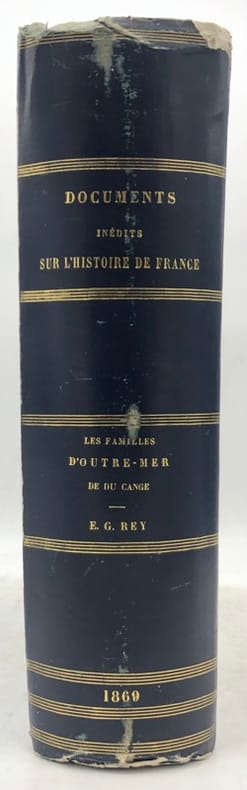
DU CANGE (Charles Du Fresne, sieur)Livre Rare Book
947 Ergebnisse
Best.-Nr. 146841Collection Documents Inédits sur l'Histoire de FranceParis, Imprimerie Impériale, 1869 in-4, IV-998 pp., index, cartonnage papier bleu, filets dorés au dos et sur les plats (rel. de l'éditeur). Petites usures aux coiffes, mors supérieur abîmé en tête. Cachet de bibliothèque annulé.
Best.-Nr. 224136Collection Documents Inédits sur l'Histoire de FranceParis, Imprimerie Impériale, 1869 in-4, IV-998 pp., index, cartonnage papier brun (rel. de l'éditeur). Petites usures au cartonnage, très fortes rousseurs.
1996Very good, well researched and comprehensive guide to Cyprus. It covers the whole island and contains information on every town and resort, and details of attractions and activities. Place names are shown in Greek characters to help with signs and travel destinations 378p. illus.maps, bibliography. index Book
19588vo., First Edition thus, with plates; yellow cloth, backstrip lettered in brown, a near fine copy in unclipped dustwrapper lightly browned at backstrip. Published a year after the first edition. Crisp copy of Durrell's engaging account of his time in Cyprus during the troubled years of 1953-56. It is a wonderful study of moods and atmospheres; the house-buying episode is justly regarded as a comic masterpiece.
19578vo., First Edition thus, with title-vignette, plates and illustrations in the text; handsomely bound in green full morocco, sides with gilt frame border, back with raised bands ruled in gilt, second and fourth compartments lettered and ruled in gilt, all other compartments tooled in gilt with a floral device, gilt top, hand-made endpapers, a most attractive copy ideal as a gift or for presentation. Published simultaneously with the first edition. Elegant copy of Durrell's engaging account of his years in Cyprus during the troubled years of 1953-56. It is a wonderful study of moods and atmospheres; the house-buying episode is justly regarded as a comic masterpiece.
19578vo., First Edition, with title-vignette, plates and illustrations in the text, neat contemporary signature on front free endpaper; red cloth, gilt back, a very good, bright, crisp, clean copy in price-clipped dustwrapper, the latter chipped at head of backstrip and with one or two tiny nicks at edges. Crisp copy of Durrell's engaging account of his time in Cyprus during the troubled years of 1953-56. It is a wonderful study of moods and atmospheres; the house-buying episode is justly regarded as a comic masterpiece.
1982Buchet / Chastel 1982, In-8 broché. 344 pages. Bon état.
1969Edited by Alan Thomas. "An entertaining harvest..of writings on places he has known... letters and essays form a vivid personal sketch of Durrell's life in England, Corfu, Greece Egypt, Rhodes, South America, Yugoslavia ,Cyprus and Languedoc. Here is a book for browsing, entertainment for every mood" Illustrated by Durrell under his artistic pseudonym of Oscar Epfs. 430p. plates index Book
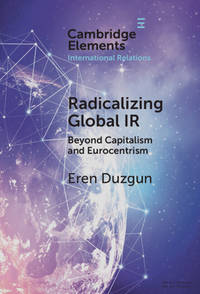
2026Best.-Nr. x-1009656031Cambridge University Press 2026. Hardcover. New. 75 pages. 6.00x0.25x9.00 inches. Cambridge University Press hardcover
Best.-Nr. 19206705-nnew. unknown
Best.-Nr. 19206705like new. unknown
2012New English Paperback. Pbo. Roy. 8vo. (24 x 17 cm). In English. 240 p. Preface M. Akif Erdogru, The Nahiye of Tuzla at the end of the XVIth Century Vera Costantini, From Greek Village to Levantine City : The Transformation of Larnaca under Ottoman Rule ??????? ??????????, ??????????? ???????? ??? ???????? ??? ????????????? (1571-1878) Anna Pouradier Duteil - Loizidou, La communauté française de Larnaca au cours de la première décennie du XVIIIème siècl ?????? ???????????, ? ?????? ??? ?????? ?????????????? ???????? ??? ??????? (1733) Georges Koutzakiotis, Franc-maçonnerie, sociabilité et politique à Larnaca au début du XIXe siècle Theoharis Stavrides, The Port of Larnaca in the Napoleonic Wars: An Eastern Mediterranean Maritime Hub in the Age of Sail (1810-1814) ????????? ? ?????, ?? ??????????? ?????????????? ??? ??????? ??? ??????????? ????????? ??? ???????? ???????? ???????????? (1817-1839) Evangelia Balta - Filiz Yasar - Elif Bayraktar, Gayr-i Muslims in Tuzla (Larnaca): The Census Register of 1831 Evangelia Balta - Mesut Ayar, Ottoman Larnaca in the Age of Reforms: A Study of the Temettuat Register (1833) Mehmet Demiryürek, Merchants and Artisans in Tuzla in the First Half of the Nineteenth Century Haydar Çoruh, Yüzyilin ikinci Yarisinda Kibris'ta Bir Kent: Tuzla (Larnaka) Mesut Ayar, XIX. Yüzyilin Ikinci Yarisinda Tuzla (Larnaka): Ticaret, Ticaret Mahkemesi ve Konsolosluklar Michalis N. Michael, The Archive of the United States' Consulate in Ottoman Larnaca: A Preliminary Report Raif Ivecan, Tanzimat'in ilanindan Kibris'ta Ingiliz Idaresinin Tesisine Kadar Tuzla Memlehasi Tom Sinclair, The Muslim Monuments of Larnaca Harid Fedai, Larnaka Bir Ta'mir Bir Târih.
2015New English Paperback. Pbo. 4to. (30 x 21 cm). In English. 421 p. Kouklia in nineteenth century Cyprus. On the ruins of a once Glorious Paphos. Kouklia (Kukla) is a village in the Paphos District, about 16 kilometres (9.9 mi) from the city of Paphos on the Mediterranean island of Cyprus. The village is built in the area of "Palaepaphos" (Old Paphos), mythical birthplace of Aphrodite, Greek goddess of love and beauty. The foundation myth is interwoven with Aphrodite at every level, such that Old Paphos became the centre for her worship in the ancient world. Contents: List of Tables List of Abbreviations Note on Usage Foreword PART ONE Settlements and population of Kouklia. Introduction 1. Nahiye of Kouklia (16th-17th centuries) 2. The kaza of Kouklia in the 19th-century censuses 2a. 1825 2b. 1831-1832 2c. 1833 2d. 1843-1844 3. The census of Kouklia on the eve of British rule 3a. The sources 3b. Settlments and Population (1876-1877).; Inhabitants names Professions The disabled Military service Relocations and migrations Criminality Protégés.; PART TWO: The Sources Note on Orthography and Transliteration - Sigla Tasra Tasnifi Kibris Mutasarrifligi Defteri no 41 Varidat Muhasebesi Defterleri, Temettuat Defteri no. 16155 3. ?üfus Defteri no 3751 4. ?üfus Defteri no 3752 5. Register 35 6. Register 49 7. Register 45 8. Register 52 Glossary Bibliography Index. CYPRUS Ottoman culture 19th Century Social history Greeks Mediterranean Ottoman rule Cypriot culture.
2002Fine English Paperback. Roy. 8vo. (24 x 17 cm). In Turkish. [xiv], 254 p. Inançlar, halk hekimligi, kötü sözler. (Kibris Türk kültürü çalismalari: 3). Beliefs, customs, folk medicine and curses in Cypriot Turkish folklore. (Cypriot Turkish folkloric studies: 3). CYPRIOT CULTURE Cyprus Greek - Rum Turkish culture Folklore.
1994Very Good English Paperback. Pbo. Roy. 8vo. (24 x 17 cm). In English. [xi], 383 p., b/w and color ills. Cyprus International Symposium On Her Past And Present. Gazi Magusa, October 29 - November 1, 1991.
2016New English Original bdg. HC. 4to. (28 x 20 cm). In English and Turkish. 554 p., ills. The Ottoman period in Cyprus.= Osmanli döneminde Kibris Uluslararasi Sempozyum Bildirileri.
2019New English Paperback. Roy. 8vo. (24 x 17 cm). In English. 416 p. Studies on Ottoman Nicosia: From the Ottoman conquest to the early British period. Preface Contributors Vera CostantInI, An Old Location's New Life: Early-Ottoman Lefkosa Recep Dündar, Nicosia according to the Population and Taxation Survey of 1572 Mehmet AkIf Erdogru, The New Status Quo of the Monasteries of Cyprus after the Ottoman Conquest Mehmet DemIryürek, The Price of the Faith: Mukataa-i Patrikiyye-i Cezire-i Kibris and Mukataa-i Sem'hâne (1572-1612) Styliani N. LepIda, Nicosia: The Capital City of an Ottoman Province in the Seventeenth Century Mustafa Öztürk, Cypriot Houses and Life at Home in the 17th Century Kemal ÇIçek, A Quest for Justice in a Mixed Society: The Muslims and the Orthodox Cypriots Before the Sharia Court of Nicosia AlI Efdal ÖzkUl, Inter-communal Relations in Cyprus under Ottoman Rule in the 18th Century IoannIs P. TheoharIdes, The Revenues of the Vali of Nicosia accorging to a firman of 1706 TheoharIs StavrIdes, Ottoman Nicosia Besieged: Sieges and Blockades of Nicosia in the Long Eighteenth Century Elnur Agayev, Ottoman Nicosia from the Perspective of the Russian Monk and Traveller Vasili Grigorovich Barsky Euphrosyne Rizopoulou-EgoumenIdou, An Alternative Ethnology: Lifestyle and Behavior of the Orthodox Elite in Ottoman Nicosia, 1775-1821 MIchalIs N. MIchael, Dependency/Autonomy, Power and Ideologies in Ottoman Nicosia at the Beginning of the Nineteenth Century Mehmet DemIryürek and Hakan Yazar, Nicosia according to the Census of 1831 IoannIs MoutsIs, Education in Ottoman Nicosia: In Quest for Modernity Stephen Boys Smith, Thomas Sandwith: A Consul's View of Mid-Nineteenth-Century Cyprus Gökhan Kaya, Some Characteristics of the Population of NicosiaDuring the Early Period of British Rule.
2003As New English Paperback. Pbo. Cr. 8vo. (20 x 14 cm). In Turkish. 255 p. Collected articles on Cyprus question from pens of Greek and Turkish specialists with axis of international relations, socio-psychology, socio-policy, anthropology, and political sciences. Kibrisin turuncusu.
2015New English Paperback. Pbo. Roy. 8vo. (24 x 17 cm). In Turkish. [x], 312 p., ills. Osmanlilardan günümüze Dogu Akdeniz kentleri.= [Cities of the Eastern Mediterranean: From the Ottomans to the present day]. OTTOMANIA Mediterranean Commerce International relations Social history.
2008New English Paperback. Pbo. Roy. 8vo. (23 x 16 cm). In English. 112 p. Ills. "This publication is a combination of the work of the GPOT staff and the participants of the nine rounds of the Heybeliada Talks held to date. The main objective in preparing this book has been to consolidate the ideas put forth during the past years by Greek Cypriots and Turkish Cypriots, and to have them be accessible to wider public of policy-makers, media and academics, as well as governments and political figures.".
2012New English Paperback. Roy. 8vo. (24 x 17 cm). In Turkish. 271 p. Besinci Uluslararasi Orta Dogu Semineri: Islamiyet'in dogusundan Osmanli idaresine kadar Orta Dogu. (Sam 2-4 Kasim 2010.) Bildiriler.
1995New French Paperback. Pbo. Small 4to. (26 x 20 cm). In French. 112 p., color and b/w ills., 125 photos, 12 plans. Chypre du Nord. Une mosaique de cultures.
2014New Turkish Paperback. 4to. (28 x 20 cm). In Turkish. [8], 169 p., b/w plates of original documents. 958 numarali Kibris timar yoklama defteri (9 Cemâziye'l-evvel 1241 / 20 Aralik 1825). One of 500 copies.
2003New English Paperback. Pbo. Demy 8vo. (21 x 15 cm). In English and Turkish. [41], 370, [22] p., color ills. Pedios River, inventory of flora.= Kanlidere ve Asi Dere florasi.
1990New English Paperback. Roy. 8vo. (23 x 16 cm). In English. 174 p., b/w ills. Ages and days in Cyprus. Having decided to tell the story of the Swedish Cyprus Expedition, it is perhaps proper to begin by relating how this expedition became a reality, especially since the question "Why did you decide to undertake an expedition to Cyprus?" has often been asked of me by many persons over a number of years. There are, after all, so many archaeologically interesting countries in the world. Why then was Cyprus chosen in preference to others? To answer that question I must tell a story, which by now is rather well known. The following scene took place during the month of March 1922. Professor Axel W. Persson of Uppsala was travelling to Greece. In a railway station in Serbia he struck up a conversation with a lively and nervous, somewhat oriental-looking man in his fifties. He asked the professor's destination, and was told that Persson was on his way to Asine in Greece to conduct archaeological excavations. "I am absolutely mad about archaeology", exclaimed this new found acquaintance. "What nationality are you, Professor?" When he learned that Professor Persson was from Sweden, he became a volcano of cordiality, embraced Persson and cried: "Well then we are almost compatriots. You see I am the Swedish consul in Cyprus! My name is Luke Zenon Pierides. My father was also the Swedish Consul, and when Norway and Sweden separated, he was offered the position of consul for Norway. This he refused and remained faithful to Sweden to his death. What a privilege and pleasure to meet a representative of this noble and high-minded nation!" After some further conversation, the consul suddenly asked: "Could you let me borrow five pounds, Professor Persson? I ran into some bad luck. The Serbian Customs took all my money and I can't get any more until I reach Constantinople." Professor Persson made a mental calculation: "Five pounds is five pounds, and quite possibly I will never see the money again. Of course there is a chance that this man is telling the truth, and if he is indeed the Swedish Consul, it would be an insult to deny him the loan." Persson thus lightened his wallet by five pounds sterling and gave them to Pierides. Pierides started to talk about Cyprus, about his home in Larnaca, containing a magnificent collection of Cypriot antiquities, he further inquired if the Swedes had considered any excavations on Cyprus and urged Persson to persuade a young Swedish archaeologist to travel to Cyprus in order to start some thorough archaeological research. After a few more minutes of archaeology and Sweden, Pierides asked to borrow another five pounds. He promised that Professor Persson would have the money without fall on his arrival in Athens. The Professor, who was not only an optimist, but also had a big heart, complied this time also with Pierides' request, but he confessed that he did not feel very optimistic when he went to inquire for his money in Athens. However, the money had indeed arrived, together with a letter from Pierides, again urging Persson to arrange for the Swedes to undertake an archaeological invasion of Cyprus. One pleasant summer-night in Asine in Greece, the kind of night when anything seems possible, Professor Persson discussed the issue with me, and recommended that I accept Pierides' invitation. I really did not know anything about Cyprus and so said, yes, without too much deliberation. The unknown beckoned.In October 1923 my wife and I travelled to Cyprus, landing in Larnaca, where Pierides received us with open arms. The unknown met me in the shape of an enormous material from the Bronze Age ready to be studied. The curator of the Cyprus Museum, Menelaos Markides, a scholar who had been archaeologically trained in England, had shortly before my arrival excavated numerous tombs from the Bronze Age. The poor man, however, fell ill with Parkinson's disease and was incapable of doing scientific work. Generously he left