[GENEVOIX (Maurice)]Biblio.com
71,497 results
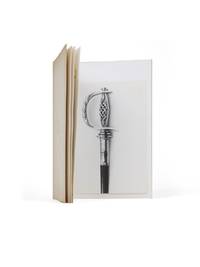
ref. 31914Paris Cartier 4 décembre 1972. 1 vol. 210 x 300 mm non paginé en feuilles. . « Exemplaire imprimé spécialement pour Maurice Genevoix Secrétaire perpétuel de l'Académie française ». . Entre 1931 et 1999 l’orfèvre Cartier reçoit vingt-sept commandes d’épées d’académiciens solennellement répertoriées dans les annales de la maison. En 1934 l’épée de François Mauriac est la première des vingt et une épées réalisées pour un membre de l’Académie française. L'Institut national créé après la Révolution ne prévoyait pas de costume ni d'épée pour ses membres. La Révolution ayant supprimé le port de l'épée comme signe de noblesse les membres de l’Institut ont rapidement souhaité un signe distinctif menant à l'attribution d'une canne en 1800 et d'un costume établi en 1801 mais aucune épée n'était prévue. Née comme simple pièce d’uniforme et jamais rendue obligatoire par les textes l’« épée d’académicien » est aujourd’hui l’attribut le plus personnel du rituel de l’Académie française : remise en privé souvent offerte par souscription elle s’est muée du Second Empire à nos jours d’une épée d’apparat à poignée de nacre en objet d’art portatif portrait symbolique du récipiendaire. L’exposition de la Bibliothèque de l’Institut 16 septembre–16 décembre 2004 a retracé cette mue : après les armes d’uniforme et les modèles inspirés de l’Institut d’Égypte la Belle Époque et l’entre-deux-guerres voient les orfèvres élever l’épée au rang d’œuvre unique par les plus grands ateliers de joiaillerie. Au XXIᵉ siècle la tradition s’ouvre encore : certaines académiciennes assument l’épée Hélène Carrère d’Encausse Emanuelle Bona d’autres adoptent des objets significatifs ; nombre de membres choisissent une épée historique quand d’autres confient à un artiste une création entièrement nouvelle. Entre protocole et création l’épée concentre ainsi mémoire publique amitié et style – un « reliquaire laïque » de l’écrivain – et demeure selon la belle formule d’Arnaud d’Hauterives un portrait plus qu’une arme. Belle monographie consacrée au sujet imprimée ici à l'attention de son secrétaire perpétuel. Paris, Cartier, (4 décembre) 1972. 1 vol. (210 x 300 mm) non paginé, en feuilles. unknown
ref. 2019914328.Gpaperback. Good. Access codes and supplements are not guaranteed with used items. May be an ex-library book. paperback
ref. 0266451586.Ghardcover. Good. Access codes and supplements are not guaranteed with used items. May be an ex-library book. hardcover
ref. 1334910049.Gpaperback. Good. Access codes and supplements are not guaranteed with used items. May be an ex-library book. paperback
ref. 101806351X.Ghardcover. Good. Access codes and supplements are not guaranteed with used items. May be an ex-library book. hardcover
ref. 3458paris chez les principaux libraires 1865 in 8 broché 255 pages - petit manque en haut et à droite de la première de couverture
1927ref. 300021466François Bernouard 1927 1927.
ref. 1391082451.Ghardcover. Good. Access codes and supplements are not guaranteed with used items. May be an ex-library book. hardcover
ref. 1391024796.Gpaperback. Good. Access codes and supplements are not guaranteed with used items. May be an ex-library book. paperback
1886ref. 85829Couverture souple bleue agrafée.
ref. 12453Seul numéro paru. Federico García Lorca, Arthur Adamov, Roger Giroux, Jean Paris, Edouard Glissant, Marcel Jouhandeau, Pierre Mabille, etc. 2 dessins hors texte de Jean Hélion. Bon état. Très rare.
ref. 57012, Toulouse, E.-B. Soubiron 1927, in-8, br., non massicoté, (lég. fané, des soulignures et annotations à l’encre et au crayon), 434p.
ref. 18448, Paris, Libr. Paillard s. dt., in-8, br., (jauni), 45p.
ref. 201947851X.Gpaperback. Good. Access codes and supplements are not guaranteed with used items. May be an ex-library book. paperback
ref. 1391076524.Gpaperback. Good. Access codes and supplements are not guaranteed with used items. May be an ex-library book. paperback
ref. 1396438572.Ghardcover. Good. Access codes and supplements are not guaranteed with used items. May be an ex-library book. hardcover
ref. 1391307542.Ghardcover. Good. Access codes and supplements are not guaranteed with used items. May be an ex-library book. hardcover
ref. 1390818489.Gpaperback. Good. Access codes and supplements are not guaranteed with used items. May be an ex-library book. paperback
ref. 1147370699.Gpaperback. Good. Access codes and supplements are not guaranteed with used items. May be an ex-library book. paperback
2026ref. LRB13002181Paris: Editions Recreasoft 2026 Reliure rigide hardcover. Langue : Français. Environ 818 pages. Français : Réimpression à la demande. Édition originale : 1881. Ouvrage médical consacré à la pathologie des maladies exotiques avec une approche clinique et documentaire caractéristique de la fin du XIXe siècle. Il présente un intérêt particulier pour l'histoire de la médecine tropicale la nosologie et l'étude des affections observées hors d'Europe. Images du livre non contractuelles English : Print-on-demand reprint. Original edition : 1881. Medical work devoted to the pathology of exotic diseases with a clinical and documentary approach characteristic of the late nineteenth century. It is of particular interest for the history of tropical medicine nosology and the study of diseases observed outside Europe. Book images are non-contractual. Editions Recreasoft. Softcover. New. Editions Recreasoft paperback
2021ref. BN221442DUNOD 2021. 2021. Softcover. Éléments de géologie - 17e édition du "Pomerol": 17e édition du "Pomerol" Éléments de géologie - 17e édition du "Pomerol": 17e édition du "Pomerol" Renard Maurice; Lagabrielle Yves; Martin Erwan; Rafélis Marc de; Collectif DUNOD paperback
ref. lc_110437Gallimard; Bilingual édition (25 octobre 1994)
1999ref. 136426Arstella 1999 In-4 broché 29 cm sur 20,3. 165 pages. Couverture à rabats légèrement poussiéreuse, intérieur frais. Bon état d’occasion.
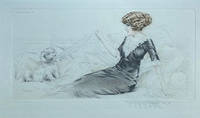
ref. 51-6156France: 1913. Color etching. Signed dated 1913 and numbered 4. Dimensions: 25 x 40 cm with margins. Framed and matted to 40 x 58cm.Expertise by Bernard Portheault8 rue des Pichots 41500 Mer.Maurice Millière 1871-1946 Born at Le Havre in Normandy on 12th December 1871 Millière began his art education in his home town but soon transferred to l'Ecole des Beaux-Arts in Paris where he studied portraiture life drawing and figure painting in the atelier of Leon Bonnat whose pupils included Toulouse-Lautrec and Raoul Dufy. He also studied at l'Ecole des Arts Decoratifs. His skill as a draughtsman translated quickly into success as a cartoonist and illustrator and his brilliant interpretation of the "Modern Parisienne" soon became known as the "Petite femme de Millière". Skilfully using the technique of colour etching with drypoint Millière created a modern woman who was coy charming independent and beautiful. Unconsciously erotic and quite adorable his portrayals became known as “Femmes Poupées” doll-women and through them he created the genre of boudoir art. His work was the prime inspiration for the popular "boudoir" painter and engraver Louis Icart 1888-1950.Millière contributed to fashionable magazines of the time including "La Vie Parisienne" and "Fantasio". He also contributed 13 illustrations to the Cornet Société of which he was a member between 1907 and 1939 most of them of the same woman – Fanny who featured originally as a coy teenager and gradually developed into a voluptuous young woman.Millière’s success continued to grow after the Great War of 1914-18 and he became closely involved with the welfare of children injured or orphaned during the War. He was the treasurer for Charitable Works in Montmartre where he lived. For this he was created Chevalier of the Legion d’Honneur. Although his art became somewhat more restrained and less overtly erotic he continued to work steadily and in various media. He also illustrated several books including works by Gyp and Maurice Vaucaire. He travelled and worked in the French colonies including Martinique.Millière developed into an establishment artist and he exhibited widely at commercial galleries and at the Paris Salon as well as the Salon des Humoristes and l’Exposition Coloniale where he was a gold medallist in 1931 when he was 59.Millière died at the age of 74 in 1946. France: 1913 unknown
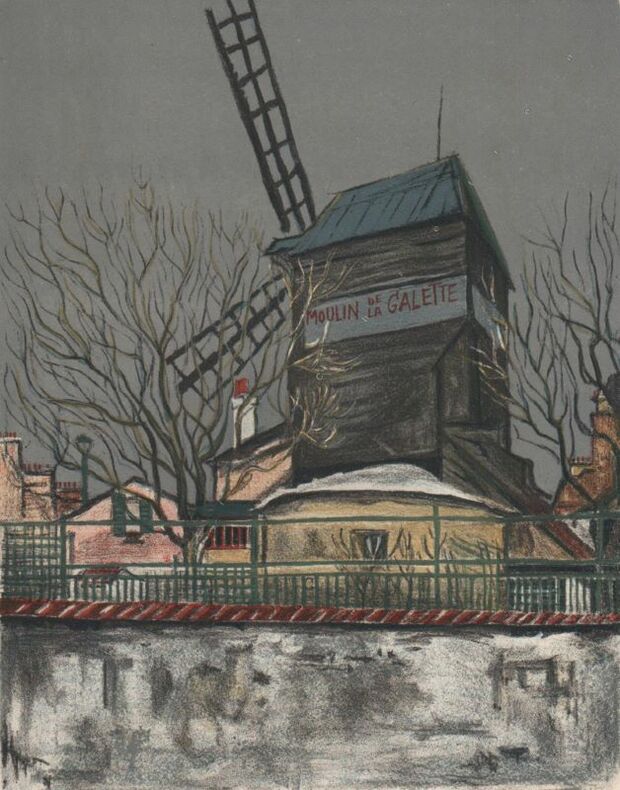
1948ref. 24058Manuel Bruker 1948 1 Orné de lithographies en couleurs. Manuel Bruker éditeur, 1956, broché, in-4, couverture rempliée vert pâle, non chiffré, table des gravures, achevé d'imprimer.