French PolynesiaBiblio.com

6 résultats
réf. 1390848779.Gpaperback. Good. Access codes and supplements are not guaranteed with used items. May be an ex-library book. paperback
réf. LDM0062499We ship worldwide. 100% guarentee. BRAND NEW unknown
réf. 1391208293.Ghardcover. Good. Access codes and supplements are not guaranteed with used items. May be an ex-library book. hardcover
1995réf. 175364New York: Harperone 1995. First Edition; Fifteenth Printing. Hardcover. Near Fine in boards. Harperone hardcover
1851réf. 2027AG1851. London & New York J & F. Tallis 1851. Original steel engraving / Vintage map. Drawn and engraved by John Rapkin. Partly hand-coloured. Plate Size: 35.7 cm x 25.8 cm. Sheet Size: 37.5 cm x 27.3 cm. Vintage 19th century map in very good condition. John Tallis 7 November 1817 3 June 1876 was an English cartographic publisher. His company John Tallis and Company published views maps and atlases in London from roughly 1838 to 1851. Tallis set up as a publisher with Frederick Tallis in Cripplegate in 1842; the business moved to Smithfield in 1846 and was dissolved in 1849. From 1851 to 1854 Tallis operated as John Tallis and Company. He started The illustrated news of the world and national portrait gallery of eminent personages in 1858 selling it for £1370 in 1861; it folded in 1863. Wikipedia The most important project John Tallis undertook was the 'Illustrated Atlas' from 1851. The original map we offer here was part of this exceptional Atlas and all the maps it contained are still today considered as the last reminder of an era of lavish map production. Tallis worked the project together with John Rapkin 1815-1876 and it was Rapkin's style and talent that we have to thank for when we marvel at these maps today. What makes these maps so special is the detail of engraved vignettes that surround the map and often show indigenous scenes people in their environment and even more so historical buildings or historical views of towns and cities architecture and landscape. The project of 'The Illustrated Atlas' was designed to be finished just in time for the anxiously awaited "Great Exhibition of the Works of Industry of All Nations" or The Great Exhibition sometimes referred to as the Crystal Palace Exhibition in reference to the temporary structure in which it was held was an international exhibition that took place in Hyde Park London from 1 May to 11 October 1851. It was the first in a series of World's Fairs exhibitions of culture and industry that became popular in the 19th century and it was a much anticipated event. The Great Exhibition was organized by Henry Cole and Prince Albert husband of the reigning monarch Queen Victoria. It was attended by numerous notable figures of the time including Charles Darwin Samuel Colt members of the Orléanist Royal Family and the writers Charlotte Brontë Charles Dickens Lewis Carroll George Eliot and Alfred Tennyson. Music for the opening was under the direction of Sir George Thomas Smart and the continuous music from the exhibited organs for the Queen's procession was "under the superintendence of William Sterndale Bennett". Wikipedia unknown
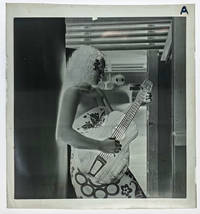
réf. PF31Two folders for film negatives. Folder 1: 85x9x35 cm 3 ¼ x 3 ½ x 1 ¼ in; with ca. 96 negatives each 6x6 cm 2 ¾ x 2 ¾ in all inserted into tissue paper pockets with printed numbers in the upper corners. No captions. Period brown full cloth folder with silver-lettered title “Album/Classeur/6x6.” Several negative slightly faded but overall a very good folder. Folder 2: ca. 8x85x3 cm 3 x 3 ¼ x 1 ¼ in; with ca. 60 negatives each 6x6 cm 2 ¾ x 2 ¾ in all inserted into tissue paper pockets with printed numbers in the upper corners. No captions. With several pieces of paper with period ink captions in French referring to the previously removed negatives. Period light brown folder with cloth spine and card covers; gilt-lettered title “Classeur/Film/6x6” on the spine. Housed in the original brown card clamshell box. The box is partly cracked on folds several negatives mildly faded otherwise a very good internally clean folder. Interesting extensive collection of over 150 original film negatives taken by a French traveller in French Polynesia in the 1930s. The negatives include portraits of the compiler and his wife or girlfriend posing in various settings on the beach and in their residences wearing pareos and swimsuits dining and having fun on the beach with their friends. Numerous negatives portray native women wearing traditional pareos and lei playing musical instruments guitar accordion piano combing hair posing on the beach and among palms &c. There are also lively beach and village scenes with local couples and families dancers in traditional costumes fishermen people in outrigger canoes views of residences taken from the sea forest and mountains a portrait of a fisherman fixing his net several scenes taken on board a schooner “goélette” a view of a city embankment and a naval ship in harbour likely in Papeete an image of a church building with the sign “Saint Lazare” &c. Several paper labels with period manuscript captions to the previously removed negatives indicate that they were taken by “Andre” in 1938 in Papeete and during a sailing voyage to Raiatea. Overall a lively collection of original film negatives showing Tahiti and its people in the late 1930s. hardcover