LUCIEN - SCOTT H. - MEAULLE F.Livre Rare Book

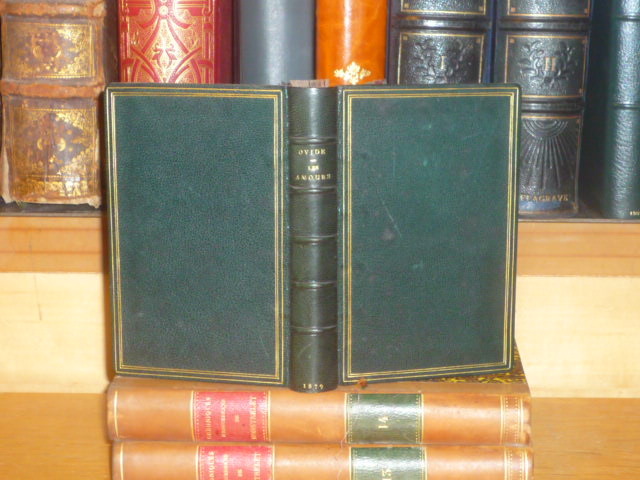
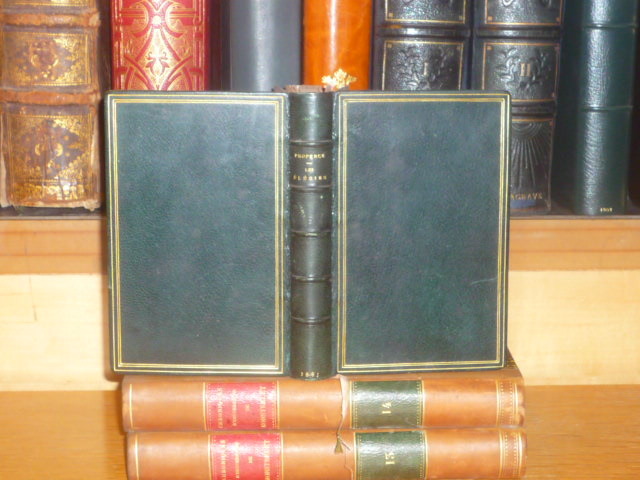
réf. 47183A. Quantin, Imprimeur-Editeur - Collection "Petits Chefs-d'Œuvre Antiques" Paris 1881 In-16 ( 145 X 100 mm ) de 135 pages, plein chagrin poli vert sapin, dos à nerfs janséniste avec date dorée en queue, tête dorée, triple filet doré d'encadrement sur les plats, coupes et coiffes filetées d'or, dentelle intérieure dorée. ( Reliure de l'époque ). Texte encadré d'un joli motif "à l'antique". Charmantes gravures dans le texte en couleurs de SCOTT et MEAULLE. Très bel exemplaire, très pur dans une reliure non signée mais d'exécution parfaite.
réf. VO004Paris, J.-B. BAILLIERE, s.d., in-8o, 620+4 p. et 16 pl. hors-texte, couvertures chromolith. conservees. A' edition de ce voyage interessant, r. 1/2 basane contemp., dos orne.
1830Par Moses Mendelsohn, traduit de l'allemand sur la sixième édition par L. Haiussmann, 1 vol. in-8 reliure de l'époque pleine basane racinée, fers de prix du Petit Séminaire de Brive au premier plat, Charles Heideloff, Paris, 1830, 332 pp. Intéressant exemplaire, portant les fers de prix du "Petit Séminaire de Brive", mention "Prix de Dissertation" 1842 au crayon en garde, pour cette nouvelle traduction française de l'une des oeuvres majeures du philosophe juif de l'Aufklärung berlinoise, Moses Mendelsohn (1729-1786). Dans sa Correspondance, Grimm évoquait l'ouvrage en ces termes : "M. Mosès s'est permis de mettre dans la bouche de son Socrate beaucoup d'arguments et de raisonnements tirés de la philosophie moderne en faveur du système de l'immortalité de l'âme. Ce Socrate, au lieu d'être le maître de Criton et des autres philosophes d'Athènes, n'est qu'un élève de Leibniz, de Wolff et de Mosès". Etat très satisfaisant (petits frott. en reliure, petites mouill. et qq. rouss., bon état par ailleurs). Français
réf. 410002A. Quantin, Imprimeur-Editeur - Collection "Petits Chefs-d'Œuvre Antiques" Paris 1879 In-16 ( 145 X 100 mm ) de 135 pages, plein chagrin poli vert sapin, dos à nerfs janséniste avec date dorée en queue, tête dorée, triple filet doré d'encadrement sur les plats, coupes et coiffes filetées d'or, dentelle intérieure dorée. ( Reliure de l'époque ). Texte encadré d'un joli motif "à l'antique". Charmantes gravures dans le texte de MEAULLE. Très bel exemplaire, très pur dans une reliure non signée mais d'exécution parfaite.
réf. 789393A. Quantin, Imprimeur-Editeur - Collection "Petits Chefs-d Paris 1879 In-16 ( 145 X 100 mm ) de 206 pages, plein chagrin poli vert sapin, dos à nerfs janséniste avec date dorée en queue, tête dorée, triple filet doré d'encadrement sur les plats, coupes et coiffes filetées d'or, dentelle intérieure dorée. ( Reliure de l'époque ). Texte encadré d'un joli motif "à l'antique". Charmantes gravures dans le texte en couleurs et en noir de MEAULLE, dessins de MEYER. Très bel exemplaire, très pur dans une reliure non signée mais d'exécution parfaite.
réf. 298832A. Quantin, Imprimeur-Editeur - Collection "Petits Chefs-d'Œuvre Antiques" Paris 1885 In-16 ( 145 X 100 mm ) de 203 pages, plein chagrin poli vert sapin, dos à nerfs janséniste avec date dorée en queue, tête dorée, triple filet doré d'encadrement sur les plats, coupes et coiffes filetées d'or, dentelle intérieure dorée. ( Reliure de l'époque ). Texte encadré d'un joli motif "à l'antique". Charmants dessins de BESNIER, gravures de MEAULLE. Très bel exemplaire, très pur dans une reliure non signée mais d'exécution parfaite.
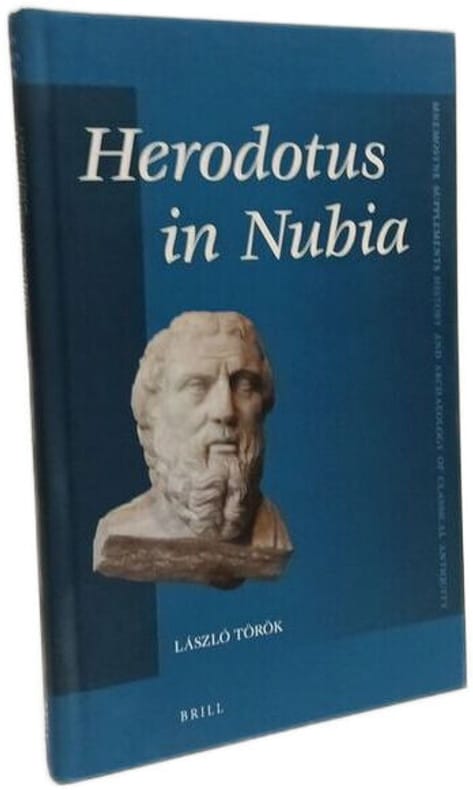
2014réf. 100143303Brill 2014 163 pages in8. 2014. Cartonné. 163 pages.
1972réf. G79326Napoli, L'arte Tipografica 1972 Complete in 2 volumes: 586pp.text + 143 plates out of text, 24cm., softcover, some traces of use and foxing and spots on edges, text and interior in very good condition, Text in Italian, G79326
1972Complete in 2 volumes: 586pp.text + 143 plates out of text, 24cm., softcover, some traces of use and foxing and spots on edges, text and interior in very good condition, Text in Italian, G79326
réf. 289042A. Quantin, Imprimeur-Editeur - Collection "Petits Chefs-d'Œuvre Antiques" Paris 1881 In-16 ( 145 X 100 mm ) de 124 pages, plein chagrin poli vert sapin, dos à nerfs janséniste avec date dorée en queue, tête dorée, triple filet doré d'encadrement sur les plats, coupes et coiffes filetées d'or, dentelle intérieure dorée. ( Reliure de l'époque ). Texte encadré d'un joli motif "à l'antique". Charmantes gravures dans le texte de Auguste LELOIR. Très bel exemplaire, très pur dans une reliure non signée mais d'exécution parfaite.
réf. SONG0801425190Used: Good unknown
1754pp. xlviij, 305 + Engraved Frontis. Fine headpieces and tail pieces engraved by Fessard, Sornique, and others. Foxed. 12mo. Disbound. All edges gold gilt. Brunet V/1788; Cohen 798. Gaius Julius Phadrus (1st century), was a Thracian slave who translated Aesop's fables into Latin verse. He was certainly more than a reproducer of Aesop, and can be credited with adding many fables of his own. A brief history of the Barbou Classics is given by Schweiger (II 1269). In 1742 Lenglet de Fresnoy persuaded Coustelier to start a series which was meant to be a French rival to the Elzeviers - even surpassing them in terms of scholarship and typography. Though this effort soon exhausted itself, it was revived by Jean Joseph Barbou in 1753. Seven of these attractive little books appeared in 1753-1755, and though there were more issued in the next decade, there was not enough market interest to support a sustained publishing program. They still stand as a monument to French scholarship and typography. This copy is priced low enough to allow for a nice new binding. **PRICE JUST REDUCED! SMALL BOX 5
1964Pages uncut. Very light browning to wraps. ; The inscription came to light during digging work in April 1957, a few miles west of present-day Kandahar. The bilingual inscription is the most westerly proof of Buddhism yet found, and the most easterly of Greek inscriptions, and the first complete Aramaic inscription discovered in the area reaching to the Indus. ; Serie Orientale Roma XXIX; 62 pages
1909Spine a bit faded. First few pages browned and stamped. One stamp to rear endpapers ; Fold-out map in rear pocket. With 16 maps, 30 plans, 2 diagrams, and a panorama of athens; 16mo - 6" to 7" tall; 447 pages
1804pp. xviii, 419; 403; : vii, 463; vii, 496. Lacks the folding map. Worn original full leather bindings. 8vo. 215 mm. ExLib. Early (1814) autograph ownership. Some foxing and browning. Jean-Jacques Barthelemy (1716-1795) was a French writer who was especially interested in the classics and numismatics. He worked as the Keeper of the Royal Collection of Metals, and continued his post during the French Revolution. This, his most famous work, was first published in 1788. It tells a story of a young Scythian man, a descendant of the philosopher in the title, who tours Greece and writes about the customs and idiosyncrasies of each place he visits. It was considered a useful handbook for Greek classical studies, and helped students to real insights about early Greek culture. Translated from the French by William Beaumont for the original English language edition. S&S/AI 5808. EVANS2
1956Portfolio of 12 large colour plates (13.25" x 13" 12") based on Bronze age art from Mycenae and Tiryns. 5 pages of introductory text by Polysemni Papaspyridi-Karouzou (1898-1994) who was a Classical archaeologist, the first woman to join the Greek Archaeological Service, and who worked as Curator of the ceramic collections in the National Archaeological Museum in Athens for over thirty years. NOTE : Aspioti [Elpis] printing was founded in 1873 in Corfu by Gerasimos Aspiotis. It merged with the Etairia Lithographias kai Kytiopoieias Athenon (ELKA) Aspioti-ELKA was the oldest company of its kind in Greece when it folded in 1997. Book
1903Very Good French Paperback. 4to. (28 x 20 cm). In French. 16 p. Traite de commerce entre la Turquie et la Grece signe le 30 Mars / 12 Avril 1903 et ratifie 24 Mai / 6 Juin 1903. Commercial Treaty between Turkey and Greece signed on March 30 / April 12, 1903 and ratified May 24 / June 6, 1903.
1650RARE 17th-century edition of various lectures by Jacobus Crucius (Jakob de Croque; Jacob de la Croix; ca.1540-1634/5), a professor at the Latin School in Delft. Most of the lectures are on pedagogic issues, as well as some literary criticism of the Classics. The book features a decoration on its title page, and further decoration at the beginning and end of some lectures. 130x75mm. 422 pages. Original white smooth-leather Hardcover. Cover slightly worn and stained. Cover edges and corners, and spine edges bumped. Spine wrinkled. Pen inscription on spine. Small pen inscriptions on title page and whitepage. Several pages slightly stained. Wormholes on pages 310-370 - slight damage to text. Pages yellowing. [SUMMARY]: This well-preserved 17th-century book of lectures in Latin is otherwise in good condition.
1744pp. [4], 342. 12mo. 170 mm. Age stain on title. Nineteenth century full leather binding. No endpapers. A very interesting collection of English translations of Demosthenes Demosthenes (384322 BC) was a Greek statesman and orator of ancient Athens. His orations constitute a significant expression of contemporary Athenian intellectual prowess and provide an insight into the politics and culture of ancient Greece during the 4th century BC. Scarce. SMALL BOX 5
1973Minor discoloration to DJ spine with light scuffing to DJ. ; Study of the origins and objectives of Greek historiography including the Greek accounts of Eastern history-- history of Egypt, Lydia, the Fertile Crescent, and Persia, from earliest times to the outbreak of the Persian wars. Focusing his study on Herodotus, the author challenges the widely held thesis that historiography was an offshoot of the Greeks' interest in ethnography. ; Publications of the Center for Hellenic Studies; 220 pages
1982Fine English Paperback. Demy 8vo. (22 x 16 cm). In English. 1 color portrait, 643 p. The Titoites: Historical notes.
2000Minor scuffing. Adhesive stains to inner covers. ; The successors of Alexander the Great were neither his closest friends nor his most prominent generals. But because these marshals labored in his shadow, their careers and contributions to Alexander's success have been neglected by historians, ancient and modern. The primary aim of this book is to bring them to light. Waldemar Heckel presents an interpretative prosopographical study of more than 130 officers who served Alexander the Great. As such, The Marshals of Alexander's Empire is a revision, a continuation and an expansion of H. Berve's Das Alexanderreich aup prosopographischer Grunlage, volume 2 (Munich, 1926). The Marshals of Alexander's Empire provides the first full discussion in English of the careers of Alexander's Macedonian officers and closest friends. ; 1.2 x 9.3 x 6.1 Inches; 444 pages
1968TWO VOLUME SET. RARE facsimile edition of the important collection of and commentary on fragments by ancient Greek historians by the renowned German classicist and philologist Felix Jacoby (1876-1959). [BOTH VOLUMES]: 245x165mm. 627 pages (pagination: XII+52+313/314-563). Blue cloth Hardcover with gilt front cover and spine. Cover slightly stained. Spine edges slightly bumped. Gilt lettering faded on spine. Text block upper edge age-stained. Pages slightly yellowing. [SUMMARY]: This comprehensive and influential two volume annotated sourcebook of fragments by ancient Greek historians, of value to anyone interested in classical philology and/or ancient history, is in good condition.
2000Very light shelfwear. A bit of creasing to spine. ; Contributions in French, Modern Greek, Italian and English. ; Bulletin De La Correspondance Hellénique - Supplément 36; Large 8vo; 455 pages
2002Small bump to foreedge of front cover. Faint bump to base of spine. ; Mnemosyne , Vol Suppl. 233; 378 pages; What was funny about ancient jokes, and why? Why did the Roman state legislate to curb the behaviour of its obscenely rich and powerful elite, if it never really expected such laws to be obeyed? Why did it oppress the poor, and lavish public child support on them? These are important questions, but ancient Greeks and Romans could never have thought of them. They never questioned the right of the rich to be rich. They could not improve their understanding of Homeric gift-giving with the experience of ritualized friendship among the Trobriand islanders. Such questions and such answers can only come from those who live after the ancient past. This volume honours the well-known Dutch epigraphist and ancient historian H. W. Pleket. Ten substantial essays reflect his wide range, from early Greece to the Roman Empire, and his taste for comparative economic and social history.