I Vassis, et al (eds)Biblio.com

18 256 résultats
2008réf. 133837Festschrift. In Greek. Soft cover 24 cm 336 pp. ill. ISBN: 978-960-524-261-9. CONTENTS: Μανόλης Σκουντάκης ΕπιγÏαφικÎÏ‚ μαÏÏ„Ï…Ïίες για τον εγγÏαμματισμό στην Ï€Ïώτη βυζαντινή ÎšÏήτη. ÎœÎµÏ„Î±Î¾Ï στοιχειώδους παιδείας και λογιοσÏνης ΜαÏίνα Λουκάκη Παιδεία και πολιτισμός στην ΚÏήτη τον 12ο αιώνα Όλγα ΓκÏάτζιου Οι εικόνες στην ΚÏήτη κατά τη δεÏτεÏη βυζαντινή Ï€ÎµÏίοδο και αÏγότεÏα. Εκκλησιαστική πολιτική και λαϊκή Î»Î±Ï„Ïεία Μανόλης Πατεδάκης ¶γνωστο επίγÏαμμα στον ναÎσκο της Κοίμησης στον ¶γιο Ιωάννη Μυλοποτάμου Τίνα ΛεντάÏη Îόσος και εÏμηνεία. Διαβάζοντας τις ασθένειες στα ÎÏγα του Σαχλίκη και του Λιμενίτη Αθανάσιος ΜαÏκόπουλος Ιωάννης ΛάσκαÏης. Ένας Κωνσταντινουπολίτης μουσικός στην ΚÏήτη Ιωάννης Βάσσης ΑνδÏÎας Δώνος. Ένας λόγιος κωδικογÏάφος στην ΚÏήτη του 16ου αιώνα Στέφανος Κακλαμάνης Ειδήσεις για την πνευματική ζωή στον Χάνδακα από το 16ο βιβλίο της «Istoria Candiana» του ΑνδÏÎα ΚοÏνάÏου Μιχάλης Λασιθιωτάκης Απηχήσεις του Cortigiano του B. Castiglione στον ΕÏωτόκÏιτο Μιχαήλ Πασχάλης Από την Orbecche στην ΕÏωφίλη. Αναζητώντας τους λόγιους «συνομιλητές» του ΧοÏτάτση Γιάννης ΜαυÏομάτης ΜοναστηÏιακÎÏ‚ και εκκλησιαστικές βιβλιοθήκες στην ΚÏήτη του 16ου και 17ου αιώνα ΔημήτÏης ΤσουγκαÏάκης ΜοναστήÏια της Ανατολικής ΚÏήτης κατά τη βενετική Ï€ÎµÏίοδο Στυλιανός Αλεξίου Το ÎÏγο του καθηγητή Î˜ÎµÎ¿Ï‡Î¬Ïη ΔετοÏάκη ΔημοσιεÏματα ΘεοχάÏη Ε. ΔετοÏάκη ================================================================== IMPORTANT: The shipping cost is an important parameter of this order; it is in NOT included in the price and depends on the actual weight and destination; you will have to approve it after the confirmation of the order. You may ask for an estimate before placing the order at: dem.siatras@gmail.com PEC paperback
1980réf. R200103344Flamamrion. 1980. In-12. Broché. Etat d'usage, Couv. convenable, Dos satisfaisant, Papier jauni. 180 pages augmentées de quelques cartes en noir et blanc,hors texte.. . . . Classification Dewey : 949.5-Grèce
1980réf. R240090053FLAMMARION. 1980. In-12. Broché. Bon état, Couv. convenable, Dos satisfaisant, Intérieur frais. 180 pages - quelques figures en noir et blanc dans et hors texte.. . . . Classification Dewey : 949.5-Grèce
1978réf. R320131503François Maspero. 1978. In-8. Broché. Etat d'usage, Couv. convenable, Dos satisfaisant, Intérieur acceptable. 180 pages - couverture contrepliée - quelques figures en noir et blanc dans et hors texte.. . . . Classification Dewey : 949.5-Grèce
1992réf. R100068635Robert Laffont. 1992. In-8. Broché. Bon état, Couv. convenable, Dos satisfaisant, Papier jauni. V+905 pages.. . . . Classification Dewey : 949.5-Grèce
réf. est247t6Dimension extérieur : 23,5 x 30,3 cm. Cuvette : 19,3 x 25,8 cm. A Paris chez Charpenier. Très belle gravure réalisée par Gleiche et dessiné par Hillur. Collections des habillements et vues de la Grèce.
Reggio Calabria, E.P.T., 1953, in-8, br., pp. (8). Con 8 ill. in b.n.
1981réf. 99686Athènes, Ekdotike Athenon, 1981, gr. in-8°, 160 pp, 109 illustrations et photos en couleurs, une carte sur double page, broché, couv. illustrée en couleurs à rabats, bon état
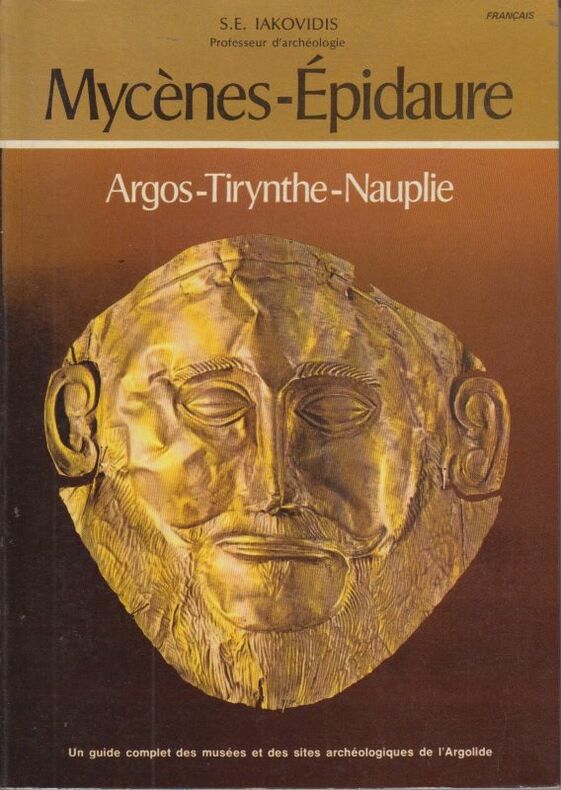
Ekdotike Athenon. 1988. In-8 Carré. Broché. Bon état. Couv. convenable. Dos satisfaisant. Intérieur frais. 160 pages. Illustré de nombreuses photos en couleur. Plan dépliable en couleur en fin d'ouvrage. Editions Errance, Français. Un guide complet des musées et des sites archéologiques de l'Argolide.
1982(Codice AK/0863) In 8° 160 pp. Illustrato con molte foto a colori. Macchietta al margine bianco delle primissime pagine. Brossura originale a risvolti, ottimo. ~~~ SPEDIZIONE IN ITALIA SEMPRE TRACCIATA
1979réf. RO80036058EKDOTIKE ATHENON. 1979. In-8. Broché. Très bon état, Couv. fraîche, Dos impeccable, Intérieur frais. 160 pages. Nombreuses photos et quelques cartes en couleurs, dans le texte et hors-texte. Couverture rempliée.. . . . Classification Dewey : 949.5-Grèce
grand in-8 de 160 pages entierement illustre en couleurs, broche, couverture illustree en couleurs. Bel exemplaire. [TX-12] Un guide complet des musees et des sites archeologiques de l'Argolide
1978Illustrated "complete guide to the museums and archaeological sites of the Argolid" 160p. illus (col) bibliography. large fold out map Book
8vo, br. ed. pp.400. Transcending ethnic, linguistic, and religious boundaries, early empires shaped thousands of years of world history. Yet despite the global prominence of empire, individual cases are often studied in isolation. This series seeks to change the terms of the debate by promoting cross-cultural, comparative, and transdisciplinary perspectives on imperial state formation prior to the European colonial expansion. The world's first known empires took shape in Mesopotamia between the eastern shores of the Mediterranean Sea and the Persian Gulf, beginning around 2350 BCE. The next 2,500 years witnessed sustained imperial growth, bringing a growing share of humanity under the control of ever-fewer states. Two thousand years ago, just four major powers-the Roman, Parthian, Kushan, and Han empires-ruled perhaps two-thirds of the earth's entire population. Yet despite empires' prominence in the early history of civilization, there have been surprisingly few attempts to study the dynamics of ancient empires in the western Old World comparatively. Such grand comparisons were popular in the eighteenth century, but scholars then had only Greek and Latin literature and the Hebrew Bible as evidence, and necessarily framed the problem in different, more limited, terms. Near Eastern texts, and knowledge of their languages, only appeared in large amounts in the later nineteenth century. Neither Karl Marx nor Max Weber could make much use of this material, and not until the 1920s were there enough archaeological data to make syntheses of early European and west Asian history possible. But one consequence of the increase in empirical knowledge was that twentieth-century scholars generally defined the disciplinary and geographical boundaries of their specialties more narrowly than their Enlightenment predecessors had done, shying away from large questions and cross-cultural comparisons. As a result, Greek and Roman empires have largely been studied in isolation from those of the Near East. This volume is designed to address these deficits and encourage dialogue across disciplinary boundaries by examining the fundamental features of the successive and partly overlapping imperial states that dominated much of the Near East and the Mediterranean in the first millennia BCE and CE. A substantial introductory discussion of recent thought on the mechanisms of imperial state formation prefaces the five newly commissioned case studies of the Neo-Assyrian, Achaemenid Persian, Athenian, Roman, and Byzantine empires. A final chapter draws on the findings of evolutionary psychology to improve our understanding of ultimate causation in imperial predation and exploitation in a wide range of historical systems from all over the globe. Contributors include John Haldon, Jack Goldstone, Peter Bedford, Josef Wiesehofer, Ian Morris, Walter Scheidel, and Keith Hopkins, whose essay on Roman political economy was completed just before his death in 2004.
2004A collection of essays based on papers presented originally at a conference organized by the Lehrman Institute and held in the Vilvorde Conference Center in Copenhagen, Denmark, June 3-5, 1987. 340P. Book
1981Book
2015réf. 202462Armenians and Greeks in the Major Crises of the Eastern Question 1856-1914 - Brother Nations Amid Storm In greek. Soft cover 24 cm 672 pp.; net weight 1200 gr. The Armenian Question emerged in the 19th century in parallel with the Question of the Pontian Greeks was culminated in the bloody 1890s revived diplomatically at the end of the Balkan Wars 1913 and was "solved" once and for all during WW I with the genocide that let to death 1500000 Armenians. This book describes the collaboration efforts between the two nations before the Berlin Congress the Armenian evolutionary movement and its action in Greece in the 1890's the attitude of the Armenian in the Greco-Turkish War of 1897 the massacres of Adana in 1909 and the resurgence of the Armenian Question during the Balkan Wars 1912-1914. Rich bibliography sources maps. ============================================================== IMPORTANT: The shipping cost estimated by the system covers books weighing up to 750 gr.; a surcharge depending on the actual weight and destination applies for heavier books. You can also choose an international transporter and pay the shipping cost at delivery in your country. Insurance of the shipment may also be necessary for some destinations. USP paperback
2019br. La sfida col Minotauro nel labirinto, la testa tagliata di Medusa, l'impresa degli Argonauti, Orfeo che scende nell'Aldilà per salvare la donna amata: i miti eroici dell'antica Grecia sono un caleidoscopio di racconti infiniti e stupefacenti. Ma anche un repertorio di favole orrende e bizzarre. Medea che uccide i suoi stessi figli. Edipo che ammazza il padre e poi si unisce con la madre. Eracle che abbandona le sue fatiche per ingozzarsi di arrosti e di dolci. Teseo che, invece di salvare le fanciulle, le stupra. L'eroe greco aveva molti lati oscuri. Era una creatura smisurata, un essere prodigioso, eccessivo nel suo furore e nelle sue passioni. E non sempre era arruolato al servizio del Bene: stava piuttosto oltre il Bene e il Male, oltre tutte le regole e le leggi dell'umano. Era venerato come lo sono oggi i nostri santi patroni. Si raccoglievano le sue reliquie, si portavano offerte sulla sua tomba. Ma soprattutto ci si divertiva a narrare le sue imprese in forme sempre diverse e sempre nuove. Nei miti eroici si trova la matrice di tutte le narrazioni future. Ci sono amori, avventure, intrighi, prodigi, mostri. Ci sono viaggi fino alla fine del mondo e love stories che sfidano anche la morte. Tutto quello che ancora oggi ci appassiona e ci commuove quando leggiamo un romanzo o guardiamo un film, i greci lo avevano già narrato nei loro miti.
2019ril. La tempesta d'amore, l'onda della passione, l'amante come naufrago. Il desiderio erotico ha un suo lessico marinaro che è entrato anche nel linguaggio comune. Ma il rapporto indissolubile fra l'amore e il mare nasce nella Grecia antica. Nelle saghe della mitologia gli amanti eroici (Teseo e Arianna, Giasone e Medea, Paride ed Elena) solcano le onde sospinti dal vento del desiderio. Isole e scogli sono spesso scenari dei drammi amorosi e un tuffo tra le acque, come quello di Saffo dalla favolosa rupe di Leucade, sigilla talvolta una storia infelice. Sullo sfondo c'è il culto della dea Afrodite che, per i greci, non era solo la divinità dell'amore ma anche una signora dei mari e una protettrice della navigazione. Tramite le parole dei poeti, dai lirici greci alle elegie di Ovidio, l'immagine del mare d'amore ha attraversato i secoli. Alla radice, un nucleo profondo, un senso drammatico dell'esistenza umana. C'è l'antica consapevolezza che oscure potenze divine, come il tremendo Eros, possono in ogni momento sconvolgere la vita dei mortali, vanificando ogni orgogliosa pretesa di autosufficienza. E c'è il senso, tipicamente greco, della vita come esperienza aperta e mai risolta, come scacchiera su cui il destino o il caso giocano la loro partita. Non solo in amore, ma in ogni nostra vicenda, la tempesta è sempre in agguato.
2021ril. Tramite le parole dei poeti, dai lirici greci alle elegie di Ovidio, l'immagine del mare d'amore ha attraversato i secoli. Nelle saghe mitologiche gli amanti eroici, Teseo e Arianna, Giasone e Medea, Paride ed Elena, solcano le onde sospinti dal vento del desiderio. Isole e scogli sono spesso scenari dei drammi amorosi e un tuffo tra le acque, come quello di Saffo dalla favolosa rupe di Leucade, sigilla talvolta una storia infelice. Sullo sfondo c'è il culto della dea Afrodite che per i greci non era solo la divinità dell'amore ma anche la signora dei mari e della navigazione.