Green, Roger LancelynMareMagnum
The True Book About Ancient Greece
1960144 pages. Black and white illustrations. Usual library markings. Front free endpaper removed. Above-average wear. Book

RareNonFiction.com · Canada49,95 €
17.970 risultati
Genève-Editions Kister-1965 - 4 volumes In-4 - Reliures cuir brun - Motifs dorés sur le premier plat - Titres dorés sur le dos - Caractère Garamond ou Terras, papier supérieur phénix - Frontispice à chaque Volume - Très nombreuses illustrations NB ou couleurs, celles-ci PP contre-collées - 382, 383, 382 & 383 pp- - Très bon Ex. 4 volumes - T. I: "La double origine", - T. II :"La naissance de l'Europe" - T. III : "Le temps des révolutions" - T. IV : "L'avenir de l'occident".
1992Part 1: From Knossos To Naxos, Part 2: Adriani of Askifou, Part 3: Rea and Theo come to the Plateau. "Aspects of Cretan history, both ancient and modern are used fictionally together with the idea of a "soul thread" [the clew] surviving through many generations of Cretan women, to imply hope for a continually creative future for "Mother Crete" 130p., illus. Book
1993"People of the Lassithi plateau of Crete, mountain farmers or shepherds, are adapting to their roles as Grekas and Europeans. Open to new constraints and opportunities, offering hospitality to tourists from all over the world, they remain "Lassithiots". Anthropologist Sonia Greger has spent ten years finding out how they handle change while retaining their traditional identity. 52p. plates.maps. Book
1995"Some thoughts exploring boundaries between person and person, people and people, and cultural differences between England and Crete." 100p. illus Book
1936Minor fraying to top and bottom spine. Ex-lib with minimal markings. DJ flap text tipped in to fep ; Marine boards with gilt lettering and pictorial design of a greek temple ; B&W Photographs; 8vo; 351 pages
1997[The Delphic Women series] Princess Medea protects the sacred grove holding the Golden Fleece. When Jason arrives, determined to acquire both and rule the land, his gentian blue eyes and golden hair obsess Medea, compelling her to help him. When the king breaks his word and seeks to kill the two, they escape together. Jason, now king of Corinth, swears always to love his wife and queen. But his allegiance is fleeting. Medea has sacrificed home, family, goddess, and innocence for the "melting, fiery loving" she feels for him. What comes next? 431p, bibliography, Neat, tight clran text except for remainder mark. Book
1973Upper Corners are bumped. Else book has minor shelfwear. Rubbing and chipping to DJ extremities. ; 228 pages; A study of the literary and archaeological (especially artistic) evidence for developments in the warfare of early Greece. Greenhalgh considers in particular the military history of the chariot and mounted horse, both as they were represented in poetry and art and as they were used in reality from about 1100 to 500 B. C.
1973Upper Corner is lightly bumped. Light foxing to textblock. DJ has Rubbing and light edgewear. DJ spine a bit sunned. ; 228 pages; A study of the literary and archaeological (especially artistic) evidence for developments in the warfare of early Greece. Greenhalgh considers in particular the military history of the chariot and mounted horse, both as they were represented in poetry and art and as they were used in reality from about 1100 to 500 B. C.
1973Corners are bumped. DJ is price-clipped. Dustjacket spine is sunned. One open tear (1 inch) to DJ along upper edge near spine. Mild rubbing to DJ. ; 228 pages; A study of the literary and archaeological (especially artistic) evidence for developments in the warfare of early Greece. Greenhalgh considers in particular the military history of the chariot and mounted horse, both as they were represented in poetry and art and as they were used in reality from about 1100 to 500 B. C.
1973Upper Corners are lightly bumped. DJ is price-clipped. Rubbing to DJ extremities. ; 228 pages; A study of the literary and archaeological (especially artistic) evidence for developments in the warfare of early Greece. Greenhalgh considers in particular the military history of the chariot and mounted horse, both as they were represented in poetry and art and as they were used in reality from about 1100 to 500 B. C.
1960144 pages. Black and white illustrations. Usual library markings. Front free endpaper removed. Above-average wear. Book
fort volume in-8°, CVII-1136 pp., cartes et qq. illustrations en noir dans le texte. Bibliographie, dictionnaire des personnages, index. 2e plat dégradé (déchirures sommairement réparées, coins cornés aux dernières pages sinon bel exemplaire. [CHEM-BA]
1993Light edgewear. Scholar's name to ffep (Robert Brown). ; Hellenistic Culture & Society , No 9; 0.9 x 8.8 x 6 Inches; 293 pages; In a 1988 conference, American and British scholars unexpectedly discovered that their ideas were converging in ways that formed a new picture of the variegated Hellenistic mosaic. That picture emerges in these essays and eloquently displays the breadth of modern interest in the Hellenistic Age. A distrust of all ideologies has altered old views of ancient political structures, and feminism has also changed earlier assessments. The current emphasis on multiculturalism has consciously deemphasized the Western, Greco-Roman tradition, and Nubians, Bactrians, and other subject peoples of the time are receiving attention in their own right, not just as recipients of Greco-Roman culture. History, like Herakleitos' river, never stands still. These essays share a collective sense of discovery and a sparking of new ideas--they are a welcome beginning to the reexploration of a fascinatingly complex age.
1991Minor shelfwear. Foxing to textblock. Minor shelfwear to DJ. ; Until recently, popular biographers and most scholars viewed Alexander the Great as a genius with a plan, a romantic figure pursuing his vision of a united world. His dream was at times characterized as a benevolent interest in the brotherhood of man, sometimes as a brute interest in the exercise of power. Green, a Cambridge-trained classicist who is also a novelist, portrays Alexander as both a complex personality and a single-minded general, a man capable of such diverse expediencies as patricide or the massacre of civilians. Green describes his Alexander as "not only the most brilliant (and ambitious) field commander in history, but also supremely indifferent to all those administrative excellences and idealistic yearnings foisted upon him by later generations, especially those who found the conqueror, tout court, a little hard upon their liberal sensibilities. " This biography begins not with one of the universally known incidents of Alexander's life, but with an account of his father, Philip of Macedonia, whose many-territoried empire was the first on the continent of Europe to have an effectively centralized government and military. What Philip and Macedonia had to offer, Alexander made his own, but Philip and Macedonia also made Alexander form an important context for understanding Alexander himself. Yet his origins and training do not fully explain the man. After he was named hegemon of the Hellenic League, many philosophers came to congratulate Alexander, but one was conspicuous by his absence: Diogenes the Cynic, an ascetic who lived in a clay tub. Piqued and curious, Alexander himself visited the philosopher, who, when asked if there was anything Alexander could do for him, made the famous reply, "Don't stand between me and the sun. " Alexander's courtiers jeered, but Alexander silenced them: "If I were not Alexander, I would be Diogenes. " This remark was as unexpected in Alexander as it would be in a modern leader. For the general reader, the book, redolent with gritty details and fully aware of Alexander's darker side, offers a gripping tale of Alexander's career. Full backnotes, fourteen maps, and chronological and genealogical tables serve readers with more specialized interests.; 8.5 x 1.5 x 5.75 Inches; 617 pages
1998In this collection of sixteen literary and historical essays, Peter Green informs, entertains, and stimulates. He covers a wide range of subjects, from Greek attitudes toward death to the mysteries of the Delphic Oracle, from Tutankhamun and the gold of Egypt to sex in ancient literature, from the island of Lesbos (where he once lived) to the challenges of translating Ovid's wit and elegant eroticism into present-day English verse, from Victorian pederastic aesthetics to Marxism's losing battle with ancient history. This third volume of Green's essays (several previously unpublished) reveals throughout his serious concern that we are, in a very real sense, losing the legacy of antiquity through the corrosive methodologies of modern academic criticism. ; 328 pages
1996Top of spine is lightly bumped. Back corner of wraps is creased. ; Hellenistic Culture & Society , No 9; 0.9 x 8.8 x 6 Inches; 293 pages; In a 1988 conference, American and British scholars unexpectedly discovered that their ideas were converging in ways that formed a new picture of the variegated Hellenistic mosaic. That picture emerges in these essays and eloquently displays the breadth of modern interest in the Hellenistic Age. A distrust of all ideologies has altered old views of ancient political structures, and feminism has also changed earlier assessments. The current emphasis on multiculturalism has consciously deemphasized the Western, Greco-Roman tradition, and Nubians, Bactrians, and other subject peoples of the time are receiving attention in their own right, not just as recipients of Greco-Roman culture. History, like Herakleitos' river, never stands still. These essays share a collective sense of discovery and a sparking of new ideas--they are a welcome beginning to the reexploration of a fascinatingly complex age.
1973Binding not tight; The very symbol of the cradle of democracy is here profiled; Wonders of Man; B&W and Color Photographs; Small 4to 9" - 11" tall; 172 pages
1973Well illustrated large format book about the Parthenon . 152p. illus. (some col) bibliography.index Book
1970DJ is price-clipped. Chipping to head and heel of DJ. Bumping to head of spine. Former owner's bookplate affixed to ffep. ; 326 pages; The long and bitter struggle between the great Persian Empire and the Fledgling Greek states reach its high point with the extraordinary Greek victory at Salamis. The author evokes the whole dramatic sweep of events that the Persian offense set in motion.
1970DJ is price-clipped. Two tears to bottom corner and bottom spine of DJ. Bumping to back corner of book. Former owner's bookplate affixed to ffep. ; 326 pages; The long and bitter struggle between the great Persian Empire and the Fledgling Greek states reach its high point with the extraordinary Greek victory at Salamis. The author evokes the whole dramatic sweep of events that the Persian offense set in motion.
2014rif. 038692Athens: Dioptra 2014 Book. Illus. by Trans. Michalis Delengos. New Book from Greece. French Wraps. Reissue. Until recently popular biographers and most scholars viewed Alexander the Great as a genius with a plan a romantic figure pursuing his vision of a united world. His dream was at times characterized as a benevolent interest in the brotherhood of man sometimes as a brute interest in the exercise of power. Green a Cambridge-trained classicist who is also a novelist portrays Alexander as both a complex personality and a single-minded general a man capable of such diverse expediencies as patricide or the massacre of civilians. Green describes his Alexander as "not only the most brilliant and ambitious field commander in history but also supremely indifferent to all those administrative excellences and idealistic yearnings foisted upon him by later generations especially those who found the conqueror tout court a little hard upon their liberal sensibilities."This biography begins not with one of the universally known incidents of Alexander's life but with an account of his father Philip of Macedonia whose many-territoried empire was the first on the continent of Europe to have an effectively centralized government and military. What Philip and Macedonia had to offer Alexander made his own but Philip and Macedonia also made Alexander form an important context for understanding Alexander himself. Yet his origins and training do not fully explain the man. After he was named hegemon of the Hellenic League many philosophers came to congratulate Alexander but one was conspicuous by his absence: Diogenes the Cynic an ascetic who lived in a clay tub.Piqued and curious Alexander himself visited the philosopher who when asked if there was anything Alexander could do for him made the famous reply "Don't stand between me and the sun." Alexander's courtiers jeered but Alexander silenced them: "If I were not Alexander I would be Diogenes." This remark was as unexpected in Alexander as it would be in a modern leader. For the general reader the book redolent with gritty details and fully aware of Alexander's darker side offers a gripping tale of Alexander's career. Full backnotes fourteen maps and chronological and genealogical tables serve readers with more specialized interests. Dioptra paperback
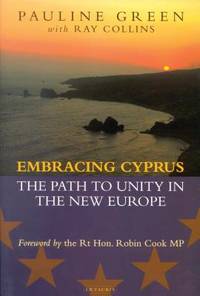
2003rif. 32310London: I.b.tauris 2003 Book. New. Hardcover. 1st UK Edition. When Archbishop Makarios was toppled as President of Cyprus in a 1974 coup and Turkish forces invaded the island few saw Cyprus as part of the incipient drive to create a new Europe. Yet as the authors reveal here behind the rhetoric of the politicians there is a growing view among Greek and Turkish Cypriots that the solution to Cyprus problems lies within the gift of Europe. They argue that the intercommunal stand-off can only be diffused and ultimately resolved by firmly embedding Cyprus within Europe. 150p.index. I.b.tauris hardcover
1975rif. 126Athen, Kalitechniki Bibliotheke, 1975. 2°. Mit üeberaus zahlreichen Abbildungen. Orig.-Kunstlederbände mit Originalschutzumschlägen. Im Schuber. - Standardwerk der griechischen Malerei des 19. und 20. Jahrhunderts in alphabetischer Ordnung. Schutzumschläge bestoßen und vergilbt, innen sehr guter Zustand.
1969rif. 12489National Bank of Greece, 1969. origi.Leinenband, 4°, 334 Seiten und einer Faltkarte im Anhang.
1972pp. xviii, 1020, 14 [Index]. Double column. Small 4to. Original full red cloth binding. Original priced dust jacket torn with loss. Hardbound. Very good. This standard reference work was first published in 1840. It gives the reader, with no previous knowledge of Greek, fresh insight into the New Testament. Coordinated with Strong's Bible Concordance. RELIGION BOX 9