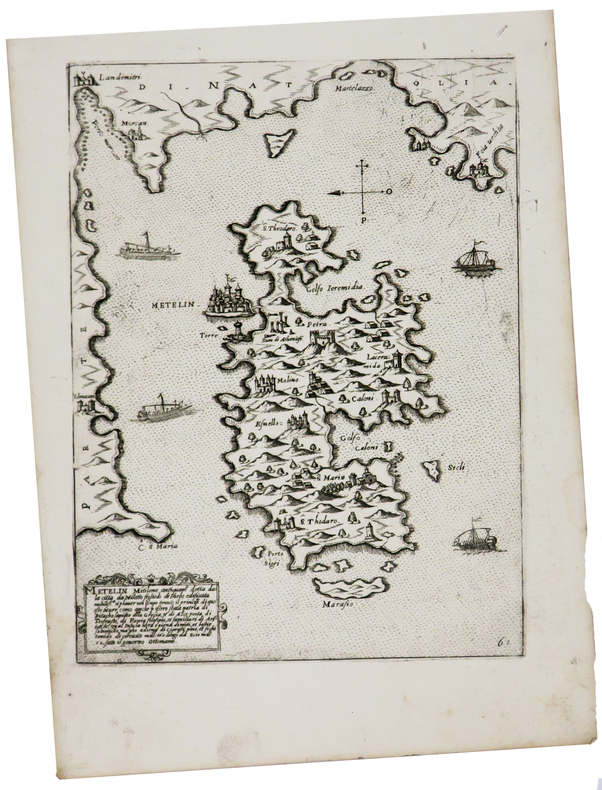
[ADALIA GREEK COMMUNITY].MareMagnum
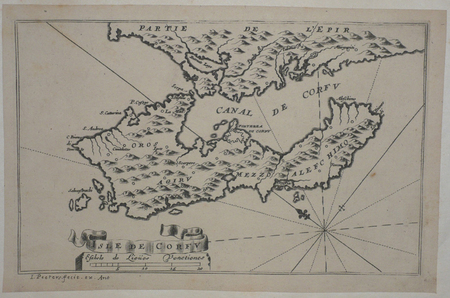
PEETERS (Jan);Livre Rare Book
[ATHENES] Ville d'Athènes.
rif. LBW045fdcirca 1690 128 x 200 mm.
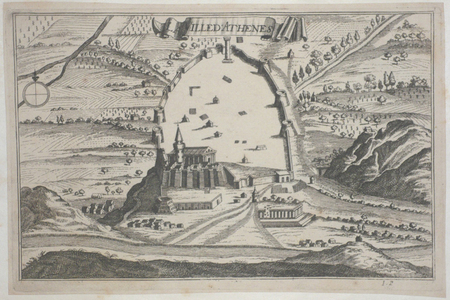
Librairie Le Bail · Paris, Francia150,00 €
17.688 risultati
1911Very Good Greek, Modern (post 1453) Original wrappers. Large 8vo. (21 x 16 cm). In Greek (Modern). 21 p. First and only edition of this exceedingly rare and one of the earliest church regulations of the Greek Orthodox community of Attalia [Antalya]. Attalia was not a large urban center or major trading hub, but neither was the Greek Community marginal, and it was well integrated into the regional economy. It was different from other areas in Asia Minor due to a combination of factors ranging between demography, geography, local Orthodox leadership, and the city's social milieu. In contrast to the West-coast cities and many villages in Asia Minor with Orthodox majorities, Attalia's population was only about one-third Orthodox. The main area of difference in Antalya was the Community leadership, which was key to the maintenance of cordial relationships between Christians and Muslims, and the secular and ecclesiastical elements of Orthodox leadership in Antalya tended to cooperate for collective benefit. Throughout this period, a local elite managed to control education and other Community institutions, perpetuating an identity that was compatible with the local Ottoman context. In this last period, the Greek Community printed several books and tractates including a brief history of Antalya and this "regulation book" in the Meli Printing House, which was the only printing house of the Greek Community in Antalya. Only one institutional copy is located in OCLC 1030075331 (Suna Kiraç Library of the Koç University).
rif. LBW045fdcirca 1690 128 x 200 mm.
rif. 26169Dimensions : 323 x 307 mm.
1964Very Good English Original bdg. Cr. 8vo. (19 x 12 cm). In Greek. B/w ills. [xvi], 448 p. [Calendar of Greek churches in the year Disektou Six (1964)].
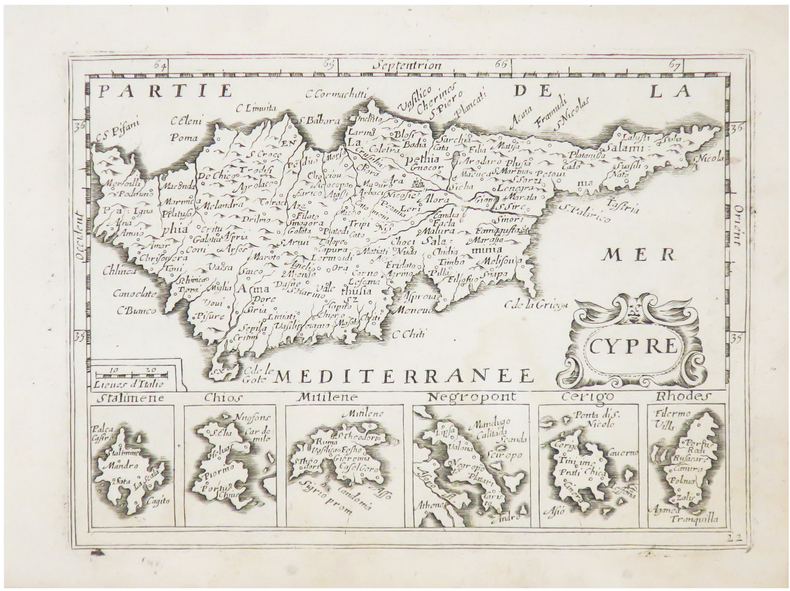
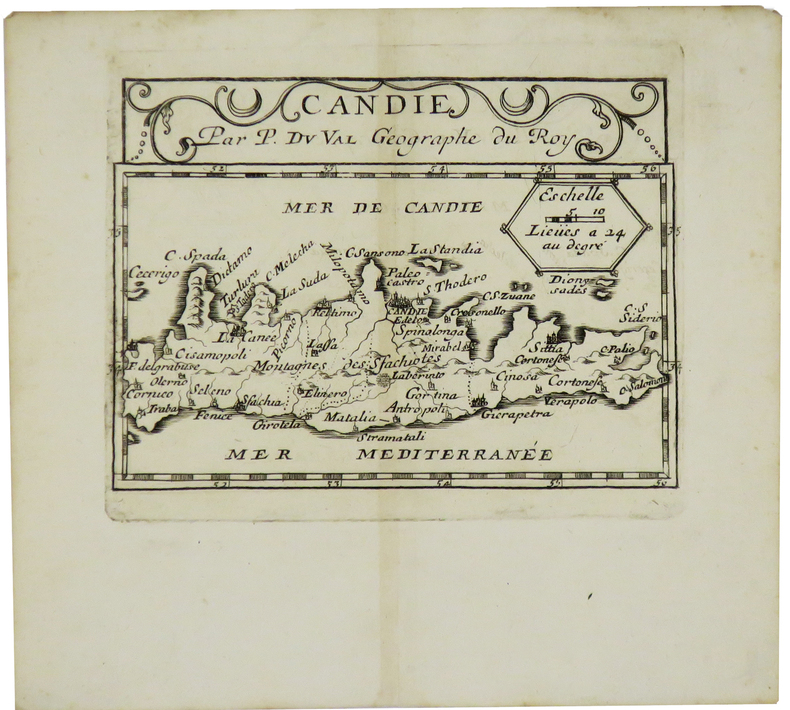
1667rif. LBW-6493[Paris, Jollain, 1667]. 132 x 180 mm.
1910Very Good Greek, Modern (post 1453) Paperback. Demy 8vo. (21 x 14 cm). In Greek (Modern). 79 p. Not in OCLC. The Metropolis of Chalcedon is an ecclesiastical territory (diocese) of the Ecumenical Patriarchate of Constantinople. Christianity spread in Chalcedon during the 2nd century AD. The city was initially the see of a bishopric before being promoted to a metropolis at 451 AD, at the time of the Fourth Ecumenical Council. It is one of the four remaining active Greek Orthodox Church metropolises of the Ecumenical Patriarchate in Turkey today and the only one surviving in Asia Minor (Anatolia). During the 14th century, the metropolitan see remained vacant, due to the Ottoman conquest of the region. However, it was reorganized in the 15th century, possibly after the Fall of Constantinople and the subsequent incorporation of the Ecumenical Patriarchate into the millet system of the Ottoman society. The first recorded metropolitan of that time was Joseph, in 1477. In the following years, the jurisdiction of the metropolis was extended to the east. During the late 17th century the see of the diocese was transferred to Kuzguncuk (Ermoulianai, Chrysokeramos), where it remained until 1855. At that period a number of monasteries were established, like the one of Saint Panteleimon, which was declared Stauropegic. The metropolitan of Chalcedon was one of the five Elder metropolitans from the wider region of Constantinople, the other being those of nearby Herakleia, Cyzicus, Nicaea, and Nicomedia. Following an Ottoman decree of 1757, they had to be always present in the Holy Synod of the Ecumenical Patriarchate and had direct access to the Ottoman Sultan, to whom they announced the election of the new Ecumenical Patriarch. From the mid-19th century, the local metropolis prospered thanks to the significant population increase and economic development of the local Orthodox population. In 1855 the see of the metropolitan returned to Chalcedon during the primateship of Metropolitan Gerasimos. Moreover, the newly erected church of Saint Euphemia became the new cathedral. The metropolitan mansion was built near the cathedral in 1902. This is the first and only known printed regulation book of the Greek Community in Chalcedonia (Kadiköy). Extremely rare.
rif. LBW045dfcirca 1690 130 x 206 mm.
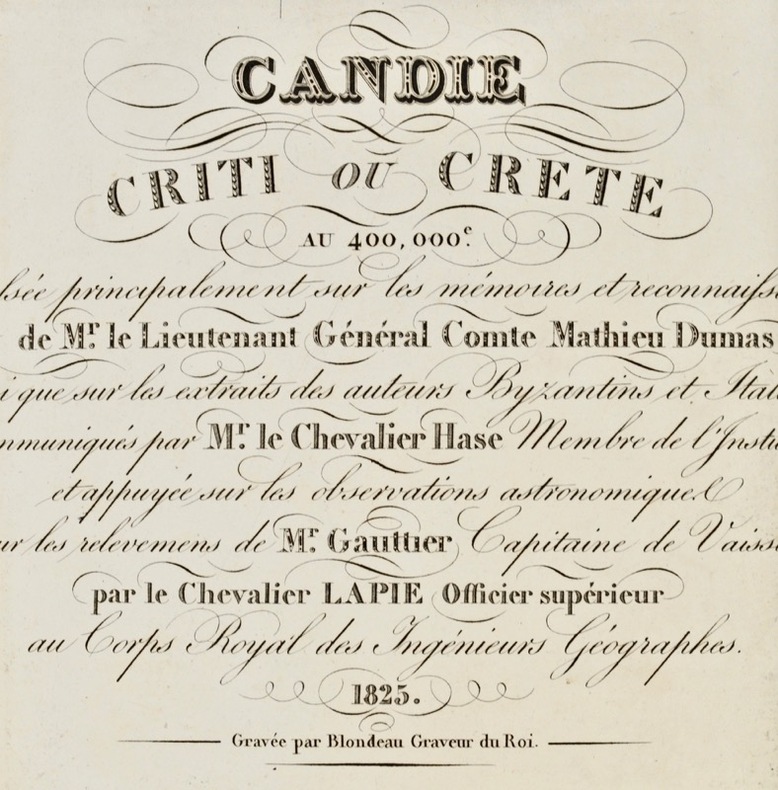
1825rif. 41623Paris, Picquet, 1825. Plan replié et entoilé de 78 x 50 cm, étiquette "J. Goujon marchand de cartes rue du Bac n°6 à Paris".
1764rif. LBW-5851764 218 x 173 mm.
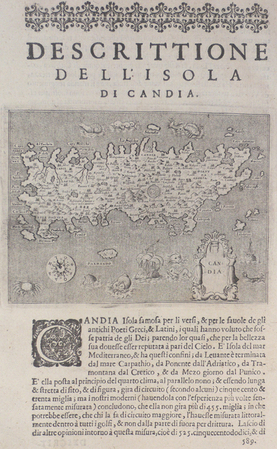
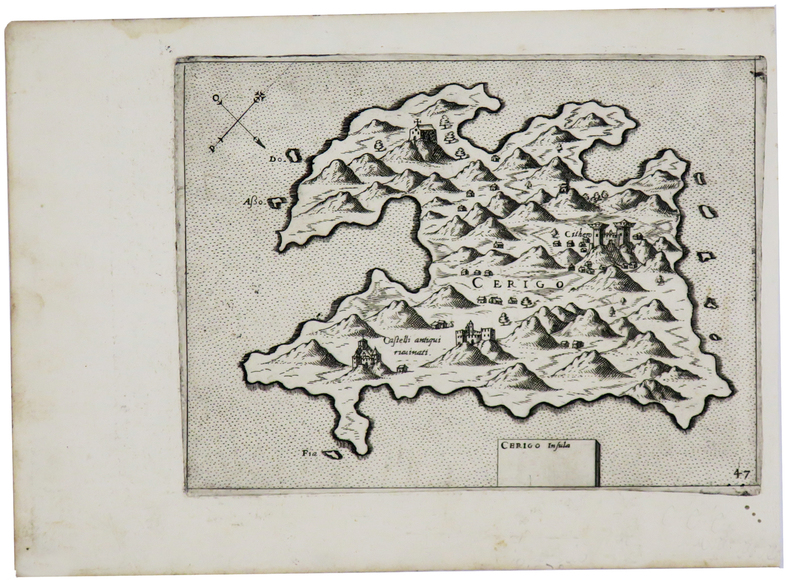
1572rif. LBW-1371[Venise, 1572]. 196 x 159 mm.
1661rif. LBW02534[1661]. 89 x 120 mm.
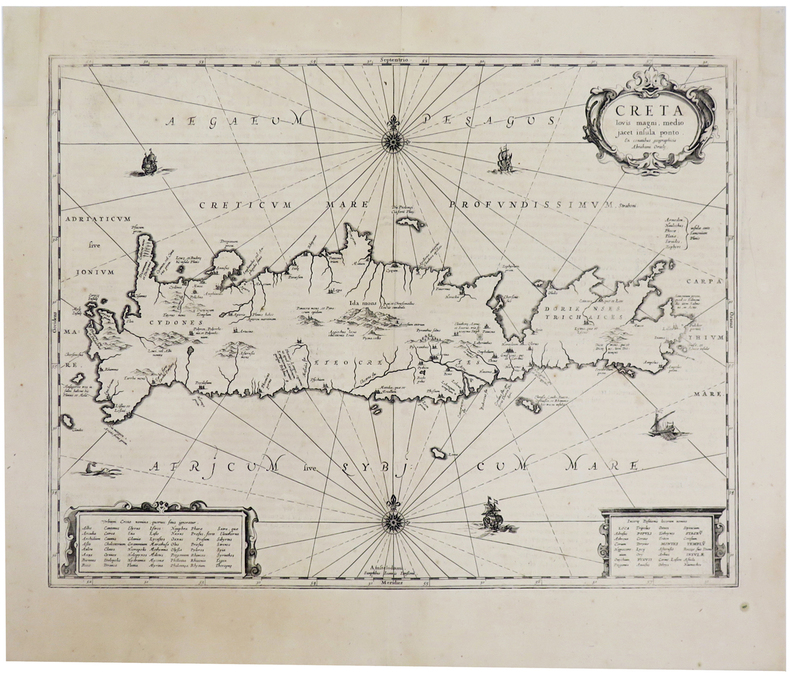
1657rif. LBW-2753[Amsterdam, 1657-1658]. 377 x 487 mm.
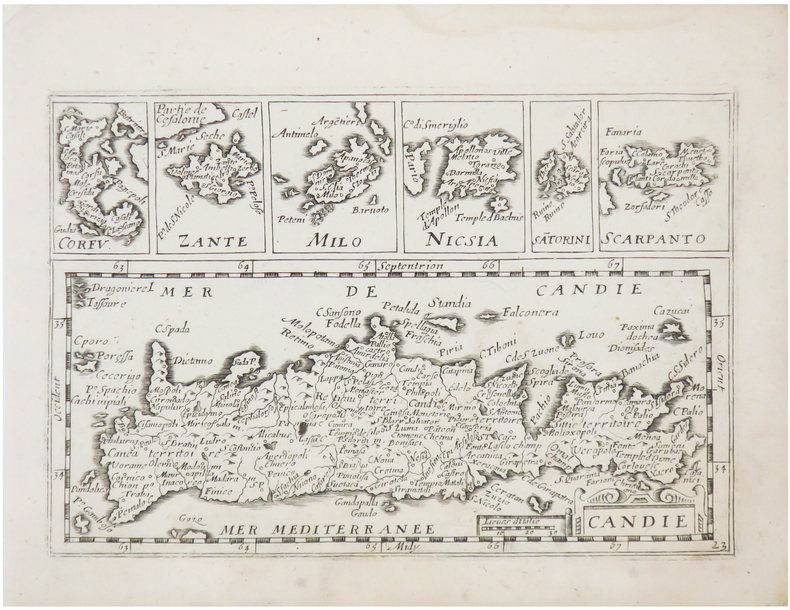
1667rif. LBW-6492[Paris, Jollain, 1667). 125 x 185 mm.
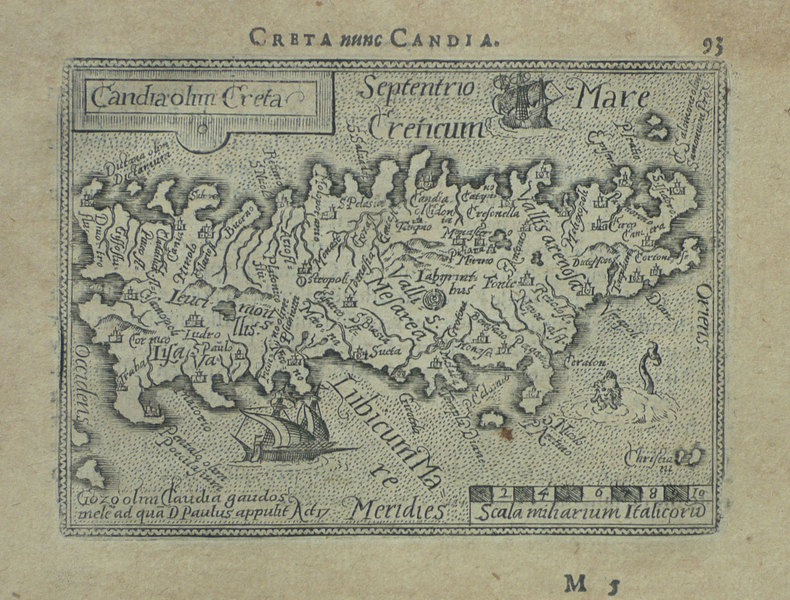
1598rif. LBW-1432Anvers 1598 82 x 106 mm.
1576rif. LBW004efVenise 1576 105 x 141 mm.
rif. 16760Dimensions : 268 x 212 mm.
1521ff. [60], 320 numbered leaves. Woodcut Aldine anchor and dolphin printer's device on the title page and last leaf. Latin Italic type. Some age stain, especially on first and last leaves. In several places the name of Erasmus is obliterated in ink by a censor. An early ownership on the title has been washed out, and a small marginal chip has resulted. Small 8vo. 160 mm. Edges decorated red. Early nineteenth century full vellum binding. Lacks front fly leaf. This second and improved Aldine edition is essentially a reprint of the edition of 1516, edited by Giovanni Battista Cipelli, called Egnazio (1478-1553), with the addition of annotations by Erasmus, which were first published in the Froben edition of 1518. Both Aldine editions contain the relevant texts of Aurelius Victor and Eutropius with the continuation by Paulus Diaconus. The full work was once the common manual of almost everyone who wished to study Roman history, and because of this long and hard use, it is extremely difficult to obtain a clean and perfect example - Renouard. This second edition is considered the more valuable, as containing an 'Index Memorabilium' and the notes of Erasmus and the Venetian philologist Joannes Baptista Egnatius (ca. 1473-1553). Gaius Suetonius Tranquillus, commonly known as Suetonius (ca. 69/75-after 130). Suetonius was a close friend to Senator and letter-writer Pliny the Younger. Pliny describes him as 'quiet and studious, a man dedicated to writing'. Through Pliny, Suetonius came into favor with Trajan and Hadrian. Under Trajan he served as secretary of studies (precise functions are uncertain) and director of Imperial archives. Under Hadrian, he became the Emperor's secretary. In 122, Hadrian dismissed him for disrespectful behavior towards Empress Vibia Sabina. Suetonius may have later regained imperial favor under Hadrian and returned to his position. It was probably in Hadrian's time that he wrote his most important surviving work - this set of biographies on the Lives of the Twelve Caesars. Entitled 'De Vita Caesarum' it deals with successive Roman rulers, from Julius Caesar to Domitian. It also includes other texts on Roman history, notably Eutropius. This collection of ancient Roman historians is dedicated to the great book collector - Jean Grolier, and is followed by a letter from Erasmus commending the edition as well as Egnatius' scholarship. Renouard 91:7; Schweiger 974-975; Adams S-2035; UCLA A4S93; Graesse VI, 521; Ahmanson-Murphy 201 (incomplete); Bibliotheca Erasmiana Bruxellensis 499 (incomplete); Dibdin II, p. 439; STC Italian p. 651. Very good. Scarce. **PRICE JUST REDUCED! ALDINE BOX SAFE
1955Very Good Turkish Original manuscript map on cloth. Chipped margins, stains on cloth. Folded. Oblong folio. (32x35 cm) In modern Turkish. Sealed. It shows the exploration of an area of ??1487 hectares and some stone and brick mosques, fountains, buildings and geographic status of the region in the upper corner. Scale: 1:25.000. Extremely rare.
1809rif. 29822Paris Didot jeune [ou :] Rignoux 1809-1852 3 vol. in-4 déreliés
1838Very Good Turkish, Ottoman (1500-1928) Original full leather bdg. with its miklep (traditional flap), embossed shamsa (mystical sun) on boards. Roy. 8vo. (24 x 17 cm). In Ottoman script. [8], 263 p. Sarlavla page decorated with traditional ornaments. First edition of this extremely rare and the first translation of the Anabasis of Alexander in the Ottoman / Turkish literature. One of 1010 copies. The Anabasis of Alexander was composed by Arrian of Nicomedia in the second century AD, most probably during the reign of Hadrian. The Anabasis (which survives complete in seven books) is a history of the campaigns of Alexander the Great, specifically his conquest of the Persian Empire between 336 and 323 BC. Both the unusual title "Anabasis" (literally "a journey up-country from the sea") and the work's seven-book structure reflect Arrian's emulation (in structure, style, and content) of the Greek historian Xenophon, whose own Anabasis in seven books concerned the earlier campaign "up-country" of Cyrus the Younger in 401 BC. The Anabasis is by far the fullest surviving account of Alexander's conquest of the Persian Empire. It primarily revolves around the military history, reflecting the content of Arrian's model, Xenophon's Anabasis; the work begins with Alexander's accession to the Macedonian throne in 336 BC and has nothing to say about Alexander's early life (in contrast, say, to Plutarch's Life of Alexander). Nor does Arrian aim to provide a complete history of the Greek-speaking world during Alexander's reign. Arrian's chief sources for his writing of the Anabasis were the lost contemporary histories of the campaign by Ptolemy and Aristobulus and, for his later books, Nearchus. One of Arrian's main aims in writing this work on history seems to have been to correct the standard "Vulgate" narrative of Alexander's reign that was dominant in his own day, primarily associated with the lost writings of the historian Cleitarchus. The Anabasis gives a broadly chronological account of the reign of Alexander the Great of Macedonia (336-323 BC), with a particular focus on military matters. George Rhasis (Yorgaki Razi) translated Anabasis Alexandrou = "History of Alexander the son of Philip" the work of Xenophon under the title "Târîh-i Iskender bin Filipos". This is the first translation of an ancient Greek historian into Turkish. Georgios Rhasis, who was one of the first writers of the French-Turkish dictionary in the early period, was an Ottoman intellectual who worked as an instructor and translator in Ottoman and French languages. He also taught at the Eastern Languages School in Paris and continued her studies in Corfu and Paris. In 1821 he came to be in Istanbul as a famous orientalist. Rhasis left the city and the homeland he lived in to settle in Tsarist Russia due to concerns during the Greek Revolution in 1821. The Bulaq or El-Amiriya Press is the first official and governmental printing press to be established in Egypt, and functions according to industrial printing basis, causing not just a qualitative but also a quantitative and knowledgeable leap in science throughout the Arab region. It's established in 1820 by Muhammad Ali Pasha of Egypt and Sudan (1769-1849) and it was part of Muhammad Ali's inclusive development plans for the modernization of Egypt. Library of Congress, Karl Süssheim Collection, no. 129. (OCLC: 966315151). Only 6 copies in OCLC: 27236333.; Alex II 25.; BM e15.; Cairo FKT 166.; IstUKT 802.; Bianchi CD 155.; Bulaq IF 8:21.; Bulaq FK 7:8.; Ridwan 162.; Özege 19837 (No author and no translator in Özege record).
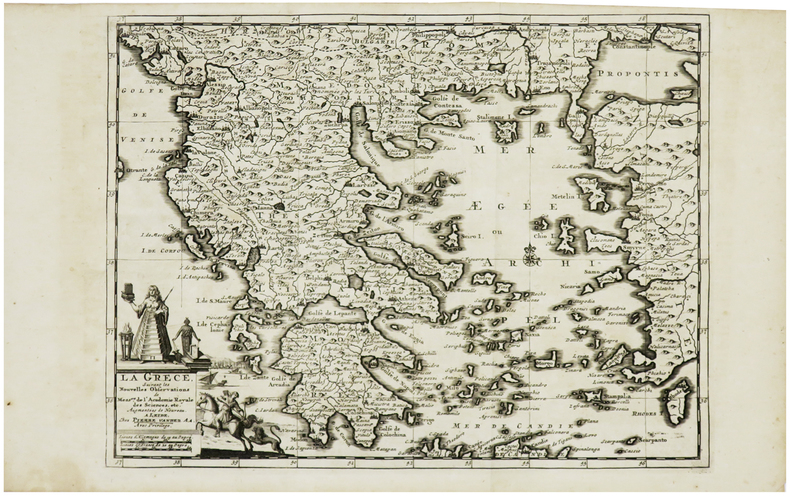
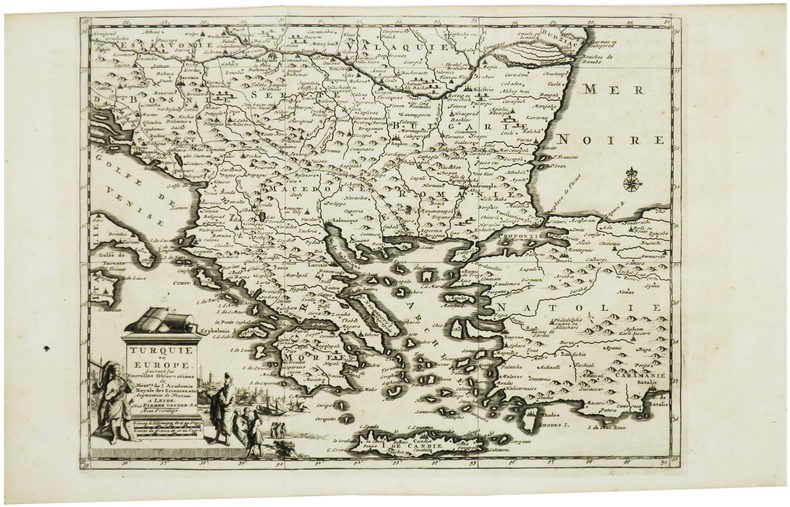
1729rif. LBW-6193Leide, Pierre Vander Aa, [1729]. 224 x 297 mm.
1729rif. LBW-6200Leide, Pierre Vander Aa, [1729]. 224 x 297 mm.
1572rif. LBW-1442[Venise, 1572]. 157 x 210 mm.
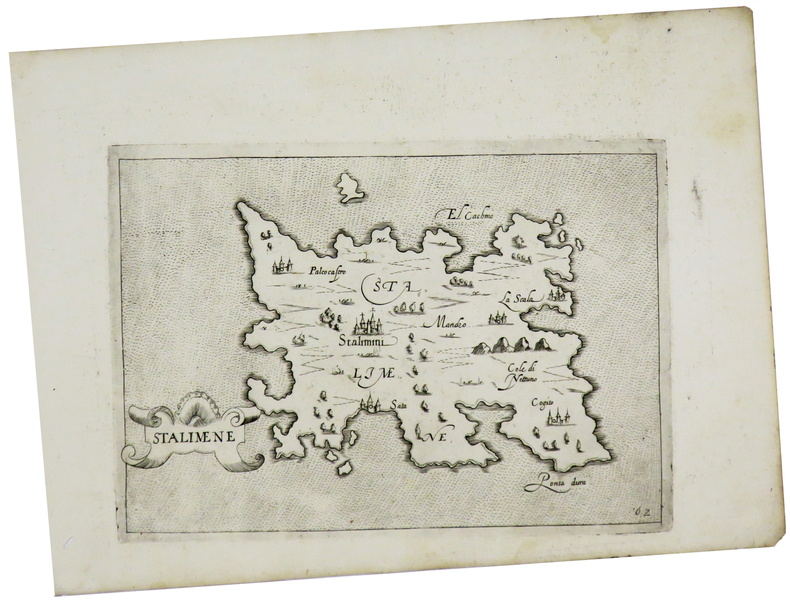
1572rif. LBW-1439[Venise, 1572]. 216 x 165 mm.
1572rif. LBW-1445[Venise, 1572]. 223 x 166 mm.