Rosenstein Nathan S.MareMagnum

18 211 résultats
8vo, hardcover in dj, pp224. Given the intense competition among aristocrats seeking public office in the middle and late Roman Republic, one would expect that their persistent struggles for honor, glory, and power could have seriously undermined the state or damaged the cohesiveness of the ruling class. Rome in fact depended on aristocratic competition, since no professional bureaucracy directed public affairs and no salary was attached to any public office. But as Rosenstein adeptly shows, competition appears to have been surprisingly limited, in ways that curtailed the possible destructive effects of all-out contests between individuals. "Imperatores Victi" examines one particularly striking case of such checks on competition. Military success at all times represented an abundant source of prestige and political strength at Rome. Generals who led armies to victory enjoyed a better-than-average chance of securing higher office upon their return from the field. Yet this study demonstrates that defeated generals were not barred from public office and in fact went on to win the Republic's most highly coveted and hotly contested offices in numbers virtually identical with those of their undefeated peers. Rosenstein explores how this unexpected limit to competition functions, reviewing beliefs about the religious origins of defeat, assumptions about common soldiers' duties in battle, and definitions of honorable behavior of an aristocrat during a crisis. These perspectives were instrumental in shifting the onus of failure away from a general's person and in offering positive strategies a general might use to win glory and respect even in defeat and to silence potential critics among a failed general's peers. Such limits to competition had an impact on the larger problems of stability and coherence in the Republic and its political elite; these larger problems are discussed in the concluding chapter.
réf. 1850435669.Ghardcover. Good. Access codes and supplements are not guaranteed with used items. May be an ex-library book. hardcover
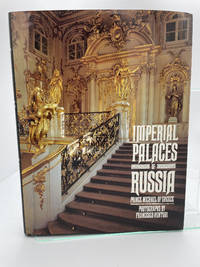
1992réf. FOL0623Tauris Parke Books 1992. Hardcover. Very Good. Book cover like new modest wear at bottom end cap - pages clean bright and unmarked spine solid and undamaged. Jacket near new modest shelf wear; protected in fresh mylar cover. Proceeds benefit Friends of the Library. ""Honest and reliable service - every book hand-packaged with care."" Russia's imperial palaces are magnificent edifices. The pictures in this book show a wide range of palaces some well-known some virtually unknown in Western Europe. Tauris Parke Books hardcover
1992réf. 003266London: Tauris Parke Books 1992. Fine/Fine. Hardcover book 9.75" x 12.5" text and dustwrapper are fine; 216 pps index profusely illustrated in all color photographs with decorative chapter drawings of architectural or decorative elements of the palace being discussed Tauris Parke Books hardcover
8vo, For centuries, Rome was one of the world's largest imperial powers, its influence spread across Europe, North Africa, and the Middle-East, its military force successfully fighting off attacks by the Parthians, Germans, Persians and Goths. Then came the definitive split, the Vandal sack of Rome, and the crumbling of the West from Empire into kingdoms first nominally under Imperial rule and then, one by one, beyond it. Imperial Tragedy tells the story of Rome's gradual collapse. Full of palace intrigue, religious conflicts and military history, as well as details of the shifts in social, religious and political structures, Imperial Tragedy contests the idea that Rome fell due to external invasions. Instead, it focuses on how the choices and conditions of those living within the empire led to its fall. For it was not a single catastrophic moment that broke the Empire but a creeping process; by the time people understood that Rome had fallen, the west of the Empire had long since broken the Imperial yoke.
1966réf. 18331C. H. Beck. Very Good. Softcover. Wraps have light edgewear with some creasing. Minor shelfwear. Scholar's name to ffep Christian Habicht with a few pages with pencil underlining and notes by him.; Münchener Beiträge Zur Papyrusforschung Und Antiken Rechtsgeschichte. Heft 50; 135 pages . 1966. C. H. Beck paperback
1966réf. 3515C. H. Beck. Very Good. Softcover. Wraps have edgewear with light chipping along bottom. Minor shelfwear.; Münchener Beiträge Zur Papyrusforschung Und Antiken Rechtsgeschichte. Heft 50; 135 pages . 1966. C. H. Beck paperback
3 Voll. in 1 in 8, pp. da 279 a 430 + 84 + 218, mz. pelle con angoli, titolo e fregi oro al dorso, 2 tavv. f. t. + 1 carta geograf (Babilonia), 4 tavv. f. t. (Grecia). Nella collana: L'Universo o storia e descrizione di tutti i popoli. Minime spellature al dorso. Buon esemplare (5861/ AFRICA - MAROCCO - CONGO - ANGOLA - LIBANO - MEDIORIENTE - GRECIA)
1833Carta geografica, antica ed originale con coloritura coeva ai confini. Autore: Marieni Giovanni trad. & A. Campana dir.. Luogo: Grecia - Turchia. Anno: 1833. Tecnica: incisione in rame. Dimensioni: 290x388. Milano, dall’Imperiale Regia Stamperia. La carta ha l'angolo in basso a sinistra ricostruito per il resto in ottimo stato
1973(Beograd, 1973) stralcio con copertina posticcia muta, pp. 201/206 con 2 mappe. - !! ATTENZIONE !!: Con il termine estratto (o stralcio) intendiamo riferirci ad un fascicolo contenente un articolo di rivista, sia che esso sia stato stampato a parte utilizzando la stessa composizione sia che provenga direttamente da una rivista. Le pagine sono indicate come "da/a", ad esempio: 229/231 significa che il testo è composto da tre pagine. Quando la rivista di provenienza non viene indicata é perchè ci è sconosciuta. - !! ATTENTION !!: : NOT A BOOK : “estratto” or “stralcio” means simply a few pages, original nonetheless, printed in a magazine. Pages are indicated as in "from” “to", for example: 229/231 means the text comprises three pages (229, 230 and 231). If the magazine that contained the pages is not mentioned, it is because it is unknown to us.
1855réf. 14461855 Lib par Alexandre Dumasrairie Nouvelle, Paris, 1855. In-12 broché. (viii), 308 pages. Catalogue in-fine. Publié et préfacé
1904[Storia] (cm.22,5) Cartonato editoriale, similpelle marrone, titolo in oro al dorso. -pp. (2), 342 nn. Contributi sul mondo Ellenico, l'Asia, l'Africa, L'Umbria. raro esemplare solo 2 esemplari nelle biblioteche italiane (Firenze e Lecce). ottimo stato di conservazione, come nuovo. Libro
2003As New English Paperback. Pbo. Mint. Roy. 8vo. (24 x 17 cm). In English. 204 p. Ills. One of most recent initiatives of the History Foundation in the field of history education, namely "Improvement of the Balkan History Textbooks Project", was completed in September 2002. This eight-month pilot project was supported by UNESCO, the Heinrich Böll Foundation and the Consulate General of the Netherlands in Turkey. The planning meeting in Istanbul (June 17th-18th,2001) was followed by a workshop in Pamporovo (September 8th-9th, 2001) and a conference in Istanbul (November 30th-December 2nd,2001), with the participation of teams from Bulgaria, Croatia, Greece, Romania and Turkey. The project aimed to bring together academics and history teachers from the Balkan countries; to review primary and -particulary- secondary level history textbooks currently in use; and to propose alternative ways of reflecting the political, social and cultural history of these countries. The main objective of the project was to prepare a final report on the history textbooks and the teaching of history in the five Balkan countries. Sine history education is in a 'transition period' in each of the five Balkan countries, this book at hand, which is the final report of the project should be considered as a 'snap shot' of the current state of the history education in the Balkans.
1957bross. edit. ill., a fogli chiusi - volume in lingua francese - illustrazioni in b.n. fuori testo
1979Milano, Moizzi, 1979, 8vo (cm. 20 x 11) brossura con copertina illustrata a colori, pp. 142 con 12 figure ed alcune cartine nel testo (Guida per viaggiare in) .
1913Milano, 1913, stralcio con copertina posticcia muta, pp. 202/206 con ill. - !! ATTENZIONE !!: Con il termine estratto (o stralcio) intendiamo riferirci ad un fascicolo contenente un articolo di rivista, sia che esso sia stato stampato a parte utilizzando la stessa composizione sia che provenga direttamente da una rivista. Le pagine sono indicate come "da/a", ad esempio: 229/231 significa che il testo è composto da tre pagine. Quando la rivista di provenienza non viene indicata é perchè ci è sconosciuta. - !! ATTENTION !!: : NOT A BOOK : “estratto” or “stralcio” means simply a few pages, original nonetheless, printed in a magazine. Pages are indicated as in "from” “to", for example: 229/231 means the text comprises three pages (229, 230 and 231). If the magazine that contained the pages is not mentioned, it is because it is unknown to us.
2001pp. 259, mm 205, brossura, Einaudi Tascabili 867. Nuovo.
2016brossura Con un approccio scientifico e narrativo insieme, Donatella Puliga e Silvia Panichi guidano il lettore in un viaggio attraverso il mondo antico, unendo all'illustrazione dei siti archeologici la ricostruzione dei miti cui essi si collegano, le vicende storiche che vi si svolsero, i ricordi dei poeti e dei viaggiatori che vi si ispirarono. Il volume è ricco di pagine in cui storie di monumenti e di eroi, di riti religiosi e di finzioni letterarie si intrecciano in un unico racconto, restituendo la potenza di significato che la terra greca possiede. Il volume, introdotto da un saggio di Maurizio Bettini, è illustrato ed è completato dalla bibliografia essenziale e dall'indice dei nomi e dei luoghi.
1938réf. 040895London: J.M.Dent 1938 Book. Very Good. Cloth. 1st.UK Ed. Description of travels in Greece 1928-1930 illustrated with the author's water-colour paintings. Preface by Frederick Kenyon.205p Frontis.15 coloured plates. maps on end papers. Neat tight clean text. Green cloth covers slightly worn. J.M.Dent hardcover
1948Dedicated to the Heroic Island of Crete. Concise history of Crete for tourists. Stapled colour illustrated wraps. Heavily illustrated with B&W photos/illustrations and some colour reproductions of art, pottery and frescoes. repructions Printed by the Aspioti - Elka Graphic Arts in their factory in Athens by the Offset - deep process. Unpaginated (64 pages).Pages clean and tight with slight corner rubbing and isolated soiling. Large format
1938Description of travels in Greece (1928-1930) illustrated with the author's water-colour paintings. Preface by Frederick Kenyon.205p Frontis.+15 coloured plates. maps on end papers. Neat tight clean text. Green cloth covers slightly worn. Book
1938Description of travels in Greece (1928-1930) illustrated with the author's water-colour paintings. Preface by Frederick Kenyon.205p Frontis.+15 coloured plates. maps on end papers.Nice Bookplate Neat tight clean text. Green cloth covers slightly worn starting to split at spine . Book
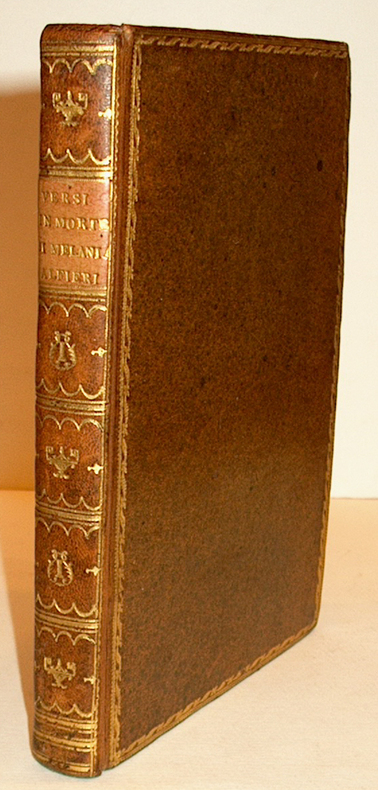
1807réf. 000752Parma Co'Tipi Bodoniani 1807
8vo, br. ed. Il tribunato della plebe è probabilmente l’istituzione politica più originale dell’antica Roma. Nel mondo antico non esiste nulla di simile, così come non esisterà nei millenni successivi: ma come nacque, che sorte ebbe e che funzioni ricoprì questa figura unica, che costituisce l’elemento distintivo della vita politica romana? Nati dalla secessione della plebe all’alba della Repubblica (494 a.C.), i tribuni detenevano un potere straordinario, che permetteva loro di paralizzare e condizionare le sorti di Roma. Dalla sua comparsa alla fine della Repubblica, il tribunus plebis fu al centro dei cambiamenti e degli sconvolgimenti di un’intera civiltà, quella romana, divenendo oggetto di ricostruzioni storiografiche spesso ostili e tendenziose. Questo libro intende offrire al lettore uno sguardo complessivo sulla storia di una magistratura tanto importante quanto trascurata: dalla sua nascita, a ridosso della fondazione della Repubblica, all’assunzione dei poteri tribunizi da parte dell’imperatore, Augusto, fino alla riflessione moderna sul concetto di “tribuno” nel pensiero politico occidentale. L’intera storia di Roma si rivela, così, sotto una nuova luce attraverso le vicende di coloro che in nome del popolo romano acquisirono un immenso potere.