Jones, Christopher P.MareMagnum
Cassius Dio Dione CassioMareMagnum
The Roman History: The Reign of Augustus
16mo, br. ed. pp.368. Penguin Classics; Reprint edizione (26 febbraio 1987)

Pali s.r.l. · Italie20,00 €
18 269 résultats
1978Scholar's bookplate to inner cover (G. P. Goold). Additional plate of inner cover ("With the compliments of the author. Sent by Harvard University Press..." ). Light Foxing to top of textblock. DJ spine sunned. Light edgewear. ; Loeb Classical Monographs; 0.39 x 9.06 x 5.91 Inches; 216 pages; The Greek orator Dio Chrysostom is a colorful figure, and along with Plutarch one of the major sources of information about Greek civilization during the early Roman Empire. C. P. Jones offers here the first full-length portrait of Dio in English and, at the same time, a view of life in cities such as Alexandria, Tarsus, and Rhodes in the first centuries of our era. Skillfully combining literary and historical evidence, Mr. Jones describes Dio's birthplace, education, and early career. He examines the civic speeches for what they reveal about Dio's life and art, as well as the life, thought, and language of Greek cities in this period. From these and other works he reinterprets Dio's attitude toward the emperors and Rome. The account is as lucid and pleasantly written as it is carefully documented.
16mo, br. ed. pp.368. Penguin Classics; Reprint edizione (26 febbraio 1987)
8vi, br. ed. pp.790. The Roman Empire at Bay is the only one volume history of the critical years 180-395 AD, which saw the transformation of the Roman Empire from a unitary state centred on Rome, into a new polity with two capitals and a new religion-Christianity. The book integrates social and intellectual history into the narrative, looking to explore the relationship between contingent events and deeper structure. It also covers an amazingly dramatic narrative from the civil wars after the death of Commodus through the conversion of Constantine to the arrival of the Goths in the Roman Empire, setting in motion the final collapse of the western empire. The new edition takes account of important new scholarship in questions of Roman identity, on economy and society as well as work on the age of Constantine, which has advanced significantly in the last decade, while recent archaeological and art historical work is more fully drawn into the narrative. At its core, the central question that drives The Roman Empire at Bay remains, what did it mean to be a Roman and how did that meaning change as the empire changed? Updated for a new generation of students, this book remains a crucial tool in the study of this period.
8vo, br. ed, pp.304
199928.5x22 cm. 224 pages. Hardcover. Front cover bottom edges slightly cracked. Spine edges slightly bumped. Else in good condition. PLEASE NOTE: This item is overweight. We may ask for extra shipping costs.
8vo, For thousands of years, and in many different cultures, cities, and states, individuals have consulted oracles in time of need. In this fascinating exploration of the history and enduring popularity of oracles, Michael Wood examines how they are interpreted and why. The inherent ambiguity of many oracular pronouncements and the ingenuity and tendentiousness of many readings of them form the basis for Wood?s analyses of oracles, both real and imagined. Using examples from actual oracles at Delphi, Dodona, and in pre-Hispanic America to fictional?but influential?oracles in literature from Oedipus to Macbeth, Wood combines storytelling and commentary to provide an entertaining and concise account of humanity?s persistent faith in signs. He also looks at later instances of oracles, arguing that consultations have evolved in many ways over the years, and that echoes and survivals of old practices in modern literature and popular culture?in the works of Kafka and in the film The Matrix, as well as in astrology columns?continue to exert an important influence over human civilization.
2003For thousands of years, and in many different cultures, cities, and states, individuals have consulted oracles in time of need. In this fascinating exploration of the history and enduring popularity of oracles, Michael Wood examines how they are interpreted and why.The inherent ambiguity of many oracular pronouncements and the ingenuity and tendentiousness of many readings of them form the basis for Woods analyses of oracles, both real and imagined. Using examples from actual oracles at Delphi, Dodona, and in pre-Hispanic America to fictional-but influential-oracles in literature from Oedipus to Macbeth, Wood combines storytelling and commentary to provide an entertaining and concise account of humanitys persistent faith in signs. He also looks at later instances of oracles, arguing that consultations have evolved in many ways over the years, and that echoes and survivals of old practices in modern literature and popular culture.continue to exert an important influence over human civilization. Lively, engaging, and remarkably revealing, The Road to Delphi shows an ancient art at work in many times and places, and invites us to think again about the ways in which we deal with our longing for the certainties we know we cant have.271p. bibliography. index Book
1963Narrative of a trip from England to Greece by car (in the days before mass tourism) 254p. maps.plates.index Book
réf. 15-6h1902699467BRAND NEW. Excellent condition. Still in original publisher's wrap. No remainder mark. 15-6H1902699467 Periplus Publishing London Ltd
1st Edition Profusely illustrated with ancient symbols, monuments and art. original burgundy cloth, gilt lett. fine in poor dj
8vo - over 7¾" - 9¾" tall. 391 pages with index.plus 16 glossy pages of photographs. Publisher's Weekly: In the mystery religion of Eleusis, a colony of Athens, cult members acted out the rape of Persephone in torchlit ceremonies, while worshippers shouted obscenities and huge models of genitals were displayed to assure the fertility of crops. Classical historian Grant reveals the deep primitive roots of Greek civilization in this wide-ranging survey of the ``archaic'' period (750-480 B.C.). It was a time when 700 scattered city-states, each bent on achieving self-sufficiency, added their distinctive contributions to the melting-pot of Hellenic culture. Organized geographically by settlement, Grant's rewarding history turns up many surprises: for example, he shows that the early Spartans, belying the reputation for brute military strength they later acquired, excelled in poetry, music and ivory carving; Spartan women were treated as equals of men and spared domestic chores; and the Ionian philosopher Anaximenes, who linked the microcosm of the individual self to the cosmos, almost certainly took his ideas from the Upanishads of India.
1965This is fasicule # 18 [intended as part of Volume II Chapter XIV of the Cambridge Ancient History series - Revised edition, Volumes I & II , [37p. bibliography] "In order to make .[the CAH] .available to readers as soon as possible it will be issued, in the first instance, as fasicles. With some exceptions [each] will contain one chapter, but the order of publication will not correspond to the sequence of the chapters . In the volumes of the complete editon the pages will be renumbered, and prefatory matter, maps, chronological tables and indexes will be included. The plates will be issued in a separate volume") Book
1965Minor scuffing along spine. Scholar's name to ffep (Jenifer Neils). ; CHAPTER 1: PERSIA, FROM XERXES TO ALEXANDER: Xerxes and his successors; enterprise of Cyrus; battle of Cunaxa; retreat of the Ten Thousand to Trapezus (Kurdistan etc..) ; From Trapezus to Pergamum; Great king and his Satrapies; Artaxerxes III and the reconquest of Egypt CHAPTER II: THE ASCENDACY OF SPARTA: Lysander's settlement; spartan home affairs; Sparta's dependents in the greek homeland (Thebes, Athens, Thessaly etc..) ; Sparta's relations with Persia; Persian Thalassocracy; Corintian War (fall of Pausanias, battle of Corinth etc..) ; New Pact between Sparta and Persia (Thrasybulus etc. ) ; CHAPTER III THE SECOND ATHENIAN LEAGUE : General condition of Greece in 386 B. C. ; Sparta's Policy of Precautions; Rise of Thebes; New Athenian Thalassocracy; Jason of Pherae (siege of Corcyra etc. ) CHAPTER IV THEBES The Battle of Leuctra; theban ascendacy in Northern Greece; disruption of the Peloponnesian league; diplomatic failures of Thebes; Failure of Arcadian Imperialism; Battle of Mantinea; Decline of the Athenian Naval League; CHAPTER V DIONYSIUS OF SYRACUSE: Carthaginian invasions 409-406 B. C. ; Rise of Dionysius, 405 B. C. ; dionysius and the Sicels, 403 B. C. ; First war with Carthage, 398-392 B. C. ; Italian wars of Dionysius and his later wars with Carthage; Relations with Eastern Greece; Death of Dionysius, 367 B. C. ; Estimate of Dionysius; CHAPTER VI EGYPT TO THE COMING OF ALEXANDER: The Achaemenid Rule (Athenians in Egypt Herodotus jews at Syene etc..) ; last native Monarchy; Coming of Alexander; Retrospect (Libyans, and Ethiopians Demotic literature, Egyptian religion etc..) ; CHAPTER VII: THE INAUGURATION OF JUDAISM: Historical outlines (Nehemiah, benevolence of Persia, Samaritan schism, Ezra etc. ) ; jews and their neighbours; Edom and Samaria (desolation of Judah and Jerusalem etc..) ; Religious tendencies (Jewish self-consciousness etc. ) ; Priestly source and the Pentateuch; CHAPTER VIII THE RISE OF MACEDONIA Greek World at the Accession of Philip; early years of Philip's reign, 359-356 B. C. ; war of Athens and her allies, 357-5 B. C. ; sacred war down to 353 B. C. ; philip's activities in Thrace and Thessaly down to 352 B. C. ; Athenian policy: Aristophon, Eubulus, Demosthenes; Sacred war continued; olynthian war; peace of philocrates, and the end of the sacred war; CHAPTER IX MACEDONIAN SUPREMACY IN GREECE: Years of Nominal Peace between Philip and Athens, 346-3 B. C. ; relations of Philip and the greek cities with Persia; struggle in Thrace and the Chersonese, 342-339 B. C. ; Amphissean War: Chaeronea (338 B. C. ) ; After Chaeronea; death of Philip. Characters of Philip and Demosthenes; CHAPTER X: SICILY, 367 TO 330 B. C. Dionysius the Second (plato Dion etc..) ; Enterprise of Dion; Timoleon: delivery of Syracuse (Carthaginian activity) ; Timoleon Settlement of Sicily; Southern italy; CHAPTER XI: THE ATHENIAN PHILOSOPHICAL SCHOOLS: philosophy of Socrates; Plato the early dialogues; Academy dialogues of the middle period (Republic Phaedo, meno, Symposium, Phaedrus) ; Later dialogues (Timaeus, Philebus) ; Aristotle; Form and matter, the actual and potential; objects and methods of science; cosmology; biology and psychology; ethics and politics; peripatetic school at Athens; CHAPTER XII: ALEXANDER: THE CONQUEST OF PERSIA Alexander's early years; preparations for invading persia; granicus and asia minor; battle of issus; administration of asia minor; tyre and egypt; battle of Gaugamela; death of Darius; CHAPTER XIII: ALEXANDER CONQUEST OF THE FAR EAST: Alexander, Philotas, and Parmenion; conquest of Turkestan; Cleitus, Callisthenes, and alexander's divine descent; india, from Bactria to the Jhelum; India from Jhelum to Beas; to Patiala; Punjab, Punjabi; Gedrosia and Susa; Alexander's Deification and death (Arabia and Arabian Expedition) ; Alexander's character and policy; finance and new cities (coinage) ; Empire: Alexander's personality; CHAPTER XIV: GREECE 335 TO 321 B. C. : the Feeling in Greece (antipater etc..) ; lycurgus and Athens; Agis III of Sparta; Prosecution of Demosthenes (Ctesiphon, on the Crown etc. ) ; Affair of Harpalus; lamian War (Hellenic league etc..) ; CHAPTER XV: THE HERITAGE OF ALEXANDER: Question of the succession; perdiccas; antipater's regency; polyperchon and Greece; eumenes and antigonus; cassander and the coalition; antigonus' first struggle for the empire; kingdom; cassander and Ptolemy; Defeat and Death of Antigonus; CHAPTER XVI; GREEK POLITICAL THOUGHT AND THEORY IN THE FOURTH CENTURY: Political thought of the fourth century; Xenophon and Isocrates; Plato and Aristotle; end of the Polis, and its political theory; CHAPTER XVII: Greek Art and Architecture: Classical Sculpture (Praxiteles, Scopas, Timotheus: Cephisodotus, Lysippus Attic grave reliefs; Fourth Century Doric Architecture; Corinthian capital; ionic architecture in Asia; civil buildings LIST OF TABLES, MAPS, PLANS : March of the Ten Thousand; Asia Minor; Second Athenian League; Central and north eastern peloponnese; plain of Mantinea and Tegea; Dominions of Dionysius; Central Greece; Alexander's Route; plans of temples etc.. ; Cambridge Ancient History Series; 37 pages
1991Jerome Lectures 11; 108 pages; A survey of how Greek historians explained the conditions of a state's success and the dangers of power.
1991[Thomas Spencer Jerome Lectures] "The Rise and Fall of States According to Greek Authors is a masterful survey of the manner in which Greek historians, from Herodotus to Polybius, explained the conditions of a state's success and the dangers of power. Both the differences and the similarities among the major authors' ideas are carefully analyzed: the changing notions of excess, or hybris; the common stress on public morality; and the value of goodwill.." 100p. Book
18412 Voll. in un tomo In-4°, legatura coeva in piena pelle, pp. 76-(2bb.) e (2)89(3)-(2bb.). Due antiporte incise con vignette e titoli diversi: (I) The Rhine Illustrated e (II) Italy Illustrated; completo delle bellissime incisioni in acciaio su tavole fuori testo protette fa fogli di carta leggera: 32 al primo volume e 39 al secondo. Magnifica legatura coeva in piena pelle con dorso a cinque nervi; titoli in oro nel secondo comparto e fregi floreali negli altri; ai piatti decorazioni neoclassiche con filetti, cornice a greca e anfora centrale; unghiature con triplo filetto; tagli dorati a specchio. Piccole mancanze alla cuffia superiore, e altre minime abrasioni ai margini della legatura; all'interno solo rare e leggere bruniture. Ottimo esemplare di questo classico dell'illustrazione di viaggio ottocentesca.
1909réf. 032541London: Hodder And Stoughton 1909. 1st Edition . Hardcover. Fair. Photographs. Xv 323 Pp.Original Green Cloth Gilt. First Edition. Worn But Gilt Bright. Spine Browned And Frayed At Top And Bottom Edges With Old Tape Repair1/4" Deep Top 1" Of Front Free Endpaper Excised Hinge Cracked Before Half Title And At Rear Endpapers Catalog Entry For This Book Pasted To Title Page Below The Publisher's Information. Ownership Signature In English And Arabic Of A. Ahmed Z. Zaky Abushady At Top Of Title Page; Abushady Was An Egyptian Who Studied In England And Returned To Egypt Where He Became Dean Of Medicine At The University Of Alexandria; He Later Came To The United States. He Is Renown For His Work As A Publisher Poet Bee Scientist Etc. Hodder And Stoughton hardcover
1995240x170mm. 138 pages. Softcover. Cover corner slightly wrinkled. Pen inscription on title-page - NO damage to text. Pages slightly yellowing. Else in good condition.
19448vo. 622p. Illustrated by medallions cut on wood by Fritz Kredel. **PRICE JUST REDUCED!
2008réf. 161151Οι εκθέσεις των Βενετών Ï€Ïονοητών της Κεφαλονιάς 16ος αιώνας Reports in italian with summaries in greek; also a general summary in Italian. Soft cover 24 cm 248 pp. CONTENTS: Εισαγωγή Εκθέσεις Ï€Ïονοητών I. Nicolo Malipiero 1528 II. Francesco Gabriel 1543 III. Alvise Calbo 1548 IV. Antonio Calbo 1548 V. Alvise Balbi 1560 VI. Paolo Contarini 15 64 VII. Daniele Vitturi 1567 VIII. Nicolo da Mulla 1569 IX. Vincenzo da Molin 1574 X. Alvise Lando 1580 XI. Giovanni Michiel 1582 XII. Girolamo Tiepolo 1584 XIII. Agostino Moro 1588 XIV. Angelo Basadonna 1590 XV. Davide Bembo 1593 XVI. Bartolomeo Moro 1596 XVII. Alvise Michiel 1601 ΠαÏάÏτημα: Οι Bενετοί Ï€ÏονοητÎÏ‚ της Κεφαλονιάς Riassunto INDICES SEE ALSO THESE TITLES on Venetian Baili: ARCHIVIO DELL' AMMINISTRAZIONE VENETA DE LEUCADE URL: www.biblio.com/books/442172990.html THE REPORTS OF THE VENETIAN BAILI AND PROVVEDITORI OF CORFU 16TH CENTURY URL: www.biblio.com/books/442185939.html ============================================================== The shipping cost estimated by the system covers books weighing up to 750 gr.; a surcharge depending on the actual weight and destination applies for heavier books. Institute of Byzantine Research paperback
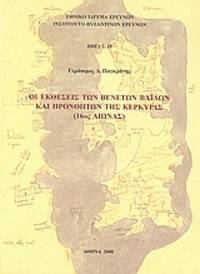
2008réf. 144119Hoi ektheseis tÅn VenetÅn vailÅn kai pronoētÅn tēs Kerkyras 16os aeÅnas Soft cover 24 cm 494 pp.; net weight 1060 gr. The reports in the original italian language with summaries in modern greek. Précis in English. SEE ALSO THESE TITLES on Venetian Baili: ARCHIVIO DELL' AMMINISTRAZIONE VENETA DE LEUCADE URL: www.biblio.com/books/442172990.html THE REPORTS OF THE VENETIAN BAILI OF CEPHALLONIA 16th ce. URL: www.biblio.com/books/485814336.html ============================================================== The shipping cost estimated by the system covers books weighing up to 750 gr.; a surcharge depending on the actual weight and destination applies for heavier books. Institute for Byzantine Research paperback
1967réf. 4051967 1967 IN-8 DE XX + 444 PAGES, RELIURE DE L'EDITEUR PLEINE PERCALINE BLEUE, TITRE DORE SUR DOS LISSE. (THE RELIGIOUS OUT LOOK OF THE GRAECO-ROMAN WORLD .THE RELIGION OF MAGIC, SACRAMENT AND SYMBOL. ASTRALISM, OR THE RELIGION OF ASTROLOGY. ANCIENT GREEK THEOSOPHY AS A RELIGION. THE WAY OF GNOSIS-RELIGION AND MEDICINE).
1964This is fasicule # 2 intended as part of Volume II Chapter XL of the Cambridge Ancient History series - Revised edition, Volumes I & II [55p. Bibliography] "In order to make .[the CAH] .available to readers as soon as possible it will be issued, in the first instance, as fasicles. With some exceptions [each] will contain one chapter, but the order of publication will not correspond to the sequence of the chapters . In the volumes of the complete editon the pages will be renumbered, and prefatory matter, maps, chronological tables and indexes will be included. The plates will be issued in a separate volume") Paper covers slightly damaged Book
1981No marks or inscriptions. A lovely clean very tight copy with bright unmarked boards and no bumping to corners. Dust jacket not price clipped or marked or torn or creased. 208pp. The new passion for travel by the wealthy at the end of the 18th century meant that the art, literature and philosophy of Ancient Greece could be experienced first-hand rather than being transmitted by intermediaries, which had happened until then. This study reflects Greece as perceived, reflected and shaped by artists and others of the period. Very well illustrated by contemporary paintings.